Foreign-Affairs
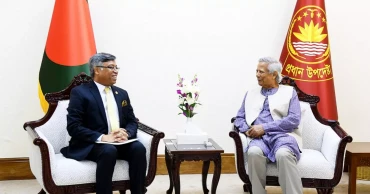
Chief Adviser Yunus hopeful SAARC can give dividends to people of the region if revitalised
Chief Adviser Prof Muhammad Yunus on Monday urged the SAARC Secretariat to work more intensely to make the regional body functional for the shared benefit of the South Asian countries.
“SAARC is a forgotten word. If you can revitalise it, this will give dividends to the people of the whole region,” said the Chief Adviser.
Professor Yunus made the comment when Secretary General of SAARC Golam Sarwar called on him at his office in Tejgaon, Dhaka.
Focus on opportunities, challenges in Bangladesh-India ties: Roundtable
Secretary General Sarwar thanked Professor Yunus for being an ardent supporter of the SAARC and said that they were encouraged by his recent call to South Asian leaders for the revival of the multilateral body.
He briefed the Bangladesh Chief Adviser about the ongoing activities of SAARC at the working level, including the Programming Committee, Governing Bodies of Regional Centres and Specialised Bodies, events on climate change, SDGs, regional integration, customs cooperation, among others.
He said that in the absence of high-level meetings, the functional initiatives were not getting adequate strength and clarity.
Professor Yunus and the SAARC Secretary General discussed the need for meetings of foreign secretaries, foreign ministers, and other sectoral ministers, and even summit of the leaders for better functioning of the body.
Changed scenario: Dhaka optimistic to establish good ties with Delhi
“We have partnerships with a lot of organizations. We are trying to explore those,” said Secretary General Sarwar.
Professor Yunus asked Secretary General Sarwar to work on multilateral issues such as the export of hydroelectric power of Nepal to neighbouring countries like Bangladesh, India, and Bhutan.
Professor Yunus invited young people from SAARC countries to join the youth festival in Bangladesh in January 2025.
UNAOC: Dhaka highlights its unwavering commitment to peace, humanity
“This will be good because this focuses on youth. The whole SAARC idea is to bring people together. This could be one way of opening the door,” he said.
This year, SAARC celebrates the historic 40th Charter Day.
The SAARC Secretary General requested continued support and guidance from the Government of Bangladesh for reinvigorating the SAARC process in realising the charter objectives of the association.
1 year ago
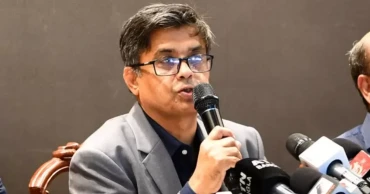
Broken criminal justice system needs to be fixed: CA's Press Secretary
Chief Adviser's Press Secretary Shafiqul Alam has said Bangladesh needs to fix a lot of things, including its "broken" criminal justice system so that they can ensure justice to every suspect.
"The biggest thing we need is to fix our broken criminal justice system so that we can ensure justice to every suspect," he said.
In a Facebook post from his verified account on Monday, Alam said that for decades, justice has been hijacked by "custodial threats and tortures" and by a corrupt and largely politically influenced police investigation system.
Focus on opportunities, challenges in Bangladesh-India ties: Roundtable
The bigger issue here is custodial torture and forcible extraction of confessions to prove charges against suspects, he observed.
"Unless we fix this dangerously inept system, no one is safe in Bangladesh," Alam said.
The Press Secretary said anyone can be framed for any murder charges here and can be hanged with massive clippings by an easily manipulated mob.
Fight Indian media's misformation campaign with truth: CA's Press Secretary
He said they need to amend or rewrite the constitution and fix the "easily rigged and flawed" voting system.
"We need to fix our extremely inefficient and partisan bureaucracy," Alam added.
1 year ago

Govt to brief diplomats on minority issues today
The government on Monday will brief diplomats stationed in Dhaka on current issues, especially on the minorities.
"It's mainly on minority issues," a senior official at the Ministry of Foreign Affairs told UNB.
Foreign Affairs Adviser Md Touhid Hossain will brief the diplomats at state guesthouse Padma in the afternoon.
Read: Govt to brief diplomats Wednesday; Rohingya situation on focus
He will talk to the media around 4pm after the diplomatic briefing.
Following the diplomatic briefing, the adviser will talk with the media.
1 year ago

Mexico extends visa application facilities for Bangladeshis
The government of the United Mexican States has extended visa application facilities for Bangladeshi nationals, simplifying the process for obtaining a visa to visit Mexico.
Previously, Bangladeshi citizens were required to approach the Mexican Embassy in New Delhi for visa applications.
Under the newly announced facilities, Bangladeshi nationals can now submit their visa applications at any Mexican Embassy or Consulate in the Asia-Pacific region or other locations worldwide, said the Ministry of Foreign Affairs on Sunday.
Additionally, Mexican immigration regulations allow visitors from all countries to enter its territory for up to 180 days without a Mexican visa, provided that they possess a valid passport and a valid visa for Canada, the United States of America, Japan, the United Kingdom of Great Britain and Northern Ireland, or any of the countries within the Schengen Area.
This development is expected to enhance connectivity, promotion of trade and investment, promote cultural exchanges and greater people-to-people interaction between Bangladesh and Mexico, said the MoFA.
1 year ago
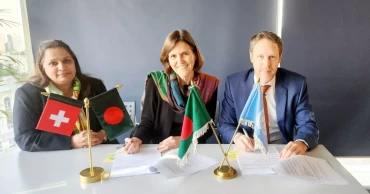
UNDP, Swiss Embassy partner to support democratic reforms in Bangladesh
The United Nations Development Programme (UNDP) and the Swiss Agency for Development and Cooperation (SDC), Embassy of Switzerland in Bangladesh, signed an agreement on Sunday to support democratic reforms in the country.
The agreement focuses on the “Democratic Reforms through Inclusive Participation” (DRIP) project, which aims to foster inclusive participation in the democratic process.
Focus on opportunities, challenges in Bangladesh-India ties: Roundtable
This initiative seeks to strengthen democratic governance in Bangladesh by promoting transparency, inclusivity, and accountability.
Stefan Liller, Resident Representative of UNDP Bangladesh and Corinne Henchoz Pignani, Chargée d'affaires a.i, Embassy of Switzerland in Bangladesh, signed the agreement in Dhaka on behalf of their respective organisations, in the presence of Gitanjali Singh, Representative, UN Women.
The DRIP project will be implemented jointly by UNDP and UN Women to promote inclusive governance by supporting the participation of women, youth, and other socially excluded groups in political decision-making processes, said UNDP.
This initiative is part of UNDP’s ongoing Strengthening Institutions, Policies, and Services (SIPS) program, which aims to create a more inclusive and responsive governance framework in Bangladesh.
“We are grateful for Switzerland's longstanding partnership with UNDP and our joint support to strengthening institutions and promoting democratic governance in Bangladesh. Together with Switzerland and UN Women, we aim to further advance Agenda 2030 by specifically addressing SDG5 on gender equality and SDG16 on peaceful and inclusive societies," said Stefan Liller at the signing ceremony.
Palestinian struggle was key inspiration behind July Uprising: Nahid Islam
Corinne Henchoz Pignani said DRIP supports the reform priorities of Bangladesh and builds on Switzerland's longstanding efforts to advance participatory governance and human rights in the country.
"Empowering women and youth is at the heart of building resilient societies. By amplifying the voice, agency and leadership of women and underrepresented groups through this initiative, we are laying the foundation for a more equitable future," said Gitanjali Singh.
Representatives from UNDP, UN Women and SDC were present at the signing ceremony.
The two-year project, implemented by UNDP and UN Women, underscores the importance of inclusive reforms in restoring public trust and addressing the root causes of socio-political discontent.
1 year ago

Palestinian struggle was key inspiration behind July Uprising: Nahid Islam
The Palestinian people's fight for their rights was one of the key inspirations behind the July Uprising, adviser Nahid Islam said on Sunday.
"Palestine holds a special place in the hearts of the people of Bangladesh. Our country has always supported Palestine in its struggle for independence, which is why we launched activities through the March for Palestine platform on November 29, 2023," he said.
The adviser made the remarks when Palestinian Ambassador to Bangladesh, Yusuf S. Y. Ramadan, visited the office of the Ministry of Posts and Telecommunications on Sunday.
He said that Palestine is a point of national unity for Bangladesh.
At that time, adviser Nahid emphasized that the country has always supported the oppressed and persecuted people of Palestine.
India attempting to further provoke Chinmoy incident: Nahid
He reiterated that Bangladesh consistently stands by Palestine’s rightful demands, adding that the people of Bangladesh remain firmly committed to Palestine's independence and sovereignty.
Addressing the adviser, Yusuf S. Y. Ramadan said, "Your arrival comes at a time when the people of Bangladesh had almost given up hope. Everyone is looking toward you. The people of the country want to place their trust in you."
He expressed gratitude to the people of Bangladesh, noting that despite the geographical distance, Bangladesh is more vocal about the rights of the Palestinian people than many other Muslim countries.
Nahid Islam reaffirmed Bangladesh's unwavering support for the Palestinian state and its people. He expressed hope that Palestine would eventually achieve the independent state it longs for.
The Palestinian ambassador also said, "We sincerely wish success for the current interim government because if this government succeeds, the people of Palestine will be stronger. We want the interim government to succeed in fulfilling the dreams of its people."
He also invited the adviser to meet with members of the OIC committee.
During the meeting, the Secretary of the Posts and Telecommunications Division, Dr. Mohammad Mushfiqur Rahman, and senior officials from the ministry were present.
1 year ago
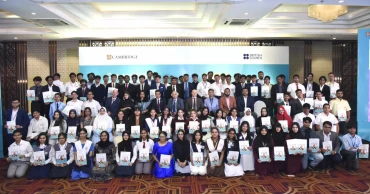
65 Bangladeshi students honoured with 'Top in the World' Awards at OCLA 2024
Sixty-five Bangladeshi students have been honoured with 'Top in the World' awards at the Outstanding Cambridge Learner Awards (OCLA) 2024, a prestigious event co-hosted by the British Council and Cambridge International Education on Saturday at the Radisson Blu in Dhaka.
The students were recognised for exceptional achievements in the June 2024 Cambridge examination series.
A total of 98 Bangladeshi students received 121 awards at the 2024 OCLA.
These global accolades celebrate the highest achievers in Cambridge International exams, with over a million students worldwide taking part in Cambridge's internationally recognised courses each year.
Cambridge International Education has been providing global examinations for more than 160 years.
The awards recognise achievement in four categories: Top in the World, High Achievement, Top in Country, and Best Across.
Among the 121 awards presented, sixty-five Bangladeshi students were recognised with the prestigious 'Top in the World' awards, given to those who have achieved the highest marks worldwide for a particular subject.
Of these winners, 98 students received this accolade across Cambridge O Level, Cambridge International AS & A Level, and Cambridge IGCSE subjects.
The ceremony was inaugurated by Shahin Reza, Country Manager for Cambridge International Education in Bangladesh, who delivered the welcome address. He said, "Cambridge International is the fastest growing international awarding body in Bangladesh, and with the growth of schools and the number of students, the number of Top in the World awards have increased significantly in Bangladesh this year, which is also the testament to the hard work of students, teachers and parents".
The event was graced by the chief guest, Prof Dr S.M.A. Faiz, Chairman of the University Grants Commission of Bangladesh, and James Goldman, Acting British High Commissioner to Bangladesh. Rod Smith, Group Managing Director of International Education at Cambridge, delivered a video message at the event.
In his speech, Dr S.M.A. Faiz commended the students for their brilliant results, especially the 65 Bangladeshi students who achieved Top in the World in the June 2024 Cambridge International exams.
James Goldman, Charge d’Affaires to the British High Commission Bangladesh, said, ‘My heartfelt congratulations to the Bangladeshi awardees, who have excelled in the Cambridge International Exam. The UK and Bangladesh share a long-standing partnership cemented by our diaspora, education, trade, and cultural ties. The students' remarkable accomplishments in this UK examination will hopefully open new doors as they work to achieve their goals and make meaningful contributions to their communities.'
Maxim Raimann, Exams Director at the British Council in Bangladesh, said, 'At the British Council, we are committed to facilitating access to UK exams and qualifications, providing teacher training, and sharing best practices in school leadership. Our innovative solutions empower candidates to achieve their full potential. We are pleased to see so many students from Bangladesh have performed exceptionally across various categories in the Cambridge International exams. We are proud to collaborate with Cambridge International Education in delivering the exams and hosting this event to celebrate their tremendous success.'
Some participants also shared their inspiring journeys at the event.
The event also featured a captivating cultural performance by S.F.X. Greenherald International School students.
1 year ago
Focus on opportunities, challenges in Bangladesh-India ties: Roundtable
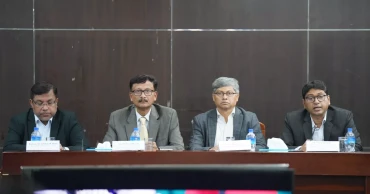
Speakers at a roundtable discussion on Saturday explored the evolving dynamics of Bangladesh-India relations, with a focus on identifying opportunities, addressing challenges and charting a constructive path forward.
They observed that the relationship is not defined by just a few days or months and remained optimistic that it will improve in the near future.
The South Asian Institute of Policy and Governance (SIPG), in collaboration with the Department of Political Science & Sociology (PSS) at North South University (NSU), hosted the discussion titled “Bangladesh-India Relations: Expectations, Challenges, and Future Prospects.”
The event, held at NSU’s Syndicate Hall, brought together a panel of experts and stakeholders to discuss the key issues between the two countries.
Foreign Affairs Adviser Md Touhid Hossain, while speaking as the chief guest, underscored the critical need for fostering mutual trust and engaging in open, constructive dialogue as a means to overcome the existing challenges and unlock the full potential of Bangladesh-India bilateral cooperation.
He emphasised that the true measure of Bangladesh’s success in enhancing bilateral ties with India would be rooted in national consensus and unity, which, he believes, will serve as the litmus test for the country’s future progress in this regard.
The discussion featured a panel, including Dr SM Asaduzzaman Ripon, BNP Vice Chairman, Barrister Asaduzzaman Fuaad, joint member secretary of AB Party; Saquib Ali, former diplomat; Lt Gen (retd) Mohammad Mahfuzur Rahman, former Principal Staff Officer of the Armed Forces Division; and Prof Dr Mohammad Abdur Rob, Vice-Chancellor of Manarat International University.
These experts brought a range of perspectives to the discussion, addressing both the challenges and opportunities in strengthening bilateral relations between Bangladesh and India.
The panel was moderated by Dr M Jashim Uddin, Associate Prof at NSU’s Department of Political Science & Sociology, noted that many Bangladeshis feel that the country has not received the expected support from India following the Liberation War of 1971.
He also highlighted the current tensions and challenges in the Bangladesh-India relationship, reflecting on how these historical and contemporary issues have shaped public perceptions and diplomatic efforts. He stated that a much-anticipated national unity is needed, giving the highest priority to our national interests.
Australia reiterates commitment to advancing gender equality
In his opening remarks, Prof Sk. Tawfique M Haque, Director of SIPG, set the tone for the discussion by providing a comprehensive analysis of the historical, political, and economic factors that have shaped Bangladesh-India relations.
He stressed the importance of building a national consensus in Bangladesh to develop a more constructive, forward-looking relationship with India.
Barrister Fuaad emphasised the role of lobbying and political maneuvering in shaping Bangladesh-India relations. He argued that external pressures and vested interests have often complicated diplomatic efforts and undermined the spirit of cooperation.
Saquib Ali highlighted the lingering effects of colonial trauma as a significant barrier to smoother relations between the two nations. He observed that, historically, Bangladesh’s leadership has often prioritized political party interests over national interests, with the people’s welfare coming second.
Lt Gen (retd) Mohammad Mahfuzur Rahman brought attention to the growing influence of China in the region, noting that this has placed the Bangladesh-India relationship in a particularly delicate position.
Prof Dr Mohammad Abdur Rob echoed similar concerns, stating that India’s regional aspirations and aggressive measures complicate efforts to build a cooperative relationship with Bangladesh.
Asaduzzaman Ripon expressed deep concern over the continued use of extremist narratives in Indian media, noting that these narratives, often propagated by previous regimes, continue to shape perceptions in both countries.
He also commended the students of North South University, particularly for their role in the July Revolution.
In his closing remarks, Prof Abdul Hannan Chowdhury, NSU Vice-Chancellor expressed a hopeful outlook on the future of Bangladesh-India relations.
Prof Chowdhury reaffirmed NSU’s commitment to hosting meaningful dialogues that contribute to shaping the political and economic landscape of the region.
Acknowledging the deep historical, cultural, and economic ties between Bangladesh and India since 1971, Prof Chowdhury noted that while these connections are significant, it is also essential to address the issue of external interference in Bangladesh’s internal affairs.
1 year ago
Australia reiterates commitment to advancing gender equality
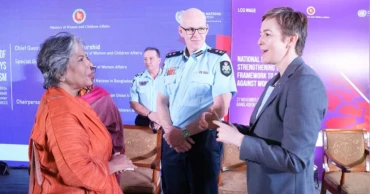
Acting Australian High Commissioner to Bangladesh Nardia Simpson has said Australia is committed to advancing gender equality and combating gender-based violence in all its forms.
As countries across the world marked the beginning of 16 Days of Activism against Gender Based Violence, Detective Superintendent Matt Craft and Detective Sergeant Scott Dixon from the Australian Federal Police were in Dhaka last week to make enquiries in relation to the unconfirmed death of a Bangladeshi-Australian woman, said the High Commission on Saturday.
Fight Indian media's misformation campaign with truth: CA's Press Secretary
Detective Superintendent Craft said the meetings with the Bangladesh Police were productive and that he was very pleased with the engagement, particularly as Bangladesh and Australia recently signed a renewal to their existing Memorandum of Understanding on police cooperation.
Acting Australian High Commissioner Nardia Simpson, Detective Superintendent Craft and Detective Sergeant Dixon met Women and Children Affairs Adviser Sharmeen S Murshid and Senior Secretary, Ministry of Women and Children Affairs Mamtaz Ahmed at event to launch the beginning of 16 Days of Activism against Gender Based Violence.
Govt for revising existing strategies to combat gender-based violence effectively
Acting High Commissioner Simpson said it was an honour to meet Adviser Murshid and Senior Secretary Ahmed to learn more about how Bangladesh and Australia can cooperate to combat gender based violence.
1 year ago

Changed scenario: Dhaka optimistic to establish good ties with Delhi
Amid intensified diplomatic tensions between the two neighbours, Foreign Affairs Adviser Md Touhid Hossain on Saturday said they expect to establish a good relationship with India accepting the reality in the context of the post-August 5 changed situation.
“We want to remain optimistic that we would be able to establish a good relationship with India making sure that both sides’ interests are protected,” he said, flagging issues of water sharing and border killings which remain unaddressed.
The Adviser was speaking at a roundtable titled “Bangladesh-India Relations: Expectations, Barriers and Future.”
The South Asian Institute of Policy and Governance (SIPG) and the Department of Political Science & Sociology (PSS), North South University hosted the event at the syndicate hall of NSU.
Hossain said Bangladesh had some concerns and there are still some concerns that remain unaddressed while the previous government tried its best to address the concerns of India.
He believes that India will proceed realising the changed situation but acknowledged that there are barriers which are normal in any relationship. “There is a change in the relations after August 5. This is reality.”
India closely monitoring situation related to minorities in Bangladesh: Jaishankar tells Lok Sabha
Talking about water-sharing issues, Hossain said there has been no progress over the Teesta water-sharing treaty. “We would want to see progress there.”
Regarding border killings, the adviser said they always spoke strongly about such incidents and he even talked about it face to face with the Indian officials. “This (border killing) is no way acceptable.”
Hossain said this is the only border (Bangladesh-India border) in the world where people are shot to death despite the fact that the two countries are not involved in a war. “It’s not seen anywhere in the world."
He said India has to fix it and if anyone commits crimes, they can be tried in court. “Why should they be killed?"
Hossain said the Indian media dangerously and aggressively engaged against Bangladesh since August 5 and the role they have played is in no way conducive to maintaining a normal relationship between Bangladesh and India.
“They (Indian media) know why they are doing this. Here, our media has a role to play,” said the adviser, highlighting the importance of fact-checking and bringing up the facts as well as proper coverage of the foreign ministry statements.
India urges Bangladesh to ensure safety of Hindus, other minorities
“It’s absolutely your decision (Bangladesh media’s coverage on MoFA statements). I am not saying that you have to do this but I am talking about people’s desire,” Hossain said.
The adviser highlighted the importance of national consensus on foreign policy and noted that Bangladesh could not gain much due to lack of national consensus.
He said India needs to address Bangladesh's concerns and would help improve the relations between the neighbours.
Hossain said Bangladesh also needs to enhance its capacity both domestically and internationally with skilled human resources, and questioned the quality of education in some rural institutions from where many are getting degrees without learning anything.
According to him, at least five percent of the GDP should go to the education sector consistently.
"Bangladeshis working in the Middle East are paid much less than that of the other countries just because of the lack of adequate skills and English communication ability," he added.
The panelists of the roundtable were Barrister Asaduzzaman Fuaad, joint member secretary, AB Party, Saquib Ali, former diplomat, Lt Gen (retd) Mohammad Mahfuzur Rahman, former Principal Staff Officer, Armed Forces Division, Prof Dr Mohammad Abdur Rob, Vice-Chancellor, Manarat International University, and Dr SM Asaduzzaman Ripon, Vice Chairman, Bangladesh Nationalist Party (BNP).
The roundtable was chaired by Prof Abdul Hannan Chowdhury, Vice-Chancellor, North South University, and moderated by Dr M Jashim Uddin, Associate Professor, Department of Political Science & Sociology (PSS), North South University.
1 year ago