Foreign-Affairs
Door of dialogue must remain open to address challenges in Dhaka-Delhi ties: Adviser Humaiun
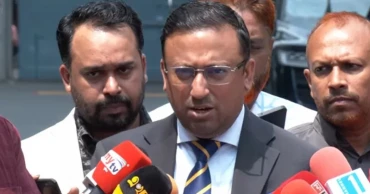
Prime Minister’s Foreign Affairs Adviser Humaiun Kobir has said the challenges that exist in the Bangladesh-India relationship can be resolved if both sides remain engaged in dialogue.
"Challenges are there. I am telling you repeatedly. You can address the challenges if you are engaged in dialogue. You must not give up the path of dialogue," he told reporters at the Ministry of Foreign Affairs on Monday evening.
Adviser Humaiun said the chances of resolving issues will be greater if the door to dialogue and discussion remains open.
Foreign Minister Dr Khalilur Rahman met Indian External Affairs Minister Dr. S. Jaishankar and Oil and Natural Gas Minister Hardeep Puri in New Delhi on April 8.
Prime Minister's Adviser Humaiun and Bangladesh High Commissioner to India Riaz Hamidullah were present at these meetings.
They also held a meeting with India's National Security Adviser Ajit Doval following their arrival in India's capital city on April 7.
"It was our first visit to India. Let us utilise this as a stepping stone to start dialogue and discussion for moving forward positively," said Adviser Humaiun while responding to a question.
He said it is a very good start to working together positively.
Describing Sheikh Hasina as a terrorist and killer he said she is staying in India after 'killing 1,500 people' in Bangladesh.
"It's a must to restrain her. She (ex-PM Hasina) should not be allowed to utilise Indian soil to destabilise Bangladesh in any way," he said.
The Adviser said there are some issues that can be resolved immediately while others may take a little longer to resolve.
Earlier in the day, Adviser Humaiun talked to reporters at the Secretariat and described former Prime Minister Hasina as an "autocrat, terrorist and killer" who fled to India and is staying there as an "international terrorist," having lost her relevance in Bangladesh.
"We told (the Indian side) she (Hasina) is a terrorist. She is irrelevant to Bangladesh. She doesn't have any room in Bangladesh. She doesn't hold any importance in Bangladesh. People have moved on," the Adviser told reporters.
"I would say it's a good start to resetting the conversation," the Adviser said while commenting on the recent visit to India.
"We will continue to seek her extradition through a transparent judicial process. It (the extradition request) has been discussed. It will be dealt with through a transparent judicial process," Adviser Humaiun said.
He said there would be some challenges as Hasina is still staying there.
The Bangladesh side reiterated its request to extradite Hasina and former Home Minister Asaduzzaman Khan Kamal to Bangladesh, who have been awarded the death penalty by the International Crimes Tribunal.
During the discussions, Minister Jaishankar said Indian visas for Bangladeshis, particularly medical and business visas, would be eased in the coming weeks.
Responding to a question, Adviser Humaiun said the Indian side responded positively to resuming medical and business visas.
"We hope there will be some goodwill gesture from the Indian side in the coming weeks," said the Adviser.
In the discussions in New Delhi, both sides emphasised the importance of advancing bilateral relations between the two countries in various dimensions.
They also discussed key regional and international issues.
Dr Khalilur said the recently elected BNP government under the leadership of Prime Minister Tarique Rahman would pursue its foreign policy in accordance with the principle of "Bangladesh First" and on the basis of mutual trust, respect, and reciprocal benefit.
He thanked the Indian government for apprehending the suspected killers of Shaheed Osman Hadi.
Both sides agreed that the arrested individuals will be returned to Bangladesh in accordance with the procedures laid out in the extradition treaty between the two countries.
Dr Khalilur expressed thanks to Minister Hardeep Puri for the recent supply of diesel to Bangladesh by India and requested an increase in the volume of diesel and fertilizer supply.
Minister Puri indicated that the Government of India will consider the request readily and favourably.
The two sides also agreed to undertake consultations on key bilateral issues.
1 month ago
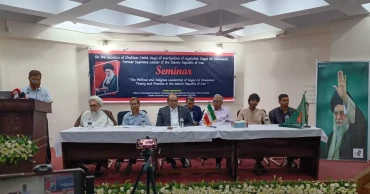
Dhaka seminar commemorates Ayatollah Khamenei’s 40th day of martyrdom
A seminar and memorial meeting were held at the University of Dhaka on Monday afternoon marking the 40th day of the martyrdom of Ali Khamenei, former Supreme Leader of the Islamic Republic of Iran.
The event took place at the Muzaffar Ahmed Chowdhury Auditorium and was jointly organised by the Dhaka office of Al-Mustafa International University and the Dhaka University Central Students’ Union (DUCSU).
Titled “Political and Religious Leadership of Sayyid Ali Khamenei: Theory and Practice in the Islamic Republic of Iran,” the seminar was attended by Iran’s Ambassador to Bangladesh Dr Jalil Rahimi Jahanabadi as the chief guest.
Special guest was Dr Mahmudur Rahman, editor of Dainik Amar Desh. The keynote paper was presented by Prof Dr Md Abul Kalam Azad of the Department of Islamic History and Culture at the University of Dhaka, while Prof Dr Md Abu Sayeem, Chairman of the Department of World Religions and Culture, took part in the discussion on the paper.
The seminar was presided over by Hujjatul Islam wal Muslimeen Shahabuddin Mashayekhi Rad, representative of Al-Mustafa International University in Bangladesh. Among others, DUCSU Literary and Cultural Affairs Secretary Musaddik Ali Ibn Mohammad attended the event as a distinguished guest.
Speakers at the seminar described Ayatollah Khamenei as a prominent spiritual figure, a resolute leader and a guide for people seeking liberation. They said under his leadership over the past three years, Iran achieved notable progress in science, knowledge and other sectors, emerging as a major global power.
They also alleged that Iran mounted strong resistance in what they described as an unjust war imposed by the United States and Israel, surprising its adversaries.
The speakers further said that Ayatollah Khamenei stood firm against adversaries in a manner comparable to historic Islamic figures and attained the honour of martyrdom. They added that under the current leadership, Iran continues to follow his path and remains capable of countering external challenges.
1 month ago
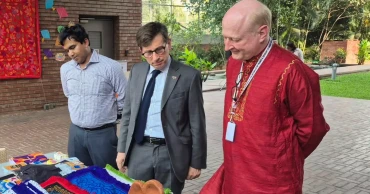
Development can only be sustainable if it’s inclusive: France
French Ambassador Jean-Marc Séré-Charlet on Monday said aspirations for ‘non-discrimination’ and for an ‘inclusive’ Bangladesh continue to shape the current political landscape and civil society.
“France firmly believes that development can only be sustainable if it is inclusive,” said the French Ambassador, noting that citizens of diverse sexual orientations and gender identities face legal and social obstacles.
The Embassy of France, together with the Embassy of Germany, co-hosted a curated event, ‘Proloyer Daak’, celebrating diversity and the power of art on the eve of Pahela Boishak – the Bengali New Year.
The event brought together local craft makers and artists whose handcrafted works were on display, offering guests an opportunity to engage directly with the artisans and their practices.
A live traditional Bengali dance performance and food stalls serving local finger foods and desserts created a festive, community-centred atmosphere that honoured the cultural significance of the Bengali New Year.
The French Ambassador, German Ambassador Dr Rüdiger Lotz, and Deputy Secretary (Cultural Exchange Section) of the Ministry of Cultural Affairs, Amitav Porag Talukder, spoke.
The French Ambassador said it was a great honour for the Embassy of France to host this event together with the Embassy of Germany and celebrate diversity and the power of art on the eve of Pohela Boishakh.
He said Bangladesh experienced a civic movement in July 2024, which changed the course of the country and led to the formation of a new government after the election in February.
1 month ago
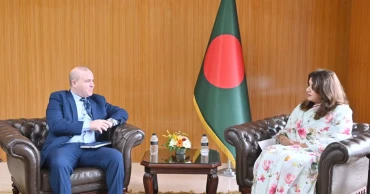
Shama Obaed thanks Algeria for cooperation in hydrocarbons sector
State Minister for Foreign Affairs Shama Obaed Islam on Monday requested enhanced cooperation in the energy sector to ensure long term energy security and thanked the Algerian authorities for their keen interest in expanding collaboration in the hydrocarbon sector.
Both sides discussed avenues to strengthen cooperation in trade and investment, particularly in the energy, infrastructure, pharmaceutical, shipbuilding and manpower sectors.
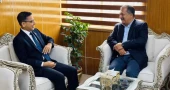
Ambassador of Algeria to Bangladesh Abdelouahab Saidani paid a courtesy call on the State Minister at the Ministry of Foreign Affairs and discussed the issues.
The State Minister underscored the importance of enhancing people-to-people contacts, including cultural and sports exchanges, mutual visa waiver agreement and stressed the need for regular bilateral engagements and high-level visits to further deepen the partnership with Algeria.
The meeting reaffirmed the longstanding friendship and growing bilateral relations between Bangladesh and Algeria.
1 month ago
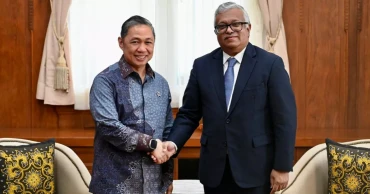
Dhaka, Jakarta want to strengthen trade facilitation measures
Bangladesh and Indonesia on Monday agreed to strengthen trade facilitation measures and to expedite convening of the ‘trade negotiating committee’ and the joint working group on power and energy.
The two countries underscored the importance of greater engagement between the private sectors to deepen economic cooperation and emphasised the early finalisation of all relevant pending legal instruments.
The issues were discussed at the second round of foreign office consultations (FOC) between the two countries held in Jakarta in a ‘cordial and forward-looking’ atmosphere.
The Bangladesh delegation was led by Foreign Secretary Ambassador Asad Alam Siam. The Indonesian delegation was led by Director General of Asia, Pacific and African Affairs at the Ministry of Foreign Affairs of Indonesia, Dr Santo Darmosumarto.
Bangladesh invited enhanced Indonesian investment particularly in high-potential sectors such as pharmaceuticals, hospitality, tourism, ICT, renewable energy, leather, and footwear, said the Ministry of Foreign Affairs.
Recognizing the importance of enhanced connectivity, Bangladesh requested Indonesia to consider easing visa procedures for Bangladeshi nationals to facilitate greater mobility and exchanges and establishment of direct flights.
Two sides acknowledged significant opportunities to expand collaboration in agriculture and fisheries, alongside broader cooperation in the agriculture and health sectors, reflecting shared priorities in ensuring food security and sustainable development.
This round marked the continuation of a structured and institutionalized dialogue mechanism between the two countries, following the successful inaugural round held in 2021 and provided a comprehensive and constructive platform to review the entire spectrum of bilateral relations and to exchange views on regional and multilateral issues of mutual interest.
Both sides engaged in wide-ranging discussions covering trade and investment, energy, agriculture, education, health, digital economy, security, connectivity, tourism, fisheries, culture, and people-to-people exchanges.
Bangladesh and Indonesia reaffirmed their strong commitment to strengthening regional cooperation.
1 month ago
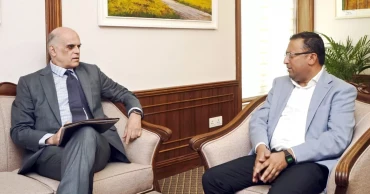
Brazil endorses Bangladesh’s candidate for UNGA presidency
Brazil has endorsed Bangladesh’s nominee Dr Khalilur Rahman for the presidency of the 81st session (2026–2027) of the United Nations General Assembly.
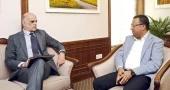
The assurance was conveyed on Monday when Brazilian Ambassador to Dhaka Paulo Fernando Dias Feres met Foreign Affairs Adviser to the Prime Minister Humaiun Kobir at the Prime Minister’s Office.
The two sides also held a fruitful discussion on the existing friendly relations between Bangladesh and Brazil as well as issues of mutual interest and ways to further strengthen bilateral cooperation.
Study finds Brazil’s oldest citizens may unlock secrets of long life
They exchanged views on expanding trade and commerce, and enhancing collaboration in sectors such as agriculture and the poultry industry.
The meeting was held in a cordial and friendly atmosphere, according to officials.
1 month ago
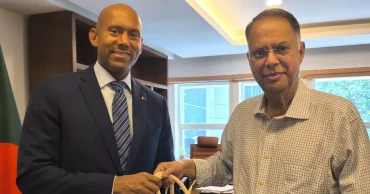
Canada keen to support Bangladesh’s clean, reliable energy expansion
Canadian High Commissioner to Bangladesh Ajit Singh on Monday underscored Canada’s support for Bangladesh’s power sector to enable its economic growth and energy security.
He said Canada values its partnership with Bangladesh and is keen to support efforts to expand reliable, affordable, and cleaner energy.
The High Commissioner, Senior Trade Commissioner Debra Boyce and Trade Commissioner Gulam Farhad Quazi met with Power, Energy and Mineral Resources Minister Iqbal Hassan Mahmood and discussed issues of mutual interest.
Canada supports Rohingya response for environmental protection, clean cooking fuel
The meeting focused on strengthening bilateral energy ties for their mutual prosperity, notably to grow their bilateral trade that reached over $4 billion in 2025.
The meeting included a discussion on Canadian expertise that could be leveraged in areas such as renewable energy, training and innovative technologies, as well as by deepening collaboration with Canadian partners.
Canada looks forward to building on this cooperation to unlock deeper ties between our people and countries, said the Canadian High Commission in Dhaka.
1 month ago
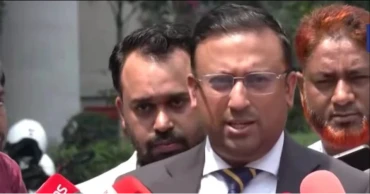
Hasina no longer relevant to Bangladesh: Adviser Humaiun
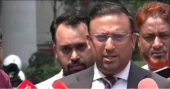
Prime Minister’s Foreign Affairs Adviser Humaiun Kobir on Monday described former Prime Minister Sheikh Hasina as an "autocrat, terrorist and killer" who fled to India and is staying there as an "international terrorist," losing her relevance in Bangladesh.
"We told (Indian side) she (Hasina) is a terrorist. She is irrelevant to Bangladesh. She doesn't have any room in Bangladesh. She doesn't hold any importance in Bangladesh. People have moved on," the Adviser told reporters at Secretariat.
"I would say it's a good start to resetting the conversation," the Adviser said while commenting on the recent visit to India.
India keen to strengthen people-centric cooperation with Bangladesh in all domains
Bangladesh laid emphasis on making sure that Hasina does not do anything to destabilise the country using the soil of India, he said.
"We will continue to seek her extradition through a transparent judicial process. It (extradition request) has been discussed. It will be dealt with through a transparent judicial process," Adviser Humaiun said.
He said there would be some challenges as Hasina is still staying there.
The Bangladesh side reiterated its request to extradite Sheikh Hasina and former Home Minister Asaduzzaman Khan Kamal to Bangladesh, who have been awarded the death penalty by the International Crimes Tribunal.
Foreign Minister Dr Khalilur Rahman met Indian External Affairs Minister Dr. S. Jaishankar and Oil and Natural Gas Minister Mr. Hardeep Puri in New Delhi on April 8. Prime Minister's Adviser Humaiun and Bangladesh High Commissioner to India Riaz Hamidullah were present at these meetings.
They also held a meeting with India's National Security Adviser Ajit Doval following their arrival in India's capital city on April 7.
Dhaka eyes goodwill gesture on visa front
During the discussions, Minister Jaishankar said Indian visas to Bangladeshis, particularly medical and business visas, would be eased in the coming weeks, Humaiun said.
Responding to a question, he said the Indian side responded positively to resuming medical and business visas.
"We hope there will be some goodwill gesture from the Indian side in the coming weeks," said the Adviser.
In the discussions in New Delhi, both sides emphasised the importance of advancing bilateral relations between the two countries in various dimensions.
They also discussed key regional and international issues.
Dr Khalilur said the recently elected BNP government under the leadership of Prime Minister Tarique Rahman would pursue its foreign policy in accordance with the principle of "Bangladesh First" and on the basis of mutual trust, respect, and reciprocal benefit.
He thanked the Indian government for apprehending the suspected killers of Shaheed Osman Hadi.
Both sides agreed that the arrested individuals will be returned to Bangladesh in accordance with the procedures laid out in the extradition treaty between the two countries.
Dr Khalilur expressed thanks to Minister Hardeep Puri for the recent supply of diesel to Bangladesh by India and requested an increase in the volume of diesel and fertilizer supply.
Minister Puri indicated that the government of India will consider the request readily and favourably.
The two sides also agreed to undertake consultations on key bilateral issues.
1 month ago
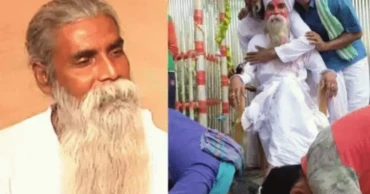
Kushtia ‘Pir’ murder: Family unwilling to file case
The family of self-proclaimed ‘Pir’ Abdur Rahman, also known as Shamim Reza and Jahangir, who was killed in a mob attack at his shrine in Daulatpur upazila of Kushtia, expressed unwillingness to file a case.
“We, all family members, have decided not to file a case,” Shamim’s elder brother, retired school teacher Fazlur Rahman, said on Monday morning.
“I am old. I cannot afford to deal with these matters,” he added.
“After the burial on Sunday afternoon, the family members sat together at night. Police officers were also present. They repeatedly asked us to file a case but we have decided not to proceed,” said Fazlur Rahman.
Earlier on Sunday night, Daulatpur Police Station Officer-in-Charge Arifur Rahman said they were waiting for the victim’s family to file a case.
When asked again on Monday morning, OC Arifur Rahman said, “I have not heard that they will not file a case. They might come today.”
Abdur Rahman, 65, was beaten and hacked to death on Saturday afternoon at a site known as “Shamim Baba’s Darbar Sharif” in Philipnagar Union.
According to locals, an old video from 2023 resurfaced, leading to allegations of blasphemy and triggering the attack.
Three of his followers—Zubayer, Mohon Ali, and Jamirun Nesa—were also injured in the incident and received treatment at a local hospital.
1 month ago
India keen to strengthen people-centric cooperation with Bangladesh in all domains
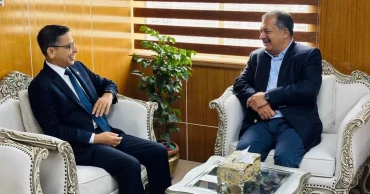
Indian High Commisioner to Bangladesh Pranay Verma on Monday reiterated India’s willingness to work with the government and the people of Bangladesh to strengthen people-centric cooperation in all domains based on mutual interest and benefit.
He paid a courtesy call on Information and Broadcasting Minister Zahir Uddin Swapon and discussed issues of mutual interest.
They discussed wide-ranging cooperation in information and broadcasting domain including engagements between media and broadcasting institutions of the two countries.
They agreed to enhance exchange visits of media delegations between the two countries to strengthen people-to-people relations and promote mutual understanding.
The High Commissioner proposed various capacity building initiatives for journalists and media professionals under ITEC programme of Government of India.
As part of these initiatives, a special training course for women journalists from Bangladesh will soon be organised in India.
They also exchanged views on cooperation in films, including organization of film screening and film festivals in each other’s country, as well as collaboration in production and post-production technological support.
1 month ago