Foreign-Affairs
India seeks closer ties with Bangladesh in Ayurveda, traditional medicines
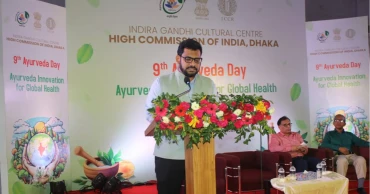
Indian acting High Commissioner to Bangladesh Pawan Badhe on Tuesday said India remains "committed to working closely" with Bangladesh to enhance cooperation in the field of Ayurveda and other traditional medicines.
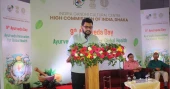
"We will continue to collaborate to promote research, education and the exchange of best practices between our two countries," he said while celebrating the 9th Ayurveda Day at Indian Cultural Centre (Old India House) in Dhaka.
The acting envoy stressed the importance of collaboration and knowledge-sharing in the field of traditional medicines.
Indira Gandhi Cultural Centre, High Commission of India, Dhaka hosted the programme.
Prof Sitesh Chandra Bachar, Faculty of Pharmacy, Dhaka University; Mokhlesur Rahman, Head of Research at the Ayurvedic Research Centre for Musculoskeletal Disorders, Dhaka; Mohammad Zamal Uddin, Deputy Managing Director of Hamdard Bangladesh Foundation; and Dr Munawwar Husain Kazmi, Academic Chair at Hamdard University, an institute under the Ministry of AYUSH, Government of India, also addressed the event.
The event was followed by a live musical performance by renowned sitar player Ebadul Huq Shaikat.
Ayurveda Day is celebrated on the day of Dhanteras or Dhanwantri Jayanti or Pooja, Lord Dhanwantri to whom Ayurveda as the ancient science of holistic health and medicine is attributed to.
Amit Shah vows to stop infiltration into India from its border with Bangladesh
This year’s theme for the Ayurveda Day is "Ayurveda Innovation for Global Health."
It focuses on fostering Ayurvedic innovation to address global health issues.
"As we mark Ayurveda Day, let us all resolve to embrace the principles of this ancient science and incorporate them into our daily lives," said the acting High Commissioner.
"By doing so, we can create a healthier, happier, and more balanced world for ourselves and future generations," he said.
Bangladesh and India share bonds of history, language, culture and multitude of other commonalities.
"Ayurveda is an integral part of our shared heritage," Badhe said.
The practice of Ayurveda in Bangladesh dates back centuries and it continues to play a significant role in the health and well-being of the Bangladeshi people. "Traditional medicine is an important element of Bangladesh’s health policy.”
Ayurveda, Unani, Yoga and Homoeopathy are important traditional health care systems existing in Bangladesh," said the acting High Commissioner.
A large population in Bangladesh is using Indian traditional medicine and homoeopathy, ayurveda, and unani systems of medicine.
"There are also a large number of medicinal plants, particularly those found in the tropical region, which are common to the two countries given similar geo-climatic factors," he said.
A sizable number of students of Bangladesh also travel to India to study traditional medicines.
"Ayurveda, which translates to "the science of life," is a holistic approach to health and wellness and is based on the belief that the mind, body, and spirit are interconnected, and that good health is achieved through a balance of these elements," Badhe said.
It emphasises preventive care, using natural remedies and lifestyle changes to promote overall well-being.
"As we face new challenges in healthcare, it is essential that we draw upon the wisdom of our ancestors and integrate their knowledge with modern medical practices," said the acting High Commissioner.
"As we celebrate the many contributions of Ayurveda to our societies and reaffirm our commitment to promoting its principles and practices, let us also recognize the importance of collaboration and knowledge-sharing in the field of traditional medicine," he added.
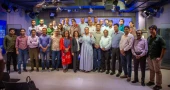
The programme brought together Ayurveda experts, practitioners, students, representatives from the pharmaceuticals sector and eminent members of the Bangladeshi civil society.
1 year ago
Cheapfakes continue to remain a problem, despite rise of deepfakes: US expert
Dr Heather Ashby, a US foreign policy and national security expert, on Tuesday said cheapfakes continue to remain a problem despite the rise of deepfakes.
She said cheapfake is a form of manipulated media where video, audio and images are altered using relatively simple and low-cost editing tools while deepfake is a form of synthetic media where video, audio and images are manipulated using artificial intelligence (AI).
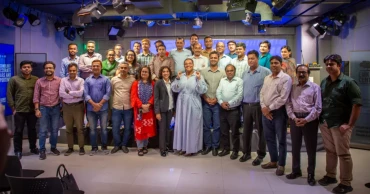
The US expert was sharing how technology impacts elections at an event titled "Leveraging Technology and AI for Accurate Foreign Affairs and Election Reporting" at the EMK Center on Tuesday. The event was jointly organised by the US Embassy in Dhaka and the Diplomatic Correspondents Association, Bangladesh (DCAB).
Spokesperson at the US Embassy in Dhaka Asha C. Beh and DCAB President Nurul Islam Hasib also spoke at the event.
On cheapfakes, Ashby said that Chinese foreign ministry spokesperson Lijjan Zhao posted a fabricated image of an Australian soldier with a bloody knife next to a child in late 2020.
"Days after the 2020 US presidential election, videos circulated on social media purporting to show election workers engaging in voting fraud. The misleading video circulated on Twitter gathering attention from users and serving as doctored evidence that was fraud during the election. Local law enforcement investigated the location in the video to prove that it was false," she said as examples of cheapfakes.
Ashby, whose work focuses on the intersection of national security, AI, and election integrity, said AI generated images and videos are also used for satire and parody.
"Numerous deepfakes have circulated in the US presidential election which are clearly fake images used for humour," she said while giving examples.
There are tools to identity deepfakes and cheapfakes.
The most sophisticated tools in the domain of private companies and governments include sensity AI, Content Authenticity Initiative, Hugging Face, Deep Media, Deepfake-o-Meter, Reality Defender, and TrueMedia, she said.
Replying to a question on how AI is being used in foreign policy practices, she said, "What I have noticed with the use of AI, AI works best if you have a problem or a challenge you're trying to identify that AI can then help with."
"In terms of AI and national security within the US, the US government, particularly in the security area, has been using AI a lot longer than what we are aware of with ChatGPT's release in late 2022, mainly because they process a lot of data and it's not possible for an individual to go through that data," said the US expert.
So instead of just having a software programme, she said, it makes it easier for them to bring various data points together to look for anomalies that may say that a terrorist attack is happening, for example.
"Or if you go to the Department of Homeland Security's website, they provide insight into the various ways that they're using AI within their law enforcement security operations, as well as within Department of Homeland Security’s emergency response, so the Federal Emergency Management Agency, if disaster strikes, they respond to it, and so they're using AI within employees," she said.
1 year ago
Bangladesh's success under Prof Yunus is in India's best interest: American-Indian businessman Khosla
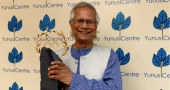
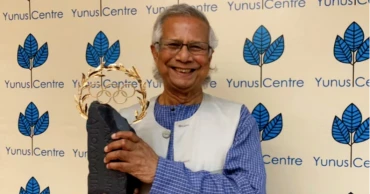
Vinod Khosla, an American-Indian businessman and venture capitalist, has said they should all be rooting for Chief Adviser Prof Muhammad Yunus to continue making progress in this important interim role, because, he thinks, Bangladesh reaching its potential is in India’s best interest.
"His early successes in this role augur well for the future of Bangladesh, and a successful Bangladesh is more likely to be a strong ally of India than a failing one," Khosla said in opinion piece which was originally published by wire.in titled "With Yunus at the Helm, Bangladesh Reaching its Potential is in India's Best Interest."
As a proud American and son of India, Khosla said he looks with hope at the exciting possibilities surrounding Prof Yunus’s leadership of Bangladesh.
Bangladesh-India relations witnessed tensions in recent days with the presence of deposed Prime Minister Sheikh Hasina in India while the ICT recently issued an arrest warrant against her and her former cabinet colleagues.
Environment, Forests and Climate Change Adviser Syeda Rizwana Hasan has told reporters recently that the government of Bangladesh definitely wants a good and strong relationship with India but it is important in any relationship that the both sides “listen” to each other and “understand” each other.
Three days after Hasina fled the country on August 5, Prof Yunus was sworn in as Bangladesh’s interim government head.
"Yunus, whom I consider a friend and have known for decades, accepted that post at the insistence of the student leaders who were at the forefront of the student-led struggle," said Khosla who is in awe of what Yunus has accomplished in his life.
In September, he joined 198 global leaders including 92 Nobel laureates in a letter to the people of Bangladesh and people of goodwill around the world.
“We are excited to see Professor Yunus finally free to work for the uplift of the entire country, especially the most marginalisd, a calling he has pursued with great vigor and success across six decades (sic).”
1 year ago

US for upholding freedom of expression, assembly in Bangladesh
The United States has laid emphasis on exercising fundamental freedoms, including the freedom of expression and freedom of assembly in Bangladesh.
"We believe that the people of Bangladesh should be able to exercise their fundamental freedoms, including the freedom of expression, the freedom of assembly," said US Department of State Spokesperson Matthew Miller while responding to a question at a regular media briefing in Washington on October 28.
He said they believe that no matter who the ruling party is in Bangladesh, and they have made that clear a number of times from this podium as well in their bilateral engagements.
Special cell formed for preserving history of July-August revolution
Miller made the remarks when a journalist wanted to know how the US views the impact of the actions on democratic freedom and political expression in Bangladesh in light of a recent report that the Bangladesh police are using the Anti-Terrorism Act to arrest people associated with the Chhatra League, for participating in demonstration.
Reports suggest that 252 police sub-inspectors were dismissed from the final recruitment in Bangladesh, allegedly excluding all Hindu officers.
Rohingya Crisis: Prof Yunus seeks urgent int’l conf to find solution
The journalist wanted to know whether the US State Department has any response regarding the religious discrimination in the Bangladesh law enforcement hiring process.
In reply, Miller said he has not seen that report, but obviously, they would oppose any religious discrimination in any process in Bangladesh or anywhere in the world.
1 year ago

UN Rights Chief Volker Türk in Dhaka, will hold high-level meetings
UN High Commissioner for Human Rights Volker Türk on Tuesday began his two-day Dhaka visit to discuss human rights issues.
Toufique Hasan, Director General (UN) of the Ministry of Foreign Affairs received him at Hazrat Shahjalal International Airport.
Türk is scheduled to hold a number of meetings with senior officials and civil society representatives, among others.
During his visit, the High Commissioner will meet Chief Adviser Prof Muhammad Yunus, said the UN office in Dhaka.
The UN rights chief will meet a number of advisers for different ministries, the Chief Justice, the Army Chief and the heads of several reform commissions.
Keen to recruit more workers from Bangladesh: Saudi Ambassador
Türk will also make an address at the University of Dhaka, where he will meet students involved in the recent movement.
He will hold meetings with UN agencies and members of diplomatic missions in Bangladesh.
The High Commissioner will hold a news conference in Dhaka at the end of his mission on Wednesday.
Earlier, the UN rights chief received an official invitation from the Chief Adviser to conduct an impartial and independent fact-finding mission into human rights violations committed from July 1 to August 15.
The office deployed a fact-finding team to Bangladesh, with a view to reporting on violations and abuses perpetrated during the protests, analysing root causes and making recommendations to advance justice and accountability and for longer-term reforms.
Volker Türk made a phone call to Bangladesh interim government Chief Adviser Prof Muhammad Yunus in August.
EU sees opportunities in Bangladesh's rapid renewable energy expansion
During his recent visit to New York, Chief Adviser Prof Yunus sought support from foreign friends for Bangladesh's new journey towards a happy and prosperous future, stressing that they do not want to miss the opportunity to build a new Bangladesh.
As part of an ongoing engagement with the interim government, an advance team of the UN rights body visited Bangladesh from August 22-29 and met student leaders of the recent protests, as well as a wide range of advisers in the Interim Government, the Chief Justice, senior officers of the police and armed forces, lawyers, journalists and human rights defenders, representatives of political parties, and minority and indigenous communities.
1 year ago

FTA: Dhaka, Bangkok plan to hold 6th JTC soon
Bangladesh and Thailand have underscored the necessity of convening 6th Joint Trade Committee (JTC) meeting in Dhaka as soon as possible, highlighting that this would pave the way for Free Trade Agreement (FTA) negotiations.
The Thai side flagged that the trial run of direct coastal shipping between Ranong Port and Chattogram Port may take place soon.
The issues were discussed when Thai Ambassador to Bangladesh Makawadee Sumitmor called on Foreign Secretary Md. Jashim Uddin at the Ministry of Foreign Affairs on Monday.
The foreign secretary expressed satisfaction over the activation of ‘Visa Exemption Agreement’ for Bangladesh official passports from mid December 2024.
Thailand to introduce e-visa for Bangladeshis early next year
The Thai ambassador informed that Thailand will introduce E-visa service soon, where the applicants can apply online and receive e-visa electronically.
Sumitmor congratulated Jashim Uddin on his assumption of the office of the foreign secretary and reaffirmed Thailand’s commitment to strengthening bilateral ties in the coming days.
The foreign secretary and the ambassador discussed the areas of mutual interest concerning trade and investment, coastal shipping, agro business, tourism and people to people contact.
The foreign secretary emphasised holding regular bilateral consultations and finalising pending bilateral instruments at the earliest.
Both expected that the BIMSTEC Summit would take place soon, according to the Ministry of Foreign Affairs.
Bangladeshi businesspeople in Thailand expect trade boost under Yunus govt
During the discussion, the ambassador mentioned the successful visit of the Thai Trade delegation to Bangladesh in July 2024, which created positive impact on the Thai businessmen.
The foreign secretary sought Thai cooperation in sharing knowledge, innovation and expertise for promoting and branding Bangladeshi delicious cuisine.
1 year ago
Matthew Miller congratulates Mushfiqul on his new assignment as ambassador
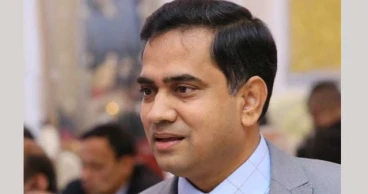
Mushfiqul Fazal Ansarey, recently appointed as an Ambassador of Bangladesh, has said goodbye to his media colleagues at the US Department of State briefing room, ending his ten-year journey as a correspondent.
"Today is my last day in this briefing room," he said after asking two last questions, noting that the interim government of Bangladesh offered him an ambassadorial post, which he gladly accepted.
He said the Ministry of Foreign Affairs, after necessary paperwork, will announce his posting.
"I am thankful to you all, my colleagues," Mushfiqul said.
US looks forward to continued engagement with Bangladesh to advance progress on all fronts: Matthew Miller
US State Department Spokesperson Matthew Miller, who was answering questions at the regular briefing in Washington on October 28, congratulated him on his appointment.
Journalist Mushfiqul was recently appointed as an ambassador of Bangladesh with the rank of senior secretary for three years.
The Ministry of Public Administration has issued a notification in this regard.
However, it has not been known yet in which country he will work as Bangladesh ambassador.
The Ministry of Foreign Affairs will soon issue an order regarding his specific posting.
He is the Executive Editor for the Washington based foreign policy magazine, South Asia Perspectives (SAP).
He worked as Assistant Press Secretary (2001-2006) to former Prime Minister Khaleda Zia; Diplomatic Correspondent of the oldest Bengali daily- Ittefaq.
Ansarey hosted a popular TV show at the NTV, titled Hello Excellency. Around sixty ambassadors and foreign dignitaries participated in the show.
1 year ago
KOICA and KBAA host donation ceremony for girls in Tejgaon
The Korea International Cooperation Agency (KOICA) Bangladesh Office, in collaboration with the Korea Bangladesh Alumni Association (KBAA), recently held a Donation Handover Ceremony at Sarkari Shishu Paribar (Girls) in the capital’s Tejgaon.
Established in 1978 under the Ministry of Social Welfare, this government-run facility cares for 135 orphaned girls. Despite its long history, the home faces challenges in providing ICT education and access to clean drinking water.
To address these pressing needs, KOICA has donated 10 desktop computers and tables, revitalizing the facility’s previously non-functional computer lab and providing essential digital training resources.
Additionally, KOICA contributed two high-quality speakers and five water filters to ensure safe drinking water access on all dormitory floors. These initiatives aim to enhance the girls’ digital skills, improve their daily living conditions, and promote better health, ultimately contributing to their overall development.
Attendees included KOICA’s Deputy Country Director, KBAA board members, and representatives from the Division of Social Services and KOICA Bangladesh Office. Due to unavoidable circumstances, this year’s annual KBAA Night was canceled, and its budget was redirected to support this meaningful donation, reflecting KBAA's commitment to social betterment.
KBAA President Nasima Begum said, “Through this contribution, we are investing in the potential of these young girls, equipping them with the skills and resources necessary for a brighter future. We are proud to partner with KOICA in supporting underprivileged communities.”
KOICA’s Deputy Country Director echoed her sentiments, emphasizing the agency's commitment to empowering communities in Bangladesh through sustainable development and educational initiatives. KOICA is also exploring digitalization in ICT by initiating new projects, including Artificial Intelligence.
1 year ago
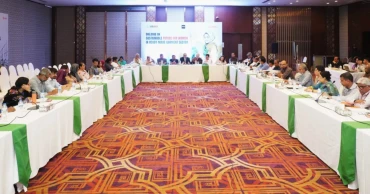
USAID, PVH and CARE partner to create sustainable future for women in RMG sector
USAID’s Women Thrive in Bangladesh project convened a roundtable on “Building a Sustainable Future for Women in the Ready-made Garment Sector” at the Hotel Radisson Blu Dhaka on Monday.
The discussion highlighted the importance of creating a supportive work environment for women workers in the ready-made garment sector by providing more resources and assistance to sustain their employment.
Dr. Khondaker Golam Moazzem, Research Director of the Centre for Policy Dialogue, delivered the keynote speech at the event.
“Women have historically made up most of the workforce in Bangladesh’s garment sector, which contributes to 80% of export earnings to the country’s economy. Over the last four decades, this sector has created significant employment opportunities for women, helping drive social change.”
Nonetheless, challenges like traditional gender norms, burden of unpaid care work, lack of gender-friendly working conditions in some factories, and limited job security and age barriers hinder the long-term career prospects for female garment workers.
As a result, the proportion of female workers has declined to less than 55% of the total workforce in the garment industry, impacting their economic empowerment and overall well-being.
This shift also affects global brands’ business models in Bangladesh and the government’s overall development agenda.
In addition, the onset of increased automation in garment factories poses a threat to female employment in this sector by reducing job opportunities and increasing gender disparities.
During the roundtable, participants discussed the importance of empowering women with new skills and creating women-friendly workplaces to boost productivity, worker well-being, gender equality, and the industry’s sustainable growth.
Efforts have been made to enhance workplace safety and ensure adherence to social and environmental standards in the garment sector. However, ongoing issues require further collective action from employers, global brands, government, civil society organizations, trade unions, and other stakeholders.
The program was presided over by Ramesh Singh, Regional Director, CARE Asia while moderated by Aamanur Rahman, Chief of Party, USAID’s Thrive Activity.
1 year ago

Bangladeshi students an integral part of American campuses: US Embassy official
Public Engagement Director at the US Embassy in Dhaka Scott Hartmann on Monday praised the achievements of Bangladeshi students in the United States, saying they are an integral part of campus communities across the United States.
Speaking at a college fair at the EMK Center, he said Bangladeshi students are contributing to a wide range of activities such as student leadership, sports, performing arts, hackathons, and debates - preparing them for future achievements.
“Whether driving innovative research or fostering cultural connections, these Bangladeshi students continue to leave a lasting impact on U.S. campuses,” he said.
Hartmann also highlighted the growing number of Bangladeshi students pursuing higher education in the United States, noting that Bangladesh currently ranks 13th among the top countries sending students to US institutions.
The US Embassy in Dhaka inaugurated the college fair at the EMK Center, bringing together prospective students and representatives from leading U.S. institutions.
Organized by the U.S. Embassy through its official EducationUSA platform, in collaboration with EdPrograms, the event attracted more than 500 visitors from across the city.
1 year ago