Foreign-Affairs
Chief Adviser expected to join COP29 Summit in Azerbaijan next month
Chief Adviser Prof Muhammad Yunus is expected to join the COP29 Summit at the Azerbaijan capital in November, where at least 32,000 people will get together to mainly discuss the thorny issue of climate finance.
Once finalised, the Chief Adviser is likely to be in Baku in the second week of November, a senior foreign ministry official told UNB.
Chief Adviser visits DU campus to see graffiti drawn by youths
The 29th Conference of the Parties to the UN Framework Convention on Climate Change (COP29) will take place in Baku, Azerbaijan from November 11 to 22.
The COP29 is seen as a pivotal opportunity to accelerate action to tackle the climate crisis.
With global temperatures hitting record highs, and extreme weather events affecting people around the globe, COP29 will bring together leaders from governments, businesses and civil societies to advance concrete solutions.
Chief Adviser seeks enhanced trade, economic cooperation with Bhutan
A key focus of COP29 will be on finance, as trillions of dollars are required for countries to drastically reduce greenhouse gas emissions and protect lives and livelihoods from the worsening impacts of climate change, according to the United Nations.
The conference will also be a key moment for countries to present their updated national climate action plans under the Paris agreement, which are due by early 2025.
If done right, these plans will limit global warming to 1.5°C above pre-industrial levels and double as investment plans advancing the Sustainable Development Goals.
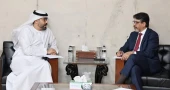
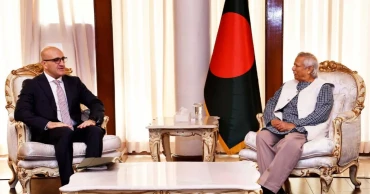
Meanwhile, non-resident ambassador of Azerbaijan to Bangladesh Elchin Huseynli on Tuesday called on Chief Adviser Prof Yunus at the state guest house Jamuna in Dhaka.
The upcoming COP29 Summit in Baku, energy, trade, business cooperation, and a planned air services agreement between the two countries were discussed during the meeting.
Ambassador Huseynli stressed deeper trade ties between two countries, with Baku seeking "new opportunities" and ways for opening up doors for more businesses.
He said a foreign office consultation between two countries was held in Baku in June. Azerbaijan has sought to sign an air services agreement with Bangladesh, he added.The Chief Adviser called Azerbaijan "a good friend" and sought increased business and trade between the two nations, according to his press wing.
Chief Adviser Prof Yunus recalled his long relationships with the Azerbaijani people, its leadership, and universities.
1 year ago
157 Bangladeshis return from Libya
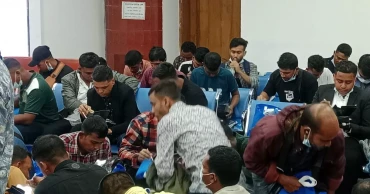
A group of 157 undocumented Bangladeshi nationals, who wanted to voluntarily return home from Libya, arrived in Dhaka early Tuesday.
They arrived by a chartered flight of Buraq Air at 4:25 am following a joint effort by the Ministry of Foreign Affairs, Bangladesh Embassy in Tripoli, Libya and the International Organization for Migration (IOM).
Most of them entered Libya facilitated by human traffickers, with the intention of illegally traveling to Europe via the sea route. They were victims of kidnapping and torture at different times in Libya, according to the foreign ministry.
The government urged everyone to remain aware of this so that no one goes to Libya illegally.
150 more Bangladeshis repatriated from Libya
After arrival, the returnees were received by ministry officials and the International Organization for Migration at Hazrat Shahjalal International Airport.
IOM provided each repatriated person from Libya with Tk 6000 and some food items.
They will be provided treatment and temporary accommodation if necessary.
The Ministry of Foreign Affairs, Bangladesh Embassy in Tripoli, and the International Organization for Migration (IOM) are working together to arrange for the safe repatriation of Bangladeshi citizens detained in various detention centers in Libya.
Meanwhile, another batch of 58 individuals is expected to arrive in Bangladesh on October 23 from Lebanon.
144 more Bangladeshis repatriated from Libya
The flight with the first batch of evacuees from Lebanon arrived in Dhaka’s Hazrat Shahjalal International Airport via Jeddah on Monday, with a group comprising 54 individuals, including 20 women and 8 children.
1 year ago
Bangladesh urges UAE to address visa issues ensuring smoother mobility for workforce
Bangladesh has urged the United Arab Emirates (UAE) to address the restrictions on visa issues including pending employment visa applications, ensuring smoother mobility for the workforce.
Bangladesh also highlighted the significant reforms being undertaken by the interim government, aimed at fostering political and economic stability and growth across various sectors.
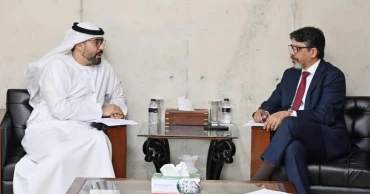
Foreign Secretary Md Jashim Uddin discussed these issues when UAE Ambassador to Bangladesh Abdulla Ali AlHmoudi met him on Monday, according to the Ministry of Foreign Affairs.
The ambassador assured him of the early disposal of the visa issues.
Hr acknowledged the presence of the large Bangladeshi diaspora working in the hospitality, finance, banking, and health sectors of the UAE.
Both sides discussed the prospect of high-level political exchanges with a view to advancing bilateral cooperation.
Italy suspends validity of work permit for Bangladeshis, other nationals until due verification
The foreign secretary stressed that the friendship between the two nations is unwavering, deep-rooted and constant irrespective of changing clime and time.
The discussion focused on strengthening bilateral relations, enhancing economic cooperation, and addressing key issues including easing visa procedure, augmenting trade and investment, and social welfare projects between the two nations.
The discussion touched upon opportunities for investment and business development, with the ambassador expressing the keen interest of prominent UAE entities such as logistics leader DP World, renewable energy company MASDAR, air service provider Dnata, and cooperation between Bangladesh and the Al-Nahiyan Trust's welfare initiatives.
The foreign secretary appreciated the significant remittances received from the UAE, acknowledging their vital contributions to Bangladesh’s economic growth.
The foreign secretary, while expressing appreciation for the contributions of Bangladeshi expatriates in the UAE, thanked the UAE government and the ambassador for the amnesty extended to convicted nationals who had expressed solidarity with the student-led mass movement in Bangladesh.
1 year ago

Another batch of 58 Bangladeshis expected to return home from war-torn Lebanon on Oct 23
The International Organization for Migration (IOM) has said they are looking into the possibility of additional support to facilitate the safe return of Bangladesh nationals and ensure that a safe passage home is available to those left vulnerable in Lebanon.
The government of Bangladesh, earlier, sought support from the IOM which is part of the United Nations system and stands as the leading intergovernmental organization in the field of migration.
Another batch of 58 individuals is expected to arrive in Bangladesh on October 23.
The flight with the first batch of evacuees arrived in Dhaka Hazrat Shahjalal International Airport via Jeddah on Monday, with a group comprising 54 individuals, including 20 women and 8 children.
IMO Secretary General in Dhaka; will deliver lecture at MoFA today
These evacuees are among approximately 1,800 Bangladeshi nationals who have expressed their wish to voluntarily return due to the deteriorating security conditions in Lebanon.
IOM’s acting Chief of Mission in Bangladesh Fathima Nusrath Ghazzali said the efforts of the government of Bangladesh to evacuate its nationals is commendable and IOM stands committed to support the Bangladeshi authorities in these humanitarian efforts.
"IOM is exploring potential avenues to extend additional support for vulnerable Bangladeshi nationals in Lebanon at soonest," she said.
Upon arrival at Hazrat Shahjalal International Airport, the returnees were provided with immediate assistance by IOM, including food, brief medical assessment, and onward transportation support to ensure safe travel to their place of origin.
Amidst the escalating conflict in Lebanon, the government of Bangladesh has initiated efforts to evacuate Bangladeshi nationals stranded in vulnerable situations.
The Ministry of Foreign Affairs (MoFA) and the Ministry of Expatriates’ Welfare and Overseas Employment (MoEWOE) are partnering in supporting the evacuation of vulnerable Bangladeshi nationals and are being supported by the International Organization for Migration with assistance with General Security in Lebanon and immediate assistance upon arrival in Bangladesh with the financial support from the European Union.
UN unanimously adopts Bangladesh’s Resolution on Culture of Peace
Expatriates’ Welfare and Overseas Employment Adviser Dr Asif Nazrul shared their commitment and said the government will repatriate all the stranded migrants with government cost, from war ridden Lebanon and will rehabilitate them as required.
The government of Bangladesh and IOM are "strongly committed" to facilitating the safe return of Bangladeshi nationals at the earliest.
IOM has to date collaborated with the Government of Bangladesh to safely return more than 150,000 of its nationals from conflict situations in the past including the Gulf crisis, Libya and more recently Sudan.
The situation in Lebanon remains tense, with many areas affected by ongoing airstrikes, severely impacting the safety of civilians, including migrant communities, according to the IOM.
The government of Bangladesh is closely monitoring the situation, issuing necessary instructions to ensure the safety of those remaining in Lebanon, and will continue to provide support to repatriate stranded Bangladeshi nationals.
1 year ago

10 Bangladesh officials joining training programe in Delhi
Ten officials from Bangladesh Land Port Authority (BLPA) have travelled to India to participate in a training programme organised by the Land Port Authority of India (LPAI) from October 21-25 in New Delhi.
The programme, under the Indian Technical and Economic Cooperation (ITEC), titled ‘Engineering Excellence: From Blueprint to Border’ will focus on master planning of smart, green and resilient land ports.
Prior to the departure of the officials to India, Deputy High Commissioner of India to Bangladesh, Pawan Badhe interacted with them from Bangladesh Land Port Authority at the High Commission of India, Dhaka on October 20.
The inaugural session of the training programme was held on Monday.
Dr Rajendra Kumar, Secretary (Border Management) and Aditya Mishra, Chairman, LPAI were present.
Another 2.31 lakh eggs imported from India
In collaboration with the School of Planning and Architecture, New Delhi, the programme brings together 27 participants from Bangladesh, Bhutan, Nepal, SriLanka and India, according to the Indian High Commission.
Out of these 27 participants, 10 participants are from Bangladesh. This diverse group will dive deep into engineering solutions and cross-border infrastructure management, fostering regional cooperation and expertise sharing.
The ITEC programme is the leading capacity building platform of the Ministry Of External Affairs, government of India.
Instituted in 1964, ITEC is one of the oldest institutionalized arrangements for international capacity building having trained more than 200,000 officials from 160+ countries.
Since 2014, India has offered close to 100,000 world-class capacity building training and scholarships at premier institutions in India.
Apart from regular calendar-based training programmes, India also responds to country-specific requests for training in specific areas of governance by organising customised training programmes which are designed and delivered by the leading institutions in India.
Under the ITEC, over the last five years, India has provided training programmes to close to 3,000 young Bangladesh officials in various disciplines such as accounts, audit, good governance practices, management, IT, data analytics and renewable energy. in India's premier institutes.
1 year ago
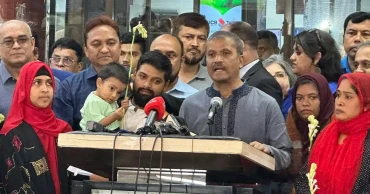
Govt committed to ensuring return of Bangladeshis from Lebanon: Asif Nazrul
Expatriates' Welfare and Overseas Employment Adviser Asif Nazrul said that the government will take all necessary measures to facilitate the return of Bangladeshi expatriates in Lebanon.
He made this statement to journalists after welcoming Bangladeshi expatriates at Hazrat Shahjalal International Airport on Monday.
Earlier, 54 Bangladeshi expatriates returned home from Lebanon in the first batch of returnees due to the ongoing Israel-Lebanon war. They arrived at Hazrat Shahjalal International Airport at 5:30pm on a Saudia Airlines flight after departing from Beirut.
Additionally, 65 more Bangladeshis, including children, are scheduled to return home from Lebanon on Wednesday evening.
According to the Bangladesh Embassy in Beirut, they will come from Beirut through Jeddah, the capital of Saudi Arabia.
There are 70,000 to 1 lakh Bangladeshis in Lebanon and around 1800 got enrolled to return to Bangladesh.
The Ministry of Foreign Affairs, Ministry of Expatriates’ Welfare and Overseas Employment are working together for the return of Bangladeshis trapped in war-torn Lebanon.
1 year ago
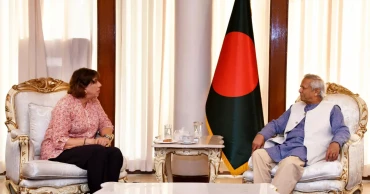
Netherlands reiterates technical support for Bangladesh’s reform agenda
Outgoing Dutch Ambassador to Bangladesh Irma van Dueren on Monday paid a farewell call on Chief Adviser Prof Muhammad Yunus and reiterated her government’s commitment to extend technical support for the interim government’s reform agenda.
During the meeting at the State guesthouse Jamuna, the chief adviser recalled his fruitful bilateral meeting with the Dutch prime minister last month in New York on the sidelines of the 79th UNGA, where he discussed with his Dutch counterpart technical assistance in the elimination of corruption, flood management and agriculture sector in Bangladesh.
They also discussed trade preferences from the European Union (EU) beyond 2029, improvement of working conditions in the RMG sector, women empowerment and upcoming youth festivity in Bangladesh.
The chief adviser congratulated the Dutch ambassador on her successful completion of the tour of duty in Bangladesh, and the Dutch Ambassador shared her fond memories of working in Bangladesh, particularly witnessing the full-fledged revolution in Bangladesh in July-August this year.
Prof Yunus seeks increased Turkish investment as Dhaka ready for business
The outgoing Dutch ambassador also paid a farewell courtesy call on Foreign Secretary Md Jashim Uddin on Sunday.
The foreign secretary congratulated the Dutch Ambassador on her successful completion of the tour of duty in Bangladesh and the Dutch Ambassador thanked the Foreign Secretary for all the support she received from the Ministry of Foreign Affairs in discharging her responsibilities.
They touched upon multi-faceted bilateral cooperation spanning across areas inter-alia water, agriculture, trade & investment, climate change, defence, and women empowerment.
The ambassador also conveyed the Dutch government’s readiness to extend technical support for the interim government’s reform agenda as well as expressed Dutch companies’ enhanced interest in expansion of business ties with Bangladesh, particularly in water, maritime and agriculture sectors.
The courtesy call was followed by a farewell luncheon in honour of the outgoing envoy by the Foreign Secretary.
The Dean of the Diplomatic Corps and Ambassador of Morocco, Ambassadors/High Commissioners/CDA of India, the UK, Republic of Korea, Switzerland, Italy, Argentina, Spain, Norway, EU, France and Egypt, UNDP Resident Representative and DCM of Denmark, among others, joined the lunch.
1 year ago

President urges Bosnia and Herzegovina, Azerbaijan to import products from Bangladesh
President Mohammed Shahabuddin on Monday urged Bosnia and Herzegovina and Azerbaijan to import international quality products from Bangladesh.
The President made the urge when the newly appointed non-resident ambassadors of Bosnia and Herzegovina and Azerbaijan to Bangladesh presented credentials to the President.
President's press secretary Joynal Abedin briefed reporters after the meeting.
A contingent of the President's Guard Regiment gave them a guard of honour on their arrival.
President welcomes envoys from Belarus, Estonia, and Uganda
First, the new Ambassador of Bosnia and Herzegovina Haris Hrle presented his credentials to the President. After that, newly appointed Ambassador of Azerbaijan Elchin Huseynli presented his credentials.
Welcoming the new ambassadors, President Shahabuddin said that Bangladesh is interested in increasing mutual and multilateral relations in various fields including trade and investment with Bosnia and Herzegovina and Azerbaijan.
He emphasized on increasing high-level contacts and exchanging visits of trade investment delegations with Bosnia and Herzegovina and Azerbaijan to exploit potential areas for development of Bangladesh's relations.
At this time, the president urged the new ambassadors to work to increase the import of various products of international quality including ready-made garments, medicines, ceramics, leather goods, besides hiring skilled and semi-skilled labor force from Bangladesh.
During the meeting, the new ambassador of Bosnia and Herzegovina praised the role of Bangladeshi peacekeepers in establishing peace in his country from 1992 to 1995.
President urges all regardless of religions, castes to work for prosperous Bangladesh
Highlighting the development potential of Bangladesh, the newly appointed ambassador of Azerbaijan said that he will work to improve his country's relations with Bangladesh.
The ambassadors sought full cooperation in fulfilling his duties.
Secretary of the President's Office Nasimul Gani, Military Secretary Major General Mohammad Adil Chowdhury, President's Press Secretary Joynal Abedin and Foreign Secretary Md Jasim Uddin were present during the meeting.
1 year ago
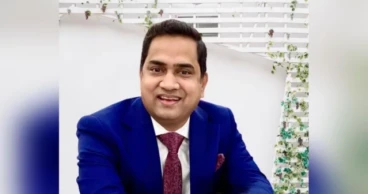
Journalist Mushfiqul Fazal Ansarey appointed ambassador
The government on Monday appointed journalist Mushfiqul Fazal Ansarey as an ambassador of Bangladesh mission abroad with the rank of senior secretary for three years.
The Ministry of Public Administration issued a notification in this regard.
According to the notification, Ansarey was appointed on the condition of severing all ties with any profession, business, government or semi-government organization for three years from the day of joining.
However, it has not be known yet in which country he will work as Bangladesh ambassador.
The Ministry of Foreign Affairs will soon issue an order regarding his specific posting.
Ansarey returned to the country Bangladesh from the US on September 12 after nearly a decade in exile.
He is a Washington DC-based Bangladeshi journalist well known for asking questions at the press briefings of the United States Department of State.
He is the Executive Editor for the Washington based foreign policy magazine, South Asia Perspectives (SAP).
Read: Ansarey warns against conspiracies to foil the fruits of mass uprising
He is working for JustNewsBD as Editor and White House Correspondent, covering the UN, US State Department, and Pentagon. He is also the Executive Director at Right to Freedom - R2F, a 501(c)(3) nonprofit organization based in Washington D.C, USA. He is a permanent correspondent of the United Nation headquarters.
He worked as Assistant Press Secretary (2001-2006) to former Prime Minister Khaleda Zia; Diplomatic Correspondent of the oldest Bengali daily- Ittefaq.
Ansarey hosted a popular TV show at the NTV, titled Hello Excellency. Around sixty ambassadors and foreign dignitaries participated the show.
1 year ago
Jabed Bangladesh's new Ambassador, Permanent Representative to OIC
The government has appointed MJH Jabed, currently consul general in Milan, as the ambassador and permanent representative to the Organization of Islamic Cooperation (OIC).
The Ministry of Foreign Affairs issued an office order regarding his new appointment on Sunday.
The 57-OIC is largely made up of countries whose people are mainly followers of the Islamic religion. It was established in 1969.
Jabed assumed his duties at the Bangabhaban Consulate in Milan on October 23, 2021.
He has been with the Foreign Service of Bangladesh since May 2003.
From July 2019 to October 2021, he was the director general for South East Asia at the Ministry of Foreign Affairs, Dhaka.
He served the Secretariat of the South Asian Association for Regional Cooperation (SAARC) in Kathmandu, Nepal, as the Director for Agriculture and Rural Development from 2014-17.
Jabed worked extensively at the headquarters. He served the Multilateral Economic Affairs, International Organizations, Finance, and Law of the Sea Divisions as an Assistant Secretary/Senior Assistant Secretary.
Read: Sustainability no longer a choice but a necessity: Adviser Rizwana
He was also Director for Americas, South Asia, and South East Asia.
During 2010-14, he was posted at Bangladesh Embassy in Washington DC and Bangladesh High Commission in New Delhi as a First Secretary (Political) and Counsellor (Political).
Jabed obtained his Bachelor’s with honours and Master’s degrees in International Relations from the University of Dhaka and a certificate course in trade policy and commercial diplomacy from Carleton University of Ottawa.
He did Master of Arts in Law and Diplomacy (MALD) from The Fletcher School of Law and Diplomacy.
1 year ago