Foreign-Affairs

EU supports Bangladesh to strengthen border security
The European Union (EU) is supporting border control personnel detect and counter forged documents, identity theft and other cross-border crimes, as well as prevent irregular migration.
The EU has provided trainings on Document Forensic Examination for Immigration Police. In addition, on 26 September, the EU transferred equipment, including a Video Spectral Comparator (VSC), to the Immigration authorities at Hazrat Shahjalal International Airport.
The equipment and training are part of a EUR 12 million regional EU project involving Bangladesh, aimed at strengthening border management and building human and institutional capacity in Bangladesh and across the region, supported by the EU in partnership with ICMPD.
EU Ambassador to Bangladesh Michael Miller said, “Migration management is a shared priority and the EU /Bangladesh partnership is helping deliver better services to prevent irregular departures and strengthen the protection of rights of Bangladeshi citizens.”
Since 2017, the EU has been assisting Bangladesh with EUR 38.2 million in addressing migration governance-related issues, sustainable return, and reintegration, including efforts to counter human trafficking.
In July 2024, the EU launched a Talent Partnership with Bangladesh to create pathways for legal migration, improve EU labour recruitment and mobility and uphold international labour and gender equality standards.
1 year ago

6 envoys recalled as part of their retirement process: CA’s office
The government on Thursday said the six Bangladesh envoys, who have been asked to return home immediately, are actually going on retirement in December this year.
“They have been recalled as part of their retirement process,” Chief Adviser’s Deputy Press Secretary Abul Kalam Azad Majumder told reporters at a media briefing at the Foreign Service Academy.
CA’s Press Secretary Shafiqul Alam and Deputy Press Secretary Apurba Jahangir were also present.
Azad said the six envoys are scheduled to go on retirement in December and they will go on Post Retirement Leave (PRL).
5 more envoys asked to return, inc. from Delhi
The government asked its envoys stationed in New Delhi, Brussels, Canberra, Lisbon and Bangladesh Permanent Mission to the UN in New York to return to Dhaka immediately.
The Ministry of Foreign Affairs asked them to relinquish their current responsibilities and return to the headquarters in Dhaka immediately in a notice served separately to each of them on October 1.
The ambassadors/high commissioners who have been asked to report to headquarters are: Mustafizur Rahman, High Commissioner of Bangladesh to India; Muhammad Abdul Muhith, Ambassador and Permanent Representative of Bangladesh to the United Nations (UN) in New York; Mahbub Hassan Saleh, ambassador of Bangladesh to Belgium; M Allama Siddiqui, Bangladesh High Commissioner to Australia; and Rezina Ahmed, Ambassador of Bangladesh to Portugal.
7 Bangladesh envoys asked to return home
"You have been requested to return to Dhaka, leaving your current responsibility immediately," the notification regarding the decision to transfer reads.
Earlier, on September 29, Bangladesh High Commissioner to the United Kingdom (UK) Saida Muna Tasneem was asked to return to Dhaka immediately.
1 year ago
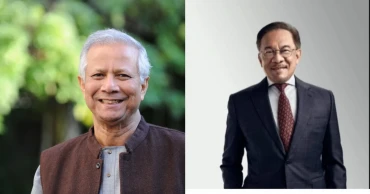
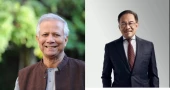
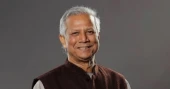
Prof Yunus set for crucial talks with Malaysian PM Friday
Malaysian Prime Minister Anwar Ibrahim is scheduled to arrive in Dhaka on Friday afternoon to discuss ways to take the relations between the two countries to a new height by exploring new areas of cooperation and strengthening the ties in diverse areas.
He will be visiting Dhaka at the invitation of Chief Adviser Prof Muhammad Yunus.
The Malaysian Prime Minister is likely to land at Hazrat Shahjalal International Airport around 2:30 pm or after that; and he will directly go to a hotel where he will be staying for around four hours, a senior official at the Ministry of Foreign Affairs told UNB.
Chief Adviser Prof Yunus will receive the Malaysian Prime Minister amid gun salute and guard of honour.
After almost a decade, a Malaysian Prime Minister will visit Bangladesh, and this official visit is the first by any head of government to Bangladesh since the formation of the interim government on August 8.
The bilateral meeting between the Malaysian Prime Minister and Chief Adviser Prof Yunus will be held at the same hotel, which will be followed by a joint press statement.
During the meeting, related areas of mutual interest including economic, political, trade and investment, education, technology and human resource development, manpower export, higher education cooperation, communications, infrastructure development, and defense cooperation are expected to be highlighted, said Foreign Affairs Adviser Md Touhid Hossain.
The two leaders will also have a one-to-one meeting before the bilateral talks.
Prof Yunus will also host high tea in honour of the Malaysian Prime Minister.
The Malaysian Prime Minister will also meet President Mohammed Shahabuddin at Bangabhaban. He will sign visitor's book there.
Malaysia is going to be the next chair of ASEAN from January 2025, and the Rohingya issue will also be discussed.
In addition, the issue of Bangladesh to become a "Sectoral Dialogue Partner" in ASEAN in terms of regional cooperation will also be specially raised.
"As a result, this visit is very important in terms of bilateral relations," said the Foreign Affairs Adviser, adding that once the Prime Minister of Malaysia arrives in Dhaka, he will be accorded a warm welcome as per state protocol.
This visit is expected to be considered as an expression of deepening bilateral relations and enduring friendship between Bangladesh and Malaysia, said the Adviser ahead of the visit.
A 58-member delegation will accompany the Malaysian Prime Minister that will include the country's Foreign Minister, Trade and Investment Minister, Deputy Minister of Transport, Deputy Minister of Religious Affairs, two Members of Parliament and senior officials of the Ministry of Foreign Affairs.
In August this year, Prof Yunus invited him to undertake a short visit to Bangladesh as soon as possible to further strengthen the brotherly relationship between the two countries.
Malaysia is the 8th largest investor in Bangladesh.
In August, the Malaysian leader made a phone call to his old friend, Prof Muhammad Yunus, to congratulate him personally on his recent appointment as the chief adviser of the Interim government of Bangladesh.
Prof Yunus has long-standing good ties with Malaysia.
"Thus, I assured him that Malaysia stands ready to help and support the interim Government in rebuilding and restoring peace and security in Bangladesh," said the Malaysian PM.
At least seven Malaysian universities have Yunus Centres, promoting social business ideas he champions and his three-zero concepts.
Malaysian companies, including several owned by its sovereign funds, have invested more than $5 billion in Bangladesh and are now willing to invest more, including in education.
A second Malaysian car manufacturer has signed an agreement with a Chattogram-based company for distributing and assembling cars.
Malaysia says they could be a desired destination for medical tourism, saying the Bangladeshi people can avail essential medical treatment in the country at an affordable price.
The Malaysian Prime Minister is scheduled to leave Dhaka at 6:25pm.
1 year ago
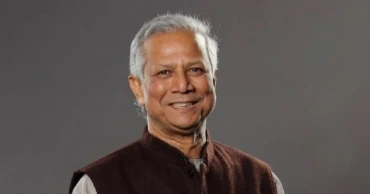
Egypt invites CA Prof Yunus to attend D-8 Summit this year
Egypt has invited Chief Adviser Prof Muhammad Yunus to attend the D-8 Summit which will be held later this year.
Ambassador of Egypt to Bangladesh Omar Mohie Eldin Ahmed Fahmy met Foreign Affairs Adviser Md Touhid Hossain on Wednesday and informed that Egypt would host the D-8 Summit in 2024.
He conveyed Egypt's invitation for the participation of the chief adviser, according to the Ministry of Foreign Affairs.
The D-8 Organization for Economic Cooperation, also known as Developing-8, is an organisation for development co-operation among Bangladesh, Egypt, Indonesia, Iran, Malaysia, Nigeria, Pakistan, and Turkey.
Egypt keen to import rawhides from Bangladesh
The establishment of D-8 Organization for Economic Cooperation was announced officially through the Istanbul Declaration of Summit of Heads of State/Government on June 15, 1997.
1 year ago
South Korea keen to support interim government in improving investment climate
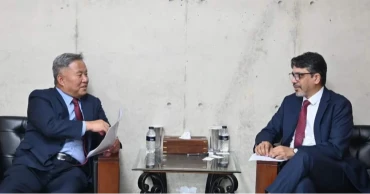
South Korean Ambassador to Bangladesh Park Young-sik has said improvement of "business-friendly, predictable and stable environment" should be one of the top priorities among the interim government's tasks in order to attract more foreign investment.
He said the Korean Embassy in Dhaka is eager to engage in further discussions with the interim government on improving the investment climate of Bangladesh.
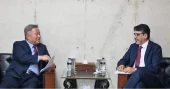
The ambassador paid a courtesy call on Foreign Secretary Md. Jashim Uddin at MoFA on Wednesday.
South Korea looks forward to working with the interim government
Park congratulated the foreign secretary on assuming the new position and wished that during his tenure the existing bilateral relations between Bangladesh and Republic of Korea (ROK) will be further strengthened.
The foreign secretary thanked him and the government of the ROK for the positive remarks towards the newly formed interim government and putting confidence in the ability of the government in restoring peace and stability in the country.
He expressed his satisfaction on the existing bilateral relations and recent upward trend of the volume of bilateral trade between the two friendly countries.
The FS appreciated South Korea for continuously being one of the major foreign investors in Bangladesh.
He also thanked the South Korean government for allowing preferential market access for a large number of Bangladeshi products into the ROK market through LDC and Asia Pacific Trade Agreement arrangements.
Bangladesh eyes major projects with South Korean financing, Finance Adviser says
Both sides urged for working together to conclude an Economic Partnership Agreement to address the growing trade imbalance and thereby facilitate sustainable and healthy growth in bilateral trade, according to the Ministry of Foreign Affairs.
The foreign secretary thanked the ambassador for his government’s Employment Permit System (EPS) which has been providing employment opportunities for Bangladeshi workers in South Korea.
He also expressed hope that Seoul will consider increasing the intake of nationals of Bangladesh and opening up opportunities for our workers to work in the ROK’s agriculture, fisheries, shipbuilding and other service sectors.
The foreign secretary further requested to increase the number of Korean scholarship for Bangladeshi students in future.
Both sides expressed satisfaction for maintaining close cooperation on the international arena, to uphold global peace and security, promote free trade and supporting each other in international fora.
1 year ago
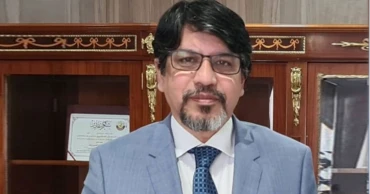
Foreign Secretary Jashim likely to visit US next week
Foreign Secretary Md Jashim Uddin is likely to pay an official visit to the United States next week to discuss issues of interest as the two countries are enjoying growing relations.
This is going to be his first official visit abroad since his appointment as the Foreign Secretary.
The Foreign Secretary will have meetings with senior officials of the US government, a diplomatic source told UNB, adding that he would visit both Washington and New York.
Bangladesh, Pakistan discuss next round of foreign secretary-level consultations
He plans to have meetings with officials at the US Department of State, Office of the U.S. Trade Representative (USTR), UN officials in New York and the officials of the World Bank and International Monetary Fund (IMF).
Chief Adviser Prof Muhammad Yunus visited the US recently to attend the United Nations General Assembly and on the sidelines he had meetings with US President Joe Biden and Secretary of State Antony J Blinken.
In New York, President Biden and Prof Yunus affirmed the close partnership between the United States and Bangladesh, which is rooted in shared democratic values and strong people-to-people ties.
No discussion beyond bilateral issues with US delegation: Foreign Secretary
President Biden welcomed further engagement between the two governments and offered continued U.S. support as Bangladesh implements its new reform agenda.
1 year ago
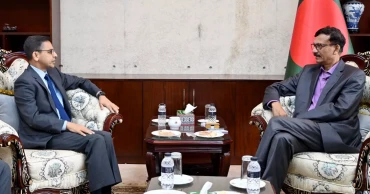
Dhaka highlights importance of resuming regular visa processing by India
Indian High Commissioner to Bangladesh Pranay Verma on Wednesday met Foreign Affairs Adviser Md Touhid Hossain and discussed ways to promote bilateral relations towards realizing shared aspirations of the people of both the countries.
Importance of resuming regular visa processing by the Indian High Commission was also discussed, said the Ministry of Foreign Affairs.
During the meeting at the Ministry of Foreign Affairs, various bilateral issues were discussed and it was emphasized that the two countries need to work together to promote bilateral relations.
Referring to the meeting between the Adviser for Foreign Affairs and the Indian External Affairs Minister Dr S Jaishankar on the sideline of the 79th UNGA in New York, both Foreign Affairs Adviser and the High Commissioner underscored the importance of activating the regular bilateral mechanisms between the two countries.
Foreign Affairs Adviser and High Commissioner discussed cooperation in the areas of trade, projects, and people-to-people contacts.
1 year ago
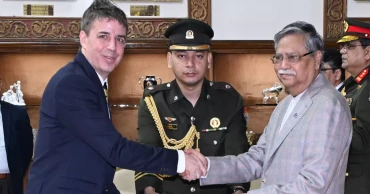
Bangladesh's remarkable development journey truly inspiring: New Swedish Envoy
Newly appointed Ambassador of Sweden to Bangladesh Nicolas Weeks on Wednesday said Bangladesh's remarkable development journey is truly inspiring.
He said the business sector, including Swedish companies, plays an important role in promoting the green and digital transition, which contributes significantly to job creation and sustainable growth.
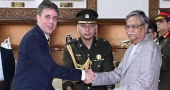
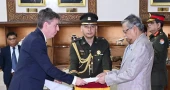
The Ambassador presented his credentials to President Mohammed Shahabuddin at a ceremony at the Presidential Palace Bangabhaban.
Following the ceremony, the President and the Ambassador had the opportunity to discuss the strong bilateral ties between Bangladesh and Sweden, highlighting the longstanding relations between the two countries.
"Sweden and Bangladesh have enjoyed a deep and enduring partnership for over five decades, built on long-term development cooperation and growing trade relations," said the Ambassador.
Sweden was one of the first countries to recognise Bangladesh. Sweden’s development cooperation with Bangladesh goes back to independence in 1971.
The ties are vibrant and multifaceted covering development cooperation, trade and investments, and people-to-people engagement, according to the Swedish Embassy.
Ambassador Nicolas Weeks joined the Swedish Ministry for Foreign Affairs in 2000.
Prior to his current position, he served as the Swedish Ambassador to Bolivia, based in La Paz.
His career spans various key roles within the Swedish Ministry for Foreign Affairs, including Minister Counsellor and Deputy Head of Mission at the Swedish Embassy in Bangkok, Deputy Director of the Human Resources Department in Stockholm, Counsellor at Sweden’s Permanent Mission to the UN in New York, various strategic positions within the Department for Asia and the Pacific Region, the European Union, and the Swedish Trade Council in Brussels.
1 year ago
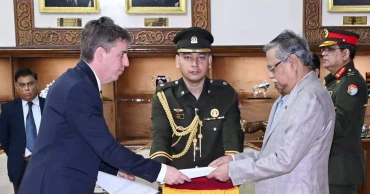
Newly appointed ambassadors of Sweden and Algeria present credentials to President
Newly appointed ambassadors of Sweden and People’s Democratic Republic of Algeria on Wednesday presented their credentials to President Mohammed Shahabuddin at the Bangabhaban.
The envoys are: Dr Abdelouahab Saidani of Algeria and Nicolas Linus Ragnar Weeks of Sweden.
President's press secretary Joynal Abedin briefed the reporters after the meeting.
Terming Sweden as a trusted development partner of Bangladesh for the last five decades, the Presidenr said Sweden is playing an important role in contributing to improve living standards of the poor, particularly women and children and promoting gender equality in addition to socio-economic development.
He expressed satisfaction with the existing ties between Bangladesh and Sweden.
The President said there are immense prospects of cooperation between the two friendly countries in trade and investment as well as in many promising sectors including IT, green transition, renewable energy and waste-to-energy, blue economy, maritime and food-processing.
President Shahabuddin hoped that Sweden as an important member of the European Union, will contribute to international peace, security and human rights, sustainable development and climate issues.
He thanked the Swedish government for its humanitarian support to the Rohingyas in Bangladesh and appreciated Sweden’s persistent commitment towards a durable solution of the Rohingya repatriation issue.
On the other hand, the President also proposed Algeria to consider importing world standard Bangladeshi products such as textile, jute, pharmaceuticals, food and electronics during the meeting with the Algerian ambassador.
Highlighting the vast potentials for expanding bilateral trade and economic ties, the President requested exploring LPG or LNG supply from Algeria to Bangladesh on mutually favourable terms to support sustained growth.
He said the existing relations among the countries will be strengthened and the scope of trade will also boost with this mutual trade.
Both the ambassadors sought full cooperation of the President during their official assignments in Bangladesh in future.
The President welcomed the new ambassadors on their arrival and were accorded a “guard of honour” by the horse-mounted contingent of the President Guard Regiment (PGR).
1 year ago
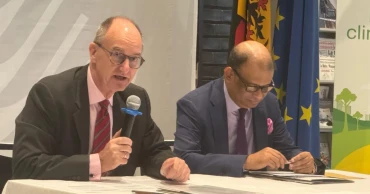
Bangladesh, Germany trade volume stood EUR 8.62 bln in 2023: German Embassy
The trade volume between Bangladesh and Germany in 2023 was EUR 8.62 billion, said the German Embassy in Dhaka on Wednesday.
The German Development Cooperation provided support in the areas like Climate and Energy – Just Transition with EUR1,168.56 including - renewable energy and energy efficiency: 642.44 million Euro and Sustainable Urban Development 526.12 million Euro.
Other areas that received support are Sustainable Economic Development, Training and Employment: (67.44 million Euro), Conserving Nature and Natural Resources, Protecting Life on Earth (17.5 million Euro).
The Development Cooperation provided total (ongoing) 1,303 million Euro while since 1958 the total amount stands at 3,769.430 million Euro.
German Ambassador to Bangladesh Achim Tröster said mitigating climate change and adapting to it can only work if governments, private sector and civil society work hand in hand.
This effort needs leadership, innovation and mutual learning by all actors, he said.
"Thus, we very much welcome the Initiative of Eastern Bank PLC. to honor such efforts in Bangladesh. EBL is already a long-standing partner supported by German Development Cooperation´s private sector instruments with loans and technical support. We are happy to intensify this cooperation with this Joint Declaration of Intent," said the Ambassador.
Eastern Bank PLC. (EBL), a leading private commercial bank in Bangladesh, and the Embassy of the Federal Republic of Germany entered into a partnership on Tuesday to collaborate on the EBL Climate Change Action Award with the common goal to promoting climate change adaptation and mitigation in Bangladesh.
The award will be announced annually with the aim of recognizing and celebrating the best practices by local corporations, manufacturing companies, NGOs, and climate activists who have demonstrated excellence and leadership in implementing climate projects and initiatives.
The joint declaration of intent was signed by German Ambassador Achim Tröster and Managing Director of EBL Ali Reza Iftekhar at the Embassy.
EBL’s Managing Director Ali Reza Iftekhar said, “Germany and EBL share a common goal of promoting work to combat climate change challenges impacting Bangladesh."
He said they are delighted to enter into this partnership with the Embassy of the Federal Republic of Germany on our Climate Change Action Award initiative and hope to work together closely to promote the climate cause.
"Through this award we aim to inspire and motivate more actors to join the fight against climate change in Bangladesh.”
The award categories cover a wide range of sectors and themes involving climate change challenges crucial to Bangladesh.
The winners will be selected by a panel of judges, comprised of experts from academia, civil society, media, and international partners like the German Embassy.
The nomination process for the EBL Climate Change Action Award 2024 will be announced soon through newspaper, electronic media and EBL website and social media platforms.
This was EBL’s second partnership. Earlier this year in May, EBL and the U.S. Department of State signed a partnership to collaborate on the EBL Climate Change Action Award.
1 year ago