Foreign-Affairs
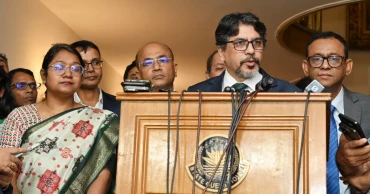
It’s a foundation for a “meaningful engagement” with US: Foreign Secretary
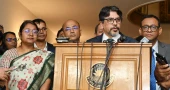
Dhaka, Sept 15 (UNB) – Foreign Secretary Md Jashim Uddin on Sunday said Bangladesh and the United States discussed Bangladesh’s financial sector’s reforms broadly, noting that the discussion will be seen as the foundation to take forward the discussion for a meaningful engagement.
“We think it is a foundation for a meaningful engagement with the US. We will take forward this discussion at various levels in the future. It is a good foundation to move ahead,” he told reporters at state guesthouse Padma, giving an idea about what they discussed in a series of meetings.
The Foreign Secretary said they have broadly discussed the financial sector’s reforms and primarily discussed the issue of money laundering as Bangladesh can use the US expertise in this regard.
"Discussion has just started. It might take a bit of time to get a final shape,” he said, adding that the US side reiterated its willingness to work closely with the interim government. The US side has assured of their support in the areas as Bangladesh identified some sectors for reforms in the financial sector.
“The conversation will continue,” Jashim said, adding that Bangladesh informed the US delegation about steps taken on the labour front which the US sees as significant progress.
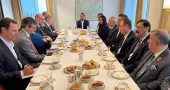
The visiting US delegation met Chief Adviser Professor Muhammad Yunus, Foreign Affairs Adviser Md Touhid Hossain and Finance Adviser Dr Salehuddin Ahmed. Foreign Secretary Jashim Uddin hosted a working lunch at state guesthouse Padma.
Asked whether any issue related to India was discussed, the Foreign Secretary said there are separate platforms for discussing issues between Bangladesh and India. “So, such an issue was not discussed here.”
On the possibility of Chief Adviser Prof Yunus meeting US President Joe Biden at the UNGA, he said the US President does not hold any bilateral meetings when he goes to UNGA.
But there is likely to be a reception and if their schedules are matched, they may get a chance to meet each other, he added.
Assistant Secretary for International Finance at the US Department of the Treasury Brent Neiman, US Assistant Secretary of State for the Bureau of South and Central Asian Affairs Donald Lu, Principal Coordinator on SDGs Affairs Lamiya Morshed, Chief Adviser's Special Envoy on International Affairs Lutfey Siddiqi and Foreign Secretary Md Jashim Uddin, among others, joined the meeting.
“Great to meet the Foreign Affairs Adviser ... we are committed to helping expand economic opportunities, build institutional capacity, uphold human rights, and mitigate climate risks with our partner, Bangladesh,” said the US side after the meeting with Touhid Hossain.
The US delegation also met Finance Adviser Dr Salehuddin Ahmed and said they support Bangladesh’s path towards renewed dynamism and growth.
“Our engagement with top economic policymakers centered on the authorities’ efforts to propel economic growth, job creation, and sustainability, including through engaging with international financial institutions,” said the US Embassy in Dhaka after the meeting with the Finance Adviser.
This is the first US delegation in Bangladesh following the formation of the interim government led by Chief Adviser Prof Muhammad Yunus on August 8.
The arrival of the first team of the United States (during this tenure) is a great reflection of the importance they attach to the relationship with Bangladesh,” said Foreign Secretary Jashim Uddin.
The US and Bangladeshi officials discussed how the United States can support Bangladesh’s economic growth, financial stability, and development needs.
The two countries also discussed labour reforms, trade facilitation, Rohingya crisis, and GSP facility, said the foreign secretary.
1 year ago

Graffiti: Prof Yunus requests US delegation to look at walls of Dhaka
Chief Adviser Professor Muhammad Yunus on Sunday presented an art book on graffiti of Bangladesh to the visiting US delegation after they met him at the State guesthouse Jamuna.
The book carries photos of some of the finest art works drawn during the student-led revolution in July-August by students and young people on the walls of Dhaka and other cities and towns.
“I will request you to look at the walls of Dhaka. These graffiti still exist. They were drawn not just after the revolution. Students defied the government forces to draw graffiti during the protests in July,” the Chief Adviser told US delegates.
The Chief Adviser commissioned the art book immediately after he was sworn in as the head of the interim government, said the Chief Adviser’s press wing.
Prof Yunus spoke about the historic significance of the graffiti, which depicted emotions, hope, and aspirations of the students and youth who participated in the protests against the “fascist” Sheikh Hasina regime defying brute forces.
Dhaka became the Graffiti Capital after young painters turned its walls into powerful canvases. They wrote slogans and poetry to deliver powerful messages.
The messages reflect the spirit of the revolution and the aspirations for a discrimination-free Bangladesh.
The Chief Adviser recalled how students used their artworks to deliver messages with the support of people from all walks of life. “They did not have the money to buy paint and brushes. People came forward to support them,” he told US delegates.
Brent Neiman, assistant secretary of the US Treasury Department, led the US team during the meeting.
Donald Lu, the US Assistant Secretary of State, Brendan Lynch, Assistant US Trade Representative, Anjali Kaur, Deputy Assistant Administrator; and Jerrod Mason, a Director of the US Treasury Department, were among those present.
1 year ago

It’s a significant moment for Bangladesh, says Prof Yunus seeking US support to rebuild nation
Chief Adviser Professor Muhammad Yunus on Sunday sought support from the United States to rebuild the country, carry out vital reforms, and bring back stolen assets, stressing that it is a very important time for Bangladesh and a significant moment in its history.
The 2006 Nobel Peace Prize winner described the challenges facing the interim government to the visiting US delegation, saying his administration has moved quickly to "reset, reform, and restart" the economy, initiate reforms in financial sectors, and fix institutions such as the judiciary and police.
The Chief Adviser sought the assistance when a high-powered US delegation met him at the state guesthouse Jamuna.
The US side affirmed their dedication to fostering inclusive economic growth, institution building, and development to benefit the people of Bangladesh.
“As Bangladesh looks to chart a more equitable and inclusive future, the US stands ready to support those efforts,” said the US side after the meeting held at state guesthouse Jamuna.
The Chief Adviser spoke about the student-led revolution, which has ushered in a new era of hope in Bangladesh, according to the Chief Adviser’s press wing.
Assistant Secretary for International Finance at the US Department of the Treasury Brent Neiman, US Assistant Secretary of State for the Bureau of South and Central Asian Affairs Donald Lu, Assistant US Trade Representative Brendan Lynch, Deputy Assistant Administrator Anjali Kaur and Director of the US Treasury Department Jerrod Mason represented the US in the meeting.
Principal Coordinator on SDGs Affairs Lamiya Morshed, Chief Adviser's Special Envoy on International Affairs Lutfey Siddiqi, Foreign Secretary Md Jashim Uddin and Secretary of the Economic Relations Division Md Shahriar Kader Siddiky also attended the meeting, among others.
The Chief Adviser described an outline of the reform initiatives undertaken by the Interim Government.
He said six commissions have been set up barely weeks after his government took over in an effort to prevent vote rigging, reform the judiciary, police, civil administration, the country's anti-graft agency, and amend the constitution.
Prof Yunus said his government was committed to getting back the stolen assets siphoned off by corrupt individuals linked with the previous autocratic regime.
"We were in an ocean of corruption," the Chief Adviser said, while describing the challenges the government faces to tackle graft.
US delegation leader Brent Nieman praised Professor Yunus's leadership and said Washington DC would be happy to support his reform agenda.
US officials have said they were eager to offer technical and financial assistance for reforms being carried out by the Interim Government.
During the hour-long talks, financial and economic reforms, investment, labour issues, the Rohingya crisis, and the Chief Adviser's upcoming visit to New York for the UN General Assembly were also discussed.
1 year ago

Meeting with Chief Adviser Yunus: US extends support for fostering inclusive growth, institution building in Bangladesh
The visiting US delegation on Sunday met Chief Adviser Professor Muhammad Yunus and affirmed their dedication to fostering inclusive economic growth, institution building, and development to benefit the people of Bangladesh.
“As Bangladesh looks to chart a more equitable and inclusive future, the US stands ready to support those efforts, said the US side after the meeting held at state guesthouse Jamuna.
Assistant Secretary for International Finance at the US Department of the Treasury Brent Neiman, US Assistant Secretary of State for the Bureau of South and Central Asian Affairs Donald Lu, Principal Coordinator on SDGs Affairs Lamiya Morshed, Chief Adviser's Special Envoy on International Affairs Lutfey Siddiqi and Foreign Secretary Md Jashim Uddin, among others, joined the meeting.
Bangladesh’s interim government is looking forward to having “multi-dimensional” discussions with the visiting US delegation.
The US officials also met Foreign Affairs Adviser Md Touhid Hossain at state guesthouse Padma.
1 year ago
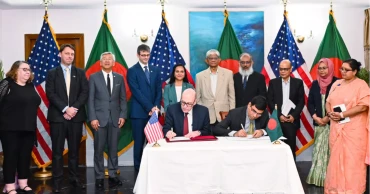
Bangladesh, USAID sign $202.25 million grant agreement to boost governance, opportunities, and resilience
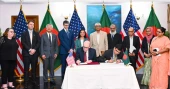
The 6th amendment of 'The Development Objective Grant Agreement’ (DOAG) has been signed between Bangladesh and the United States Agency for International Development (USAID) in Dhaka on Sunday.
A. K. M Shahabuddin, Additional Secretary, Economic Relations Division, Ministry of Finance and Reed J. Aeschliman, Mission Director, USAID have signed the amendment on behalf of the Bangladesh government and USAID respectively at the state guest house Padma.
On September 27, 2021, a new DOAG was signed between Bangladesh and USAID for the period of 2021-2026. By implementing the DOAG, USAID is committed to contribute a total $954 million.
So far up to 5th amendment, USAID has provided $425 million. Under this 6th amendment, USAID will provide $202.25 million grant for three sectors namely (a) Good Governance, (b) Social, Human and Economic Opportunity and (c) Resilience.
The United States of America is a trusted development partner of Bangladesh since 1972. Under an umbrella agreement titled “Economic Technical & Related Assistance” which was signed in 1974, USA has contributed more than $8 billion till today (September 15, 2024) in different sectors like democracy and governance, food security, health and education, and global climate change.
USA provides most of its development assistance through United States Agency for International Development (USAID), United States Department of Agriculture (USDA) and some other Government and non-Government organizations.
1 year ago
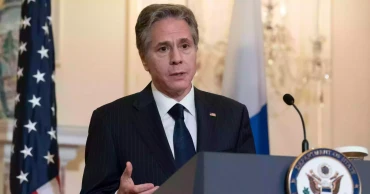
Blinken, Guterres discuss importance of mobilizing collective action to address global challenges
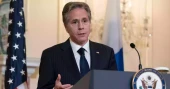
US Secretary of State Antony J. Blinken spoke with United Nations Secretary-General Antonio Guterres ahead of the UN Summit of the Future and the 79th session of the UN General Assembly’s High-Level Week.
Secretary Blinken and Secretary-General Guterres discussed the renewed opportunity the Summit of the Future presents for Member States to recommit to the principles of the UN Charter.
The Secretary voiced U.S. support for achieving a Pact for the Future – a Summit roadmap for strengthening the UN, Spokesperson at the US Department of State Matthew Miller said on Saturday.
As UNGA High-Level Week approaches, the Secretary and Secretary-General discussed the importance of mobilizing collective action to address global challenges, Miller said.
Secretary Blinken reiterated the United States’ UNGA priorities: working together to address conflict and crises, revitalizing an overstretched humanitarian system, and fostering a more inclusive and effective UN.
The Secretary thanked the Secretary-General for his many efforts in preparing for a productive high-level week.
1 year ago
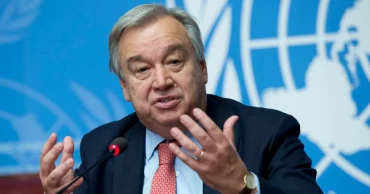
International Day of Democracy: "Let’s keep working to build a more inclusive, just, equal world
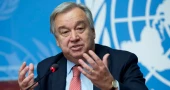
United Nations Secretary General Antonio Guterres has said the International Day of Democracy is an opportunity to reinforce the importance of upholding free speech, civil liberties, and the rule of law; ensuring accountable institutions; and protecting and promoting human rights.
"On this International Day of Democracy, let’s keep working to build a more inclusive, just, and equal world," he said in a message marking the day that falls September 15.
This is especially crucial in a year where more than 50 countries – representing half of the global population – are holding elections, Guterres said.
"Yet, these rights and values are under attack around the world. Freedoms are being eroded. Civic space is diminishing. Polarization is intensifying. And mistrust is growing," he said.
This year’s Democracy Day focuses on Artificial Intelligence as a tool for good governance.
"Left unchecked, the dangers posed by artificial intelligence could have serious implications for democracy, peace, and stability. This can start with the proliferation of mis- and disinformation, the spread of hate speech and the use of so-called deepfakes," Guterres said.
Yet, AI has the potential to promote and enhance full and active public participation, equality, security, and human development, he said.
"It can boost education on democratic processes, and shape more inclusive civic spaces where people have a say in decisions and can hold decision-makers to account."
To seize these opportunities, it is critical to ensure effective governance of AI at all levels, including internationally.
"The message is clear: AI must serve humanity equitably and safely," Guterres said.
The inclusive and geographically diverse High-Level Advisory Body on Artificial Intelligence has released a report with recommendations on how to harness the benefits of AI while mitigating the risks, he said.
This month’s Summit of the Future offers a crucial opportunity to strengthen international cooperation, build trust, and safeguard current and future generations, said the UN chief.
1 year ago
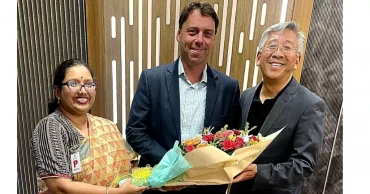
Presence of senior Treasury officials in US delegation signals focus on economy; meeting with Yunus Sunday
US Assistant Secretary of State for the Bureau of South and Central Asian Affairs Donald Lu arrived in Dhaka on Saturday wrapping up his India tour, with Bangladesh's interim government looking forward to having “multi-dimensional” discussions with the visiting US delegation on Sunday.
Assistant Secretary for International Finance at the U.S Department of the Treasury Brent Neiman arrived on Saturday morning, hours prior to Lu’s arrival. They will both be part of the interagency delegation for meetings with the Bangladeshi interim government.
Assistant United States Trade Representative Brandon Lynch also arrived in Dhaka as part of the multi-agency US delegation to discuss issues pertaining to bilateral relations.
They were received at the airport by Samia Israt Ronee, Director, (North America) of the Ministry of Foreign Affairs, Dhaka.
US Treasury Department Director Jerrod Mason, Chargé d’affaires (ad interim) at the US Embassy in Dhaka Helen LaFave, Political/Economic Counselor Eric Geelan and USAID Mission Director Reed Aeschliman are likely to join the meetings scheduled to take place on Sunday, a diplomatic source told UNB.
This is the first US delegation to visit Bangladesh following the formation of the interim government led by Chief Adviser Prof Muhammad Yunus on August 8 to discuss issues pertaining to bilateral relations.
“The arrival of the first team of the United States (during this tenure) is a great reflection of the importance they attach to the relationship with Bangladesh. This implies that this discussion will be multi-dimensional; it will not be limited to just one topic,” said Foreign Secretary Md Jashim Uddin.
The US delegation will meet Chief Adviser Yunus on Sunday morning, a senior official told UNB.
They will also meet Foreign Affairs Adviser Md Touhid Hossain and Finance Adviser Dr Salehuddin Ahmed, apart from their other engagements.
Foreign Secretary Jashim will host a working lunch for the US delegation on Sunday, where representatives from the relevant ministries will attend.
“US and Bangladeshi officials will discuss how the United States can support Bangladesh’s economic growth, financial stability, and development needs,” a spokesperson at the US Department of State said.
Somewhat unusually for US delegations visiting Bangladesh in recent years, this time it is being led by the Treasury Department. The London-based Financial Times newspaper reported earlier in the week that Washington would seek "to help one of the world’s biggest garment exporters boost its economy".
The inclusion of Nieman in the delegation is seen as key to such prospects.
“The United States is optimistic that, by implementing needed reforms, Bangladesh can address its economic vulnerabilities and build a foundation for continued growth and increased prosperity,” Neiman told the Financial Times.
He also said Washington planned to “underscore US support for Bangladesh’s continued engagement with the IMF and other international financial institutions” as Bangladesh “seeks to strengthen economic growth by deepening financial sector reforms, improving fiscal sustainability and reducing corruption”.
Bangladeshi officials however are remaining tight-lipped about the possible agenda for the meetings.
“I don't want to make any kind of comments before the discussion starts, which would undermine the normality of the discussion,” said the foreign secretary, when asked about specifics in the agenda.
Responding to a question, he said the government wants to move to a mutually beneficial relationship with everyone. The people of Bangladesh have historically had an interest in international affairs, he added.
Throughout his trip, Assistant Secretary Lu will reaffirm the United States’ commitment to supporting "our partners’ economic growth and promoting stability throughout the Indo-Pacific region."
The senior-level US delegation will discuss ways to take forward the relations between the two countries in the changed political scenario.
Any visit by a US delegation is always important, Foreign Affairs Adviser Md Touhid Hossain told reporters at the Ministry of Foreign Affairs.
The foreign affairs adviser said they will discuss issues which are achievable and stressed that the US visa policy put in place prior to the last general election in Bangladesh will have no bearing on relations going forward.
1 year ago

BIA, Alliance Française jointly host Ikebana display, demonstration in city
Bangladesh Ikebana Association (BIA) and Alliance Française jointly organized “Ikebana Display, Demonstration” at Alliance Française in Dhanmondi on Saturday.
BIA’s Annual General Meeting (AGM) was also held at the same venue.
Japanese Ambassador to Bangladesh Iwama Kiminori and Director, Alliance Française François Grosjean joined the occasion as the chief guest and special guest respectively.
The Ambassador congratulated the Bangladesh Ikebana Association on the auspicious occasion of its 14th AGM and other Ikebana activities.
In Japan, the practice of Ikebana is considered as more than just a form of flower decoration. It is rather a spiritual art form that requires creativity, Imagination, aestheticism and love for nature.
Its aesthetic beauty and spiritual values have made Ikebana known globally, including Bangladesh.
BIA members conducted activities, such as Ikebana classes, workshop, all of which were held in BIA's different schools. Looking back on the year of 2023 BIA organized several events to promote Ikebana not only in Dhaka, but also in other cities like Rajshahi.
In November an event was organized in the University of Rajshahi to promote the culture of Ikebana.
“BIA's initiatives will continue to leave a profound impact on cultural and art scenes in Bangladesh. I hope that the practice of Ikebana will take deep root in local communities of this country and become an enduring symbol of grass-root friendship between Japan and Bangladesh,” said the Japanese Ambassador.
He warmly congratulated the Ikebana display, demonstration and the 14th Annual General Meeting organized by the Bangladesh Ikebana Association (BIA) in the city.
Bangladesh Ikebana Association started its journey as an Ikebana school in October 1973 on the Japanese Embassy premises in Shantinagar. It was restructured into the present organization in 2009, said a media release.
Ambassador Iwama handed over certificates to those who completed Ikebana courses from Ikebana School.
Dr AKM Moazzem Hussain, a former BUET professor who returned from Japan after 10 years of studying in September 1971, and a group of Bangladeshis who had studied and/or taken training in Japan established an Ikebana School in October 1973 on the premises of the Embassy of Japan at Shantinagar in Dhaka.
Preeminent painter the late Shilpacharjya Joynul Abedin and Ambassador Takeshi Oyamada of Japan had handed over certificates to the 28 graduates of the first batch in March 1974.
Honorary CEO Masud Karim said, “We always get supportive cooperation from the Embassy of Japan. Next year we have a plan to arrange our event in a multipurpose hall at the Embassy of Japan premises.”
1 year ago
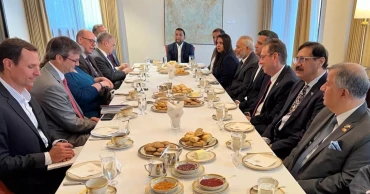
American private sector can help unlock Bangladesh’s growth potential: Embassy
American private sector can help unlock Bangladesh’s growth potential through trade and investment with the right economic reforms in place, said the US Embassy in Dhaka on Saturday.
From energy security to data centers to transportation, U.S. businesses play a positive role in many facets of Bangladesh’s economy, said the Embassy after a trade and investment related discussion.
Assistant Secretary for International Finance at the U.S Department of the Treasury Brent Neiman, U.S. Treasury Department Director Jerrod Mason, Chargé d’affaires (ad interim), U.S. Embassy Dhaka Helen LaFave, Political/Economic Counselor, U.S. Embassy Dhaka Eric Geelan and Mission Director, US Agency for International Development (USAID) Reed Aeschliman, joined the meeting representing the US side.
American Chamber of Commerce in Bangladesh (AmCham) President Syed Ershad Ahmed, Vice President Eric M Walker, MetLife in Bangladesh Chief Executive Officer Ala Uddin Ahmad, Country Manager Mastercard Syed Mohammad Kamal and Country Manager, GE Nowshad Ali were also present, a meeting source told UNB.
Earlier, US Assistant Secretary Brent Neiman arrived in Dhaka on Saturday morning to lead a US delegation to discuss issues pertaining to bilateral relations.
He was received at the airport by Khandker Masudul Alam, DG (North America) of the Ministry of Foreign Affairs, Dhaka.
Bangladesh looks forward to have a “multi-dimensional” discussion as it welcomed the first US delegation after the formation of the interim government led by Chief Adviser Prof Yunus on August 8.
“The arrival of the first team of the United States (during this tenure) is a great reflection of the importance they attach to the relationship with Bangladesh. This implies that this discussion will be multi-dimensional; it will not be limited to just one topic,” said Foreign Secretary Md Jashim Uddin on Thursday.
The US delegation will meet Chief Adviser Prof Muhammad Yunus on Sunday morning, a senior official told UNB. They will also meet Foreign Affairs Adviser Md Touhid Hossain and Finance Adviser Dr Salehuddin Ahmed apart from their other engagement.
Foreign Secretary Jashim will host a working lunch where representatives from the relevant ministries will attend.
“US and Bangladeshi officials will discuss how the United States can support Bangladesh’s economic growth, financial stability, and development needs,” a Spokesperson at the US Department of State said.
“I don't want to make any kind of comments before the discussion starts, which would undermine the normality of the discussion,” said the Foreign Secretary when asked about the specific agenda.
US Assistant Secretary of State for the Bureau of South and Central Asian Affairs Donald Lu, who is now visiting New Delhi, will travel to Bangladesh soon as part of the delegation.
Responding to a question, Foreign Secretary Jashim said the government wants to move to a mutually beneficial relationship with everyone.
The people of Bangladesh have historically had an interest in international affairs, he added.
Throughout his trip, Assistant Secretary Lu will reaffirm the United States’ commitment to supporting "our partners’ economic growth and promoting stability throughout the Indo-Pacific region."
In Dhaka, Lu will join an interagency delegation for meetings with the Bangladeshi interim government.
The senior-level US delegation will discuss ways with the interim government to take forward the relations between the two countries in a changed political scenario.
Any visit by the US delegation is always important, Foreign Affairs Adviser Md Touhid Hossain told reporters at the Ministry of Foreign Affairs.
The foreign affairs adviser said they will discuss issues which are achievable and stressed that US visa policy will not affect the relations between the two countries.
1 year ago