Foreign-Affairs
175 Bangladeshis return home from Libya
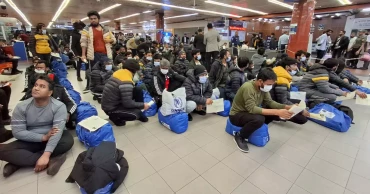
A total of 175 Bangladeshi nationals returned home from Libya on Wednesday.
They arrived at Dhaka at 6:25 am on Burak Air flight, according the Ministry of Foreign Affairs.
The repatriation was coordinated by the Bangladesh Embassy in Libya, the Ministry of Foreign Affairs, the Ministry of Expatriates’ Welfare and Overseas Employment, and the International Organization for Migration (IOM).
Of the returnees, 113 were held at the Tajoura Detention Centre in Tripoli and 62 at the Ganfouda Detention Centre in Benghazi.
Most of the returnees had entered Libya with the intention of traveling illegally to Europe via human traffickers.
Many had experienced abductions and abuse during their stay.
Officials from the foreign ministry and the IOM welcomed the returnees at the airport and requested them to share their difficult experiences to raise public awareness.
Each returnee received travel allowances, food supplies, basic medical care, and temporary shelter from the IOM.
The Ministry of Foreign Affairs, the Bangladesh Embassy in Libya, the Ministry of Expatriates' Welfare and Overseas Employment, and the International Organization for Migration are jointly working to ensure the safe return of Bangladeshi nationals held in different detention centers in Libya.
2 months ago
US assures support for Bangladesh’s energy security
US Energy Secretary Chris Wright has acknowledged the energy challenges Bangladesh is currently facing and expressed his country's commitment to support Bangladesh during these difficult times to help ensure its energy security.
He said the U.S. will consider the requests of Bangladesh and assured that he and his team would work closely with the relevant departments of the U.S. government to this end.
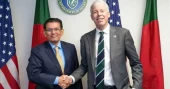
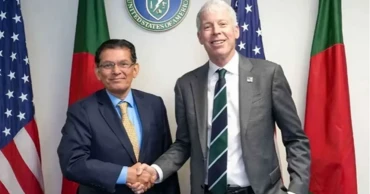
Foreign Minister Dr Khalilur Rahman met with the US Energy Secretary at the Department of Energy in Washington, D.C. on March 31.
During the meeting, Dr Rahman explained the energy related challenges Bangladesh is going through due to supply chain disruptions.
He requested the Energy Secretary for help and support to ensure Bangladesh's energy security, said the Bangladesh Embassy in the US in a media release.
Secretary Wright congratulated Prime Minister Tarique Rahman on his election victory and looked forward to strengthening bilateral ties between the two countries.
The two sides also discussed longer-term cooperation for secure energy solutions for Bangladesh and the prospects of increasing procurement of U.S. energy products.
Secretary Chris Wright was assisted by Audrey Robertson, Assistant Secretary of Critical Minerals and Energy Innovation (CMEI) and other DOE officials.
From Bangladesh side, Tareq Md Ariful Islam, Bangladesh Ambassador to the USA; DM Salahuddin Mahmud, Deputy Chief of Mission and Dr. Md. Fazle Rabbi, Economic Minister attended the meeting with the Foreign Minister.
2 months ago
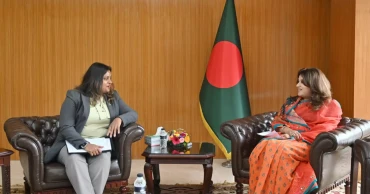
Dhaka, Malé eye enhanced exchanges of business delegations
State Minister for Foreign Affairs Shama Obaed on Wednesday underscored the importance of increased exchanges of business delegations between Bangladesh and the Maldives and welcomed the recent resumption of direct Malé–Dhaka flights by ‘Maldivian’, the national carrier of the Maldives.
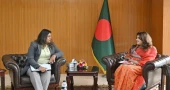
High Commissioner of the Maldives to Bangladesh Shiuneen Rasheed met the State Minister for Foreign Affairs at the Ministry of Foreign Affairs and discussed issues of mutual interest.
The High Commissioner congratulated the State Minister on her assumption of the office.
The State Minister expressed appreciation for the participation of the President and the Foreign Minister of the Maldives in the swearing-in ceremony of the new government, as well as the participation of the Minister for Higher Education, Labour and Skill Development of the Maldives at the State Funeral of former Prime Minister Begum Khaleda Zia, said the Ministry of Foreign Affairs.
During the meeting, both sides emphasized the importance of further strengthening bilateral cooperation in different areas including trade, health, education, connectivity and to unlock the vast untapped potential that exists between the two countries.
The High Commissioner appreciated the contributions of Bangladeshi migrant workers to the socio-economic development of the Maldives.
The State Minister expressed sincere appreciation to the government of the Maldives for extending employment opportunities to Bangladeshi workforce and requested the Maldives to consider recruiting more skilled and semi-skilled workers from Bangladesh.
The High Commissioner conveyed the interest of the Maldives in recruiting healthcare workers from Bangladesh.
The State Minister expressed appreciation for the continued support of the Government of Maldives on the Rohingya issue.
The State Minister conveyed the government of Bangladesh’s commitment to revitalizing SAARC, with both sides emphasising the importance of strengthening regional cooperation.
2 months ago
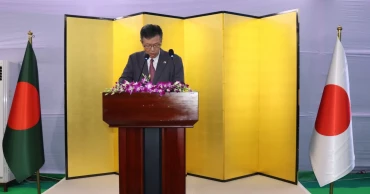
Tokyo eyes high-level exchanges as Dhaka enters new chapter
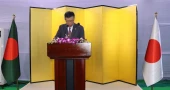
Japanese Ambassador to Bangladesh Saida Shinichi has said his country looks forward to further promoting high-level exchanges, including at the head of state and ministerial levels, noting that the new chapter has just begun.
“Prime Minister Tarique Rahman has pledged a break from the past. Even now the Jatiya Sangsad is conferring to find a solution through earnest dialogue. The new chapter has just begun,” he said, reiterating the commitment to providing their unwavering support.
Celebrating the birthday of the Emperor, the Ambassador said as Bangladesh is growing toward an upper middle-income nation, they remain firmly committed to extending their steadfast assistance, as a faithful development partner since its independence, its strategic partner, and its friend in need, for the course of nation, charted by the new government.
Social Welfare Minister Abu Zafar Md Zahid Hossain spoke as the chief guest and said the friendship between Bangladesh and Japan is deeply rooted in mutual trust, common aspirations and progress.
Terming Japan as one of Bangladesh's most trusted development partners, he said the unwavering friendship between the two countries, built on mutual respect and trust, has grown steadily over the past few decades.
The Minister said they are firmly committed to further strengthening Bangladesh's strategic partnership with Japan for shared peace, prosperity and stability.
In May last year, Ambassador Saida said their former Prime Minister Aso told his guest from Dhaka, former Chief Adviser Prof Muhammad Yunus in Tokyo that, “It’s all about political stability. No stability, no economic growth.”
“In any country, and in any era, it’s never easy to restore law and order after an uprising,” said the Japanese envoy.
He said now it is getting clearer how well-conceived the new government’s “plan” is: ‘reconciliation to break the old-time cycle, restoration of law and order, and economic growth’ through enhanced investment.
“On behalf of our Government, let me express sincere appreciation and strongest support for this vision,” said Ambassador Saida.
In February this year, Bangladesh signed its first-ever Economic Partnership Agreement with Japan. The two countries also concluded the ‘defense equipment and technology transfer agreement,’ the 17th of its kind for japan.
“We look forward to a steady implementation of these agreements under the new government, thereby further strengthening our bilateral relations in both economic and security domains, and contributing to the country’s growth strategy,” said the envoy.
He said Japan’s development assistance has always been extended for the benefit of the people and the nation, never for any particular groupings.” I’m sure the same sense is shared by the Japanese business community.”
Even when many international investors took a wait-and-see stance, Ambassador Saida said Japanese companies definitely did their business as usual.
“We didn’t see even a single company that has withdrawn. I wish to express respect for their commitment and pledge our continued support to ensure that their integrity and perseverance will be duly paid off,” he said.
Japan welcomed the progress made in a series of their projects under the new government.
On the Rohingya issue, he said despite formidable challenges, Bangladesh has continued to manage this issue, the largest humanitarian crises in Asia.
The envoy reiterated his commendation to the government and the Armed Forces of Bangladesh for their tireless efforts, and pledged their continued support in close cooperation with the international community.
Political leaders, diplomats stationed in Dhaka, civil society members and senior journalists were present.
2 months ago
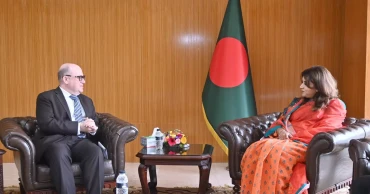
Bangladesh, Malta highlight importance of FTA with EU
Bangladesh and Malta on Wednesday underscored the importance of a Free Trade Agreement (FTA) with the European Union (EU) to enhance bilateral trade.
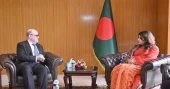
High Commissioner of Malta to Bangladesh (resident in New Delhi) Reuben Gauci met Shama Obaed Islam at the Ministry of Foreign Affairs and discussed the issues of mutual interest.
She requested Malta’s support for Bangladesh’s candidacy for the Presidency of the 81st session of the United Nations General Assembly (UNGA) for the term 2026-2027.
The two sides exchanged views on regional and global issues, underscoring the importance of peace, stability, and enhanced international cooperation.
The High Commissioner congratulated the State Minister for her appointment as the State Minister for Foreign Affairs and hoped that bilateral relations would be strengthened further under the new government.
Both sides reaffirmed their commitment to advancing the mutually beneficial partnership, exploring avenues for enhancing cooperation in trade and commerce, education, gender equality as well as migration matters.
The State Minister appreciated Malta for extending holistic visa services for Bangladeshi students and workers from Dhaka as it saves valuable time and money, said the Ministry of Foreign Affairs.
The State Minister and the High Commissioner discussed strengthening political collaboration in both bilateral and multilateral settings.
2 months ago
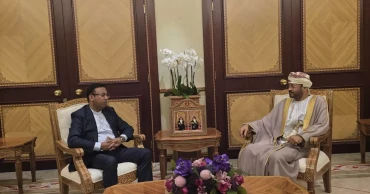
PM reaches out to Oman’s Sultan with solidarity message
Prime Minister Tarique Rahman has written to Sultan of Oman Haitham bin Tarik, conveying Bangladesh's solidarity with the leadership, government, and brotherly peoples of Oman in the context of the current regional situation.
The Prime Minister also conveyed Bangladesh's readiness to extend any necessary support, should it be considered useful by the Omani government.
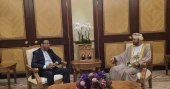
Foreign Affairs Adviser to the Prime Minister of Bangladesh, Humaiun Kobir on Wednesday called on the Foreign Minister of Oman Sayyid Badr bin Hamad bin Hamood Albusaidi and handed over a personal letter from the Prime Minister, addressed to the Sultan of Oman.
The Foreign Affairs Adviser is currently undertaking a visit to several Gulf countries as the special envoy of the Prime Minister, to convey his messages to the leadership and further reinforce Bangladesh's engagement with the region.
The Prime Minister expressed his deep concerns on the attacks on Oman and loss of lives and properties, said the Ministry of Foreign Affairs.
He expressed deep appreciation for the continued support extended by Omani government in hosting a large number of Bangladeshi expatriates and for the measures taken to ensure their safety and wellbeing.
During the meeting, the Foreign Affairs Adviser appreciated the constructive roles played by Oman to negotiate the dispute between Iran and United States and promoting peace, dialogue and diplomacy in the region.
The discussion also covered the excellent state of bilateral relations between Bangladesh and Oman, with a shared commitment to further strengthening cooperation across sectors of mutual interest.
2 months ago

Dhaka-Seoul CEPA to be signed soon to strengthen economic ties, hopes S Korean Deputy Minister
South Korean Deputy Minister for Public Diplomacy at the Ministry of Foreign Affairs Lim Sang Woo has expressed optimism that the Comprehensive Economic Partnership Agreement (CEPA) between two friendly countries would be signed at the soonest.
Once signed, he hoped the CEPA would take the bilateral relations beyond the area of free trade, encompassing services, investment, and industrial collaboration.
Speaking at a reception in Seoul on Tuesday, the Korean Deputy Minister expressed the willingness of the Korean government to work with the newly elected government of Bangladesh and to expand bilateral cooperation based on mutual respect and trust.
He also expressed satisfaction over the current level of cooperation encompassing all possible areas.
The Embassy of Bangladesh in Seoul hosted the reception on the occasion of the Independence and National Day of the People’s Republic of Bangladesh at a local hotel in Seoul, with due dignity and enthusiasm.
Ambassadors, Heads of Missions, high dignitaries from the Korean Foreign Ministry and other ministries and agencies, Korean investors and business representatives, journalists, academia and distinguished members of the Bangladesh community living in South Korea, attended the reception, said the Bangladesh Embassy in Seoul on Wednesday.
Bangladesh Ambassador Toufiq Islam Shatil, in his statement, paid deep tribute to the supreme sacrifices of 3 million martyrs and the valiant freedom fighters during our Liberation War in 1971.
He highlighted the continuous deep engagement of Bangladesh and the Republic of Korea in all sectors especially in infrastructure development, textiles, electronics, automobiles and people to people contacts over the last 50 years.
The Ambassador also highlighted Bangladesh’s interest in expanding our bilateral political, economic and people-to-people ties with the Republic of Korea, in the context of the existing geopolitical landscape, on the basis of mutual respect and shared interests.
The Bangladesh Ambassador said the new democratically elected Government in Bangladesh, under the able leadership of Prime Minister Tarique Rahman, is working relentlessly, in coordination of their international partners, to take the country towards the next level of development while ensuring social harmony, rule-based system, good governance and economic stability.
A cultural program was arranged with the participation of Bangladeshi and Korean artists; where a number of patriotic poetry recitation, songs and dance performances were presented.
2 months ago
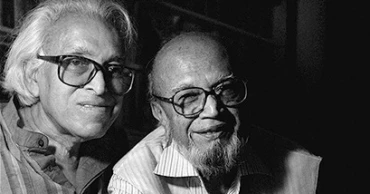
Nasir Ali Mamun’s solo exhibition opens Friday featuring rare moments of poets Shamsur Rahman, Al Mahmud
Alliance Française de Dhaka will host the 66th solo exhibition of renowned photographer Nasir Ali Mamun, titled 'Photoseum: Life of Poetree’ on Friday.
The exhibition will open at La Galerie and continue till April 16.
The exhibition features an exceptional collection of black-and-white iconic portraits and archival materials dedicated to two of Bangladesh’s most influential poets, Shamsur Rahman (1929-2006) and Al Mahmud (1936-2019).
This exhibition is dedicated to the bicentenary of photography.
Matiur Rahman, Editor and Publisher of Prothom Alo, Jean-Marc Séré-Charlet, Ambassador of France to Bangladesh; artist Monirul Islam and Kamal Quadir, CEO of bKash will attend the event.
Over the decades, Mamun has documented many of the country’s leading cultural figures.
His portraits are considered invaluable visual archives of Bangladesh’s intellectual heritage.
The exhibition pays tribute to Shamsur Rahman, a central figure in modern Bangladeshi poetry, and Al Mahmud, one of the most distinctive poetic voices rooted in the cultural and rural landscape of Bengal.
Rahman’s poetry reflects urban sensibility, existential concerns, and a strong commitment to humanism, freedom, and resistance against oppression, said a media release.
In contrast, Al Mahmud’s work draws deeply from rural life, folklore, and spiritual
traditions, blending modernist techniques with indigenous themes to create a uniquely Bengali poetic expression.
Through Mamun’s lens, these two towering literary figures are presented not only as poets but as complex human beings.
His portraits of Shamsur Rahman often capture a quiet intellectual solitude, with subtle lighting creating a contemplative atmosphere that reflects the poet’s moral depth and introspection.
In contrast, his images of Al Mahmud reveal a more textured emotional landscape—marked by experience, contemplation, and a sense of both dignity and isolation.
A highlight of the exhibition is the rare visual documentation of a historic meeting between the two poets, who had long remained estranged due to ideological differences.
On 31 May 2004, after persistent efforts by Mamun, they met at Rahman’s residence in Shyamoli, Dhaka.
During this encounter, Mamun conducted an interview while simultaneously capturing a series of photographs.
This significant moment, later published in Prothom Alo, is presented in the exhibition through photographs and video materials, offering visitors a rare glimpse into a historic literary reconciliation.
The exhibition showcases approximately 60 photographs and unpublished videos, emphasizing the timeless quality of black-and-white portraiture.
The interplay of light and shadow, combined with intimate framing and minimal backgrounds, allows viewers to engage deeply with the presence, personality, and inner lives of the poets.
More than a photographic display, Photoseum: Life of Poetree creates a dialogue between literature and visual art.
It invites audiences to connect with two iconic literary figures not only through their words but through their expressions, silences, and humanity.
Born on July 1, 1953, in Dhaka, Nasir Ali Mamun is widely regarded as the father of portrait photography in Bangladesh and celebrated as the “poet of the camera.”
Over five decades, he has captured the essence of artists, writers, thinkers, politicians, and cultural icons through his iconic black-and-white portraits, creating a visual archive of national and international significance.
Mamun has held 65 solo exhibitions worldwide and authored 20 books, amplifying the voices of Bangladesh’s creative and intellectual spheres.
His work as Photo Editor at Daily Prothom Alo and as personal photographer of Nobel Laureate Professor Muhammad Yunus has further cemented his influence.
2 months ago
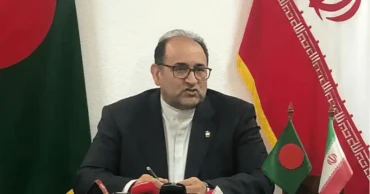
Iran grants permission for 6 Bangladeshi ships to pass through Strait of Hormuz: Ambassador
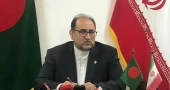
Iranian Ambassador to Bangladesh Jalil Rahimi Jahanabadi on Wednesday said Iran's Supreme National Security Council (SNSC) has granted permission for six stranded Bangladeshi ships to pass through the Strait of Hormuz.
“I am hopeful that energy-carrying vessels will soon be able to cross the Strait of Hormuz, and that any potential energy crisis in Bangladesh can be resolved,” he told reporters at the Iranian Embassy, adding that Bangladesh and Iran are working closely to ensure the safe passage of the ships.
Commenting on recent developments in the Middle East, the Ambassador claimed that the United States has actually brought the entire region under war.
He said while the previous U.S. administration avoided falling into what he described as an Israeli “trap,” President Donald Trump had done so under Israeli influence and instigation.
The envoy emphasised that efforts would be made to ensure that Muslims in the region do not suffer.
He also mentioned that Bangladesh’s Foreign Minister, Dr. Khalilur Rahman, wrote to his Iranian counterpart on Tuesday, expressing gratitude for Iran’s assistance in safely repatriating Bangladeshis from Iran.
Describing the relationship between the two nations as fraternal, the Ambassador said Iran considers Bangladesh a brotherly country and expects mutual support during difficult times.
Citing the UN Charter, he said aggression by one state against another is illegal, and claimed that Iran is a victim of such aggression.
Highlighting Bangladesh’s identity as a Muslim-majority country and its membership in the United Nations and the OIC, the Ambassador said Iran expects Bangladesh to strongly condemn what he described as aggression and the killing of women and children.
“Bangladesh has expressed concerns, but we would have been happy to see Bangladesh condemning the aggression on Iran,” he said.
The Ambassador said Iran was verifying detailed information of six fuel-carrying ships bound for Bangladesh that remained stranded at the Strait of Hormuz.
“Initially, there were no specific details of the ships. After we informed Bangladesh, they shared the specific information last week. We are now verifying it,” he said.
Bangladesh had earlier requested Iran to allow the vessels to pass through the strait following the February 28 attacks by the United States and Israel on Iran.
The envoy said Iran maintains a principled position to allow Bangladesh’s fuel-carrying ships through the strategic waterway.
Jahanabadi said the Iranian Embassy in Dhaka has sent information and photographs to Tehran highlighting the difficulties faced by Bangladeshis amid the ongoing fuel crisis.
2 months ago
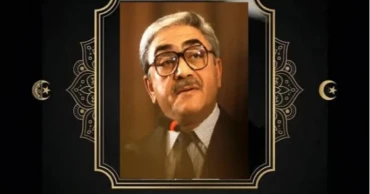
Algeria’s former President Liamine Zeroual dies at 84
The Embassy of the People’s Democratic Republic of Algeria in Dhaka has announced the death of former Algerian President Mujahid Liamine Zeroual. He passed away on 28 March 2026 at the age of 84.
Zeroual served as Algeria’s sixth President from 1994 to 1999, guiding the nation through a challenging period and voluntarily stepping down to uphold democratic principles. He is remembered for his leadership during difficult times and his efforts to strengthen Algeria’s international relations, including the longstanding friendship between Algeria and Bangladesh.
The Embassy has opened a condolence book at its Baridhara premises (House 06, Road 13, Baridhara Diplomatic Zone, Dhaka-1212). It was available on 31 March from 2:00 pm to 6:00 pm and will remain open from 1 April to 2 April between 10:00 am and 6:00 pm. Diplomats, representatives of international organizations, and distinguished guests have been visiting to pay tribute.
The Embassy expressed deep condolences and appreciated the solidarity shown by the Government of Bangladesh, diplomatic missions, and friends of Algeria during this period of mourning.
2 months ago