Foreign-Affairs
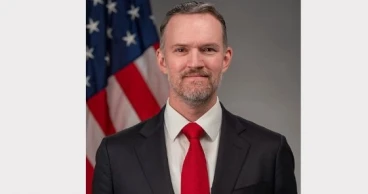
Bangladesh among 60 countries in USTR's crosshairs as Trump eyes go-around for tariffs
The United States Trade Representative (USTR) has initiated investigations of 16 economies, including Bangladesh, relating to failures to take action on forced labor.
The investigations will determine whether acts, policies, and practices of each of these economies related to the failure to impose and effectively enforce a ban on the importation of goods produced with forced labor are unreasonable or discriminatory and burden or restrict U.S. commerce.
“Despite the international consensus against forced labor, governments have failed to impose and effectively enforce measures banning goods produced with forced labor from entering their markets. For too long, American workers and firms have been forced to compete against foreign producers who may have an artificial cost advantage gained from the scourge of forced labor,” said US Trade Representative (USTR) Ambassador Jamieson Greer on March 12.
“These investigations will determine whether foreign governments have taken sufficient steps to prohibit the importation of goods produced with forced labor and how the failure to eradicate these abhorrent practices impacts U.S. workers and businesses.”
The economies under investigation are among the United States' largest trading partners.
They include the United Kingdom, United Arab Emirates, Pakistan, Sri Lanka, Saudi Arabia, Cambodia, Indonesia, Malaysia, Philippines, Singapore, Thailand, and Vietnam, according to a statement issued from Washington.
USTR has requested consultations with the governments of these economies in connection with these investigations.
USTR will hold hearings in connection with these investigations on April 28, 2026.
To be assured of consideration, interested persons should submit written comments, requests to appear at the hearing, along with a summary of the testimony, by April 15, 2026.
Section 301 of the Trade Act of 1974 is designed to address unfair foreign practices affecting U.S. commerce.
Iranian ambassador reassures Dhaka: 'Bangladeshi tankers can pass Strait of Hormuz'
Section 301 may be used to respond to unjustifiable, unreasonable, or discriminatory foreign government practices that burden or restrict U.S. commerce.
Under Section 302(b) of the Trade Act, the United States Trade Representative may self-initiate an investigation under Section 301.
An investigation under Section 301(b) of the Trade Act examines whether the acts, policies, or practices of a foreign country are unreasonable or discriminatory and burden or restrict U.S. commerce.
After considering the advice of the inter-agency Section 301 Committee, and consulting with appropriate advisory committees, the United States Trade Representative has initiated these investigations.
Upon initiation of an investigation, the United States Trade Representative must seek consultations with the economies whose acts, policies, or practices are under investigation.
2 months ago

Iranian ambassador reassures Dhaka: 'Bangladeshi tankers can pass Strait of Hormuz'
Bangladesh has received reassurance from Iran regarding the safe passage of fuel shipments amid growing concerns about global oil supply disruptions.
Iranian Ambassador to Bangladesh Jalil Rahimi Jahanabadi on Friday said his country Iran stands ready to ensure that Bangladeshi oil tankers can pass safely through the Strait of Hormuz, despite the ongoing tensions in the Middle East.
"I have seen that there is an energy crisis in your country. Due to the energy problem, Prime Minister Tarique Rahman and the Energy Minister (Iqbal Hassan Mahmood) have requested the Iranian government to allow Bangladeshi oil tankers to pass through," said the Ambassador.
“I have spoken with Iranian government officials and they are ready. If you have vessels willing to transport fuel, we will allow them to pass safely so that the people of Bangladesh do not face difficulties,” the Ambassador told reporters following an event in Dhaka.
Iran’s secretive new leader issued his first public statements Thursday, resolving to keep fighting, promising more pain for Gulf Arab states and threatening to open “other fronts” in a war that has already disrupted world energy supplies, the global economy and international travel, reports AP.
Early Friday, U.S. President Donald Trump issued a new threat online to Iran, writing: “Watch what happens to these deranged scumbags today.” Trump tallied the damage inflicted on Iran and its leaders and called it a “great honor” to be responsible for it.
The remarks by Supreme Leader Ayatollah Mojtaba Khamenei came as Israeli Prime Minister Benjamin Netanyahu said his country’s attacks were creating conditions for the Iranian population to topple the government.
“It is in your hands,” Netanyahu said at a news conference, addressing the Iranian people. “We are creating the optimal conditions for the fall of the regime.”
Energy conservation plea goes unheeded as Dhaka malls glow with lights
Iran will continue blocking the Strait of Hormuz, the world's busiest oil shipping channel, according to a statement attributed to Iran's new Supreme Leader Mojtaba Khamenei, reports the BBC.
His message was broadcast on Iranian state TV, but Khamenei did not appear in person. His message was instead read out by a newsreader.
Iran would "avenge the blood" of Iranians killed in the war with the US and Israel, Khamenei said in the statement, which also warned neighbouring countries to stop hosting US bases.
He was named supreme leader on 8 March after his father, Ayatollah Ali Khamenei, was killed on the first day of the war.
Ambassador Jahanabadi defended his country’s position, and said, "We are not seeking a regional war, but we cannot remain indifferent while being attacked from American bases in neighbouring countries."
The first week of war with Iran cost the United States $11.3 billion, according to the Pentagon, which provided the estimate to Congress in a briefing earlier this week, according to a person familiar with the situation who spoke on condition of anonymity to discuss the private meeting.
The US military reported spending $5 billion on munitions alone in the war’s first weekend.
The war continued to escalate on its 13th day as oil prices spiraled up again to $100 per barrel, and stocks sank worldwide over fears that the conflict could drag on longer than hoped.
To relieve the surge in prices, the U.S. Treasury Department announced it was further easing sanctions on Russian oil by granting a license that authorizes the delivery and sale of some Russian crude oil and petroleum products for the next month.
Trump signaled earlier this week that he would take more action to address the squeeze on oil flows. The move follows the administration’s decision to grant temporary permission for India to buy Russian oil.
The new exemption applies only to Russian oil already at sea. Last week, analysts estimated there were about 125 million barrels loaded on tankers. To put that in perspective, about 20 million barrels of oil per day usually pass through the Strait of Hormuz, according to the International Energy Agency.
2 months ago

Five Bangladeshi workers killed in Maldives fire; two injured
Five Bangladeshi migrant workers were killed in a fire that broke out early Thursday at Dhigurah Island in the Maldives, according to the Bangladesh High Commission in Maldives.
The deceased were identified as Taj Uddin Islam, Md Sadar Ali, Md Robin Molla, Shafiqul Islam and Md Nurnabi Sarkar.
The High Commission said it is closely monitoring the situation and has taken steps to send the bodies back to Bangladesh as quickly as possible.
Two other Bangladeshi workers, Jamal Uddin and Saddam Hossain, were seriously injured in the incident.
Maldives’ President meets PM Tarique; eyes stronger ties
They are currently undergoing treatment at Indira Gandhi Memorial Hospital in Male, according to the High Commission.
2 months ago
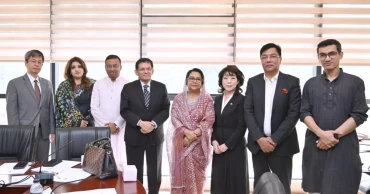
Bangladesh, Japan discuss ways to operationalise 3rd terminal of Dhaka airport soon
Bangladesh and Japan on Friday discussed ways to operationalise the long-delayed third terminal at Hazrat Shahjalal International Airport (HSIA) soon, with both sides expressing optimism about reaching a 'mutually beneficial' solution through negotiations.
The issue was discussed at a bilateral meeting with a Japanese delegation on the operation and maintenance of the terminal held at the Ministry of Foreign Affairs.
Foreign Minister Dr Khalilur Rahman presided over the meeting.
Civil Aviation and Tourism Minister Afroza Khanam Rita, State Minister for Foreign Affairs Shama Obaid Islam, Adviser to the Prime Minister on Foreign Affairs Humaiun Kobir, State Minister for Civil Aviation and Tourism M Rashiduzzaman Millat, Executive Chairman of the Bangladesh Investment Development Authority Chowdhury Ashik Mahmud Bin Harun, Foreign Secretary Asad Alam Siam, the Secretary of the Ministry of Civil Aviation and Tourism, the Chairman of the Civil Aviation Authority and other senior officials were present.
The Japanese delegation was led by Nakayama Riiko, Assistant Vice Minister of Japan’s Ministry of Land, Infrastructure, Transport and Tourism.
Officials from both countries discussed several operational and financial aspects of the third terminal and stressed the need for early decisions to make the facility operational.
The discussions were held following instructions from Prime Minister Tarique Rahman to expedite efforts to open the new terminal.
Speaking to journalists after the meeting, Humaiun Kobir and State Minister Millat described the talks as positive and expressed hope that a mutually acceptable solution could be reached soon.
Millat said Bangladesh is seeking a solution that protects the country’s interests while addressing shortcomings in earlier agreements with the Japanese consortium managing the terminal.
He said complications have arisen regarding certain operational issues and charges included in the agreement.
“Civil aviation agreements usually involve three categories of charges, and differences have emerged between the two sides on some of these issues,” he said.
Both sides discussed the matter in detail.
Bangladesh presented its proposals, and the Japanese side also shared their position.
Millat said Japan has agreed to consider Bangladesh’s proposals and submit a revised offer, after which further discussions will take place to finalise the arrangement.
Humaiun Kobir said the government is reviewing the issue with Bangladesh’s national interest as the top priority.
“The discussions are progressing positively, and we hope to see meaningful progress soon,” he said.
The latest meeting comes as the government seeks to restart negotiations with the Japanese consortium to operationalise the terminal, which is more than 99 percent complete but has yet to begin full commercial operations.
2 months ago
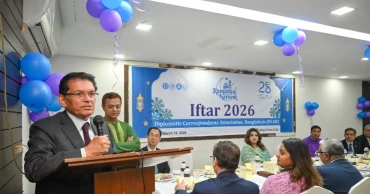
FM, State Minister, diplomats join DCAB Iftar
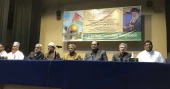
Diplomatic Correspondents Association, Bangladesh (DCAB) hosted an Iftar at the Jatiya Press Club on Thursday, bringing together senior officials from the Ministry of Foreign Affairs, diplomats stationed in Dhaka and journalists, reflecting strong bonds of friendship, cooperation and mutual respect.
Foreign Minister Dr. Khalilur Rahman and State Minister for Foreign Affairs Shama Obaed Islam, MP addressed the gathering.
DCAB President AKM Moinuddin delivered the welcome remarks, greeting all, including diplomats stationed in Dhaka and senior officials from the Ministry of Foreign Affairs.
Former DCAB President Masud Karim conducted the munajat, while DCAB General Secretary Emrul Kayesh conducted the programme.
2 months ago
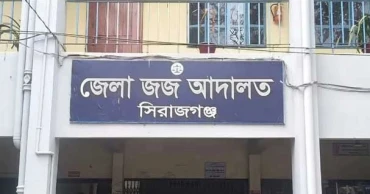
Man gets life imprisonment for killing wife in Sirajganj
A Sirajganj court has sentenced a man to life imprisonment for killing his wife in 2023.
The court also fined him Tk 30,000, in default of which he will have to serve an additional one year in jail.
The convict, Fazal Sarkar, is the son of late Chabader Ali of Panaigati village in Raiganj upazila.
Nazrul Islam, Additional District and Sessions Judge of Sirajganj, handed down the verdict on Thursday afternoon, said Assistant Public Prosecutor Hamidul Islam Dulal.
According to the prosecution, Fazal Sarkar married Nur Mahal of Basuria village in the same area. The couple had been in a long-standing marital dispute and divorced in 2021.
However, they remarried in February 2023 and started living together again.
On June 26 of that year, police recovered the hanging body of Nur Mahal from a eucalyptus tree near Laxmi Khola Bridge in the area.
Following the incident, the victim’s brother Yakub Hossain filed a case with the concerned police station, accusing Fazal Sarkar.
After investigation, police submitted a charge sheet against him.
Following the trial and examination of witnesses, the court found him guilty and delivered the verdict, the prosecutor added.
2 months ago

British Council joins two UNESCO global education platforms
The British Council has been formally recognised as a member of two major global education platforms led by UNESCO, a move expected to strengthen international collaboration on teacher development and education reform.
In a statement on Thursday, the British Council said it has joined the UNESCO Global Education Coalition and the International Task Force on Teachers for Education 2030, reinforcing its engagement in global efforts to promote inclusive and quality education.
The Global Education Coalition was launched by UNESCO in 2020 to address disruptions to education caused by the COVID-19 pandemic. The initiative has since evolved to support the goals of Sustainable Development Goal 4, which seeks to ensure inclusive and equitable quality education and expand lifelong learning opportunities worldwide.
The coalition brings together more than 200 partners, including governments, multilateral organisations, civil society groups and private-sector institutions, to advance reforms and innovation in education systems.
Through its membership, the British Council will contribute expertise in teacher training, English language education and inclusive learning to support countries in building resilient and future-ready education systems.
The organisation has also joined the International Task Force on Teachers for Education 2030, an independent global alliance working to tackle the growing shortage of qualified teachers and to strengthen professional support for educators.
The task force focuses on raising awareness, expanding knowledge and supporting national efforts to improve teaching quality and address teacher-related challenges.
With more than nine decades of experience in teacher education and professional development, the British Council said it will bring practical knowledge and global partnerships to the initiative, particularly in supporting teachers working in fragile, multilingual and resource-constrained contexts.
Stephen Forbes, Country Director of the British Council in Bangladesh, said the country has made notable progress in expanding access to education, although improving quality and equity remains a key priority.
He said the organisation’s participation in UNESCO’s global education platforms would help connect local expertise with international partnerships, enabling greater support for teachers and young learners through inclusive and future-oriented learning opportunities.
Pearson partners with British Council to honour top students in Bangladesh
The British Council works with ministries of education, schools, universities and civil society organisations across multiple regions to strengthen education systems through teacher development programmes, digital learning initiatives and support for English language educators.
According to the statement, participation in the two initiatives will open new avenues for collaboration with governments and education stakeholders, supporting ministries, school leaders, teachers and young people through evidence-based programmes, peer learning networks and scalable innovations.
2 months ago
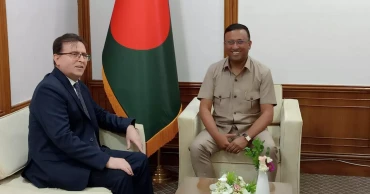
Turkish envoy meets Humayun, backs Bangladesh’s UNGA presidency bid
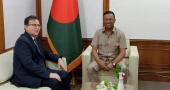
Turkish Ambassador to Bangladesh Ramis Sen on Thursday paid a courtesy call on Prime Minister’s Foreign Affairs Adviser Humayun Kabir and reaffirmed his country’s support for Bangladesh’s candidature for the presidency of the 81st session of the UN General Assembly (2026–2027).
The meeting was held at the Prime Minister's Office (PMO) in the city's Tejgaon area, said Prime Minister's Deputy Press Secretary Zahidul Islam Rony.
During the meeting, he said the two sides exchanged views on issues of mutual interest and explored ways to expand bilateral cooperation between the two friendly nations.
They discussed increasing trade and investment between the two countries, as well as enhancing cooperation in defence, education, cultural exchanges, technology and infrastructure development, Rony said.
He said regional and global issues were also discussed, particularly the challenges facing the Muslim world, humanitarian cooperation and strengthening mutual support in international forums.
Rony said both sides expressed hope that the longstanding friendship and cooperation between Bangladesh and Turkey will be further strengthened in the future.
He said they also reaffirmed their commitment to work together for the welfare of the people of the two countries based on mutual respect, trust and cooperation.
2 months ago
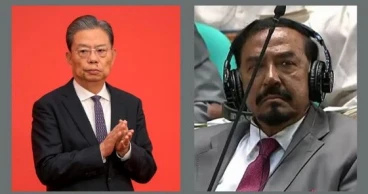
China’s NPC chairman congratulates Hafiz Uddin Ahmed on becoming Speaker
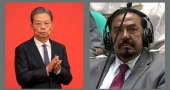
Chairman of Standing Committee of the National People's Congress of China Zhao Leji has congratulated Hafiz Uddin Ahmed on assuming office as Speaker of the Jatiya Sangsad of Bangladesh.
Zhao reaffirmed that China is ready to work with Bangladesh to advance the friendly exchanges and cooperation between the National People's Congress of China and the Jatiya Sangsad of Bangladesh, and to promote the Comprehensive Strategic Cooperative Partnership between China and Bangladesh to a higher level.
2 months ago
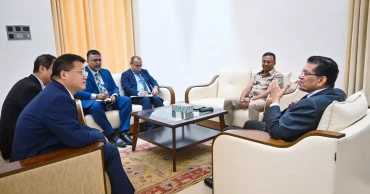
Chinese Vice Foreign Minister Sun Weidong to visit Bangladesh Apr 2–3
Chinese Vice Foreign Minister Sun Weidong will pay an official visit to Bangladesh on April 2-3 and will lead the Chinese delegation to the 14th Bangladesh-China Diplomatic Consultations.
Vice Foreign Minister Weidong is also expected to meet high level dignitaries during the visit, according to the Ministry of Foreign Affairs.
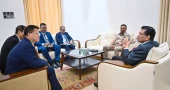
Chinese Ambassador to Bangladesh Yao Wen met Foreign Minister Dr Khalilur Rahman on Thursday and discussed issues of mutual interest.
Prime Minister’s Foreign Affairs Adviser Humaiun Kobir was present during the meeting.
The Chinese envoy briefed the Foreign Minister on the forthcoming visit of the Chinese Vice Foreign Minister Sun Weidong to Bangladesh.
The Consultations are expected to review the entire spectrum of bilateral relations between Bangladesh and China and explore new avenues for enhanced cooperation in areas of mutual interest.
Acknowledging China’s longstanding support and contribution to Bangladesh’s development journey, Foreign Minister Rahman expressed hope that the visit would inject new momentum into Bangladesh-China bilateral relations following the formation of the new Government.
2 months ago