Foreign-Affairs
Current govt committed to Hasina's extradition: Shama Obaed
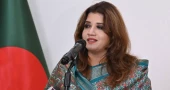
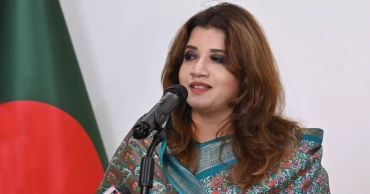
State Minister for Foreign Affairs Shama Obaed Islam on Monday said Bangladesh’s request to extradite former Prime Minister Sheikh Hasina from India remains an ongoing process, reaffirming the current government’s commitment to bringing her back to face justice.
“The current government is making efforts to bring Sheikh Hasina back, and those efforts will continue,” she told reporters at the Ministry of Foreign Affairs when asked whether Dhaka would renew its call for Hasina’s extradition from India.
The State Minister said the government, which recently assumed office, is determined to ensure justice for those responsible for events over the past 17 years, including the killing of civilians and children during the July Uprising in Bangladesh 2024.
Addressing bilateral issues with India, Shama Obaed said Bangladesh has many issues with its neighbour.
“We are asking for diesel, water, and we want the killings along the border to stop,” she said, adding that the Indian government has expressed interest in maintaining constructive relations with Bangladesh’s new elected administration based on mutual respect.
Indian High Commissioner to Bangladesh Pranay Verma paid a courtesy call on Finance and Planning Minister Amir Khosru Mahmud Chowdhury on Sunday.
The two sides held wide-ranging discussions on issues of mutual interest aimed at strengthening bilateral financial and economic cooperation.
Talks focused on collaboration in the financial sector, emerging areas such as the digital economy and artificial intelligence, and improving the ease of doing business to attract greater investment and deepen economic ties between the two countries.
Bangladesh had earlier written to India in November last year for the second time seeking Hasina’s extradition following a verdict by the International Crimes Tribunal-1.
On November 17, the tribunal sentenced Sheikh Hasina and former Home Minister Asaduzzaman Khan Kamal to death in a case over crimes against humanity committed during the July–August mass uprising last year. Former Inspector General of Police Chowdhury Abdullah Al-Mamun, who testified as a state witness, was sentenced to five years in prison.
2 months ago
Dhaka seeks consular access after arrest of 2 Hadi murder accused in Kolkata
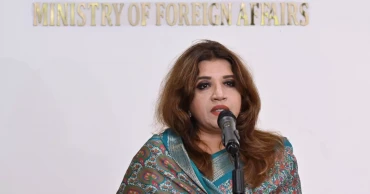
State Minister for Foreign Affairs Shama Obaed Islam on Monday said Bangladesh has sought consular access following the arrest of the prime accused and an associate in the killing of Osman Hadi by the Special Task Force (STF) of West Bengal Police in India.
She said further steps would be taken following due process once Bangladesh receives feedback from the Indian side.
“We came to know they have been placed on a 14-day remand. Our Deputy High Commission in Kolkata is in contact with the authorities, and we have sought consular access,” she told reporters at the Ministry of Foreign Affairs.
She said Bangladesh is still gathering detailed information about the arrests.
“The information we have so far is not sufficient. We will proceed once we receive adequate details. Since the incident has just occurred, we need to wait,” she said, adding, “We hope India will help us in this regard.”
Based on information provided by Bangladesh’s strategic intelligence agencies, the two main accused in the murder of Inqilab Moncho convener Osman Hadi, Rahul alias Faisal Karim Masud 37, a resident of Patuakhali, and Alamgir Hossain34, a resident of Dhaka, were arrested from the Bangaon area of West Bengal.
According to various sources, Indian authorities have recently taken a tougher stance against individuals accused of terrorism who fled Bangladesh, particularly following the recent visit of a senior official of Bangladesh’s Defence Intelligence to India.
Reports suggest that the suspects had been moving between various locations in India after entering the country following the killing.
They were allegedly attempting to take shelter near the Bangaon border area with the intention of returning to Bangladesh.
Acting on intelligence shared by Bangladesh, Indian authorities conducted an operation and arrested the two Bangladeshi nationals on the intervening night of March 7–8, 2026.
Investigators said the suspects had fled Bangladesh after killing political activist Osman Hadi.
They reportedly entered India illegally through the Meghalaya border and travelled to several locations before arriving in Bangaon in West Bengal, allegedly planning to cross back into Bangladesh.
A case has been registered in this connection.
The suspects were produced before the relevant court on Monday and were remanded to police custody.
2 months ago
Bangladesh seeks greater Turkish investment, cooperation in defence sector
State Minister for Foreign Affairs Shama Obaed Islam on Monday sought greater Turkish investment in Bangladesh and expressed readiness to facilitate such engagement.
She also highlighted the growing defence cooperation between the two countries and underscored the importance of ‘continued collaboration’ in capacity building, and defence industry cooperation.
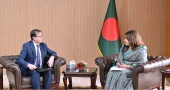
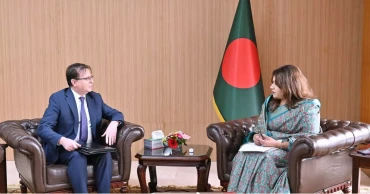
The issues were discussed when Turkish Ambassador to Bangladesh Ramis Şen paid a courtesy call on the State Minister at the Ministry of Foreign Affairs.
The State Minister sought Türkiye’s support for Bangladesh’s candidature for the Presidency of the 81st Session of the United Nations General Assembly for the term 2026–2027.
Ambassador Şen conveyed that the Republic of Türkiye would extend its support to Bangladesh’s candidature, said the MoFA.
He congratulated the State Minister on her recent appointment and reaffirmed Türkiye’s commitment to further deepening the longstanding friendship and partnership between the two countries.
During the meeting, the State Minister warmly welcomed the Ambassador and underscored the excellent bilateral relations between Bangladesh and Türkiye, which are rooted in shared values, cultural affinity, and deep-rooted civilisational bonds.
The discussions focused on further strengthening bilateral cooperation in key areas.
Both sides noted with satisfaction the positive momentum in bilateral trade and emphasised the shared objective of increasing the trade volume between the two countries.
The State Minister expressed appreciation to the Turkish government for its humanitarian support to the forcibly displaced Rohingyas sheltered in Bangladesh and for its consistent support to Bangladesh in international forums.
She also expressed hope that Türkiye will play a key role in the repatriation of the Rohingyas to Myanmar.
The State Minister welcomed the growing cultural and educational engagement between Bangladesh and Türkiye and highlighted the popularity of Turkish culture in the country.
He proposed the establishment of a full-fledged cultural institute in Bangladesh to further promote Turkish heritage.
In response, the Turkish Ambassador referred to the existing proposal for the establishment of the Yunus Emre Institute at the University of Dhaka and noted that the initiative could gradually expand, starting initially as a language training institute and potentially developing into broader cultural programs in the future.
The State Minister also expressed the hope that, once the Parliament of Bangladesh sits in, efforts would be made to rejuvenate the Bangladesh-Turkey Parliamentary Friendship Group to further strengthen legislative and people‑to‑people ties, noting the role such friendship groups play in enhancing bilateral cooperation and parliamentary diplomacy.
2 months ago
Commonwealth countries discuss challenges amid erosion of rules-based order
The Commonwealth countries have set the agenda and tone for the upcoming Commonwealth Heads of Government Meeting in November this year.
They discussed about the challenging time the global community is currently going through amid the erosion of rules-based order and undermining of international norms set by the international institutions.
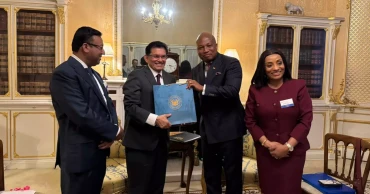
Foreign Minister Dr Khalilur Rahman led the Bangladesh delegation, comprised of the Advisor to the Prime Minister for Foreign Affairs Humaiun Kobir and other officials,to the 26th Commonwealth Foreign Affairs Minister’s Meeting (CFAMM) held on March 8 at Lancaster House in London.
Delegates from 56 Commonwealth Nations attended the meeting.
In his deliberation, he highlighted the free, fair, participatory and peaceful election that just held couple of weeks back.
The Foreign Minister expressed his proudness to have been a true representative of the people of Bangladesh in the CFAMM and conveyed how Prime Minister Tarique Rahman is consolidating the Commonwealth values of good governance through injecting extraordinary humility in politics and brilliant ideas in governance.
He expressed heartiest gratitude to the Commonwealth Secretariat for sending a high-power Commonwealth Observer Group who observed the election on the ground all-across the country and their post-election report highly commended the spectacular accomplishment of an extraordinary election for nearly 13 million voters.
Highlighting on the importance of the multilateralism, he called upon concrete actions to confront existential global challenges, particularly climate change and growing economic uncertainty, according to Bangladesh High Commission in London.
Rohingya Crisis
In the afternoon session, the Foreign Minister raised the unbearable burden Bangladesh is shouldering in hosting over 1.2 million forcefully displaced Rohingya minorities from Myanmar for nearly one decade already, while the fresh arrivals still continue.
Bhutan, Nepal discuss ways to strengthen ties with Bangladesh
2 months ago
Dhaka, Delhi can transform geographical proximity into new economic opportunities: Pranay Verma
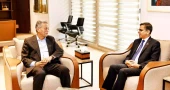
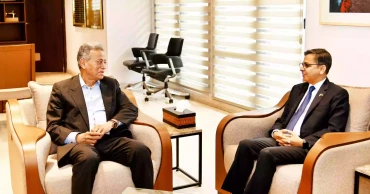
Indian High Commissioner to Bangladesh Pranay Verma on Sunday said Bangladesh and India can really transform their geographical proximity into new economic opportunities by setting a forward-looking and people-centric agenda.
He made the remarks while talking to reporters at Secretariat after his meeting with Finance Minister Amir Khosru Mahmud Chowdhury.
Their discussion focused on cooperation in financial sector, emerging areas such as digital economy and artificial intelligence, as well as improving the ease of doing business to promote greater investment and deepen economic cooperation between the two countries.
Their discussion focused on cooperation in financial sector, emerging areas such as digital economy and artificial intelligence, as well as improving the ease of doing business to promote greater investment and deepen economic cooperation between the two countries.
They discussed ways to enhance trade and economic ties between the two friendly neighbours and make economic engagement more convenient for both sides.
“The whole idea is how we can enhance our trade and economic ties, how we can strengthen our economic connectivity and how we can promote our economic cooperation,” he said.
The High Commissioner said trade is already taking place through various channels and stressed the need to make it more convenient as part of improving the ease of doing business.
He said they also discussed cooperation in the financial sector and taxation reforms, as well as greater use of technology to make economic participation more inclusive.
The High Commissioner shared India’s successful experience in financial inclusion, describing the discussion as a very forward-looking conversation.
The Indian envoy said the meeting was overall very positive, noting that both countries have large economies and forward-looking societies with significant potential to work together.
Eralier at an Iftar event, the High Commissioner noted that as two aspiring and forward moving societies, India and Bangladesh stand at the cusp of a new future where they can offer to each other and to the region, shared prosperity by working together.
He expressed India’s support for a democratic, stable, peaceful, progressive, and inclusive Bangladesh, and described the presence of the large number of guests from a wide array of Bangladeshi society at the Iftar as a reaffirmation of shared commitment to strengthen the bonds of friendship and cooperation between the two countries.
2 months ago
Bangladesh withdraws 5 envoys from foreign missions
The government of Bangladesh has withdrawn four ambassadors appointed on a contractual basis from their posts in Portugal, Poland, Mexico, and the Maldives, the Ministry of Foreign Affairs announced on Sunday.
The Ambassadors- Dr M. Mahfuzul Haque, Md Mainul Islam, M Mushfiqul Fazal (Ansarey) and Dr Md Nazmul Islam - have been transferred to the headquarters of the Ministry of Foreign Affairs in Dhaka.
Besides, Bangladesh’s High Commissioner to the United Kingdom, Abida Islam, has also been withdrawn and transferred to the ministry’s headquarters.
All five envoys have been instructed to report to the headquarters.
2 months ago
Bhutan, Nepal discuss ways to strengthen ties with Bangladesh
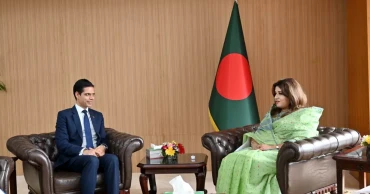
Bangladesh and Nepal on Sunday reaffirmed their commitment to deepening bilateral cooperation across various sectors and strengthening the longstanding friendly relations between the two countries.
State Minister for Foreign Affairs Shama Obaed Islam congratulated the government and people of Nepal on the successful conduct of the recent parliamentary elections.
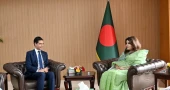
Ambassador of Nepal to Bangladesh Ghanshyam Bhandari met the State Minister on Sunday and both sides discussed a range of issues of mutual interest including trade and commerce, energy cooperation, connectivity, education, tourism, cultural exchange and people-to-people contacts.
Ambassador of Bhutan to Bangladesh Dasho Karma Hamu Dorjee also called on the State Minister.
During the meetings, views were also exchanged on enhancing regional cooperation, said the Ministry of Foreign Affairs.
2 months ago

UK supports Bangladesh in advancing women's leadership
British High Commissioner to Bangladesh Sarah Cooke has said the UK stands alongside Bangladesh in advancing women's leadership, economic opportunity, and safety and security.
In a brief message marking the International Women's Day, she also said the UK stands alongside Bangladesh in supporting women and girls to participate with confidence and influence the decisions that shape their futures.
UN Secretary-General António Guterres has said women hold just 64 per cent of the legal rights enjoyed by men worldwide.
In a message marking the International Women’s Day that falls on March 8, he said legal discrimination can shape every aspect of a woman’s life.
“She may be prevented from owning property, seeking a divorce, or taking a job without her husband’s permission. In more than 40 countries, marital rape is not recognized as a crime,” said the UN chief.
The day focuses on rights, action and justice for all women and girls.
2 months ago

German Embassy reaffirms commitment to women’s rights on Women’s Day
On International Women’s Day, the German Embassy in Dhaka on Sunday reaffirmed that human rights are not a limited resource and they do not shrink when shared.
“If women enjoy 100% of their rights, it benefits 100% of humanity,” said the Embassy in a message.
Advancing gender equality is essential for democracy, development and peace, Germany said.
Germany said it remains a steadfast partner for women’s rights in the EU, the UN, and worldwide.
2 months ago
Bangladesh envoy in London Abida Islam withdrawn: Adviser Humaiun
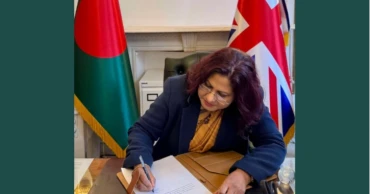
The government has withdrawn Bangladesh High Commissioner to the United Kingdom (UK), Abida Islam, accusing her of not serving the interests of the Bangladeshi community and of keeping the community divided through her actions.
"The good news is that High Commissioner Abida Islam has been withdrawn. She has been removed from her post," Prime Minister’s Adviser on Foreign Affairs, Humaiun Kobir, who is currently visiting London, told reporters on Saturday.
He claimed that Abida Islam did not serve the interests of the community.
Abida Islam has kept the High Commission in London Awami League-aligned, Adviser Kobir also said.
UNGA Presidency: UK to give due consideration to Bangladesh’s candidature
Foreign Minister Dr Khalilur Rahman is also visiting London to attend the 26th Commonwealth Foreign Affairs Ministers Meeting (CFAMM) at Lancaster House (Scheduled for March), an event that is also being viewed as an opportunity for Bangladesh to seek broader support for its candidature for the Presidency of the UN General Assembly (UNGA).
Prime Minister’s Adviser on Foreign Affairs Humaiun Kobir is accompanying the foreign minister.
High Commissioner Abida Islam officially assumed office as High Commissioner Extraordinary and Plenipotentiary of the People's Republic of Bangladesh to the United Kingdom of Great Britain and Northern Ireland on 27 January 2025.
A career diplomat, High Commissioner Islam has "significantly contributed" to strengthening Bangladesh's foreign relations, particularly with Southeast Asia, the Americas, and on the international stage, according to her profile.
Her efforts have "notably enhanced" Bangladesh's diplomatic, economic, and cultural ties with various countries.
Abida Islam has held key diplomatic positions in several international postings, including in the Bangladesh Missions in London (2001-2004), Colombo (2004-2006), and Brussels (2009-2012), Deputy High Commissioner, Bangladesh High Commission, Kolkata, India (2012–2014).
As the first female Deputy High Commissioner and Head of Mission in Kolkata, Ambassador Islam was "instrumental in strengthening" Bangladesh's ties with the West Bengal region of India, according to her profile.
In her capacity as Director General, Ambassador Islam oversaw two significant wings within the Ministry of Foreign Affairs: the International Organisations Wing (2014-2015) and the Americas Area (2015-2017).
During her tenure as Ambassador to South Korea, Ambassador Islam worked to improve Bangladesh-South Korea relations, particularly in trade, investment, and cultural exchange.
2 months ago