Foreign-Affairs
BCCCI hosts dua and iftar, highlights Bangladesh-China trade ties
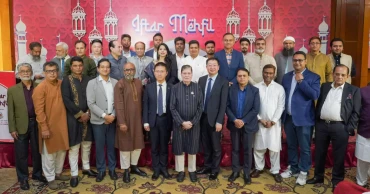
The Bangladesh China Chamber of Commerce and Industry (BCCCI) recently hosted a dua and iftar mahfil at the Ballroom of The Westin Dhaka.
The event brought together diplomats, senior government officials, leaders of trade bodies, presidents of bilateral chambers, members of the Chinese Enterprises Association in Bangladesh (CEAB), directors and members of BCCCI, and representatives of the media.
BCCCI holds first meeting of president’s advisory standing sub-committee in Dhaka
Among those present were Song Yang, Commercial Counsellor at the Embassy of the People’s Republic of China in Bangladesh; Md Golam Rasul, Chief of the Special Branch (SB) of Police; Mahbubur Rahman, President of the International Chamber of Commerce (ICC), Bangladesh; Han Kun, President of the Chinese Enterprises Association in Bangladesh; and Nargis Morsheda, former administrator of BCCCI and Joint Secretary at the Ministry of Commerce.
Song Yang highlighted the growing investment cooperation between Bangladesh and China. Since August 2024, more than 30 Chinese enterprises have signed investment agreements with Bangladeshi partners, with intended investments totalling nearly $1 billion, he said.
BCCCI President Khorshed Alam stressed the importance of expanding bilateral trade and investment. He noted that China has granted 100 per cent duty-free access to Bangladeshi products and encouraged exporters to take advantage of the opportunity by promoting items such as fruits, vegetables, shrimp, agricultural goods and leather products.
BCCCI signs MoU to enhance Bangladesh-China vocational, skills cooperation
Han Kun reaffirmed the commitment of Chinese enterprises to supporting Bangladesh’s development through investment, industrial cooperation and participation in development projects.
The programme ended with prayers and iftar, reflecting the spirit of friendship and cooperation between the business communities of Bangladesh and China.
3 months ago
US trade deal discussed with BNP, Jamaat before signing: FM
Foreign Minister Dr Khalilur Rahman on Wednesday rejected claims that the reciprocal trade agreement between Bangladesh and the US was signed abruptly just days before the recently held national election.
He said the matter had been discussed in advance with the leadership of the country’s two major political parties - BNP and Jamaat-e-Islami- and both of which had agreed to the deal prior to its signing.
"The US Trade Representative spoke to the heads of our two key parties before the elections and they also agreed to it. So it's not like we did this in the dark,” Dr Khalilur said in response to a question on whether there had been any pressure to expedite the signing of the deal ahead of the recently held national election.
The Foreign Minister said there are entry and exit clauses and the government can review it if it desires so.
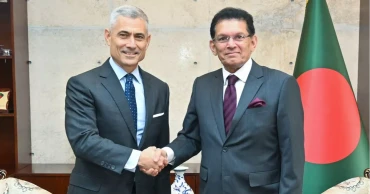
US Assistant Secretary of State for South and Central Asian Affairs Paul Kapur, who met the Foreign Minister at the Ministry of Foreign Affairs, underscored the importance of implementing the provisions of the agreement on ‘reciprocal trade’ to foster greater bilateral trade and investment.
The Foreign Minister reiterated the government’s commitment to policy continuity, particularly in the economic domain.
Assistant Secretary Kapur, in the meeting, discussed key US priorities in Bangladesh, expanding market access for American businesses, strengthening cooperation on illegal immigration, and deepening collaboration on regional security and counterterrorism.
The deal says Bangladesh shall endeavor to increase purchases of US military equipment and limit military equipment purchases from certain countries; and shall endeavor to facilitate the increase of purchases by its national flag carrier (Biman Bangladesh Airline) of U.S. civilian aircraft, parts, and services.
Bangladesh will submit a full and complete notification to the WTO of all subsidies that it provides, as required under Article 25.1 of the WTO Agreement on Subsidies and Countervailing Measures within six months of entry into force of this agreement.
Biman Bangladesh Airline intends to purchase 14 Boeing aircraft, plus a purchase option of additional aircraft.
The deal also says Bangladesh shall endeavor to purchase, or to facilitate the purchase by Bangladeshi companies, of U.S. energy, including long-term offtake agreements for U.S. liquefied natural gas, with an estimated value of $15 billion over 15 years.
Khalilur, who played a leading role on Bangladesh's side in negotiations with the US before the agreement, said the deal was not concluded just three days before the elections but a year ago, in February 2025.
The Centre for Policy Dialogue (CPD) recently said the reciprocal trade agreement between the US and Bangladesh is “highly discriminatory” and must be revoked.
“We are stunned and bewildered….I do not know how a government could enter into such an agreement,” said CPD Research Director Khondaker Golam Moazzem at a media briefing on the social and economic policies of the new government for the first 180 days and beyond.
3 months ago
UNFPA hosts Open Mic to amplify public voices for women’s and girls’ rights
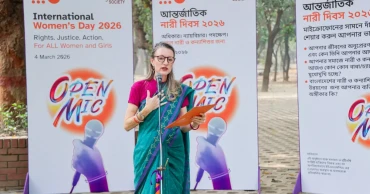
To mark International Women’s Day, the United Nations Population Fund (UNFPA) in Bangladesh on Wednesday organised an Open Mic event at Shahabuddin Park in the city’s Gulshan area to raise their voices for the rights, justice and empowerment of women and girls across the country.
With the global theme “Rights, Justice, Action: For All Women and Girls,” the event created a public platform for women, girls, men and boys to share their reflections, commitments and aspirations for a more equal Bangladesh.
Foreign Adviser lauds UNFPA’s role in maternal health, gender equity in Bangladesh
Addressing the gathering, UNFPA Representative in Bangladesh Catherine Breen Kamkong thanked participants for their courage and engagement, emphasizing that meaningful change begins by listening to communities.
“Policies and programmes are strongest when they reflect and are guided by real voices and lived experiences,” the UNFPA Representative said. “At UNFPA, we are committed to preventing violence against women and girls, ending child marriage, reducing adolescent pregnancy, ending preventable maternal deaths and ensuring access to sexual and reproductive health and rights. But sustainable progress requires collective action, and that starts with dialogue.”
Bangladesh has made significant progress in advancing gender equality. However, challenges remain as violence against women continues to affect millions, child marriage persists as a reality for almost half of all adolescent girls, mothers still die in pregnancy and birth, and many women and girls still face barriers in exercising full agency over their health and life choices.
“Many girls are still discouraged from studying technology and engineering, and too often they face cyber-bullying and online harassment. Initiatives like Alapon Helpline help adolescents to have a safe space to openly share their struggles, talk about mental health, and support each other. When young people feel heard, they find strength and hope to move forward,” said Farhana Sadika, a student at the United International University speaking at the Open Mic event about the challenges girls face in her community.
The Open Mic event was held as part of UNFPA Bangladesh’s broader International Women’s Day campaign, which aims to highlight data, personal stories and community voices to drive action on women’s and girls’ rights.
3 months ago
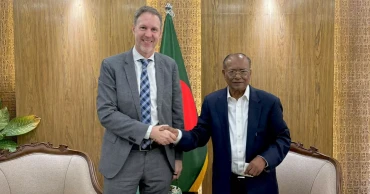
UNDP reaffirms support for Bangladesh’s climate, development priorities
UNDP Resident Representative in Bangladesh Stefan Liller on Wednesday reaffirmed UNDP’s support for the Government of Bangladesh’s climate and development priorities.
He met Environment, Forest and Climate Change Minister Abdul Awal Mintoo and discussed areas of ongoing cooperation.
UNDP strengthens Bangladesh EC with IT support for post-election capacity building
3 months ago
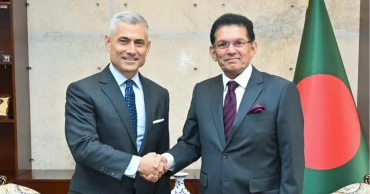
Bangladesh flags economic risks of prolonged Middle East war
Seeking an early resolution to the ongoing crisis in the Middle East, Bangladesh on Wednesday conveyed to the US that it is difficult for a country like Bangladesh to bear the economic impact of this war if it lasts longer and spreads further.
“We have discussed the crisis in the Middle East. I told him (US Assistant Secretary S Paul Kapur) that two of our Bangladeshis have lost lives and seven others have been injured. If this war is prolonged or spreads, this fear may increase further,” Foreign Minister Dr Khalilur Rahman told reporters at the Ministry of Foreign Affairs after his meeting with the US top diplomat.
The US Assistant Secretary of State for South and Central Asian Affairs, who arrived in Dhaka on Tuesday night from New Delhi, is now paying a two-day visit.
Briefing the reporters in the afternoon, Dr Rahman said they conveyed to the US official that they should try to resolve this conflict - this problem through dialogue as soon as possible by giving diplomacy opportunity.
As the recent escalation in the Middle East came up during the exchange, the Foreign Minister stressed the need for exercising restraint by all parties and urged early resolution of the conflict through dialogue and diplomatic means in order to minimise loss of life, prevent further destabilisation in the region and beyond.
During the briefing, a journalist asked whether the US Assistant Secretary of State had said anything about when the war would end.
In response, the Foreign Minister said, "It is not even completely in their hands when the war will end. No one can say that."
When the journalist commented in response that "they have started it," Dr Rahman said, "No, no - that cannot be a question."
Responding to another question, Dr Rahman said defence matters were not discussed during the meeting and that neither GSOMIA nor ACSA was mentioned.
“There has been no discussion with me regarding defence cooperation,” he said, adding that while the Indo-Pacific issue came up but it was not discussed in detail.
The Foreign Minister said Bangladesh will review its overall Indo-Pacific Policy and reiterated that the country will not enter into any military alliance.
During the discussion, both sides reaffirmed their commitment to further strengthening bilateral relations, including economic engagements, based on mutual respect and shared interests.
Dr Rahman emphasised the ‘Bangladesh First’ policy of the current government under the leadership of Prime Minister Tarique Rahman.
He further highlighted Bangladesh’s approach to maintaining robust relations with regional and global partners to promote national interests and shared prosperity.
Assistant Secretary Paul Kapur expressed happiness at the peaceful, free and festive general election in Bangladesh and felicitated the new government led by Prime Minister Tarique Rahman on the assumption of its responsibilities.
He also mentioned the congratulatory letter of US President Donald Trump addressed to Prime Minister Tarique Rahamn, and expressed the confidence that the ties between two countries will grow stronger in the coming days.
Paul Kapur also underscored the importance of implementing the provisions of the agreement on Reciprocal Trade to foster greater bilateral trade and investment.
The Foreign Minister reiterated the government’s commitment to policy continuity, particularly in the economic domain.
The two sides also discussed the Rohingya issue.
Defence issues not discussed in meeting with US assistant secretary: FM Khalilur
The Foreign Minister thanked the United States for its continued humanitarian support for the Rohingyas and sought sustained international support for a durable solution to the crisis.
Both sides expressed optimism that regular high-level engagements and institutional dialogues would continue to deepen Bangladesh-US relations in the years ahead.
Prior to this meeting, Paul Kapur had a brief meeting with the State Minister, Shama Obaed Islam.
3 months ago

Chinese firm to invest $22m in fashion and beauty factory in Bangladesh
A Chinese company is set to invest US$22 million to establish a fashion and beauty products manufacturing facility at the Bangladesh Export Processing Zones Authority Economic Zone.
Adeline Beauty Technology (Bangladesh) Co., Ltd. signed a land lease agreement with BEPZA on Wednesday at the BEPZA Complex in Dhaka to set up the factory.
The company plans to invest US$22 million in the project, which is expected to generate employment for approximately 4,170 Bangladeshi nationals.
Under the agreement, Adeline Beauty Technology will manufacture a wide range of fashion hair and beauty products, including wigs, eyelashes and cosmetic nails.
The products will be primarily exported to major international markets such as the United States, Canada, the United Kingdom, Germany, France, Spain, Italy, the United Arab Emirates, Russia and Mexico, among others.
The project is also expected to strengthen Bangladesh’s position in the fast-growing global beauty and personal care sector, which has seen steady demand in North America, Europe and the Middle East in recent years.
The agreement was signed by Md Tanvir Hossain, Executive Director (Investment Promotion) of BEPZA, on behalf of the authority, while Managing Director Hang Sun signed on behalf of Adeline Beauty Technology (Bangladesh) Co., Ltd.
Executive Chairman of BEPZA, Major General Mohammad Moazzem Hossain, witnessed the signing ceremony.
Bangladesh seeks more Chinese investments, security cooperation
Speaking on the occasion, the Executive Chairman thanked the company for choosing BEPZA Economic Zone as its investment destination.
He reaffirmed the authority’s commitment to providing a secure, compliant and business-friendly environment for investors.
3 months ago
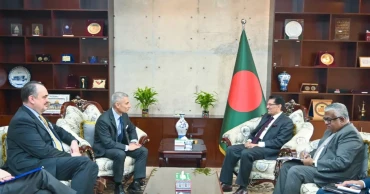
Defence issues not discussed in meeting with US assistant secretary: FM Khalilur
Foreign Minister Dr Khalilur Rahman on Wednesday said defence issues did not come up for discussion during his meeting with visiting US Assistant Secretary Paul Kapur and the words GSOMIA and ACSA were not even uttered in the meeting.
He made the remarks while responding to questions on defence cooperation between the two countries.
General Security of Military Information Agreement (GSOMIA) and the Acquisition Cross-Servicing Agreement (ACSA) are two foundational defence agreements which are "essential" to enabling a closer defence relationship, expanding opportunities for defence trade, information sharing, and military-to-military cooperation between our two countries.
Korean FM greets Khalilur Rahman; eyes enhanced ties with Dhaka
Foreign Secretary Asad Alam Siam and US Ambassador to Bangladesh Brent T Christensen were also present at the meeting.
3 months ago

US-Bangla Airlines to operate two special Dhaka–Dubai flights for stranded Bangladeshis in UAE
US-Bangla Airlines will operate two special flights on the Dhaka–Dubai–Dhaka route to repatriate Bangladeshi nationals stranded in the UAE amid the ongoing Middle East crisis.
According to a press release issued on Tuesday, the first flight will leave Dhaka on Wednesday, March 4, at 7:20 PM (BST), returning from Dubai at 12:20 AM (local time).
The second flight departs Dhaka on Thursday, March 5, at 5:15 PM (BST), with a return from Dubai at 10:00 PM (local time). Both flights will use the 436-seat Airbus A330-300, flight numbers BS-341 (Dhaka–Dubai) and BS-342 (Dubai–Dhaka).
The Dubai Airport Authority, along with carriers such as Emirates and Air India, has granted special permission for these humanitarian flights. Priority will be given to Bangladeshis whose visas have expired or are nearing expiration.
Passengers seeking bookings or assistance can contact any US-Bangla Airlines Sales Center in Bangladesh or the UAE, authorized travel agencies, or call the hotline at 13605. Mobile support is available at +880 1777 777800–806.
3 months ago
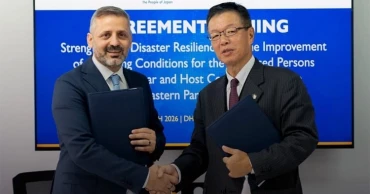
Japan-IOM sign $2.6 million aid to Rohingya refugees and host communities in Cox’s Bazar and Bhasan Char
The Government of Japan has granted USD 2.6 million (about 400 million JPY) to the International Organization for Migration (IOM) to support a comprehensive program for Rohingya refugees and host communities in Cox’s Bazar and Bhasan Char.
The Exchange of Notes was signed by Saida Shinichi, Ambassador of Japan to Bangladesh, and Giuseppe Loprete, Chief of Mission a.i., IOM Bangladesh.
The project will assist roughly 565,000 people through integrated interventions, including shelter and non-food items, LPG distribution, healthcare, site management and development, and livelihood support for refugees. Disaster Risk Reduction measures will also be implemented to help displaced and disaster-prone host communities in Cox’s Bazar.
Ambassador Saida Shinichi expressed his hope that the support from the Government of Japan will lead to improved living conditions for both Rohingya refugees and host communities.
“Japan remains firmly committed to supporting the Rohingya refugees and the host communities in Bangladesh. Through our continued partnership with IOM, Japan hopes to help improve living conditions, strengthen resilience, and uphold human dignity in the face of this protracted humanitarian crisis..,” said Ambassador Saida.
“Supporting humanitarian operations in Cox´s Bazar has become increasingly urgent in 2026, as the needs of the refugee population continue to grow while long term solutions are not yet available,” said Giuseppe Loprete, Chief of Mission, a.i., IOM Bangladesh.
“We are deeply grateful to the Government of Japan for its continued and generous support. This contribution will enable IOM and its partners to respond to critical life-saving needs, including shelter and health services, while also supporting livelihoods and strengthening resilience to climate-related disasters and other challenges faced by Rohingya refugees and host communities. In close coordination with the Government of Bangladesh and partners, IOM remains firmly committed to supporting affected populations.”
Since the beginning of the emergency in August 2017, Japan has been a consistent supporter of the Rohingya humanitarian response in Bangladesh, contributing over USD 250 million to IOM and other UN agencies and non-governmental organizations, including through this latest contribution.
3 months ago
US Asst Secy Paul Kapur arrives in Dhaka
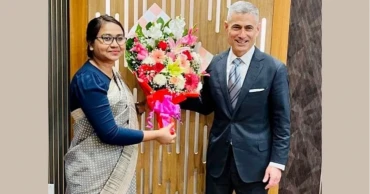
US Assistant Secretary S. Paul Kapur arrived in Dhaka on Tuesday a two-day visit to ‘strengthen strategic ties’ between Bangladesh and the United States and explore opportunities in diverse areas.
“We warmly welcome Assistant Secretary S. Paul Kapur to Bangladesh. Assistant Secretary Kapur will engage with government officials and business leaders to strengthen US-Bangladesh strategic ties,” said the US Embassy in Dhaka on Tuesday night.
He visited New Delhi, India (March 1-3) and discussed regional security and shared priorities in the Indo-Pacific.
Assistant Secretary Kapur’s visit builds upon recent momentum to advance President Trump’s vision for robust and mutually beneficial US-India partnership.
During his visit, Assistant Secretary Kapur will meet with new government officials and business leaders to discuss expanding bilateral trade and investment, enhancing security cooperation, and advancing shared interests in the Indo-Pacific region, said U.S. Mission Spokesperson Poornima Rai on Monday.
Before Kapur’s arrival in Dhaka, US Ambassador to Bangladesh Brent T. Christensen had a series of courtesy meetings with the newly appointed Cabinet members over the past few days highlighting the opportunities in diverse sectors.
Bangladesh’s aviation and tourism sectors are poised for growth over the next decade, and Boeing and US technology companies are the perfect partners, said the US Embassy in Dhaka after Ambassador’s meeting with Civil Aviation and Tourism Minister Afroza Khanam Rita.
“Had an excellent meeting with Law Minister Md Asaduzzaman. Stopping illegal immigration and human trafficking and strengthening border security are shared priorities for both countries,” said Ambassador Christensen.
His meeting with Home Affairs Minister Salahuddin Ahmed focused on strengthening their fight against illegal immigration, and deepening collaboration on security and counterterrorism.
US warns of possible Iranian strike on Saudi oil hub as Trump says it’s ‘too late’ for talks
The United States looks forward to working with the newly elected government to advance prosperity and the security of the region.
Paul Kapur was sworn in as Assistant Secretary of State for South and Central Asian Affairs on October 22, 2025.
US President Donald J. Trump has recently congratulated Prime Minister Tarique Rahman on his assumption of office and expressed hope for stronger defence cooperation between the two countries.
In his message to Tarique Rahman last month, President Trump said he expects the new Prime Minister to take decisive steps to complete the routine defence agreements that would enable Bangladesh’s military to access high-end American-made equipment, which he described as the best in the world.
“I look forward to working with you to make the relationship between the United States and Bangladesh stronger than ever before,” he said in a letter to PM Tarique, shared by the Ministry of Foreign Affairs.
President Trump said the partnership between the two countries is based on mutual respect and a shared interest in fostering a free and open Indo-Pacific where strong, sovereign nations can prosper.
“As you begin your term, I hope you will help me maintain the tremendous momentum in our trade relationship through the implementation of our Agreement on Reciprocal Trade, which benefits farmers and workers in both of our countries,” he said.
President Trump said his Ambassador to Bangladesh, Brent Christensen, has my full confidence. “Together, we have an opportunity to make both of our nations more prosperous and secure.”
3 months ago