Foreign-Affairs
Bangladesh elected Vice Chair of UN Peacebuilding Commission for 2026
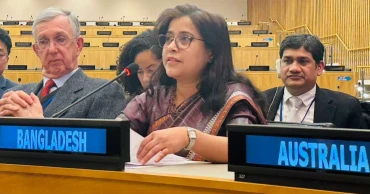
Bangladesh has been elected as the Vice-Chair of the UN Peacebuilding Commission (PBC) for the year 2026.
The election of the five-member bureau of the PBC was held at the UN Headquarters in New York on Thursday.
The members of the Commission during its first meeting of the 20th session elected Morrocco as Chair while Germany, Brazil and Croatia and Bangladesh were elected as Vice-Chairs.
The Peacebuilding Commission is an intergovernmental advisory body that supports peace efforts in conflict-affected countries.
Bangladesh needs to target visa fraud as brokers exploit social media
The Commission is composed of 31 member states, elected from the General Assembly, the Security Council, the Economic and Social Council and the leading troops and financial contributing countries to the United Nations system.
Bangladesh has been a member of the Commission since its inception in 2005 and had earlier served the Commission as chair in 2012 and 2022 as vice-chair in 2013 and 2023.
Bangladesh assumed charge today as Vice-Chair during the first PBC meeting of its 20th session after a brief ceremony. On this occasion, the President of the UN General Assembly and Chef de Cabinet, on behalf of the Secretary-General were present and delivered statements emphasizing the rule of the PBC.
UNDP to support Bangladesh’s capital market with thematic bond development
In a statement, Bangladesh delegation thanked members of the Commission for reposing their trust and confidence in Bangladesh for this important responsibility and reiterated its commitment to the UN’s peacebuilding efforts and activities as well as its future plan of action.
4 months ago
Dhaka-Karachi direct flight launched
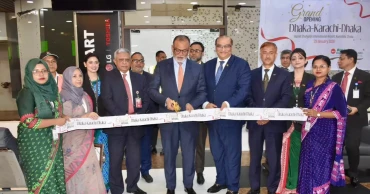
Direct flight operations between Bangladesh and Pakistan commenced on Thursday as Biman Bangladesh Airlines launched its inaugural flight from Dhaka to Karachi.
The "fully packed" inaugural flight departed from Hazrat Shahjalal International Airport, Dhaka, for Jinnah International Airport, Karachi.
The flight was seen off by Civil Aviation and Tourism Adviser Sk. Bashir Uddin; High Commissioner of Pakistan to Bangladesh, Imran Haider; Secretary, Ministry of Civil Aviation and Tourism; Chairman, Civil Aviation Authority of Bangladesh; and Managing Director and CEO of Biman Bangladesh Airlines, along with other senior officials.
The launch of the direct flight is being hailed as a positive and long-awaited development, said the Pakistan High Commission in Dhaka.
Addressing the inaugural ceremony, the Adviser for Civil Aviation and Tourism underscored the importance of the Dhaka–Karachi route in enhancing connectivity, promoting tourism and strengthening people-to-people links.
He noted that Biman Bangladesh Airlines would gradually increase flight frequency and reduce airfares to make travel more affordable for the people.
He expressed hope that people of Bangladesh will visit Pakistan and explore its natural beauty, cultural heritage and diverse cuisines.
Speaking on the occasion, the High Commissioner recalled the vision of Professor Muhammad Yunus, Chief Adviser of Bangladesh and Muhammad Shehbaz Sharif, Prime Minister of Pakistan aimed at enhancing connectivity between Pakistan and Bangladesh.
3 transgender women shot dead in Karachi
The High Commissioner expressed gratitude to the Government of Bangladesh, Biman Bangladesh Airlines, and the Civil Aviation Authority for making the launch of the flight possible.
Passengers travelling on the inaugural flight expressed happiness and enthusiasm over the restoration of the direct air link, describing it as a milestone towards bringing the two countries closer, said the High Commission.
4 months ago
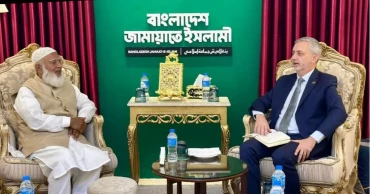
EU Envoy meets Jamaat Ameer, reaffirms support for Bangladesh’s democratic transition
European Union (EU) Ambassador to Bangladesh Michael Miller on Thursday met with Jamaat-e-Islami Ameer Dr Shafiqur Rahman, reaffirming the EU’s support for Bangladesh’s democratic transition and reform process.
"We look forward to smooth elections and stand ready to work with whomever will form the next government to further strengthen EU-Bangladesh relations," said the EU Embassy in Dhaka after the meeting.
4 months ago
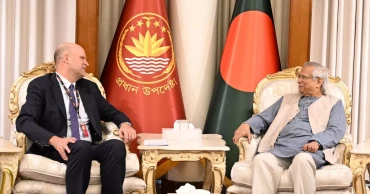
Rohingya crisis not receiving due attention, repatriation only solution: Prof Yunus
Chief Adviser Prof Muhammad Yunus has said the Rohingya crisis is still not receiving the global attention it deserves, despite the interim government’s efforts over the past year to spotlight the issue through a series of high-profile initiatives, including a visit by the UN Secretary-General to the camps during Ramadan.
He said the prolonged stay of the Rohingyas in the camps could never be a solution, as it had already created tensions with host communities, and called for renewed international efforts to ensure repatriation.
“The problem began in Myanmar, and the solution must also come from there. A frustrated and angry young generation is growing up in the camps, with access to technology. This is not good news for anyone. Our job is to make sure they return to their homeland in peace and dignity,” the Chief Adviser said.
4 months ago
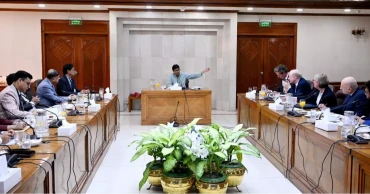
Bangladesh needs to target visa fraud as brokers exploit social media
Bangladesh needs to step up efforts to curb fraudulent visa applications, as officials and stakeholders warn that unethical brokers operating both at home and from Western capitals continue to exploit social media, with prosecutions of offenders remaining rare.
The concerns were raised at a meeting in Dhaka on Wednesday reviewing progress in addressing the drivers of visa fraud, where participants said loosely regulated intermediaries, online misinformation and weak cross-border enforcement are undermining recent policy measures despite growing scrutiny from destination countries.
Envoys from Italy, Germany, UK and the Netherlands commended Bangladesh’s landmark ordinance "Prevention and Suppression of Human Trafficking and Smuggling of Migrants Ordinance" which unambiguously criminalises the smuggling of migrants, including those that facilitate and assist, through activities such as document fraud.
This was expressed at the meeting convened by Chief Adviser’s Special Envoy Lutfey Siddiqi at his office.
The heads of Special Branch and Criminal Investigation Department (CID) were present as well as representatives from National Security Intelligence (NSI), the Bureau of Manpower, Employment and Training (BMET) and Ministry of Foreign Affairs.
The following points were raised at the meeting:
1. It is perceived that until recently, Bangladesh authorities were not serious about curbing the prevalence of fraudulent documents used in visa applications. This in turn has eroded trust and contaminated the approval process for applications from Bangladesh.
2. Specific examples include one embassy that received over 600 applications in the last few months with job offer letters that were fake.
Another received 300 tourist visa applications all from the same part of Bangladesh, and all accompanied by fake statements from the same bank.
In another instance, a Facebook page had already collected several hundreds of thousands of Taka in fees from 70 victims before they were disrupted.
In all three cases, Law Enforcement is now pursuing prosecution.
In addition, over 40 people on average have been offloaded every day by immigration police last year.
3. Another phenomenon is the use/abuse of airports that grant visa-on-arrival to Bangladeshis as transit points for moving illegally to third countries.
4. One country reported that last year, they received over 6,000 asylum applications from Bangladeshis who had originally entered on student or work visas.
5. Another country reported that the general breakdown of trust in our documents has significantly lengthened their visa processing time; another reported a temporary suspension of all applications until an investigator from their headquarters (currently visiting Bangladesh) completes her work.
6. On a positive note, it was mentioned that United Commercial Bank (UCB) now provides a QR code on their bank statements which make them easier to verify. This should be rolled out more widely.
7. Intelligence sharing agreements have also been put in place recently or are in the process of being established so that transnational crime can be tackled in a coordinated manner between the sending and host countries.
8. Technical assistance and systems such as the EU’s Returnee Case Management System (RCMS) are also being put to good use. However, it was observed that officers who obtain training from foreign partners on immigration issues can soon get transferred out to other parts of the police. 9. In recent months, the Bureau of Manpower, Employment and Training (BMET) have fully automated most of their processes and have linked their system to that of immigration police so that both exits and re-entry of BMET card-holders can now be monitored for the first time.
10. However, it was observed that while primary agents are regulated via a registration process, sub-agents who operate downstream remain unauthorised and unregulated. There needs to be proactive awareness campaigns about potential abuses by brokers.
11. Bangladesh is now a party to The Hague Apostille Convention. This means that Bangladesh is treaty-bound to ensure that notarised documents are genuine and credible. It is vital that apostilles issued by the Ministry of Foreign Affairs are irreproachably genuine both in terms of their source and content.
All parties at the meeting sought the high-level focus and commitment of the interim government to transparently tackle this issue.
They also commended the unprecedented cooperation that they are receiving from Bangladesh.
4 months ago
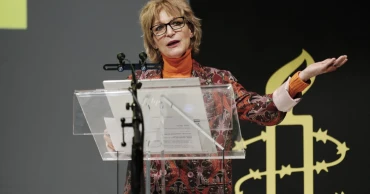
AI chief writes to Prof Yunus; calls for HR guarantees during election period
Bangladesh’s interim government must restore public trust by guaranteeing full respect for human rights and the rule of law in the fortnight ahead of next month’s national elections, Amnesty International’s Secretary General Agnes Callamard said in an open letter to Chief Adviser Muhammad Yunus.
The letter also cites the interim authorities’ "inadequate response" to the violence that followed the killing of Sharif Osman Hadi on 18 December 2025, when the offices of media outlets The Daily Star and Prothom Alo were set alight, and the editor of the New Age newspaper, Nurul Kabir, was harassed.
On the same day, Dipu Chandra Das, a Hindu man, was lynched following allegations of blasphemy, AI said.
Since assuming power in 2024, the interim authorities have "misused" the draconian Anti-Terrorism Act (ATA) against journalists and other perceived critics.
The letter cites the examples of Monjurul Alam Panna, who was arrested under the ATA in August 2025 for allegedly “attempting to overthrow the interim government,” and Anis Alamgir, who was detained under the ATA in December 2025, for allegedly “spreading propaganda for the Awami League.”
Both journalists’ arbitrary arrests violate their rights to freedom of expression and association, AI said.
The letter, sent ahead of the 12 February polls, raises concerns about the authorities’ continued misuse of anti-terror legislation against journalists, and their failure to adequately safeguard the rights to life, security of persons, and freedom of expression, and association.
It calls on the interim government to “ensure that laws, policies, and practices fully protect” these rights in the lead up to the elections.
“Bangladesh’s interim government had a mandate to restore human rights, in line with the nation’s obligations under international law. The coming weeks will be a decisive test of whether it will honour those responsibilities,” said Agnès Callamard, Amnesty International’s Secretary General.
“The authorities must uphold the rights of individuals and groups to speak freely – including during an election. Chief Advisor Yunus’s government must show genuine leadership by ensuring that all Bangladeshis can participate fully and safely in deciding their country’s future. They must ensure that the right to life is protected. No one should fear for their life for peacefully speaking their minds and sharing their views. ”
Despite Bangladesh being a signatory to many of the core international human rights instruments, the interim administration has failed to give effect to these obligations.
This includes the International Covenant on Civil and Political Rights, which enshrines the rights to freedom of expression, peaceful assembly and freedom of association that must be upheld, including during an election period.
In the letter, Agnès Callamard said, “Unlawful restrictions on these fundamental freedoms undermine public debate and participation in the electoral process, and weaken public trust in institutions.”
4 months ago

Meaningful climate action is about people, equity, dignity: ICIMOD DG
ICIMOD Director General Dr Pema Gyamtsho said on Wednesday that by focusing on the knowledge, leadership and priorities of women and indigenous people in Bangladesh, Bhutan and Nepal, they are not only boosting climate resilience but also giving more power to those who have long protected mountain ecosystems.
“As implementation begins, I am reminded that meaningful climate action is not only about technologies or policies, but about people, equity, and dignity,” he said, reflecting not only on what the ICIMOD has achieved but also on what this year has meant to him personally.
By working closely with national partners in all three countries, HI-CAS is laying the foundation for integrated, ecosystem-based adaptation solutions that respond to local realities and ensure that those most affected by climate change are at the centre of adaptation planning and action, Dr Pema said.
“What gives me confidence is HI-CAS’s clear focus on locally led, gender-responsive adaptation,” he said in a message.
In 2025, ICIMOD (International Centre for Integrated Mountain Development) began implementation of the Integrated Climate Adaptation Solutions for the Hindu Kush Himalaya Region (HI-CAS) project, a multi-country initiative focused on strengthening climate adaptation for women and Indigenous Peoples and Local Communities across Bangladesh, Bhutan, and Nepal.
In 2025, ICIMOD further strengthened its partnership with the Global Biodiversity Information Facility (GBIF) through a GBIF-Capacity Enhancement Support Programme (CESP)-supported capacity-building programme that enhanced institutional capabilities for biodiversity data management across the HKH.
Working with national institutions in Bangladesh, Bhutan, India, Nepal, and Pakistan, partners published 20 biodiversity datasets using the regional open-access infrastructure, the Hindu Kush Himalayan Biodiversity Information Facility (HKHBIF), hosted by ICIMOD.
The Third Regional Science, Policy, and Finance Dialogue on Air Quality Management in the Indo-Gangetic Plain and Himalayan Foothills took place in Paro, Bhutan, in December 2025 and brought key partners from Bangladesh, Bhutan, India, Nepal, and Pakistan to discuss on developing a voluntary collaborative platform and talk about the factors required to make regional collaboration for air quality management a success.
The project ‘Reducing air pollution by creative use of pelletisation’ was a three-year initiative implemented from September 2023 to September 2026, funded by the United States Department of State, Dr Pema said.
The project focused on Bangladesh, India, Nepal, and Pakistan, and aimed to address severe regional air pollution linked to agricultural residue burning.
The proposed pilot unit was designed as a demonstration facility to showcase the technical, economic, and environmental viability of converting agricultural residues into clean energy products.
Dr Pema said it was also expected to generate practical evidence on operational performance, supply-chain linkages with farmers, and emission reduction benefits, thereby supporting knowledge exchange and facilitating replication of the model in countries such as Bangladesh and Pakistan.
ICIMOD chief hails SANDEE’s 25 years of shaping South Asia’s environmental economics
The Green Alliance for Women’s Economic Security in the HKH was a 24-month regional initiative awarded to ICIMOD by the US Embassy in Nepal to strengthen women’s entrepreneurship across Bangladesh, India and Nepal.
The project aimed to support 60 young women entrepreneurs through small grants, business incubation, mentorship, and the establishment of a regional alliance of incubators to promote inclusive, resilient and sustainable enterprises.
4 months ago
UNDP to support Bangladesh’s capital market with thematic bond development
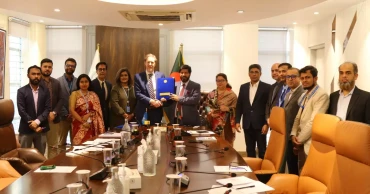
The United Nations Development Programme (UNDP) has assured support to Bangladesh’s capital market by strengthening the thematic bond market, with a focus on promoting green and sustainable finance.
The assurance came on Wednesday following the signing of a memorandum of understanding (MoU) between the Bangladesh Securities and Exchange Commission (BSEC) and UNDP at the BSEC headquarters in Agargaon.
BSEC Commissioner Khondoker Rashed Maqsood and UNDP Bangladesh Resident Representative Stefan Liller signed the MoU on behalf of their respective organisations.
Speaking at the event, Khondoker Rashed Maqsood said BSEC, as the market regulator, remains committed to the continuous improvement of market governance.
“By strengthening good governance, enhancing transparency and reinforcing investor confidence, we are working to build a robust and credible market structure. Through partnerships with UNDP and other stakeholders, BSEC will continue its efforts to ensure a supportive, predictable and resilient regulatory environment,” he said.
Rashed also underscored the importance of establishing the capital market as a long-term source of financing, developing the bond market and expanding thematic bonds to support sustainable economic growth.
Stefan Liller said Bangladesh’s capital market holds significant potential to mobilise long-term capital for high-impact environmental and social investments through thematic bonds.
“To sustain the economic momentum of the past decade, manage the transition from least developed country status and avoid the middle-income trap, increased investment across sectors, particularly to address growing climate-related risks, is essential,” he said.
Liller noted that thematic bonds could act as a catalyst for mobilising both domestic and international capital to meet these challenges, adding that UNDP is committed to strengthening the enabling environment for Bangladesh’s thematic bond market through its partnership with BSEC.
Under the MoU, UNDP will provide technical assistance to the commission in areas including sustainable finance, introduction of investment taxonomies, and support to thematic bond issuers from pre-issuance to post-issuance stages.
The cooperation will also cover capacity-building and training for BSEC and other stakeholders, as well as knowledge exchange on thematic bond practices in emerging economies.
The partnership will further focus on ensuring proper utilisation of funds raised through thematic bonds, project monitoring, enhanced bond reporting capacity, and the introduction of impact measurement and management frameworks aligned with international standards.
It will also support the development of third-party verification mechanisms, risk mitigation for issuers, and the issuance of green, social, climate, sustainable and SDG-linked thematic bonds.
UNDP said these initiatives would contribute to mobilising long-term finance, supporting Bangladesh’s transition from an LDC to a middle-income country, and advancing the country’s long-term sustainable development goals.
Thematic bonds are widely recognised as a key financial instrument for channelling investment towards the Sustainable Development Goals (SDGs). They support access to long-term financing in capital markets and help diversify funding sources.
There are mainly three types of thematic bonds. Green bonds are used exclusively to finance projects with clear environmental benefits, such as renewable energy, biodiversity conservation, clean transportation and eco-friendly construction. Blue bonds, a sub-category of green bonds, focus on ocean-related projects with positive environmental, economic and climate impacts.
Human Rights Day: Speakers at UNDP event call for stronger protection of rights
Social bonds are issued to finance projects with a positive social impact, particularly for vulnerable groups such as the unemployed and people living below the poverty line. Gender bonds, a sub-category of social bonds, support projects that advance women’s empowerment and gender equality.
Sustainable bonds finance a combination of both green and social projects, integrating environmental and social objectives under a single financing framework.
4 months ago

Doesn’t matter who thinks what about Bangladesh decision on drone making: Foreign Adviser
Foreign Affairs Adviser Md Touhid Hossain on Wednesday defended the government’s decision to set up a UAV (drone) manufacturing and assembly plant in Bangladesh with support from China, stressing that it matters little what others may think about the move.
“If Bangladesh plans to establish a factory or sets up a factory with the support of another country, it will be done in the interest of Bangladesh and based on its own decision. It does not matter who thinks what about Bangladesh’s decision,” he told reporters at the Ministry of Foreign Affairs when asked about a recent agreement with China.
Hossain posed a counter question, asking, “Does his opinion carry any importance regarding whatever happens in India or Pakistan?”
Referring to cooperation with China, the Adviser said such collaboration is already taking place, and if a factory is established through this process, it is not a matter for the Foreign Ministry.
When a reporter drew his attention to comments made by the newly appointed US Ambassador to Bangladesh, Brent T. Christensen, both after his arrival and prior to arriving in Dhaka, the Adviser said they have seen that. “We will take decisions and work in line with our interests.”
No Comments on US Diplomat
As the Jamaat-e-Islami readies for its strongest showing at the polls next month, US diplomats are quietly signalling a willingness to engage with the once-banned party, reports The Washington Post, citing audio recordings it says it obtained.
In a Dec 1 closed-door discussion with female Bangladeshi journalists, a US diplomat in Dhaka described the country as ‘shifted Islamic’ and predicted that Jamaat would ‘do better than it’s ever done before’ in the Feb 12 elections, The Washington Post said, citing the audio recording.
When his attention was drawn to the report, Adviser Hossain said, “I won’t want to make any comment.” He said there is nothing to gain through speculation and noted that they will see who wins the election and the elected party will deal with the USA.
Dhaka-Beijing Ties
Dhaka and Beijing on Tuesday signed a Government-to-Government (G2G) agreement for setting up a UAV manufacturing and assembly plant and technology transfer in an effort to strengthen defence cooperation.
The deal was signed between Bangladesh Air Force and China Electronics Technology Group Corporation International (CETC) at the Air Force Headquarters in Dhaka Cantonment.
CETC is a massive state-owned conglomerate and leading defense contractor specializing in electronics, software, and information systems.
The agreement was signed for the establishment of an ‘Unmanned Aerial Vehicle (UAV)’ manufacturing and assembly factory and the Technology Transfer (TOT) project.
Under the agreement, Bangladesh Air Force and CETC International will jointly set up a state-of-the-art UAV manufacturing and assembly facility in Bangladesh.
This includes technology transfer, capacity building, industrial skills development and joint technical cooperation, which will help achieve self-reliance in UAV production in the long term, according to ISPR.
Bangladesh Air Force will initially acquire the capability to produce and assemble various types of Medium Altitude Low Endurance (MALE) UAV and Vertical Take-off and Landing (VTOL) UAV. In addition, Bangladesh Air Force will produce its own UAV through this project.
These UAVs will play a significant role in military activities as well as humanitarian assistance and disaster management, ISPR said.
US Ambassador Christensen on Wednesday said he is concerned about broader Chinese influence in South Asia, stressing that they have a host of options available to try to help their partner militaries meet their capability needs.
‘You know, as I said in my hearing…I am concerned about broader Chinese influence in South Asia. I think the United States government has been very clear about that," he said while responding to a question during an interaction with a small group of journalists.
"And as I committed to my hearing, I will always engage with our friends in the government—be it the interim government or the newly elected government-- to clearly articulate the risks of involvement with the Chinese in certain areas should the Bangladesh government choose to go down that path," Ambassador Christensen said.
China on Thursday reacted to China-related remarks by the US Ambassador to Bangladesh, urging the US side "to be more aware of its responsibilities, and focus more on actions" that are "conducive to Bangladesh’s stability" as well as the development and cooperation in the region.
"Such remarks by the US Ambassador to Bangladesh are irresponsible and utterly unfounded," said the Spokesperson at the Chinese Embassy in Bangladesh, refuting China-related remarks by the US Ambassador to Bangladesh.
The Spokesperson said they confuse right and wrong, and are "completely out of ulterior motives.
Over the past 50 years since the establishment of diplomatic ties, the Spokesperson said Bangladesh and China have always supported each other, treated one another as equals, and engaged in win-win cooperation.
No security situation warrants diplomats’ families to go back home: Touhid Hossain
"The China-Bangladesh cooperation has delivered benefits to and received broad support from the people of both countries. It is conducive to the development and stability in the region," said the Spokesperson.
China said cooperation between Bangladesh and China is a matter between the two countries and their peoples, and brooks no interference or finger-pointing by the US side.
4 months ago
Journalist Anis Alamgir now shown arrested in ACC case
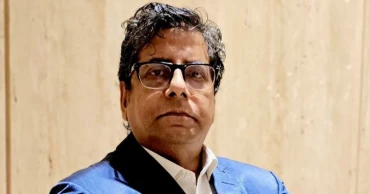
Journalist Anis Alamgir has been shown arrested in a graft and money laundering case filed by the Anti-Corruption Commission (ACC).
Dhaka Metropolitan Senior Special Judge Sabbir Faez passed the order after hearing a petition submitted by the ACC, said its lawyer Torikul Islam Torik.
Earlier, on January 25, the investigation officer and ACC Assistant Director Akhtaruzzaman submitted the petition.
The ACC lodged the case on January 15 accusing Anis Alamgir of acquiring assets beyond his known sources of income and engaging in money laundering.
According to the case statement, the ACC found that Anis owned immovable properties worth Tk25 lakh and movable assets valued at Tk3.84 crore, bringing his total assets to more than Tk4.09 crore. His family and other expenses were estimated at Tk15.90 lakh.
His total asset accumulation stood at over Tk4.25 crore, while the ACC identified his lawful income at Tk 99.09 lakh.
This included Tk54.45 lakh in previous savings, Tk19.39 lakh from talk shows and consultancy, Tk22 lakh from plot sales, and Tk3.24 lakh from savings certificates and bank interest, it said.
Anis acquired assets worth Tk3.26 crore beyond his declared income, accounting for about 77 percent of his total assets.
Anis was earlier detained by the Detective Branch (DB) of Dhaka Metropolitan Police on December 14 last year from Dhanmondi.
Amnesty, CPJ call on govt to release Anis Alamgir unconditionally
He was taken to the DB office for interrogation and was placed on a five-day remand the following day by a court order.
After completion of the remand, he was sent to jail on December 20 and has remained in custody since then.
He was shown arrested in a case filed under the Anti-Terrorism Act at Uttara West Police Station in the capital.
4 months ago