foreign-affairs
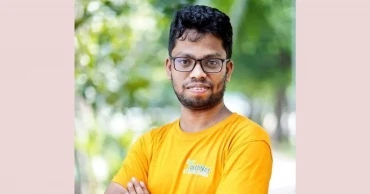
UN: Young Activists Summit to honour Bangladesh's Sohanur, 4 others in Geneva
The Young Activists Summit will honour five outstanding young people this month, including Bangladesh's Sohanur Rahman, who have inspired and mobilized their communities to create meaningful change.
Taking place at the Palais des Nations, headquarters of the United Nations Office at Geneva, Switzerland on November 19, the event will be webcast live and is open to the media.
Sohanur told UNB that he will deliver his speech at the event in Bangla.
Now in its sixth edition, the Young Activists Summit (#YAS24) will showcase five inspiring individuals, aged between 19 and 29, whose impactful actions are shaping communities around the globe.
Drawing from the African proverb, “If you want to go fast, go alone. If you want to go far, go together”, this year’s edition, carrying the theme “Go Far, Go Together”, celebrates the power of collective action, said the UN office in Dhaka.
The stories of the five Laureates show how collective action by groups or movements can successfully protect the environment and defend human rights.
After surviving super-cyclone Sidr as a child, Sohanur recognized the extreme vulnerability of communities to climate-induced disasters, which hit Bangladesh especially hard.
This led him to become a key figure in the country’s fight against climate change.
In 2016, he founded YouthNet for Climate Justice, to raise awareness of climate issues among younger generations.
In 2019, a campaign led by YouthNet led the Parliament of Bangladesh to declare the climate crisis a planetary emergency.
YouthNet also helped halt the construction of ten coal plants.
Recently, Sohanur and his group played a key role in peaceful student protests advocating for greater democracy in Bangladesh.
This uprising ultimately led to the ousting of the country’s Prime Minister, who had been in power for the past 15 years.
Today, Sohanur continues to push for climate action to be prioritized on the interim government’s agenda.
Marley Dias, 19, USA, Black representation in the media launched the #1000BlackGirlBooks campaign when she was 10, to protest against the lack of black representation in the books she read as a child.
Her story went viral and was picked up by media around the world.
Shanley McLaren, 25, France, Online gender-based violence:
At a time when more and more intimate content or pornographic deepfakes are posted without the consent of those who are in those pictures, Shanley launched Stop Fisha to protect victims of cybersexism.
Stop Fisha has now become a “trusted flagger”, enabling the organization to report non-consensual content to social media platforms more easily, so that the content is taken down and the accounts shut down faster.
Stop Fisha also offers psychological support and legal advice to victims, in collaboration with like-minded organizations based in other countries. The organization has also allowed new laws to be passed in France, to prevent online gender-based online violence, sextortion, deepfake pornography, and more.
Alvaro Quiroz, 25, Mexico, Helping the homeless:
Alvaro found himself on the streets during his teenage years, when he fled his hometown to escape from an environment that rejected his sexuality.
Just as he was about to commit suicide, a woman heard his cries and took him to a shelter where he was able to start a new life and study art. At the age of 21, Alvaro created Brigada12 to help homeless people.
His non-profit organizes art sales to fund its activities, and has engaged thousands of people to deliver millions of meals, and toys.
Brigada12 also provides training and psychological support, thus enabling the homeless to find jobs and live in dignity. In addition, the organization offers targeted help specifically for children and young parents.
Cynthia Houniuhi, 29, Solomon Islands, Climate change & human rights:
Cynthia is President of Pacific Islands Students Fighting Climate Change (PISFCC). While studying at the University of the South Pacific, Cynthia and 26 of her classmates called on the governments of Vanuatu, Fiji, Tonga and Solomon Islands to ask the International Court of Justice (ICJ) to issue an advisory opinion on the obligations of states regarding climate change, including from a human rights perspective.
This request achieved a historic unanimous agreement from the UN General Assembly, the first advisory opinion request of its kind to be passed.
Her organization is now made up of 100 members, and its outreach goes far beyond the Pacific, as many Small Island Developing States around the world are threatened by rising sea levels due to global warming.
1 year ago
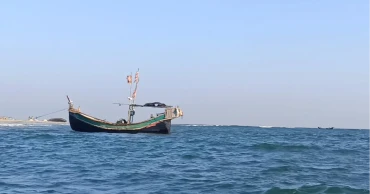
Arakan Army capture 20 Bangladeshi fishermen from Naf River
Myanmar’s insurgent Arakan Army allegedly took 20 Bangladeshi fishermen hostage from the Naf River while they were fishing on Tuesday evening, said authorities.
Moreover, 15 small wooden boats from the estuary of the river near Naikhongdia of Teknaf upazila were captured.
Local Union Parishad (UP) member Abdus Salam confirmed the matter saying that the fishermen from Shahparir Island, who were fishing near Naikhongdia with about 15 boats, were taken hostage at gunpoint by the Arakan Army.
All the fishermen are residents of Teknaf, he said, adding that they have already informed the Border Guard Bangladesh (BGB) about the matter.
Lt. Col Mohiuddin Ahmed, commander of Teknaf-2 BGB, said they are in contact with Myanmar authorities to negotiate their release and are making efforts to bring them back.
Earlier on October 9, Myanmar's Navy took away 58 fishermen from the Bangladesh side of the Bay of Bengal, near Saint Martin's Island.
One fisherman was killed and two others were injured when Myanmar Navy opened fire on them.
On the next day, Myanmar authorities returned the fishermen in two separate groups, along with the body of one of the deceased.
1 year ago
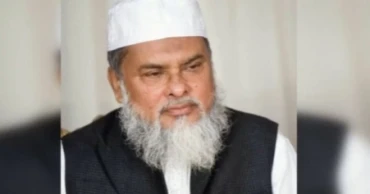
Religious Affairs adviser seeks scholarships for more Bangladeshi students in Algeria
Religious Affairs Adviser A F M Khalid Hossain has sought more scholarships in Algerian universities for madrasha students alongside the other students from Bangladesh.
He also proposed that teachers from Algeria’s renowned Islamic universities can offer Arabic language and literature courses in Bangladesh’s universities and madrasahas.
The Adviser made the proposal at a meeting with Algerian Ambassador to Bangladesh Abdelouahab Saidani at the Secretariat on Tuesday.
Religious Affairs Adviser calls Islamic scholars 'beacons' for society
They discussed issues of mutual interests and cooperation across various fields.
The Algerian Ambassador agreed on the proposal on introducing scholarships for Bangladeshi students in Algerian universities and pledged to facilitate the exchange of resource persons to assist in teaching students in Bangladesh.
Khalid Hossain expressed hope that the close relationship between the two countries will be strengthened in the future.
Additional Secretary Md. Matiul Islam from the Hajj Division of the Ministry of Religious Affairs and Sadeq Ahmed, the adviser’s personal secretary were present.
1 year ago

UK emergency team in Bangladesh to provide medical support to injured students
The UK Emergency Medical Team (EMT), funded by the UK government, has arrived in Bangladesh to provide specialised medical treatment to the students injured during the July-August protests.
They will be working at National Institute of Traumatology & Orthopaedic Rehabilitation (NITOR) from November 5 to 18 November, said the British High Commission in Dhaka on Tuesday.
This deployment is taking place in response to a formal request for assistance from the interim government.
The team consists of an orthopaedic surgeon, a physiotherapist and rehabilitation expert and a clinical coordinator.
The clinical experts of this team have vast experience in treating patients in conflict-affected areas worldwide.
Earlier, the Turkish government decided to provide free advanced treatment to seven Bangladeshis injured in the July-August mass uprising.
The decision was taken in response to the request of the Ministry of Foreign Affairs for better treatment of those injured in the student-led movement.
1 year ago

“To achieve reconciliation, we need to hear the word sorry and an apology”: German Ambassador
German Ambassador to Bangladesh Achim Tröster has laid emphasis on making efforts for reconciliation to change one’s mind and to cast away the shadows of a bloody and revengeful past.
"In order to achieve reconciliation, we need to hear the word sorry and an apology for the crimes and mistakes that have been committed. I may be wrong, but so far I unfortunately have not heard it here," he said while speaking at a reception marking the Day of German Unity (falls on October 3) at the Embassy on Monday evening.
Furthermore, the Ambassador said, reconciliation is not possible without investigating and acknowledging the truth.
Finance Adviser Dr Salehuddin Ahmed spoke at the reception, highlighting the importance of the growing relations.
Ambassador Tröster found what a well-known, experienced and thoughtful politician from Bangladesh, whom he appreciates, said recently regarding a peaceful future of this country to be "very touching" and "convincing".
The politician mentioned the necessity of reconciliation—between the political parties, and within the parties.
"This is an idea that has worked well in the recent past in countries like South Africa or Rwanda, but also equally in Europe. I don’t see any reason why this should not be the case in Bangladesh and contribute to a much better communal life," said the Ambassador.
Tröster pointed out that they were all standing in a building that is co-owned by two countries that were enemies for centuries.
“France and Germany have decided that reconciliation is the way forward towards a peaceful existence of our peoples, and a necessary precondition for their aspirations for a free, peaceful and prosperous Europe.
“I think France and Germany, the whole European Union are a testimony of the success of that way,” said the envoy.
He said the interim government is matching the expectations of many people in Bangladesh and outside of Bangladesh by initiating proper investigation of the events in July and August 2024, with the support of the Office of the High Representative for Human Rights in Geneva. The German government has contributed 50,000 euro to this operation of the OHCHR.
“I am confident that also in challenging times, the friendly and good relations between Bangladesh and Germany will continue to flourish and blossom,” said the German envoy, adding that there is reason for confidence since many people with goodwill are working on it.
Germany supports the work and the mission of the interim government of Bangladesh and stands ready to help, as it has done in the past, he said.
German Federal Chancelor Olaf Scholz wrote to the Chief Adviser Dr. Yunus on the occasion of assuming office: “You assume responsibility at a critical phase in your country’s development. I wish you and the Interim Government great strength and success for the tasks that lie ahead.”
The Ambassador said Germany has been a proven partner in the last 52 years for Bangladesh’s impressive development, and they are proud to have been contributing to its successes.
During the last governmental negotiations, Germany committed 176 million additional euros for cooperation between the countries, mainly in the fields of renewable energy, energy efficiency, and climate resilience.
As for the Rohingyas Bangladesh is generously hosting for long, Germany can very well understand the heavy burden that is put on Bangladesh, said the envoy.
Germany itself has given shelter and protection to a lot of people in the recent years. Germany is currently taking care of more than 3.1 million refugees and asylum seekers within its borders.
Germany has continued to support Bangladesh with the Rohingyas and has contributed since 2017 with 305 million euros to the humanitarian operations in and around the camps.
In the field of economy, Ambassador Tröster said, the relations between Bangladesh and Germany continue to strive as before. Germany remains the second largest importer of garment products from Bangladesh, and there is a lot of scope for further expanding businesses in other promising sectors.
The German government appreciated the efforts by the interim government to swiftly restore security and stability in the country and acknowledged the reforms that have been started, for example in the banking sector.
The Embassy talked to German businesspeople and they all generally display a continued interest in Bangladesh.
"They would applaud the success of Bangladesh’s economic reform agenda that would allow them to intensify and broaden their businesses with Bangladesh," said the Ambassador.
The German government assumed that with the establishment of the interim government, the common basis for cooperation—bilaterally as well as in the framework of its cooperation with the European Union—has broadened.
The envoy said they now share more democratic values and convictions than has been the case before, and they are hopeful to jointly make the best of it, to grasp this chance that has suddenly come about, for the benefit of the people of Bangladesh, for freedom, participatory democracy, and more prosperity for all and not only a few.
"Being a democracy, we believe in these values, and we have seen that large parts of the society in Bangladesh were willing to make enormous personal sacrifices, up to the ultimate, for these aspirations," Tröster said.
"We are mourning these tragic losses and will keep them and their outstanding courage in our memories," he said.
Bangladesh, Germany trade volume stood EUR 8.62 bln in 2023: German Embassy
For their aspirations and dreams to come true, many citizens of Bangladesh feel that it needs a different approach in some areas, the German Ambassador said.
1 year ago
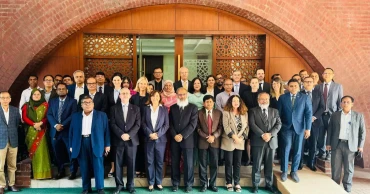
EU concerned about ICT's legal framework; seeks changes
The European Union (EU) has underlined the importance of ensuring due process at all stages of the legal proceedings and expressed "concern" about the legal framework of the International Crimes Tribunal (ICT), which "should be revised" as soon as possible to bring it in line with international human rights standards.
Paying respect to the victims and survivors of the violent crackdown on protestors in July-August, as well as prior human rights violations, Bangladesh and the EU recently discussed the importance of transitional justice.
They agreed on the need to hold perpetrators of human rights violations accountable.
Both sides agreed on the need to address the human rights concerns of women, children, and persons belonging to minorities and marginalised groups.
No one should live in fear of violence, harassment or discrimination while law and order "should be ensured" for all, including the most vulnerable, according to the EU.
The interim government says it condemns any kind of violence and does not want to see any violence.
The 11th meeting of the sub-group on good governance and human rights of the EU-Bangladesh Joint Commission was held in Dhaka recently under the framework of the EU-Bangladesh Cooperation Agreement.
The sub-group was co-chaired by the head of the Bangladesh delegation, Mohammad Mohiuddin, head of the Legislative and Parliamentary Affairs division at the Ministry of Law, Justice and Parliamentary Affairs, and by head of the European Union's delegation, Rensje Teerink, Head of Division for South Asia at the European External Action Service (EEAS).
They were also joined by observers from the Embassies of the EU Member States in Dhaka.
The sub-group reported to the Bangladesh-EU Joint Commission that addressed all areas of bilateral cooperation on Monday.
"Very happy to be back in Dhaka to co-chair the 11th EU-Bangladesh Joint Commission. We reviewed the wide range of cooperation during these transitional times," said Deputy Managing Director for Asia Pacific Department at the European External Action Service Paola Pampaloni after the meeting.
They conveyed EU support to reforms for an "inclusive" democratic transition.
The EU and Bangladesh reinforced their commitment to "strengthen cooperation" in the field of human rights, good governance and on-going reform process of the interim government.
They recognised that the political transition the country is currently undergoing constitutes an "unprecedented opportunity" to make progress on human rights and good governance in Bangladesh.
Bangladesh-EU relations transforming from development-centric to wide-ranging strategic partnership: Paola Pampaloni
They paid tribute to the courage and determination of the students and members of the general public that stood up for their rights – and remembered those that lost their lives – during the popular uprising in July-August.
The EU welcomed the interim government’s "strong commitment" to advance reforms and take the necessary steps towards a "democratic, pluralistic and inclusive" Bangladesh that is grounded in the rule of law and human rights.
This commitment is notably reflected in Bangladesh’s accession to the International Convention for the Protection of All Persons from Enforced Disappearance (ICPPED), and in the creation of a Commission of Inquiry on enforced disappearances, according to the EU.
Announcements to repeal or swiftly amend some of the legislations that have been used to crush dissent and curtail fundamental freedoms, such as the Cyber Security Act, are further signals of this commitment.
Bangladesh explained the process for carrying out structural reforms in several key areas, including through the recently established reform commissions.
The EU welcomed the ongoing work of the commissions and underlined the importance of taking into account the realities and perspectives of the population in all its diversity, including women and minorities.
The need for clarity over the further process of consultation and decision-making based on the commissions’ reports was discussed.
The subgroup discussed a number of areas of reform, such as the justice sector, public administration, the security sector, and capacity building of the Legislative and Parliamentary Affairs Division.
Following up on the EU’s long-standing engagement with Bangladesh on labour rights, Bangladesh and the EU agreed on the urgency and opportunity to make progress in this regard, namely by making labour inspections more effective.
The EU recalled that the preferential access of Bangladeshi exports to the European market is premised on the respect of international human rights and labour standards.
Besides, the EU drew attention to recently adopted legislation that will reinforce the protection of human rights and labour rights, as well as improve environmental sustainability, throughout European supply chains, including for products from Bangladesh.
Helpful Reference for Electoral Reforms
Agreeing on the need for thorough electoral reforms, they acknowledged the recommendations of the EU Election Expert Mission of January 2024 as a "helpful reference" for Bangladesh to rebuild public trust in the electoral process and ensure that international standards on elections are upheld.
The EU reiterated its great appreciation for Bangladesh temporarily hosting 1.2 million forcibly displaced Rohingya people on its territory.
Measures to best meet the needs of the Rohingya people and host communities, as well as perspectives for voluntary, safe, dignified and sustainable return were discussed.
The EU and Bangladesh expressed deep concern over the ongoing conflicts in Rakhine that is seriously affecting the commencement of Rohingya repatriation.
The EU encouraged the government of Bangladesh to further cooperate with the Office of the High Commissioner for Human Rights and to issue a standing invitation to UN Special Procedures in order to benefit from relevant expertise in the context of the country’s political transition.
Bangladesh shared that the promotion and protection of human rights of all citizens is one of the priorities of the interim Government and it is working closely with the OHCHR in this regard.
At the invitation of interim government, the UN is undertaking an independent UN Fact Finding Mission regarding the human rights violations committed in the context of the July-August student-led mass movement.
Bangladesh underlined that the interim government would give due consideration to the recommendations of the UN Fact Finding Mission.
They both expressed the expectation that, with Bangladesh’s renewed commitment to human rights and democracy, collaboration and alignment in multilateral human rights fora would increase.
1 year ago
CSA to be abolished within a week, Nahid tells Norwegian ambassador
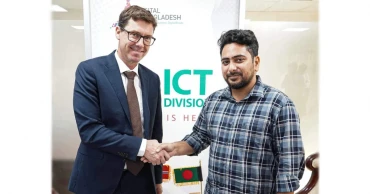
Mohammad Nahid Islam, Adviser to the Ministry of Posts, Telecommunications, and Information Technology, has said the Cyber Security Act will be abolished within a week, and urged Norway to invest in Bangladesh in a meeting with the country's ambassador.
He expressed the government's desire to strengthen its partnership with Norway as a development ally and emphasized the hope for investment in these sectors.
The adviser made this call during a meeting with Norway's Ambassador Hakon Arald Gulbrandsen at the ICT Division office on Monday.
Nahid Islam stated, “We have built a new Bangladesh through the student and public uprising. Over the past sixteen years, the oppressive government has engaged in widespread irregularities and corruption. The interim government has now embarked on the task of rebuilding the country to help both the nation and its people recover from the damage.”
He also requested Norway's guidance and support in this rebuilding effort.
Ambassador Hakon Arald Gulbrandsen assured him that Norway is ready to assist in the reconstruction of the new Bangladesh and will stand by the interim government.
When asked about the Cyber Security Act by the ambassador, the adviser said that the Act would be abolished within a week, and all cases filed under it would also be withdrawn. He added that not only this law but all laws that hinder freedom of expression are under review. He emphasized that decisions on reforms will be taken after consulting with stakeholders.
When asked about minority oppression, the adviser stated that minorities in Bangladesh are safe. Special security arrangements were made during the last Durga Puja, and holidays were extended.
He also commented that the previous fascist government had played political games with minorities, identifying them as a vote bank. Despite major incidents of minority oppression occurring during their regime, they did not pursue justice.
Nahid Islam requested Norway's cooperation in disseminating the truth about the July uprising, countering the various negative international propaganda surrounding the event.
1 year ago
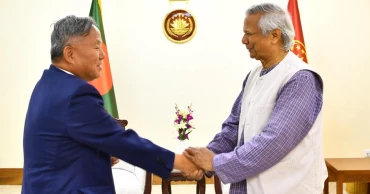
Invest more in Bangladesh, recruit more workers: Prof Yunus urges Korea
Chief Adviser Prof Muhammad Yunus on Monday urged South Korea to invest more in Bangladesh and recruit more Bangladeshi workers, especially in their shipbuilding industry, for mutual benefits.
Prof Yunus made the call when Park Young-sik, the South Korean Ambassador in Bangladesh, called on him at his office in Tejgaon, Dhaka,
“We look forward to a broader and more developed relationship with South Korea; elevate our existing relationship to the next step,” the CA told the ambassador.
Raising the issue of the current situation in the Korean peninsula Ambassador Park Young-sikh expressed concern at North Korea's troops deployment in Russia - Ukraine war and it's recent ballistic missile test. The chief adviser sought peace and stability in the Korean peninsula.
He told the chief adviser that many South Korean companies were keen to invest in Bangladesh with the recent positive turn in the business climate. He conveyed about Korea's particular interest in importing Bangladeshi workers for Korea's shipbuilding sector.
He said that many South Korean companies were operating RMG factories in Bangladesh’s specialised economic zones.
The ambassador also said that Bangladesh is the number one recipient country of Korea’s Economic Development Cooperation Fund (EDCF) and is a very important development partner.
1 year ago
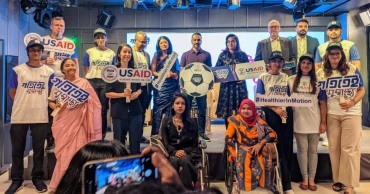
"Equal opportunities key to society's full potential"
USAID Mission Director Reed Aeschliman on Monday said for society to reach its full potential, it requires all of then to play a part to make sure women, girls and young people have equal opportunities to complete their education, compete in athletics, or fulfill whatever dreams they choose so they can live their best lives.
Through the United States Agency for International Development (USAID), the U.S. Embassy in Dhaka launched its “Healthier in Motion" campaign to promote health, nutrition, physical fitness, and mental health among women and youth in Bangladesh.
The campaign will address social barriers that women and girls face in taking charge of their own well-being and encourage a more supportive environment to provide equitable opportunities to thrive.
USAID, PVH and CARE partner to create sustainable future for women in RMG sector
Nigar Sultana Joty, captain of the Bangladesh National Women's Cricket Team and Healthier in Motion campaign ambassador, shared her inspiring journey of overcoming challenges to achieve success in athletics.
1 year ago

Bangladesh reaffirms ‘zero tolerance’ stance on terrorism, commits to global security
Foreign Affairs Adviser Md Touhid Hossain on Monday reaffirmed Bangladesh’s ‘zero tolerance’ policy against terrorism and underscored the country’s commitment to global security collaborations and alignment with UN conventions.
He stressed the importance of a human rights-centered approach to counterterrorism, cautioning against politically misused security measures and highlighting Bangladesh’s ongoing reforms to protect fundamental freedoms.
Hossain is leading the Bangladesh delegation to the high-level conference on "Strengthening International Counter-Terrorism Cooperation and Building Agile Border Security Mechanisms," in Kuwait City.
In his address to the ministerial session, he called for responsible use of Artificial Intelligence (AI) in security and border management, emphasising that AI must respect human rights and be tailored to local contexts.
Hossain also urged nations with advanced technology to share expertise, fostering a globally coordinated approach to combat terrorism.
The Adviser underscored the essence of multilateralism in counterterrorism, noting that true security is achieved only when every society is safeguarded.
"In today’s interconnected world, no society is truly safe until every society is safe," he affirmed.
The high-level conference marks the fourth iteration of the Dushanbe Process, an initiative launched in 2018 to foster collaboration on counterterrorism and border security among countries in Central Asia, according to the Ministry of Foreign Affairs.
This conference is especially important, as it broadens the scope and impact of the Dushanbe Process beyond Central Asia for the first time, aligning with efforts to strengthen the implementation of the United Nations Global Counter-Terrorism Strategy.
1 year ago