foreign-affairs
Stephen Forbes joins British Council in Bangladesh as new Country Director
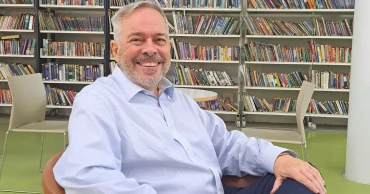
Stephen Forbes has been appointed as the new Country Director for British Council’s Bangladesh operation.
Stephen, who brings over 20 years of experience with the British Council, will spearhead initiatives focused on education, arts, and the English language, said a press release.
Stephen's extensive background includes previous roles as Country Director in Sudan, Kuwait and Botswana, as well as Regional Programmes Director in East Asia and the Middle East and North Africa. Stephen has also served as the European Co-Director on a legal reform programme in China, funded by the European Union.
He holds an MSc in Business Administration from London Business School and an MA (Hons.) in Mandarin Chinese from Edinburgh University.
Stephen said, "I am so pleased to be taking up the role of Director Bangladesh for the British Council. Exciting opportunities are opening up for people in the country, especially the young. My goal is to build on the strong links already established between the people of Bangladesh and the UK, and the dynamic operation we have here, to make the most of those opportunities. “
“Our suite of projects and products - in the arts, education and English – will serve that aim. I look forward to working closely with our friends and partners, as well as our committed and professional British Council team, to strengthen ties between Bangladesh and the UK. I hope that together we can further improve opportunities for people, deepen our peaceful exchange, and drive impact that will make a lasting difference,” he added.
Stephen will lead an operation that opened in Bangladesh in 73 years ago with the aim to transform lives and foster enduring partnerships between the UK and Bangladesh.
1 year ago

Nepal's Ambassador discusses vast hydropower potential, energy trading issues with Prof Yunus
Ambassador of Nepal to Bangladesh Ghanshyam Bhandari on Tuesday discussed Nepal's vast hydropower potential with interim government Chief Adviser Professor Muhammad Yunus and expressed hope that the two countries would soon be able to start energy trading.
The envoy paid a courtesy call on Chief Adviser Prof Yunus at the State Guest House Jamuna and congratulated the Chief Adviser on taking over the leadership of the Interim Government after a historic student-led mass uprising in July-August.
The Ambassador said two South Asian nations are members of SAARC and BIMSTEC, and both countries have "excellent" bilateral relations based on shared history and very deep people-to-people interactions.
The economic engagement between the two countries is still at a modest level, the envoy said.
Ambassador Bhandari expressed gratitude for the Bangladesh government's generous offer to Nepal to use the Chattogram and Mongla ports.
The Ambassador also expressed appreciation to the Bangladesh government for hosting a significant number of Nepali students, especially in medical education.
"Many doctors of Nepal were educated in Bangladesh," Chief Adviser's press wing quoted the Ambassador as saying.
During the meeting, the Chief Adviser enquired about the activities of the SAARC, the South Asian regional cooperation, which didn't have any summit after 2014.
The headquarters of the SAARC is based at the Nepalese capital of Kathmandu.
The Ambassador highlighted the importance of strengthening regional cooperation through SAARC and BIMSTEC and working closely at various multilateral forums.
Ambassador Bhandari handed over to him the letter of felicitations from the Prime Minister of Nepal Rt. Hon. K P Sharma Oli.
Referring to the Prime Minister’s letter and the press statement issued on 7 August 2024 by the Government of Nepal, the Ambassador reiterated the solidarity of the Government and people of Nepal with the Government and people of Bangladesh as the latter try to navigate through the current transitional period.
The Chief Adviser appreciated the expression of support and solidarity from Nepal and observed with satisfaction that the two countries continue to enjoy close and cordial relations both at the political and people-to-people levels.
During the meeting, the discussions were held on ways to further consolidate Nepal-Bangladesh relations with a renewed focus on economic linkages.
As the Ambassador stressed the need to unlock potentials in areas of trade, transit, and connectivity, he laid emphasis on energy cooperation as a ‘win-win enterprise’ between Nepal and Bangladesh.
Early commencement of the export of 40 MW hydroelectricity from Nepal to Bangladesh through the Indian transmission lines will be a transformative step in enhancing energy cooperation at the sub-regional level, he said.
He also expressed happiness over the increasing people-to-people contacts, educational linkages, and tourism exchanges between the two countries.
The Chief Adviser emphasized the benefits of tapping the hydropower potential with a particular focus on its contributions towards achieving net zero emission scenario.
He also stressed the early realization of this mutually beneficial cooperation between the two countries.
The Ambassador thanked the Bangladesh government for support and cooperation received in matters related to safety and security of Nepali nationals, particularly Nepali students, during and after the recent protests, and expressed hope that this support would continue in the future as well.
Discussions were also held on Nepal-Bangladesh cooperation at the regional and international forums.
They underscored the significance of revitalizing regional processes such as SAARC and BIMSTEC.
Noting that Nepal and Bangladesh are graduating from the LDC category in 2026, they underlined the need to share experiences and best practices for a smooth, sustainable, and irreversible graduation.
Ambassador Bhandari was accompanied by Deputy Chief of Mission Lalita Silwal and Second Secretary Yojana Bamjan.
1 year ago
Govt to help UN fact-finding mission if they seek any help : Foreign Adviser
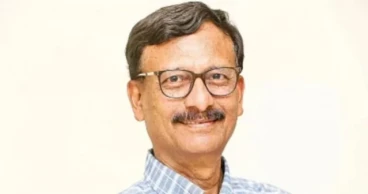
Foreign Affairs Adviser Md Touhid Hossain on Tuesday said the government will help the UN fact-finding mission if they seek any help as the team will start working soon.
"They (UN team) want to avoid publicity as they want to work neutrally. We also want to see they can work neutrally. We won't interfere," he told reporters at the Ministry of Foreign Affairs, adding that the team had a courtesy meeting with him and conveyed him that they would soon start their work in Bangladesh.
Hossain said the fact-finding mission that arrived in Bangladesh is yet to begin their work.
The fact-finding mission is not a criminal investigation and is conducted independently of any national criminal justice process, said the UN Human Rights Office.
The fact-finding process is strictly confidential. The team will not be conducting any media interviews during the investigation phase.
"We appeal for respect for the confidentiality of the fact-finding process," said a spokesperson at the UN Human Rights Office.
At the invitation of the Interim Government, a UN Human Rights Office fact-finding team is conducting an independent and impartial investigation into alleged human rights violations that took place between July 1 and August 15 this year, arising from the recent protests.
The fact-finding team is mandated to establish facts, identify responsibilities, analyze root causes, and make concrete recommendations for Bangladesh to address past human rights violations and prevent their recurrence.
Individuals, groups, and organizations are invited to provide first-hand information that is not already on social media or otherwise in the public domain concerning the period of July 1 to August 15 2024 and human rights violations and abuses in the context of the protests during that period.
Submissions should be sent to [email protected].
The team also plans to conduct interviews with victims, law enforcement officers, medical practitioners, and witnesses.
After its on-site examination and data analysis, the UN Human Rights Office will publish a detailed human rights report containing key findings, conclusions, and recommendations.
1 year ago

India wants to keep its relations with Bangladesh stable: Jaishankar
Indian External Affairs Minister S Jaishankar on Tuesday said the political churn in Bangladesh is the country's "internal matter" but India is keen to continue what was a stable relationship.
In an interview with NDTV, Jaishankar underlined the maxim that neighbouring nations are "dependent on each other".
He touched on Russia's war on Ukraine and Delhi's potential peacemaker role in that conflict, as well as Iran leader Ayatollah Khamenei's remark, the war in Gaza, and a flurry of foreign visits in the first 100 days of Prime Minister Narendra Modi's third term.
"What happens is their internal matter. Bangladesh is our neighbour and the relationship, on our part, is something we want to keep stable. We have good trade... our people-to-people ties are good... I want to keep the relationship that way," Jaishankar said.
Bangladesh battled civil unrest and violence last month - the result of a student-led movement against quota in government jobs - that forced then Prime Minister Sheikh Hasina to resign. Hasina fled Dhaka in a military aircraft to land at an Air Force base near Uttar Pradesh's Ghaziabad.
She was expected to proceed to London to claim political asylum but British Home Office sources told NDTV its rules do not allow people to travel to that country to seek asylum or temporary refuge.
For now, Hasina is believed to be in the custody of Indian intelligence agencies.
Last month Jaishankar told Indian Parliament that Hasina's office had requested permission to flee Dhaka for Delhi "at very short notice".
At an all-party briefing he said the Indian government was prepared to give Hasina time to decide on her next steps, which could include political retirement.
Last week Nobel laureate Prof Muhammad Yunus - who leads the interim government - said his country too wants to maintain its previous good relationship with India, but that these ties should reflect "fairness and equality". Yunus said he had received a congratulatory phone call from Prime Minister Modi.
"We want the world to recognise Bangladesh as a respected democracy," the 84-year-old said in his address to his nation.
For Hasina, the chief advisor had a stern warning, demanding she must remain silent to prevent compromising the two countries' relationship till her extradition is sought, according to NDTV. "If India wants to keep her till Bangladesh wants her back, the condition would be that she has to keep quiet," he said.
1 year ago

Dhaka seeks IOM’s role in protecting rights of Bangladeshi migrant workers
Foreign Affairs Adviser Md Touhid Hossain on Tuesday emphasised the need for IOM's continued proactive efforts in protecting the rights of Bangladeshi migrant workers in destination and transit countries.
He appreciated IOM’s involvement in supporting the Forcibly Displaced Myanmar Nationals (FDMNs) in Cox’ Bazar, stressing the urgency of their safe and dignified repatriation to Myanmar.
The issues were discussed when Chief of Mission of the International Organization for Migration (IOM) in Bangladesh Abdusattor Esoev paid a farewell call on the foreign adviser at the Ministry of Foreign Affairs.
The foreign adviser appreciated Esoev’s active and engaging tenure in Bangladesh and acknowledged IOM’s steadfast support in assisting the repatriation and reintegration of nationals in irregular situations or humanitarian crises.
Esoev expressed satisfaction with his tenure in Bangladesh, commending the country’s efforts in promoting safe, orderly, and regular migration as a champion of the Global Compact on Migration (GCM).
He reaffirmed IOM's commitment to supporting the repatriation of the Rohingya, according to the Ministry of Foreign Affairs.
The foreign adviser congratulated Esoev on the successful completion of his mission and extended best wishes for his next assignment in Yemen.
Earlier, he also met with Foreign Secretary Md Jashim Uddin during his farewell engagements.
1 year ago

World Bank commits $2 billion of new support to Bangladesh
Assuring an increased lending to Bangladesh, World Bank Country Director Abdoulaye Seck on Tuesday said the World Bank can mobilise about $2 billion new financing in this fiscal year to support critical reforms, flood response, better air quality and health.
Seck spoke about the new assistance when he met Chief Adviser Professor Muhammad Yunus at the state guesthouse Jamuna in Dhaka.
The World Bank is committed to increasing lending to Bangladesh in this fiscal year to help the reform agenda of the Interim Government, he said.
"We would like to support you as fast as possible and as much as possible," Seck said, adding that the bank would support the critical financial needs of the country.
He said that in addition to the new commitments, the multilateral lender would repurpose about an extra one billion dollars from its existing programmes in consultation with the government in response to the calls for support by the Chief Adviser to all development partners of Bangladesh.
Seck said the extra lending would raise the amount of soft loans and grants the World Bank would be giving to Bangladesh this fiscal year to about 3 billion dollars once the funds from the existing projects are repurposed.
The World Bank country chief said the completion of the reforms would be "critically important" for Bangladesh and its young people, including the two million people who are joining the job market every year.
The Chief Adviser told the World Bank country head that the bank must have flexibility to fund Bangladesh's reforms and help restart a new journey after 15 years of "extreme misgovernance."
"Out of these ashes, we have to build new structures. We need a big push, and we have to focus on the dreams of the students," he said.
“I will suggest, help us. Be a part of our team,” said the Chief Adviser.
Professor Yunus asked the World Bank to lend its technical support to recover billions of dollars of stolen assets siphoned off from Bangladesh by corrupt individuals during Sheikh Hasina's 15-year-long dictatorship, according to Chief Adviser’s press wing.
"You have the tech to bring back stolen assets," Prof Yunus said, adding Bangladesh would also need the bank's expertise to build "a zero-corruption Bangladesh".
The World Bank country chief has agreed to help Bangladesh bring back the stolen money. "We are happy to help you," Seck said.
He said the bank would also like to help Bangladesh with data transparency, data integrity, digitalisation of tax collection, and financial sector reforms.
Professor Yunus said Bangladesh can't afford to lose this once in a lifetime opportunity to fix its institutions and undertake major reforms.
"Once we lose it, it will never come back," he said.
Seck offered condolences for the martyrs of the July-August student-led uprising.
He said he was impressed by the graffiti and murals painted by young people on Dhaka's walls. "In 30 years of my career, I've never seen it anywhere," he said.
"We need to empower them," Seck said.
1 year ago
Bangladeshis to decide new election; duration of interim govt: US diplomat Richard Verma
US Deputy Secretary of State for Management and Resources Richard R. Verma has said it is for the people of Bangladesh to decide when a new election will be held and how long the interim government will stay.
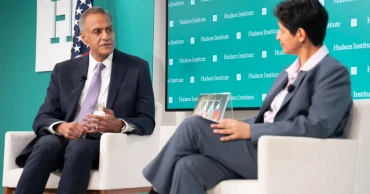
“That is for the people of Bangladesh to decide how and when they are going to hold a new election and how long the transitional (interim) government will be in place,” he said while responding to a question at an event at Hudson Institute in Washington D.C. on Monday.
The top US diplomat said it is a bit too early to tell in which direction things are headed and said the reason the US team visited Dhaka was to pledge their support for a “peaceful” democratic process and transition. “I think that is the most important thing right now.”
Verma said their team just returned which made additional commitments in humanitarian aid and support for the people on the ground at this very difficult period.
“I think the most important thing is to try to support democratic, peaceful, lawful transition,” he said, adding that that is where everyone’s interest remains.
Talking about day by day approach, the US diplomat said security is hopefully restored, law and order is restored with basic economic services to the people.
He said their role is to be supportive to people to provide what kind of support they can provide on a democratic pathway.
Regarding concerns about attacks on minorities, the US diplomat said any attack on any civilian is concerning. “I think we have to take those quite seriously.”
Verma delivered remarks at the Hudson Institute in Washington D.C. and discussed milestones achieved in the U.S.-India relationship since 2000 and chart a pathway forward for strengthening our bilateral ties.
After delivering remarks, Deputy Secretary Verma participated in an open conversation with Dr Aparna Pande, Research Fellow on India and South Asia at the Hudson Institute.
Deputy Secretary Verma previously served as U.S. Ambassador to India from 2015-2017.
The US interagency delegation held meetings with key advisers for the Bangladesh Interim Government, including Chief Adviser Prof Muhammad Yunus, Foreign Affairs Adviser Touhid Hossain, and Finance and Commerce Adviser Dr. Salehuddin Ahmed on Sunday.
The US delegation included Department of Treasury Assistant Secretary Brent Neiman, Assistant Secretary of State for the Bureau of South and Central Asian Affairs Donald Lu, USAID Deputy Assistant Administrator for Asia Anjali Kaur, and Assistant US Trade Representative Brendan Lynch.
The United States has reiterated its support for governance, expanding trade, and creating greater opportunities for the Bangladeshi people to build a "brighter and more prosperous future".
“Assistant Secretary Lu (Assistant Secretary of State for the Bureau of South and Central Asian Affairs Donald Lu) has been in Dhaka. He met with key advisors to the Bangladeshi interim government to discuss how the United States can support Bangladesh’s economic growth, financial stability, and governance and development needs,” spokesperson at the US Department of State Matthew Miller told reporters during a routine briefing on September 16.
Along with representatives from USAID, the US signed with the Bangladesh interim government a development agreement worth over $200 million in interim assistance which will support governance, expanding trade, and creating greater opportunities for the Bangladeshi people to build a brighter and more prosperous future, Miller said.
From 2021-2026, USAID has committed nearly $1 billion to help improve the lives of the Bangladeshi people, said the US Embassy in Dhaka on Monday.
1 year ago
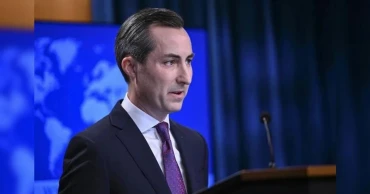
US reiterates support for Bangladeshis to build a brighter, more prosperous future
The United States has reiterated its support for governance, expanding trade, and creating greater opportunities for the Bangladeshi people to build a "brighter and more prosperous future".
“Assistant Secretary Lu (Assistant Secretary of State for the Bureau of South and Central Asian Affairs Donald Lu) has been in Dhaka. He met with key advisors to the Bangladeshi interim government to discuss how the United States can support Bangladesh’s economic growth, financial stability, and governance and development needs,” spokesperson at the US Department of State Matthew Miller told reporters during a routine briefing on September 16.
Along with representatives from USAID, the US signed with the Bangladesh interim government a development agreement worth over $200 million in interim assistance which will support governance, expanding trade, and creating greater opportunities for the Bangladeshi people to build a brighter and more prosperous future, Miller said.
From 2021-2026, USAID has committed nearly $1 billion to help improve the lives of the Bangladeshi people, said the US Embassy in Dhaka on Monday.
This newest tranche of funding will assist Bangladesh as it charts a more inclusive, equitable and democratic course for its people, it said.
The officials discussed ways to support inclusive economic opportunities for the people of Bangladesh, ensure financial stability, and strengthen democratic governance.
The US interagency delegation held meetings with key advisers for the Bangladesh Interim Government, including Chief Adviser Prof Muhammad Yunus, Foreign Affairs Adviser Touhid Hossain, and Finance and Commerce Adviser Dr Salehuddin Ahmed on Sunday.
The US delegation included Department of Treasury Assistant Secretary Brent Neiman, Assistant Secretary of State for the Bureau of South and Central Asian Affairs Donald Lu, USAID Deputy Assistant Administrator for Asia Anjali Kaur, and Assistant US Trade Representative Brendan Lynch.
1 year ago

Canadian MP voices concern over attacks on Hindus in Bangladesh
Canadian MP Chandra Arya on Monday expressed deep concern over the ongoing violence against Hindus in Bangladesh.
In a statement in the Canadian Parliament, Indian origin Arya highlighted the troubling situation faced by religious minorities, including Hindus, Buddhists, and Christians, in Bangladesh.
The Canadian MP shared his statement in his verified Facebook page.
He noted that during periods of instability in Bangladesh, these groups, especially Hindus, often suffer the most.
“Every time there is instability in Bangladesh, religious minorities, particularly Hindus, face the brunt,” he said.
The canadian lawmaker also said that the share of religious minorities in the population of Bangladesh has significantly decreased since it achieved its independence in 1971.
In this connection, he said that from 23.1 percent, including about 20 percent Hindus, it has now come down to just about 9.6 percent, including about 8.5 percent Hindus.
“Canadian Hindus who have families in Bangladesh are concerned about the security and safety of their families, their temples and properties," Arya said while speaking in the parliament.
He also said that Bangladeshi minorities who have their families in Bangladesh will be holding a rally on Parliament Hill next Monday (September 23) to highlight the current situation there.
“They will be joined by Canadian Buddhists and Christians who have families in Bangladesh,” he added.
1 year ago

US funding will assist Bangladesh towards a more inclusive, equitable and democratic course for its people: Embassy
From 2021-2026, USAID has committed nearly $1 billion to help improve the lives of the Bangladeshi people, the US Embassy in Dhaka said on Monday.
During the US delegation's visit, USAID signed a development agreement worth over $200 million with the Interim Government to support Bangladesh in advancing development, strengthening governance, expanding trade, and creating greater opportunities for the Bangladeshis to build a brighter and more prosperous future.
This newest tranche of funding will assist Bangladesh as it charts a more inclusive, equitable and democratic course for its people, said the US Embassy.
The officials discussed ways to support inclusive economic opportunities for the people of Bangladesh, ensure financial stability, and strengthen democratic governance.
The US interagency delegation held meetings with key advisers for the Bangladesh Interim Government, including Chief Adviser Prof Muhammad Yunus, Foreign Affairs Adviser Touhid Hossain, and Finance and Commerce Adviser Dr. Salehuddin Ahmed on Sunday.
The US delegation included Department of Treasury Assistant Secretary Brent Neiman, Assistant Secretary of State for the Bureau of South and Central Asian Affairs Donald Lu, USAID Deputy Assistant Administrator for Asia Änjali Kaur, and Assistant US Trade Representative Brendan Lynch.
1 year ago