World

Magnitude 7.1 earthquake hits southern Japan, tsunami advisory issued
A preliminary magnitude 7.1 earthquake struck Kumamoto on Japan’s southern main island of Kyushu late Tuesday afternoon, prompting authorities to issue a tsunami advisory, the Japan Meteorological Agency said.
The advisory was issued for nearby Ariake Bay along the western coast of Kumamoto, located about 900 kilometres (560 miles) southwest of Tokyo.
Japan’s Nuclear Regulation Authority said no abnormalities were detected at three nearby nuclear power plants following the earthquake.
Kumamoto was struck by a deadly earthquake in 2016 that killed more than 50 people, injured around 1,800 and damaged or destroyed tens of thousands of homes.
6 days ago

Pakistan monsoon death toll exceeds 100 in a month as more heavy rain forecast
The death toll from monsoon rains and flash floods in Pakistan over the past month has crossed 100, while weather forecasters warned that more heavy rain is expected across the country later this week.
Pakistan’s National Disaster Management Authority said 109 people have died nationwide since June 26. Many of the deaths were caused by collapsing houses and roofs, with nearly half of the fatalities reported in the northwestern Khyber Pakhtunkhwa province along the Afghan border.
The latest figures came a day after the disaster management authority reviewed flood preparedness measures across the country.
Officials discussed plans to issue timely warnings to communities living along rivers so that residents can voluntarily move to safer areas or be evacuated before floodwaters inundate their communities.
Heavy rain lashed parts of Pakistan last week, including Lahore, the country’s cultural capital, where several neighbourhoods were flooded and commuters were forced to take lengthy detours.
Images shared on social media showed residents wading through floodwater, drawing criticism from people who questioned the government’s preparedness and response to extreme weather.
Authorities have warned in recent months that they cannot rule out a repeat of the extreme weather that triggered Pakistan’s devastating floods in 2022.
The disaster submerged about one-third of the country, killed 1,737 people and displaced millions.
6 days ago
US plans hundreds of millions more in anti-China spending worldwide
The Trump administration is preparing to increase funding by hundreds of millions of dollars for programmes aimed at countering China's growing global influence, after many such initiatives were halted last year amid sweeping budget and personnel cuts.
The administration informed Congress late last week that it plans to spend $175.8 million to replace outdated undersea telecommunications cables in the Caribbean and Central America to prevent China from gaining influence in the sector, according to a copy of the notification obtained by The Associated Press on Monday.
The administration has expressed growing concern over China's activities in the Americas, including Chinese ownership of ports at both ends of the Panama Canal, infrastructure projects financed under China's Belt and Road Initiative and Chinese investments in telecommunications.
A State Department official said China's economic activities in the Western Hemisphere pose risks to US national security and prosperity. The official, who was not authorised to speak publicly and spoke on condition of anonymity, said Chinese offerings may initially appear cheaper but ultimately become more costly because of cost overruns, hidden maintenance fees and poor performance.
The funding for undersea cables appears to be part of a broader effort to revive programmes aimed at limiting Chinese influence worldwide, which could cost many hundreds of millions of dollars more.
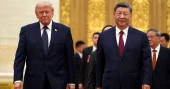
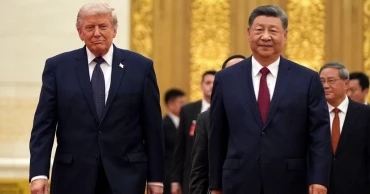
The move comes even as President Donald Trump and Chinese President Xi Jinping have sought to project cooperation, with Xi expected to visit the United States this fall.
US weighs wider spending to counter China globally
The State Department is considering nearly half a billion dollars in additional spending on programmes targeting Chinese influence across the Western Hemisphere, Africa and Asia, according to an internal State Department document obtained by AP.
“The United States must respond to the CCP's growing economic, technological, and diplomatic leverage around the world which undermines our national interests,” the document says, referring to the Chinese Communist Party.
Many of the proposed programmes are intended to “reclaim diplomatic leverage” through investments in areas where the US had previously funded projects but stopped them as the Elon Musk-led Department of Government Efficiency, or DOGE, carried out major budget and personnel cuts last year.
Those cuts dismantled the US Agency for International Development and eliminated several hundred diplomatic posts around the world. They also affected previously approved projects, including some designed to counter China's influence.
A senior US official, speaking on condition of anonymity about future administration plans, confirmed that the Trump administration wants to increase spending to counter China but declined to provide specific details.
The official acknowledged that large-scale projects were being discussed, but said many remained under consideration.
Congress notified about undersea cable project
The programme outlined to Congress on Friday is called the “Countering CCP Control of Caribbean and Central America Undersea Cables project.”
It will fund the installation of strategically selected undersea cable infrastructure and support foreign governments in working with private-sector cable installers, according to the notification.
The funding will support the replacement of outdated undersea telecommunications cables in the Caribbean and Central America with secure alternatives from US and trusted partners, the document said.
Even as the administration continues its war with Iran and peace efforts in Gaza and Lebanon, it has placed a strong focus on the Western Hemisphere.
The administration captured Venezuelan leader Nicolás Maduro earlier this year, increased pressure on Cuba's socialist government and imposed severe sanctions on Nicaragua.
Under the new programme, funding is expected to support undersea cable projects benefiting El Salvador, Guatemala, Honduras, Nicaragua and Haiti, the document said.
The US has strained relations with Nicaragua and would not work directly with its government on the programme.
China's embassy in Washington did not immediately respond to requests for comment.
Other anti-China efforts may target cyber, critical minerals
Meanwhile, the administration has drawn up plans to spend more than $340 million on over 50 specific projects aimed at countering China around the world, including many in the Western Hemisphere, according to the internal State Department document.
The administration told Congress in May that it had spent several hundred million dollars from the 2024 budget approved by the Biden administration on efforts to counter China.
However, many other projects funded for 2024 and 2025 had been put on hold.
Among the programmes proposed for revival are plans to establish security operations centres in Argentina and Belize to monitor Chinese threats to critical infrastructure and cyber platforms in the region.
Other initiatives would seek to protect Ecuador, Jamaica, Mexico, Paraguay, Peru and Uruguay from alleged Chinese efforts to infiltrate port operations and illegally exploit offshore fishing and critical mineral resources.
More broadly, the proposal, which is still under consideration, would seek to counter Chinese influence in the selection of a successor to the Dalai Lama by developing proprietary technology for secure communications and information gathering.
It would also seek to reduce international support for China's space programme and counter Chinese companies seeking to export surveillance and censorship technologies.
The document did not provide details of the proposed initiatives.
Trump is expected to meet Xi in September around the time of the annual UN General Assembly gathering of world leaders in New York.
Ahead of the meeting, Secretary of State Marco Rubio met Chinese Foreign Minister Wang Yi last week at a regional security conference in the Philippines.
Trump has alternated between anger and enthusiasm toward Xi, whom the US president has sought to cultivate as an ally even as China pursues policies that conflict with many of his administration's objectives.
The ultimate impact of the proposed programmes may not be clear for months or even years.
6 days ago
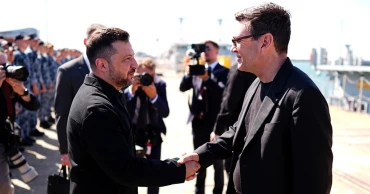
Zelenskyy, new UK leader discuss drone projects and missile defense
Ukrainian President Volodymyr Zelenskyy and new British Prime Minister Andy Burnham met Monday at a British naval base, discussing joint drone projects and Ukraine’s urgent need for ballistic missile interceptors to defend against Russian attacks.
Zelenskyy’s visit was the first by a foreign leader since Burnham took office a week ago. The prime minister said the visit demonstrated Britain’s “unwavering” support for Ukraine as it continues to defend itself against Russia’s nearly four-year-old full-scale invasion.
Burnham’s predecessor, Keir Starmer, visited Kyiv less than two weeks ago on his final foreign trip before leaving office. Burnham said he also planned to visit Ukraine soon.
Burnham is the fifth British prime minister Zelenskyy has dealt with since Russia launched its full-scale invasion in 2022.
“You are the first leader I have welcomed in person since taking office, and that is no accident,” Burnham told Zelenskyy. “It is intended to send a very clear message: we are with Ukraine 100%, I am personally with you 100%, and I will honor every commitment this country has made to Ukraine in full.”
Zelenskyy said relations between the two countries were “stronger than ever.”
The meeting took place aboard the aircraft carrier HMS Queen Elizabeth, docked at Portsmouth on England’s southern coast, a day before Zelenskyy is expected to meet US President Donald Trump in Washington.
Burnham said the two leaders had discussed Kyiv’s need for more interceptors to shoot down Russian ballistic missiles, particularly to protect Ukraine’s critical infrastructure during the winter.
“We’ve taken away some things that we will now follow up with our partners,” Burnham said after the meeting.
Russia has stepped up attacks this year on gas stations, power facilities and other infrastructure as part of a wider campaign aimed at disrupting Ukraine’s logistics and energy networks.
Zelenskyy said on X that the leaders also discussed “joint defense production.” Britain and Ukraine already have an agreement to cooperate on the development of new drones.
Before the meeting, Zelenskyy told Sky News that he hoped to establish a “big, big factory” in Britain.
The leaders also met more than 200 Ukrainian military personnel who had spent three weeks in Britain taking part in an exercise designed to strengthen their combat capabilities and improve measures to counter mines in the Black Sea, according to the UK government.
Burnham announced that Britain would provide Ukraine with the intellectual property behind its new “Stone Cloak” electronic warfare system. The technology can jam Russian air defenses and prevent drones from being detected.
Ukraine has expanded its campaign of frequent drone strikes deep inside Russia, targeting oil facilities, military factories and, most recently, logistics centers. The attacks have brought the war closer to millions of Russians and increased pressure on President Vladimir Putin.
The strikes have challenged Putin’s narrative that the war does not directly affect ordinary Russians. However, he has remained undeterred, while Russia has intensified its own aerial campaign, regularly attacking Ukraine with missiles and drones.
Russia and Ukraine exchange drone attacksRussia attacked Ukraine overnight with 147 long-range drones, according to Ukraine’s air force, which said 123 of them were intercepted or jammed.
In Zaporizhzhia, one person was killed and two others injured in overnight attacks that damaged a residential high-rise and several private homes, regional administration head Ivan Fedorov said.
A Russian strike on the town of Balakliia in the Kharkiv region killed one person and wounded eight, according to Vitalii Karabanov, head of the city’s military administration.
In the Nikopol district of the Dnipropetrovsk region, Russian strikes damaged a kindergarten, residential buildings and infrastructure, injuring a woman and a 6-year-old boy, administration head Oleksandr Hanzha said.
In the eastern Kharkiv region, regional council member Oleksandr Skoryk said Russian forces had destroyed every gas station along the highway between Kharkiv and Poltava, a route stretching about 150 kilometers (93 miles).
The highway is an important supply route connecting Kharkiv, Ukraine’s second-largest city and a regional hub near the Russian border, with central Ukraine.
Romania’s Ministry of National Defense said a drone briefly entered its airspace before crossing the river border into Ukraine, where explosions were later reported. Two F-16 fighter jets were deployed to monitor the airspace.
The incident was the fourth such incursion into Romanian airspace in four days. Romania, a NATO member, said the three previous drones were shot down.
In Moscow, Russia’s Defense Ministry said its air defenses had shot down 276 Ukrainian drones overnight.
Rostov regional Governor Yuri Slyusar said five people, including a child, were killed when a Ukrainian drone struck an apartment building in Rostov-on-Don.
Ukraine’s military General Staff said its forces had struck an export terminal in Rostov-on-Don, setting it on fire.
The Ukrainian military also said other strikes in the Russian-controlled part of the Kherson region targeted a ground relay station used to control drones and a bridge over the Henichesk Strait used by Russia for military logistics.
Russian fuel and supply depots were also targeted, it said.
In Belgorod, a city in southwestern Russia near the Ukrainian border, a Ukrainian drone attack injured 12 people, including two children, according to regional emergency officials.
Iran vows retaliation after Ukrainian strike on shipIranian Foreign Minister Abbas Araghchi said Ukraine had attacked an Iranian vessel in the Caspian Sea, killing a sailor.
In a statement on X Sunday, Araghchi condemned the attack as a “blatant U.N. Charter violation” carried out at Israel’s behest to draw Europe into its war.
He said he had made clear in phone calls with European Union foreign policy chief Kaja Kallas and Russian Foreign Minister Sergey Lavrov that the attack “can’t go unanswered.”
Zelenskyy said on X that Ukrainian long-range strikes in the Caspian Sea over the weekend achieved “very good results.” He said the targets included “vessels involved in transporting military cargo linked to Iran, as well as a warship.”
Ukrainian Foreign Minister Andrii Sybiha rejected Iran’s threats of retaliation as unjustified and baseless, saying Tehran’s weapons supplies to Russia had made it a direct accomplice in Moscow’s aggression.
“Iran has no standing to pretend to be a victim,” Sybiha posted on X, calling Tehran’s references to the UN Charter “absurd.”
Sybiha said Iran’s statements were an attempt to divert attention from Russian attacks on civilian shipping in the Black Sea, which he said would be discussed at an emergency UN Security Council meeting Monday.
7 days ago
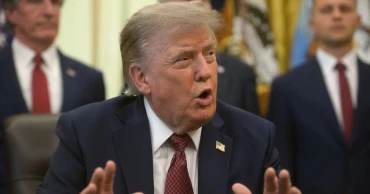
Trump demands Senate cancel August break until voting bill passes
President Donald Trump on Monday called on Senate Majority Leader John Thune to cancel the chamber’s upcoming August recess until senators pass a strict proof-of-citizenship voting bill, even as Republicans currently lack the votes to move the legislation forward.
Trump has repeatedly urged Thune to eliminate the legislative filibuster, which effectively requires 60 votes to pass most legislation in the 100-member Senate, or find another way to approve the voting bill, known as the SAVE America Act.
Republicans hold a 53-47 majority in the Senate, but Thune has repeatedly said they do not have enough votes either to pass the bill or change the rules to bypass the filibuster. The Senate is scheduled to begin its August recess on Aug. 7.
“John Thune should not allow the United States Senate to ‘leave town’ until it passes The Save America Act or, far better still, TERMINATES THE FILIBUSTER,” Trump wrote on social media.
The post was the latest escalation in a months-long campaign by Trump and his Republican supporters to get the SAVE Act passed ahead of the midterm elections. A small but vocal group of Republican senators has also stepped up pressure on Thune to find a way to advance the legislation.
House Republicans have sought another route for the bill through the budget reconciliation process, which would allow voting-related funding measures to pass the Senate with a simple majority.
The House last week approved a budget framework containing $10 billion for voting-related changes aligned with the SAVE America Act. But Thune has said Republicans also lack the votes to pursue the legislation through that process.
Trump pressure comes at key time
The dispute threatens to complicate the Senate’s final legislative push before the August recess. Thune had planned to use the period to work on a long list of priorities, including government funding, cryptocurrency legislation and sanctions on Russia.
The August break is also an important period for senators to return home and campaign ahead of the midterm elections.
Several Republican senators are facing competitive races, including Maine Sen. Susan Collins, Ohio Sen. Jon Husted and Alaska Sen. Dan Sullivan.
Republicans currently hold a 53-47 majority in the Senate and are also facing broader political challenges, including an unpopular war in Iran, rising gas prices and persistently high costs for voters.
Thune has maintained broad support within his Republican conference throughout the year as he has resisted Trump’s demands. He previously kept the SAVE Act on the Senate floor for weeks in an effort to gain more support, but failed to secure enough votes to advance it.
Utah Sen. Mike Lee, who has led the Senate push for the legislation, increased pressure on Thune late last week, warning that the Republican handling of the SAVE America Act “could impact not only the November midterm elections, but also the Senate GOP leadership elections.”
“Leaders must lead. And if they don’t, they’re not leaders,” Lee wrote on social media Friday.
Frustrated by the pressure despite lacking a clear path to pass the bill, Thune has urged Trump, Lee and others to help secure the necessary votes. Trump said Friday that he would “certainly be willing” to help contact senators.
Asked last week whether Trump was frustrated with Thune, White House press secretary Karoline Leavitt said that “his patience is running out.”
The late-summer dispute is similar to a fight before last year’s August recess, when Trump urged Thune to keep senators in Washington to clear a backlog of his nominees. The Senate ultimately left Washington without an agreement after negotiations with Democrats broke down.
SAVE America Act would impose national voting rules
The SAVE America Act, short for Safeguard American Voter Eligibility, would require Americans to prove their citizenship when registering to vote, mainly through a valid US passport or birth certificate.
The legislation would also require voters to present valid photo identification before casting ballots, a requirement already in place in some states.
Voting experts have warned that the bill could disenfranchise about 20 million American voters who do not have birth certificates or other required documents readily available.
Trump has made the legislation a top priority in 2026, saying it would “guarantee the midterms” and falsely claiming that election cheating is “rampant.”
He previously said he would not sign other legislation until the SAVE Act was passed.
7 days ago
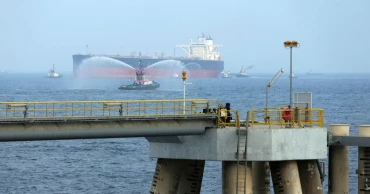
Mediators see progress in efforts to halt Iran war: regional officials
Mediators have made progress in efforts to bring the United States and Iran back to negotiations and prevent an all-out war in the Middle East, two regional officials said Monday, as attacks remained halted after nearly two weeks of rapidly escalating tensions.
The comments came after neither the US nor Iran reported attacks for three consecutive days, offering a brief respite following sustained bombardments that had raised fears of a return to full-scale conflict.
However, Saudi Arabia said it had intercepted drones launched by Iran-backed militias in Iraq that targeted its petroleum facilities, highlighting the risk that tensions could flare up again. The Saudi Defense Ministry, in a social media post, did not report any casualties or damage.
The two regional officials, speaking on condition of anonymity because of the sensitivity of the talks, said mediators led by Qatar and Pakistan were working to narrow differences between Washington and Tehran and revive an interim ceasefire agreement that had been largely undermined by recent exchanges of fire.
No strikes over weekend
The US has paused its attacks after targeting Iranian coastal areas and infrastructure during nearly two weeks of escalation that began after Iran fired on ships attempting to pass through the Strait of Hormuz, a key waterway for global oil shipments.
The Pentagon did not respond to questions about the pause.
US Ambassador to the United Nations Mike Waltz told Fox News that President Donald Trump was “giving talks some space” and allowing them some time.
Waltz also rejected suggestions that the US was running short of interceptor missiles needed to defend against Iranian attacks. However, experts have questioned how long either side can sustain the current level of military operations.
Iran also halted attacks after the US stopped its strikes for two nights, an Iranian army spokesperson said on state television Sunday.
In recent days, Tehran had launched retaliatory attacks against countries in the region that host US military forces, killing at least three service members at a base in Jordan and another in Iraq.
Regional officials cite progress in talks
One of the regional officials told AP Monday that progress in the mediation efforts was “significant.” He said mediators were working with Iran and Oman on a mechanism to manage vessel traffic through the Strait of Hormuz, which has emerged as a major flashpoint in the latest escalation.
Iranian Foreign Ministry spokesperson Esmail Baghaei said at a news conference in Tehran Monday that mediators were passing messages between the two sides, but there were no direct negotiations between Washington and Tehran.
“Mediators may convey messages to us from the American side regarding ongoing developments in the region. But at present, we have no negotiations with the American side,” Baghaei said.
He said Iran and Oman, which lies across the Strait of Hormuz, had already held talks on Friday and Saturday over how to manage shipping through the waterway.
The aim, Baghaei said, was for Iran and Oman, as the two coastal states, to establish mechanisms to ensure safe navigation through the strait while respecting their sovereignty and Iran’s security and national interests.
He stressed, however, that the waterway remained closed.
Tehran has maintained that the interim agreement with the US allows it to manage shipping through the strait for now. Iran has also opposed US efforts to support a shipping route passing close to Oman instead. Before the war, the Strait of Hormuz was regarded as an international waterway.
The US military said Saturday that its recently reinstated naval blockade of Iran remained in place, with 12 commercial ships redirected, two disabled and two boarded.
US forces “remain highly vigilant, focused, lethal, and ready,” it said.
The 60-day period set under the interim agreement in mid-June is now well into its second half. Major issues that were supposed to be discussed, particularly Iran’s nuclear programme, which lies at the centre of the tensions, remain on hold as mediators focus on keeping both sides engaged.
Shipping through Strait of Hormuz hits three-week lowConcerns also remain over shipping through another key regional waterway, the Bab al-Mandeb Strait leading to the Red Sea.
Iran-backed Houthi rebels in Yemen last week threatened to block Saudi shipping there and fired on at least one Saudi tanker, setting it on fire.
Global energy supplies and the broader economy remain at risk as gasoline prices have risen again.
Commercial shipping through the Strait of Hormuz fell to a three-week low, a maritime body overseen by the US Navy said Sunday. It added that no new attacks had been confirmed in the previous 72 hours.
Shipping traffic through the Bab al-Mandeb remained steady, the body said.
Netanyahu backs Trump’s efforts
Meanwhile, Israeli Prime Minister Benjamin Netanyahu is scheduled to travel to the United States and meet with Trump in Washington on Tuesday, his office said.
The two leaders last met in Washington in February, weeks before the US and Israel launched the war against Iran that killed senior Iranian leaders, including Supreme Leader Ayatollah Ali Khamenei.
Iran-backed Hezbollah fired at Israel two days after the war began, prompting Israel to respond with airstrikes and ground operations in southern Lebanon.
Since then, the US has backed landmark direct talks between Lebanon and Israel aimed at easing tensions on that front and finding a way to disarm Hezbollah.
Iran criticizes Ukraine over Caspian Sea strikeSeparately, Baghaei criticized Ukrainian President Volodymyr Zelenskyy after he said over the weekend that Ukraine had attacked “vessels used in military cargo shipments involving Iran” in the Caspian Sea.
Iranian Foreign Minister Abbas Araghchi said Sunday that the Ukrainian strike on an Iranian vessel killed a sailor.
In a post on X, Araghchi condemned the attack as a “blatant U.N. Charter violation” carried out at Israel’s behest to draw Europe into the war.
He said he had made clear in phone calls with EU foreign policy chief Kaja Kallas and Russian Foreign Minister Sergey Lavrov that the attack “can’t go unanswered.”
Iran is an ally of Russia in its war against Ukraine and has helped Moscow strengthen its drone capabilities.
At Monday’s news conference in Tehran, Baghaei said that “all parties that consider themselves in some way supporters of the Ukrainian regime must be held accountable.”
He also compared Zelenskyy’s actions to those of anarchists who, before World War I, carried out “theatrical and highly dangerous actions” whose consequences eventually engulfed Europe.
7 days ago

Gunfire at Seattle food festival leaves 2 dead, 5 injured
A shooting killed two people and wounded five including a child on Sunday evening during a popular food festival near the Space Needle in Seattle, a city fire department spokesperson said.
The gunfire erupted around 6 p.m. in the waning hours of the Bite of Seattle, an annual festival that draws hundreds of food and retail vendors and performers. Police were investigating the shooting and urged people to avoid the area just northwest of downtown. Authorities did not immediately say if anyone was in custody.
Two people died at the scene, said Grace Nuñez, spokesperson for the Seattle Fire Department.
Five patients were transported to Harborview Medical Center, including a 56-year-old woman in serious condition, Nuñez said.
A 2-year-old boy, a 23-year-old man and a 39-year-old woman are in stable condition, while a 40-year-old woman had minor injuries, she said.
A large number of police and emergency crews responded and began evacuating the area around the sprawling Seattle Center events campus. Authorities have not said where exactly the shooting occurred at the event, which had outdoor and indoor areas.
Washington Gov. Bob Ferguson said he was receiving briefings and State Patrol SWAT officers were deployed to assist local police.
“My prayers are with the families of the victims, and the responders as they work to keep people safe,” Ferguson said in a statement.
Faith Adia Hunter said she and her friends had just gotten food from a crepe vendor when gunfire broke out. She realized the shooter was near them.
“We were right next to him when it started so we took off running,” Hunter said. “So we took off running too into the building with the crowd.”
She and others found shelter in the nearby Seattle Children’s Museum, Hunter said.
In the chaos of the shooting, many vendors bolted toward the exits, abandoning their food stands. Hours afterward, some milled outside the police tape, wondering when they would be allowed to return to collect their tents, food and cooking gear.
Roberto Ramirez, a vendor at the event, said he heard what sounded like firecrackers before people began yelling “shooter” and frantically running out of the building.
“Suddenly everything was empty,” he said. “People were freaked out.”
Ramirez ran outside to grab his father but did not leave the event because his merchandise remained there. After the initial panic, new guests continued to arrive unaware of what had happened and were told by police to leave, he said.
Estan Wakonabo said he and his girlfriend were at the festival waiting in line for a photo booth when he was shoved from behind and he turned to see a rush of people fleeing.
“People were hiding, were pushing, people were falling on the ground, baby strollers were falling,” Wakonabo said, adding that was when he heard gunshots.
“Once I heard a ‘pop, pop, pop,’ that’s when I knew it was a shooter,” he said.
After he escorted his girlfriend to safety, he returned to the scene to make photos and saw multiple victims on the ground, Wakonabo said.
The annual festival started in 1982 and draws 350,000 attendees over “three days of food, drink, and community celebration,” according to its website.
7 days ago

House fire in Japan leaves 4 people dead
Four people, including two children, died in a house fire in southwestern Japan early Monday morning, local media reported.
According to public broadcaster NHK, firefighters received a report at around 5:30 a.m. local time that white smoke was coming from the second floor of a two-story wooden house in Imari City, Saga Prefecture. The blaze was extinguished at around 7 a.m. and did not spread to any neighboring buildings.
Police said two adults and two children were found inside the house and taken to the hospital unconscious. All four were pronounced dead shortly afterward.
Police believe the victims were members of the family living in the house. Authorities are working to confirm their identities while investigating the cause and circumstances of the fire.
7 days ago

Berlin Pride attack suspect killed
The suspect in the deadly Berlin Pride attack that left one person dead and 29 injured was shot and killed by police during a confrontation on Sunday in a suburb of the city, authorities said.
Abdul Ballout, a German citizen with Lebanese roots, was killed following a search that lasted nearly 24 hours after the attack in downtown Berlin. Prosecutors said he had previously sought to join the militant Islamic State group.
Ballout was suspected of driving a van into a crowd near Berlin’s Pride festival Saturday night before apparently stabbing others with a machete in what authorities believe was an Islamic extremist terror attack.
Interior Minister Alexander Dobrindt said the attack occurred a few hundred meters (yards) from a party near the Brandenburg Gate that was supposed to close out the city's Pride festival.
Ballout was tracked down around 6 p.m. Sunday at a garden in Spandau, a Berlin suburb, the city's police department wrote on X. They said he apparently ran toward officers with a sharp instrument, and police fired at least one shot. He died at the scene.
Ballout was born in Germany, the minister said. His mother was naturalized in 2002, three years before he was born.
Ashley Jump, a 26-year-old U.K. resident, had traveled to Berlin for Saturday’s Pride parade but had left the celebrations before the attack. They returned Sunday to leave flowers at a memorial near the crime scene in support of the LGBTQ+ community.
“They’ll never erase us, we’ll never be gone,” they said. “As long as humanity has existed, we’ve existed. And as long as humanity exists, we will exist. We will not be removed.”
Suspect convicted of ties to Islamic extremism
Ballout traveled to Lebanon in 2025 with the goal of going to Syria to join the Islamic State group, Berlin prosecutors said Sunday.
There, he made contact with several people who were presumed members of the militant group — or at least he believed them to be, prosecutors said. He was arrested in Lebanon last year and sentenced by a military court to three months’ imprisonment for offenses including incitement to religious and sectarian conflict.
He returned to Germany after completing his sentence, where he was arrested at the Berlin airport.
In May, a juvenile court in Berlin convicted Ballout of preparing a serious act of violence endangering the state, as well as publishing Islamic State propaganda on his Instagram account and other charges, prosecutors said.
The court handed down a suspended sentence of 1 year and 10 months in youth custody, which Berlin prosecutors had appealed.
The court said it took Ballout’s months of pre-trial detention in Germany and Lebanon into account. It also said it considered that Ballout had confessed to the crimes, appeared to distance himself from the militant group and no actual threat had ever materialized.
He was released from detention pending the appeal.
Berlin's Pride festival is one of Europe's largest LGBTQ+ celebrations
According to police, a white van drove into the Tiergarten park around 10 p.m. and hit several people before colliding with a tree. The closing party at the Pride festival, known as Christopher Street Day, was ongoing at the time next to the Brandenburg Gate, a short distance away. The party followed a parade with some 80 trucks that had made its way through downtown Berlin earlier in the day.
The attack did not occur at the festival, along its route or at the closing party. Rather, the violence took place a few hundred meters (yards) away on a track in the Tiergarten park. The van drove into a crowd that was likely a mix of festivalgoers and other locals or visitors.
Police said a woman was killed.
On Sunday afternoon, hundreds of mourners gathered at a memorial at the iconic gate. They hugged each other and laid down flowers, candles, rainbow flags and homemade signs, including a cardboard one that said: “the only thing more powerful than hate is love.”
Hundreds of thousands had come to Berlin to celebrate on Saturday, though it’s unclear how many were still at the festival by late evening. It’s one of Europe’s largest LGBTQ+ celebrations.
“We are simply stunned by what happened,” said Andre Lehmann, a top official with the main national LGBTQ+ association, LSVD+. “This suspected attack hits the heart of the queer community.”
Amsterdam says it will celebrate freedom in the wake of Berlin attack
Chancellor Friedrich Merz urged the nation to remain united in the aftermath of the attack.
“I would like to say this to Christopher Street Day participants here in Berlin but also across Germany: Don’t let yourselves, let us not let ourselves, be intimidated," he said. "These acts have only one purpose: They aim to divide our society. They want to take away from us the most important thing we have: Namely our openness and our freedom.”
Dobrindt said he expected security measures at other major events in Germany, including Pride events elsewhere, to be reviewed and if necessary significantly boosted.
Berlin has seen Islamic extremist attacks before. In December, 2016, a rejected asylum seeker from Tunisia plowed a hijacked truck into a Christmas market, killing 13 people and injuring dozens. He was killed days later in a shootout in Italy.
In February last year, a Spanish tourist was stabbed and seriously wounded at Berlin’s Holocaust Memorial, an attack that saw a Syrian man convicted in March and sentenced to 13 years.
This week, Amsterdam will be hosting World Pride alongside its own annual Pride celebrations. Mayor Femke Halsema said authorities and organizers “are closely monitoring the security situation” after the Berlin attack but aim to prevent any extra measures getting in the way of celebrating freedom and love.
7 days ago

Oil prices ease after US and Iran pause their attacks
Oil prices eased in early trading Sunday, falling further from a two-month high set last week, after the United States and Iran refrained from launching military strikes in the Persian Gulf for a second straight day.
The price for a barrel of Brent crude oil to be delivered in September dropped 4.9% to $92.02 shortly after trading resumed. The decline followed a 3.9% drop on Friday.
Brent crude, the international standard, briefly hit $102 a barrel last week. That was $30 more than the most actively traded contract in the Brent market was going for early in the month, and the highest it had been since May.
Oil prices surged this month because of increased fighting in the Middle East and worries a return to all-out war would further slow the global flow of crude.
The ability of tankers to pass safely through the Strait of Hormuz has been the central concern for the oil market since the U.S. and Israel attacked Iran in late February. The narrow strip of water off Iran’s coast is the route through which a fifth of the world’s oil typically leaves the Persian Gulf and heads to customers worldwide, and the conflict has largely halted shipping traffic.
Oil producers have since searched for alternative routes, but those are under pressure too. Last week, attacks hit Saudi oil tankers that were using the Red Sea to leave the region. When less oil is available for customers to buy, the price goes up and fuel prices do as well.
In the United States, the average price for a gallon of regular gasoline on Sunday was $4.11, up from $3.90 a month ago and just $3.15 a year ago, according to motor club AAA.
If oil prices stay elevated, it could lead to higher prices for every product that gets shipped, trucked or flown around the world, including groceries. Although the U.S. economy continues to grow, the ongoing conflict with Iran has dragged consumer confidence in it lower.
The reacceleration of oil prices this month took place just as inflation had begun to slow more than economists expected. Now, traders believe inflation pressures have grown enough that they’re betting on a 36% chance the Federal Reserve will hike its main interest rate at an upcoming meeting, according to data from CME Group.
Higher interest rates would help keep a lid on inflation, but they could also slow the economy by making it more expensive for all kinds of Americans and businesses to borrow.
Long-term U.S. mortgage rates have already hit their highest levels in nearly a year, for example, chilling the housing industry. And more expensive borrowing could slow the boom in building artificial-intelligence data centers, which have become a big engine for the U.S. economy's growth.
While oil prices have given back some of their big July gains, much uncertainty still remains.
The price for a barrel of benchmark U.S. oil to be delivered in September fell 5.6% to $84.34 on Sunday. It dropped 3.1% on Friday.
In the oil market, traders are buying and selling contracts for barrels of oil to be delivered many months in the future. The price for a barrel of Brent crude to be delivered in October, which is now the most actively traded part of the market, fell 4.6% to $87.48.
8 days ago