world
US judge blocks Trump’s latest bid to curb birthright citizenship
A US federal judge has blocked President Donald Trump’s latest attempt to restrict birthright citizenship, issuing a preliminary injunction against an executive order targeting what the administration calls “birth tourism.”
US District Judge Deborah L. Boardman of Maryland issued the order Wednesday while a class-action lawsuit filed by immigrant families and advocacy groups is pending.
In her ruling, Boardman said the Supreme Court had already established that children covered by the case are citizens at birth.
Birthright citizenship is guaranteed under the US Constitution to people born on American soil, with limited exceptions. The right stems from the 14th Amendment, ratified in 1868.
Trump has repeatedly sought to end or restrict the practice. His earlier executive order sought to deny citizenship to children born to people who are in the US illegally or temporarily, but the Supreme Court struck down that effort in June.
In August, Trump issued a narrower order seeking to restrict automatic citizenship for certain children, including those born to parents with links to foreign embassies or organizations and people classified as “alien enemies.”
The latest order also targeted “birth tourism,” which the administration described as entering the US on a nonimmigrant visa specifically to give birth there.
Families challenging the order argued that its broad provisions could leave children at risk of being denied citizenship based on circumstances involving their parents or extended family members.
The administration argued that blocking the order was premature, saying federal agencies would issue appropriate guidance on how it would be enforced.
Boardman rejected that argument, saying the order itself directs agencies to deny citizenship documents to broad categories of children regardless of future guidance.
The lawsuit was filed with support from We Are CASA, the Asylum Seeker Advocacy Project and the Institute for Constitutional Advocacy and Protection.
The White House did not immediately comment on the ruling.
1 hour ago

Tens of thousands protest across Spain over Ceuta border crisis
Tens of thousands of people took to the streets across Spain on Wednesday to protest the ongoing humanitarian and border crisis in Ceuta, demanding urgent solutions and blaming Prime Minister Pedro Sánchez's government for its handling of the situation.
Ceuta, a small Spanish territory on the northern coast of Africa, usually marks its Sept. 2 annual holiday with official ceremonies and cultural events. This year, however, the celebrations were overshadowed by Spain's worst border crisis in recent memory.
In Madrid, authorities said around 50,000 people joined the protest. After the demonstration ended, an Associated Press journalist heard gunshots and explosions, while Spanish newspaper El País reported that police used rubber bullets and tear gas to disperse crowds.
Large protests were also held in Barcelona, Valencia and Seville.
Waving Spanish flags, protesters chanted slogans against Sánchez and irregular migration, including calls for a “united Ceuta” and demands for migrants to leave the city.
The protests came weeks after around 72,000 people swam, climbed or rushed across the border into Ceuta from Morocco in late July. At least 90 people died while attempting to reach the Spanish territory.
Although most of the migrants later returned or were sent back across the border, the Spanish government said around 5,000 people, including 1,200 minors, remain in Ceuta. Local authorities have put the number even higher.
The sudden arrival of tens of thousands of people placed enormous pressure on Ceuta, which has a population of about 84,000, and left many residents frustrated. Local officials accused Spain's central government of failing to act on warning signs before the border crossing.
Ceuta's regional leader Juan Jesús Vivas said the incident was more than a migration crisis.
“What happened was the violation of Spain's territorial integrity,” he said during an official event marking the city's annual holiday.
Vivas, a member of the opposition conservative Popular Party, has called on the government to strengthen Ceuta's border with Morocco and reduce Spain's dependence on cooperation from its neighbour.
The Popular Party and the far-right Vox party have made the Ceuta crisis a major political issue as they seek to challenge Sánchez's left-wing government.
Spain's Territorial Policy Minister Ángel Víctor Torres, however, dismissed Wednesday's protests as politically motivated.
“This is not to show support for Ceuta or its residents; it is to attack the government of Spain,” he said.
The Spanish government has denied abandoning the city and recently allocated 309 million euros ($357 million) to support Ceuta's social services, migrant accommodation, economy and security.
Questions have also been raised about whether Morocco could have done more to prevent the mass border crossing. Sánchez has defended Moroccan authorities, saying they helped quickly return most of those who entered Ceuta.
The Spanish prime minister has claimed that misinformation on social media, including posts allegedly amplified by accounts linked to Russia and Israel as well as right-wing groups, worsened the crisis. He did not present public evidence to support the allegations.
Russia and Israel have rejected the claims.
Meanwhile, life in Ceuta has yet to return to normal. Many migrants, including unaccompanied minors, are still sleeping on the streets or camping on beaches as authorities struggle to provide shelter, complete registration and return eligible migrants to Morocco.
“We're suffering and want to reach Europe or find a solution,” Moroccan migrant Nebil Tazi told AP, saying many people were still sleeping on the beach after waiting for weeks.
Vivas said restoring normal life in Ceuta should now be the main priority. He also vowed to continue seeking answers about what led to the mass crossing.
“If we don't strengthen the border, there will always be someone tempted to use migration as a tool for political purposes,” he said.
In a video message released Wednesday, Sánchez said his government was using all available resources to help restore calm and normalcy in Ceuta.
The city's annual holiday marks Sept. 2, 1415, when Portuguese forces took control of the territory. Ceuta later came under Spanish rule in 1580.
3 hours ago
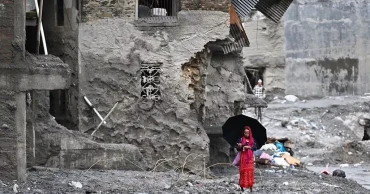
Nepal steps up relief and recovery efforts after deadly floods: UN
Nepal is stepping up relief and recovery efforts following last week's devastating flash floods along the Nepal-Tibet border, while rescue teams continue searching for survivors, the United Nations said.
For thousands of affected people, the immediate priorities are receiving emergency aid, finding missing family members, recovering the bodies of loved ones and reuniting children separated from their families, a spokesperson for UN Secretary-General said.
Nepal's disaster management agency said at least 1,200 people have been killed and more than 4,200 remain missing. On the Tibetan side, at least 21 people have died and more than 540 are still unaccounted for, according to Chinese state media.
Rescue teams are also working to reach potentially hundreds of workers believed to be trapped inside hydropower tunnels in Nepal.
The disaster occurred last Wednesday when a massive flash flood, believed to have been triggered by a glacial collapse, swept through a Himalayan valley and destroyed villages in its path.
Nepal's disaster management agency said nearly 12,000 people have been rescued since the floods.
However, thousands of people remain missing, including hundreds of foreign nationals from countries such as India, the United Kingdom, Australia, the United States and Malaysia.
With a week having passed since the disaster, concerns are growing that the death toll could rise further as rescue teams reach more remote and severely affected areas.
With inputs from BBC
4 hours ago
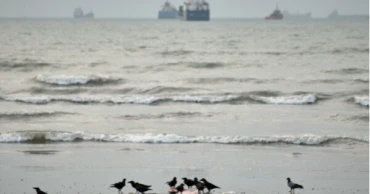
Iran fires missiles and drones at Kuwait as regional tensions escalate
Iran launched attacks on Kuwait on Thursday, continuing its retaliation following U.S. bombardments of Iranian targets earlier this week.
Here is a look at the latest developments in the Iran war and the wider Middle East:
Iran targets KuwaitAir raid sirens sounded across Kuwait early Thursday as the country's air defense systems intercepted Iranian missiles and drones, Kuwait's Ministry of Defense said.
The ministry described the attacks as a “blatant Iranian aggression.”
The latest attack came a day after Bahrain and Jordan, both U.S. allies, said their air defense systems had intercepted several Iranian aerial attacks.
Fighting between the United States and Iran has intensified this week after U.S. forces struck Iranian rocket launchers on an island in the Strait of Hormuz on Sunday. Washington said Iran was preparing to use the launchers to fire mines into the strategic waterway.
Netanyahu seeks to unite Israel's right wing before electionMeanwhile, Israeli Prime Minister Benjamin Netanyahu is trying to unite right-wing parties ahead of the country's Oct. 27 election.
Several small parties that support Netanyahu are competing separately in the election. However, instead of strengthening his position, the division could weaken his chances of remaining in power by splitting votes among his supporters.
The parties include hard-line groups led by controversial Cabinet ministers Itamar Ben-Gvir and Bezalel Smotrich.
Netanyahu has urged his former allies to join larger political blocs that would have a better chance of winning seats in parliament.
The upcoming election is widely seen as a major test of Netanyahu's political future and his handling of a turbulent period in Israel.
His nearly uninterrupted 17 years in power have included mass protests, Hamas' Oct. 7, 2023 attack and nearly three years of war.
A victory could mark a major political comeback for Netanyahu, while defeat could bring an end to the long political career of one of Israel's most influential leaders.
5 hours ago

Very strong El Niño could fuel floods, droughts, extreme heat into 2027: WMO
The El Niño weather phenomenon is firmly established and is expected to intensify into a very strong event in the coming months, increasing the risks of floods, droughts and extreme heat across different parts of the world, the World Meteorological Organization (WMO) said.
According to the latest WMO update, forecasts from its Global Producing Centres show an exceptionally high likelihood of nearly 100% that El Niño will continue through February 2027.
The latest forecast marks the first time a WMO El Niño/La Niña update has expressed such a high level of certainty, reflecting strong agreement among meteorological and climate forecasting centres worldwide.
El Niño is being driven by unusually warm ocean temperatures across the tropical Pacific. The phenomenon is expected to strengthen further over the next several months, reaching very strong intensity and likely peaking toward the end of 2026. Its effects on global climate and weather patterns are expected to continue well into 2027.
UN Secretary-General António Guterres described the developing phenomenon as an exceptionally large El Niño and warned that rising sea-surface and global temperatures could put the world at greater risk of extreme weather.
“The science leaves no room for doubt: the planet is in uncharted waters, and those waters are heating up,” Guterres said, calling for stronger climate action to protect vulnerable populations.
WMO Secretary-General Celeste Saulo said El Niño could have severe consequences for communities and economies worldwide, noting that droughts, floods and other disruptions are already being experienced in various regions.
She stressed the need for exceptional preparedness and response as the phenomenon intensifies.
Saulo said the WMO has launched a major mobilisation with National Meteorological and Hydrological Services, describing them as being on the frontline of providing forecasts and early-warning services aimed at protecting lives and livelihoods.
The WMO will also work with UN agencies, humanitarian organisations and other partners to provide climate information needed for disaster preparedness and response, as well as for climate-sensitive sectors including agriculture, health, energy and water management.
“We have no time to lose,” Saulo said.
The WMO El Niño/La Niña Updates are considered a key source of information for governments and decision-makers. The forecasts are based on a consensus of climate models from WMO Global Producing Centres, along with assessments from national meteorological and hydrological services and climate prediction centres worldwide.
6 hours ago
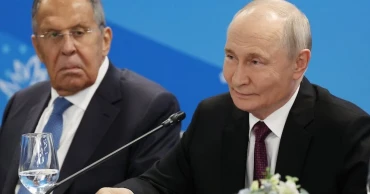
Russia to close German cultural centers after Berlin accuses Moscow over airport drone plot
Russia said Thursday it will close several German cultural centers after Berlin accused Moscow of being behind an attempted drone attack at Leipzig/Halle Airport and announced the closure of Russian diplomatic and cultural facilities in Germany.
Russian Foreign Minister Sergey Lavrov said centers operated by Germany's Goethe-Institut would be shut down in Moscow, St. Petersburg and Yekaterinburg.
Speaking at the Eastern Economic Forum in Vladivostok, Lavrov said Germany should have understood that closing the Russian House cultural center in Berlin would bring an end to Germany's cultural presence in Russia.
The move came after German authorities blamed Russia for an alleged plot involving a drone carrying explosives that was found near a Ukrainian aircraft at Leipzig/Halle Airport on Aug. 4. The device was later defused.
The airport is a major international cargo hub and has been used to provide support and supplies to Ukraine.
Western officials have repeatedly accused Russia of carrying out sabotage and other disruptive activities across Europe in an effort to weaken support for Ukraine and destabilize European countries.
Russian President Vladimir Putin rejected the accusations, claiming that Germany was trying to divert attention from its own domestic problems and growing voter dissatisfaction. He also said any evidence presented against Russia had been fabricated.
EU considers response
European Union foreign ministers discussed possible responses to the alleged drone attack on Wednesday but faced difficulties in finding new measures that would address the threat without military action.
EU foreign policy chief Kaja Kallas said the incident appeared to have the characteristics of state-sponsored terrorism. Possible measures discussed included additional sanctions, visa restrictions and the closure of Russian consulates.
The EU has already imposed nearly two dozen rounds of sanctions on Russia since the start of the war in Ukraine, targeting more than 3,000 Russian officials, business figures and organisations, including banks, energy companies and drone manufacturers.
Kallas said the bloc was also preparing additional travel bans and asset freezes against around 1,600 more individuals.
Germany said it was “not at war” with Russia but had become a regular target of what it described as the Kremlin's hybrid campaign.
German Foreign Minister Johan Wadephul said Berlin had carefully prepared its response and that Moscow would now have to face the consequences.
He also called on Russia to demonstrate its willingness to engage in meaningful talks and negotiations, particularly over the war in Ukraine.
7 hours ago
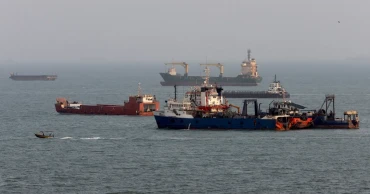
Trump suggests renaming Strait of Hormuz as ‘Trump Strait’ amid Iran war
US President Donald Trump has suggested renaming the Strait of Hormuz after himself, again asserting that the strategic waterway is under US control despite near-daily Iranian attacks on vessels in the area.
Trump made the suggestion Wednesday, less than 24 hours after US forces struck several targets in Iran, killing at least four people, including two children, at a wedding in the southern city of Sirik.
“Now that we have it under USA control, should we change the name Hormuz Strait to TRUMP STRAIT???” Trump wrote in a social media post.
“Like America itself, it would be ‘hotter’ than ever before!”
Iran responded to Tuesday’s US strikes by launching missiles at US bases in the region. The escalation sent oil prices up by around 4 percent.
Despite repeated claims by US officials that the Strait of Hormuz is open and that millions of barrels of oil are passing through the waterway each day, oil prices have not declined in recent weeks.
Iran, meanwhile, continues to maintain that the waterway is closed and remains under its control.
On Wednesday, Saudi Arabia accused Iran of striking an oil tanker, killing two people.
The United Kingdom Maritime Trade Operations (UKMTO), a monitoring agency affiliated with the British Royal Navy, has reported attacks on vessels in the Strait of Hormuz almost every day.
In the US, gasoline prices have also been rising. The average price reached $4.12 per gallon on Wednesday, according to the American Automobile Association (AAA), up from below $3 before the war began on Feb. 28.
When Trump and Israeli Prime Minister Benjamin Netanyahu launched the conflict by attacking Iran and killing its supreme leader earlier this year, Trump had said the war would last six weeks.
However, the promised quick end to what Trump initially described as a “little excursion” failed to materialise. The conflict entered its seventh month last week.
Trump has nevertheless continued to claim victory and control over the Strait of Hormuz, repeatedly saying that Iran has been militarily defeated despite its continued ability to strike US interests in the region.
Following Tuesday’s US strikes, Trump warned Tehran against retaliating, saying Iran would be “hit again at a much harder and higher level” if it responded.
Within hours, however, Iran’s military launched missiles and drones at US bases in Bahrain, Jordan and Iraq.
Trump’s “Trump Strait” proposal on Wednesday was the latest attempt by the US president to assert control over a conflict that critics say was a strategic miscalculation and is turning into a quagmire.
Last month, Trump said he considered the Strait of Hormuz to be “American territory.”
Last week, he also unilaterally renamed Lake Ontario, which borders the US and Canada, as “Lake America” amid ongoing trade tensions between Washington and Ottawa.
#From Al Jazeera
7 hours ago

Symbolic funerals held in Nepal as some missing tourists contact authorities
Some tourists previously reported missing after Nepal's devastating floods have made contact with authorities, offering a glimmer of hope, while families of locals who remain unaccounted for are holding symbolic funerals for loved ones feared dead.
Nepal's Foreign Ministry said 324 foreign nationals have been rescued, while 590 people from 39 countries are still missing following the Aug. 26 disaster. The country's disaster management agency said at least 1,204 people have been killed and more than 4,200 remain missing.
Australian Prime Minister Anthony Albanese said the number of Australians reported missing had dropped from 43 to 38 after five people were confirmed safe overnight.
“Amidst all of this tragedy, we are seeing some positive news,” Albanese said while attending a regional summit in Palau, adding that efforts were continuing to locate others.
Australia said Thursday it would send a team of drone operators to Nepal within days to support search and rescue operations.
Nepal Tourism Board spokesperson Sunil Sharma said at least five other tourists previously listed as missing had contacted authorities by phone or email in recent days.
The disaster is believed to have been triggered by a glacial collapse in the Himalayas, sending huge amounts of rock, ice and meltwater into valleys and causing rivers in Tibet and Nepal to rise rapidly. Floodwaters swept away homes, roads, bridges and other infrastructure.
Families hold symbolic funeralsIn Nuwakot, one of the hardest-hit districts, some families have held symbolic funerals for relatives who remain missing and are feared dead.
For Hindu families, cremation is an important final rite. Performing the ceremony without recovering the bodies can offer families a sense of spiritual closure.
Mukunda Rijal said several of his cousins and their daughters were still missing, prompting the family to carry out symbolic funeral rites.
Along the banks of the Trishuli River, a priest placed straw effigies representing the missing relatives on funeral pyres and set them alight as family members gathered with traditional offerings.
Authorities have also been burying recovered bodies in temporary graves until they can be identified. DNA samples are being preserved, while photographs and other identifying details are being recorded to help match the bodies with missing people and eventually return them to their families.
China opens access route for rescue teamsAcross the border in China, rescue workers have completed a temporary road to reach the disaster-hit area near Gyirong Port, state broadcaster CCTV reported Wednesday.
The route will allow heavy machinery to reach the border crossing area, which was severely damaged by the floods and buried under water, mud and rocks.
China's state news agency Xinhua said at least 21 people had been killed and 541 others remained missing on the Chinese side of the disaster zone.
Survivors seek shelter in KathmanduMeanwhile, hundreds of flood survivors have fled to Kathmandu in search of shelter.
About 400 people, most of them from the town of Timure, around 110 kilometers west of the capital, are staying at the Yellow Gumba monastery. Local residents, relatives and charity groups are providing food and other relief supplies.
Among them is 21-year-old Riya Tamang, who escaped with her 10-month-old baby as floodwaters approached her home. She said she lost her grandparents in the disaster.
“I was the last one to leave the house. It was so difficult to escape,” she said.
Her husband, who works as a cook in Gyirong on the Chinese side of the border, also survived. The couple are now staying in contact through video calls.
7 hours ago
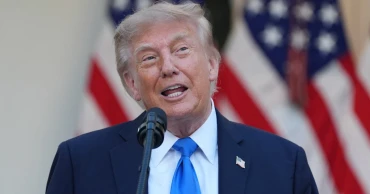
Trump promises to campaign for Republicans, says they have a winning midterm message
President Donald Trump on Wednesday urged Republican lawmakers facing difficult reelection races to campaign on his record in the White House despite his declining popularity, while pledging to campaign in all of the roughly three dozen contests expected to determine control of Congress.
Voters' negative views of the economy and the war in Iran have put Republicans in a difficult position as the midterm election season enters its final stretch. But at a dinner in the Rose Garden — one of the White House spaces he has controversially renovated since returning to office last year — Trump told some of his party's most vulnerable lawmakers that they had a strong record to present to voters.
“All you have to do is talk about it, and you're going to win and you're going to win big,” Trump said, a week before Republicans are scheduled to gather in Dallas for an unusual midterm convention.
The Republican lawmakers listened quietly throughout Trump's remarks, occasionally applauding as many sipped cocktails before dinner. Yellow gingham-covered menus described the event as an “end of summer BBQ” featuring cheeseburgers.
Trump highlighted economic investment in the United States, lower drug prices and reduced border crossings, though some of the figures he cited were significantly inflated.
Trump said control of Congress would be decided by about 35 races. He pledged to spend the 30 days before the election campaigning aggressively in those battleground contests, recalling his extensive travel schedule before his own White House victory two years ago.
“I'm going to go to every one of those 35 places, and we're going to see if we can get everyone elected,” Trump said. He said his efforts would focus on both House and Senate races.
He specifically mentioned Senate contests in Alaska, where Republican Sen. Dan Sullivan is facing Democratic former Rep. Mary Peltola, and Texas, where Republican state Attorney General Ken Paxton is running against Democratic state Rep. James Talarico.
Trump endorsed Paxton during this year's primary despite his scandal-plagued past. However, Trump also joked Monday about Paxton's appearance and performance on the campaign trail.
“You might not love his look. You might not love his television interviews,” Trump said. “But he was the best attorney general in the country, perhaps. He was one of the best in the entire country. And that speaks a lot louder than the suit he's wearing that doesn't look so great.”
Trump suggested that the Republicans' difficulties in the midterm elections were part of a broader pattern faced by nearly all modern presidents.
“Whether you're a good president or a great president, you lose the midterms,” Trump said. “We're going to turn that around because there's no reason for it.”
10 hours ago
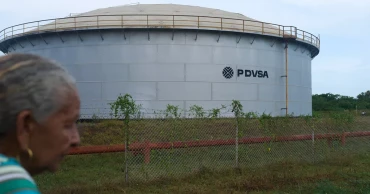
US oil giant Chevron confirms plans to expand operations in Venezuela
US oil giant Chevron has confirmed plans to expand its operations in Venezuela after President Donald Trump announced an ambitious deal aimed at developing the country's vast oil reserves and giving the Pentagon a share of the profits.
Chevron, the only major US oil company with a significant presence in Venezuela, said Wednesday that it had been allocated additional acreage in the Orinoco Belt, where it already operates. The company plans to invest more than $7 billion over the next five years, aiming to more than double its current production to around 600,000 barrels per day.
“Chevron's history in Venezuela spans more than a century, and our expanded position reflects our confidence in the country's deep resource potential,” CEO Mike Wirth said in a prepared statement.
Venezuela has the world's largest proven crude oil reserves, with more than 303 billion barrels, according to OPEC's 2025 Annual Statistical Bulletin. Saudi Arabia ranks second with 267 billion barrels.
However, Venezuela's severely deteriorated energy infrastructure and international sanctions have kept its daily oil output at just over 1 million barrels, compared with Saudi Arabia's 10 million to 11 million barrels a day. US production is nearly 14 million barrels per day.
Chevron expansion follows US-Venezuela deal
Chevron, the second-largest US oil company, has operated in Venezuela since 1923.
US Energy Secretary Chris Wright attended a ceremony in Caracas on Wednesday where Chevron, Italian energy company Eni and other firms signed agreements with the Venezuelan government.
“President Trump's mission in Venezuela is straightforward. The mission is to bring peace, freedom, opportunity and prosperity to the people of Venezuela,” Wright said in Caracas. “I believe the deals that are signed today — tens of billions of dollars of investment, ultimately many thousands of jobs — are critical in starting this ball rolling of peace, opportunity and prosperity for everyone in Venezuela.”
The White House confirmed Monday that it is partnering with North American Blue Energy Partners, or NABEP, as part of Trump's efforts to expand US involvement in Venezuela's oil sector.
The agreement, however, has drawn skepticism from energy experts who say it could take years to restore Venezuela's oil industry, which has deteriorated after years of neglect.
Questions have also been raised over whether Venezuela's acting president, Delcy Rodríguez, has the authority to grant NABEP 100-year rights to 17 oil fields containing an estimated 65 billion barrels of reserves, and whether future Venezuelan or US administrations could reverse the agreement.
US pushes back against criticism
Venezuela's constitution requires arrangements of this nature involving the United States to be approved by the National Assembly, which has not taken such action, wrote Ian Vásquez, vice president for international studies at the Cato Institute.
“The deal lacks legitimacy since it was agreed to with a dictatorship that has clung to power for decades through violence and by committing what was probably the largest electoral fraud in Latin American history in 2024,” Vásquez wrote.
He also said the agreement was reached under significant US pressure, including military pressure, and argued that any future democratic government in Venezuela could challenge the deal, potentially undermining confidence in the arrangement.
The ruling-party-controlled National Assembly expressed support for the agreement during its Tuesday session, but lawmakers neither debated the deal nor voted to approve it.
Wright on Wednesday rejected the criticism, describing the agreement as “a massive win” for both countries.
“What it's going to do is take resources that are underground, not helping anyone, and invest capital and money and technology and bring them to the surface to better the lives of Venezuelans, better supply energy to Americans,” Wright said at a joint news conference with Rodríguez.
Trump has been focused on Venezuela's oil industry since the capture of then-President Nicolás Maduro in January and has pushed for US businesses to return to the country.
“We have Exxon going in, we have Chevron going in. We have our big oil companies going in,” Trump said at the time.
He again suggested Monday that other major US oil companies were preparing to return, although there is no evidence of such plans beyond Chevron.
Exxon Mobil CEO Darren Woods said in January that Venezuela was “uninvestable.” An Exxon spokesman said this week that “nothing has changed.”
US oil majors remain hesitant
The history of US oil companies in Venezuela helps explain their reluctance.
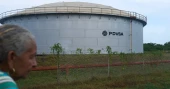
Venezuela nationalized its oil industry in 1976 and established the state-owned company Petróleos de Venezuela S.A. A second nationalization took place in 2007, when then-President Hugo Chávez required foreign oil companies to enter state-controlled joint ventures and seized the assets of companies that refused.
Chevron agreed to participate in a joint venture, while Exxon and ConocoPhillips refused, prompting Venezuela to seize their assets.
Trump has said the agreement with Venezuela will “substantially lower” gasoline prices in the United States. Analysts, however, have repeatedly warned that Venezuela's aging and damaged oil infrastructure will require years of rehabilitation and tens of billions of dollars in investment.
“It could take 2 to 4 years to get new greenfield facilities online in the Orinoco region,” Amy Jaffe, director of the Global Energy, Climate, and Sustainability Lab at New York University, said in an email. “Other places where there is no pipeline and other kinds of support infrastructure could take longer.”
Meanwhile, the national average price of regular gasoline rose overnight to $4.12 a gallon, according to the motor club AAA, up 93 cents from the same point last year.
10 hours ago