Tech

Proposed amendments to Cyber Security Act expected to curtail freedoms
Speakers at a citizens' dialogue on Tuesday warned that the proposed amendments to the Cyber Security Act 2026 risk curtailing freedom of expression and civic freedoms, cautioning that the legislation could be repurposed to target dissenting voices.
The dialogue, titled “Cyber Security or Suppression of Voices? In Whose Interest is the New Boundary of Freedom of Expression and Law Amendment Being Set?”, was held at the BDBL Building in Kawran Bazar, Dhaka.
The event was jointly organized by seven human rights and advocacy organizations: Voice for Reform, Drik, Nagorik Coalition, HRSS, JRA, DSA Victim Alliance, and the Bangladesh America Alliance. Renowned photographer and human rights activist Shahidul Alam presided over the session, while Fahim Mashroor, co-convener of Voice for Reform, moderated the discussion.
Prominent participants included National Citizen Party (NCP) Member of Parliament Akhter Hossen, former UN Enforced Disappearances Inquiry Commission member Dr. Nabila Idris, Wada Editor Shafiqul Alam, former Media Reform Commission head Kamal Ahmed, former Special Assistant to the Chief Adviser Monir Haider, Alternative organizer Dr. Taznuva Zabeen, State Reform Movement's Didar Bhuiyan, Sarwar Tushar of NCP, Nagorik Coalition’s Hasib Hossain, and HRSS Executive Director Ejaz Islam.
Presenting the keynote concept paper, Fahim Mashroor noted that while the original intent of cyber legislation was to protect citizens and businesses from hacking, phishing, and financial fraud, the proposed amendments risk transforming the legal framework into an instrument for criminalizing dissent, much like the previous digital security regime. He suggested decoupling provisions concerning women and children's safety from the cyber law and integrating them under the Women and Children Repression Prevention Act.
MP Akhter Hossen remarked that the proposed amendments effectively turn the cyber security framework into a "government protection law" rather than a safeguard for ordinary citizens.
Former Special Assistant to the Chief Adviser Monir Haider expressed deep concern over the shrinking space for freedom of speech, warning that the administration is treading dangerously close to authoritarian thresholds. He observed that while past regimes took years to suppress public voices, the current administration is accelerating along a restrictive trajectory, adding that referendums or broader public accountability mechanisms could help address growing governance deficits.
Dr. Nabila Idris pointed out that a significant proportion of arrests under the cyber law since February's elections stemmed from criticisms directed at high-ranking officials and national leaders, arguing that such actions lack legal justification and reflect patterns of unwarranted harassment.
Former Media Reform Commission head Kamal Ahmed noted that while the government consulted select mainstream media forums on the draft amendments, freedom of expression and protection must extend universally to all citizens rather than being confined solely to institutional media.
Concluding the dialogue, chairperson Shahidul Alam emphasized that the ultimate ownership of the state rests with its citizens, urging the administration to heed public demands and preserve fundamental democratic freedoms. Participants reached a broad consensus that while combating cybercrime is necessary, enforcement must never conflict with constitutionally guaranteed freedoms of expression, and must feature transparent definitions, accountability, and multi-stakeholder consultations.
20 hours ago

Microsoft offers voluntary buyouts to 27% of global workforce amid AI spending surge
Microsoft has offered voluntary buyouts to around 60,000 employees, or about 27% of its global workforce, as the software giant ramps up spending on artificial intelligence.
The voluntary exit offer is available to eligible employees in Canada, India, the United Kingdom and the United States, the company's Chief People Officer Amy Coleman said in a blog post on Monday.
“The Voluntary Exit Offer is new for us,” Coleman wrote. “We'll learn from it. At the same time, we'll keep helping people focus on the work that matters most, build new skills and, where it makes sense, find new opportunities across Microsoft.”
Microsoft had approximately 223,000 full-time employees at the end of June. The company is scheduled to release its quarterly financial results on Wednesday.
Shares of Microsoft Corp., headquartered in Redmond, Washington, reached an all-time high this month and rose about 1% on Monday.
In May, Microsoft planned to offer buyouts to around 8,750 employees, or 7% of its US workforce, according to two people familiar with the plan who were not authorised to speak publicly about it.
In July, the company announced 4,800 job cuts, representing about 2.1% of its global workforce, including a significant number of employees at its Xbox video game business.
The growing investment in data centres to support artificial intelligence, expected to exceed $700 billion this year, has driven up the costs of memory chips, computer processors, other equipment and electricity.
Economists expect the spending boom to continue putting upward pressure on inflation at least through the end of this year.
Microsoft has been expanding its AI capabilities for several years. In 2024, the company unveiled a new category of AI-powered personal computers designed to integrate its Copilot AI assistant into the Windows operating system, which is used by millions of consumers.
In October 2025, Microsoft introduced Mico, a new AI character represented by a floating cartoon face resembling a blob or flame, designed to embody the company's Copilot virtual assistant.
1 day ago

Countries caught between US and China as AI rivalry intensifies
As the United States and China establish competing artificial intelligence (AI) alliances, countries around the world are seeking to benefit from both powers while avoiding being forced to choose sides.
Experts warn that as the rivalry intensifies, opportunities for countries to cooperate with both sides may diminish, eventually forcing them to choose between the US-led Pax Silica initiative and China's proposed World AI Cooperation Organization.
The dilemma centres on whether to rely on America's most advanced chips and AI technologies or China's more affordable, open-source systems.
Kazakhstan, a Central Asian country of about 21 million people, is among the few attempting to maintain ties with both blocs.
In June, AI Minister Zhaslan Madiyev visited Washington to join a US initiative aimed at strengthening AI supply chains. Just three weeks later, he travelled to Shanghai, where Kazakhstan became a founding member of China's initiative to influence global AI policy.
Membership in Pax Silica could bring Kazakhstan technological partnerships, high-tech manufacturing jobs and access to global AI supply chains. Meanwhile, joining China's organisation alongside 28 other founding members, including Pakistan and Russia, could give the country a voice in shaping regional and international AI standards.
“Everyone is hedging,” said Dana Masalimova, a former Kazakh diplomat and independent scholar at Harvard University's Kathryn W. and Shelby Cullom Davis Center for Russian and Eurasian Studies.
“We don't want this binary choice,” she said.
Kazakhstan seeks benefits from both powersKazakhstan is attracting investment from both countries but faces a difficult balancing act, Masalimova said.
The country possesses critical minerals essential for AI development and offers relatively cheap electricity for powering data centres, which have become a contentious issue in the United States.
Earlier this year, Kazakhstan signed an investment agreement worth up to $10 billion involving Nvidia to develop a data centre hub in the country.
Chinese investment is also growing. Local officials said Chinese foreign direct investment in Kazakhstan reached a record $2.8 billion in 2025.
Chinese President Xi Jinping met Kazakh President Kassym-Jomart Tokayev in July to expand cooperation under Beijing's Belt and Road infrastructure initiative.
Washington applies pressure as Beijing courts partnersBoth Washington and Beijing are using access to AI technologies to expand their international influence.
US President Donald Trump said last month that “whoever wins AI, wins.” US officials and technology companies have accused China of large-scale AI “distillation”, a process of extracting capabilities from advanced American models.
Beijing has rejected the allegations, accusing Washington of seeking an AI monopoly by restricting China's access to some of the world's most advanced chips and semiconductor manufacturing equipment.
The US has indicated that its Pax Silica initiative, which implicitly targets China, will be limited to trusted partners.
“Countries can't be trusted partners in Pax Silica while substantively engaging in initiatives that advance a competing vision for super intelligence,” the US State Department said, using the Trump administration's preferred term for AI.
China, meanwhile, presents its proposed World AI Cooperation Organization as an open and inclusive platform.
“As both major countries in AI, China and the United States should leverage respective strengths in AI rather than guarding against each other,” the Chinese embassy in Washington said in a statement. “AI should not be owned by major countries.”
Kyle Chan, a fellow at the John L. Thornton China Center of the Brookings Institution, said the different approaches reflect their strategic positions.
Beijing needs to attract developing countries and build an alternative coalition, while Washington already has an extensive network of allies. This gives countries that maintain relations with both sides considerable leverage, he said.
Indonesia, Singapore also balance competing interestsIndonesia, which possesses resources such as nickel and copper that are vital to AI and other technologies, is also seeking to benefit from both powers. The country has joined China's proposed AI organisation.
“We should be able to be part of both, put it that way. And choose the best system,” Mari Pangestu, vice chair of Indonesia's National Economic Council, told reporters at an event organised by the University of Hong Kong Business School.
US AI companies are also expanding their presence in other countries. Anthropic, for example, is establishing its latest Asian office in Singapore, which has said it is considering joining China's AI organisation.
Saudi Arabia is pursuing a similar strategy. AI startup Humain unveiled a platform in September built on an open model developed by a Chinese AI company. The kingdom also has an agreement with Nvidia to expand its AI computing capacity using advanced chips.
France, another ambitious AI developer, is pursuing an independent path through its startup Mistral. The company's new model, released this month, reportedly outperforms some advanced Chinese models.
Japan remains closely aligned with the United States on strategic and security matters, including advanced semiconductors, trusted AI and technical standards. However, it will continue considering cheaper Chinese AI models for applications involving lower risks, said Takahiro Tsuchiya, a professor at Kyoto University of Foreign Studies.
Challenging the leading AI powers remains difficultFor countries such as the United Kingdom and Germany, which have considerable economic and military capabilities but lack powerful homegrown frontier AI models, alignment with the United States may be essential to securing access to data centres and chip agreements with American companies.
Anton Leicht and Sam Winter-Levy of the Carnegie Endowment for International Peace said their access to advanced AI systems essentially “depends on the whims of policymakers in Washington and Beijing”.
As a result, these countries may have limited influence over the future direction of AI.
China has been narrowing the technological gap with the United States in semiconductor manufacturing and advanced AI capabilities, although it continues to trail the leading American technologies in some areas.
Beijing's open-source approach also gives other countries an alternative to US technology. China has provided financial support to developing countries seeking to build their own AI ecosystems, said Alberto Lemma, a research fellow at ODI Global.
According to the AidData research laboratory at William & Mary, a public university in Virginia, China has provided official-sector grants and loans for projects and activities using or supporting AI technologies in at least 77 low- and middle-income countries.
Major recipients include Nigeria, Zambia, Ghana, Bangladesh, Senegal, Cameroon and Kenya.
Public attitudes are also shifting. Recent Pew Research Center findings indicate that people in middle-income countries are becoming more positive towards China and more trusting of its approach to AI and technology regulation.
Despite these developments, many countries remain reluctant to align exclusively with either power because each offers different advantages and disadvantages.
“Don't want to pick a side ... because there are advantages and disadvantages to each technology stack,” said Aalok Mehta, director of the Wadhwani AI Center at the Center for Strategic and International Studies.
He warned that most countries may eventually have few viable options because they cannot independently develop advanced frontier AI models.
Nevertheless, governments worldwide are considering how to maintain control over their own AI capabilities, a concept known as AI sovereignty.
“Maybe no other country than the U.S. and China can really build these very large, powerful models,” he said.
2 days ago

Musk admits Starlink speed restrictions in Ukraine as service restored
Elon Musk has acknowledged that SpaceX restricted the speed of its Starlink satellite internet service in Ukraine, disrupting military operations, as Ukrainian President Volodymyr Zelenskyy said access to Starlink and Starshield services had returned to normal.
Musk said the restrictions were imposed because Ukraine's military had violated Starlink's terms of service by using the civilian commercial system for offensive drone strikes. He said the loophole had been closed last week.
“Using Starlink, a civilian commercial service, for offensive drone strikes to kill people has never been allowed, nor should it be,” Musk wrote on X on Saturday.
Zelenskyy said service restoration began overnight and that speeds were sufficient by Saturday morning, improving frontline logistics and defences against Russian jet-powered Shahed drones.
Restrictions on Starshield, the military-grade version of Starlink used for Ukrainian drone operations and communications, had alarmed military commanders, who reported lost drones and disrupted missions. Musk said the US government controlled changes involving Starshield.
Ukraine's Defence Minister Yevhenii Khmara credited direct communication and Zelenskyy's diplomatic efforts with Washington for resolving the issue.
The dispute added to tensions between Kyiv and Washington. US President Donald Trump said he had not ordered the restrictions, while Vice President JD Vance suggested coordination between the White House and Musk. Secretary of State Marco Rubio and Defence Secretary Pete Hegseth denied administration involvement.
The development came amid renewed diplomatic efforts to end the war, with Russia agreeing to resume three-way talks with the United States and Ukraine next month.
Meanwhile, cross-border attacks continued. A Russian missile strike on Lozova in Ukraine's Kharkiv region killed one person and wounded two, while Ukrainian forces struck industrial facilities in Russia's Tolyatti and Oryol.
Three people were killed in Friday's attack on an electronics plant in Oryol, according to local officials. Ukrainian drones also reached Russia's Omsk region, more than 2,000 kilometres from the Ukrainian border, striking an Ozon logistics centre without causing casualties.
3 days ago
US designates helium critical material amid supply concerns
The United States has designated helium a critical material, citing its importance in semiconductor manufacturing and the risk of global supply disruptions, the Energy Department said Friday.
The designation will make more federal financing available to helium producers and enable closer government monitoring. Helium is mainly produced as a byproduct of natural gas processing. The US is the world’s largest producer, followed by Qatar and Russia.
Qatar’s exports have been severely curtailed by Iran’s closure of the Strait of Hormuz amid its war with Israel and the US, while Iranian strikes on Qatari infrastructure have further affected supplies. Russia imposed temporary helium export controls in April.
Energy Secretary Chris Wright said the move would strengthen domestic manufacturing, support jobs and reduce reliance on foreign sources.
Helium is the 20th material identified as critical by the department. Metallurgical coal, used in steelmaking, was added in 2025. The designation requires an essential role in energy technologies and a high risk of supply-chain disruption.
Beyond balloons, helium is vital for semiconductors, wind, solar and nuclear energy, space exploration, medical imaging and research. Its non-combustibility and extremely low boiling point make it difficult to replace.
The Semiconductor Industry Association said helium supports cooling, photolithography and leak detection, stressing the need for resilient supply chains.
The US produced 81 million cubic metres of helium in 2025, accounting for 43% of global output, with 38 million cubic metres exported. Production has remained around 80 million cubic metres annually since 2021.
Avanti Helium CEO Chris Bakker welcomed the designation, saying investment in exploration could help the US remain self-sufficient.
4 days ago

PHP security flaws trigger global cyber alert as AI helps uncover vulnerabilities
Serious security flaws in PHP, a programming language used to build millions of websites, have triggered a global cybersecurity alert after researchers used artificial intelligence (AI) tools to identify vulnerabilities that had remained undetected for years.
Governments, cybersecurity agencies and technology companies are urging website operators to install emergency software updates or temporarily take vulnerable platforms offline to prevent potential attacks.
Cybersecurity firm Wiz, whose researchers helped uncover the flaws, described them as the most severe vulnerabilities identified by AI. OpenAI, whose technology was used in the research, called the discovery one of the most significant cybersecurity issues in recent years.
PHP, short for PHP: Hypertext Preprocessor, is widely used to develop websites and online services, including Wikipedia, online shopping platforms and websites built with WordPress.
The programming language processes information and delivers it to users through websites. However, the newly discovered vulnerabilities could allow attackers to take control of affected servers without authentication and access sensitive information.
Paul Spain, chief executive of Gorilla Cyber Security, warned that the flaws could affect millions of websites. Cybersecurity researcher Jill Slay of the University of Adelaide said the misuse of the vulnerabilities could expose private data on a large scale.
Websites taken offline
The security alert has disrupted online services worldwide, affecting government portals, public institutions, gaming platforms and online forums.
Wikimedia, the organisation behind Wikipedia, temporarily shut down some systems as a precaution. Several public websites in Finland, the Netherlands and Scotland were also taken offline, along with sites operated by Edinburgh Council and the University of Geneva.
Experts warned that smaller organisations with limited cybersecurity resources could face greater risks, particularly if their websites are not regularly maintained.
Salil Kanhere, a cybersecurity researcher at UNSW Sydney, said attempts to exploit the flaws could increase in the coming weeks as technical details become publicly available.
Governments urge immediate action
PHP developers released security updates on Wednesday and urged users to install them immediately.
The US National Security Agency advised organisations to temporarily take affected systems offline if they could not apply the updates promptly. It warned that the vulnerabilities could provide attackers with a direct route to databases.
The UK's National Cyber Security Centre issued similar advice, urging organisations to check their systems for unauthorised access and hidden backdoors.
Cybersecurity authorities in the European Union, Singapore and Australia also issued warnings.
Japanese Prime Minister Sanae Takaichi urged operators of publicly accessible websites to check whether their systems used PHP and apply the necessary fixes.
Amazon, meanwhile, said it had faced multiple attempts to target its systems days before the vulnerabilities were publicly disclosed. It remains unclear how the potential attackers learned about the flaws.
How AI helped uncover the flaws
Researchers at cybersecurity firms Calif and Wiz used advanced AI tools to examine software code and identify weaknesses more quickly than traditional methods.
Kanhere said complex software could contain security problems that remain unnoticed for years. The underlying flaws were not new, but advances in AI made them easier to detect, he said.
OpenAI said the incident demonstrated AI's potential to identify security weaknesses while also highlighting the risk that attackers could use the technology to develop malicious tools and exploit vulnerabilities.
The company said it had released a programme to help check whether PHP systems were secure.
Ryan Ko of the University of Queensland's Cyber Research Centre said many vulnerabilities originated in older software designed primarily to provide functionality rather than strong security protections.
How website operators and users can stay safe
Website owners are being advised to install the latest security updates for PHP and closely monitor announcements from software providers.
Paul Spain said applying the patch should be a routine task for most technical teams.
The US National Security Agency also urged organisations to remain alert and promptly apply relevant security updates.
Although website operators are primarily responsible for securing their platforms, users should follow security advice from affected services, including requests to change passwords when necessary, Kanhere said.
He also warned users to watch out for phishing messages that exploit the incident to trick people into revealing passwords or other sensitive information.
Source: Al Jazeera
6 days ago

Ukraine's drone strikes disrupt Russian digital services, threaten AI research
Ukrainian drone attacks on several major Russian data centres have disrupted key digital services, including banking, online shopping, taxi bookings and cloud computing, raising concerns about the country's artificial intelligence (AI) development.
The attacks this month targeted three major data centres operated by technology company Yandex, one belonging to Russia's largest bank, Sberbank, and another serving social media platform VKontakte, according to reports.
The damage has caused widespread service interruptions across Russia, affecting businesses, ordinary users and even the judicial system. Some arbitration courts reportedly had to postpone hearings after losing access to databases.
Experts warn that repairing the damaged facilities could take months or even years, potentially slowing Russia's efforts to compete with the United States and China in AI development.
Mikhail Klimarev, head of the Internet Protection Society, said the attacks could leave Russia significantly behind in the global AI race.
The strikes took place between October 8 and 18. Ukrainian drones hit Yandex facilities in the Ryazan, Kaluga and Vladimir regions before targeting Sberbank's data centre in Balakovo and a facility serving VKontakte in St Petersburg.
Data centres contain large numbers of computer servers and rely on specialised power and cooling systems. Even relatively small explosives can cause extensive damage to the equipment.
The attacks followed Russian strikes on Ukrainian data centres, which disrupted internet services and television broadcasts.
Russia's policy of keeping data within its borders has also increased the vulnerability of its digital infrastructure. Unlike Ukraine, which stores critical information on servers in allied European countries, Russia requires much of its data to remain on domestic systems.
Nick Reiners, a senior geotechnology analyst at Eurasia Group, said Russia's vast territory and limited air defence resources made it difficult to protect all critical facilities.
The disruptions have affected everyday activities. Some users reported being unable to collect online orders, access personal data or book taxi rides through Yandex's services.
Taxi driver Pavel Belyavskiy said he had to cancel several trips because he could not contact passengers through the company's app.
Yandex said it restored most of its key cloud services within days by shifting operations to other data centres in Russia.
However, concerns remain over the impact on its AI research. The company operates three supercomputers used to develop AI models, including one at its Sasovo facility that ranked 19th globally.
Experts said fires caused by the attacks may have damaged expensive computer chips and other sensitive equipment.
Connor Martin, an expert with the Council on Foreign Relations, said the strikes would likely further delay Russia's AI development.
Replacing advanced US-designed Nvidia A100 chips could prove difficult because of global shortages and Western sanctions restricting technology supplies to Russia.
Klimarev warned that rebuilding the damaged facilities could be expensive and time-consuming, adding that it remained uncertain whether all the equipment could be replaced within a year.
6 days ago

Websites temporarily go offline after AI detects flaws in widely used programming language
Websites operated by governments and other organisations in Europe and the United States went temporarily offline on Wednesday as operators rushed to install security updates after artificial intelligence-assisted research uncovered vulnerabilities in a widely used programming language.
The FBI’s cyber division warned that the flaws in PHP, a programming language used to power websites and web applications, could allow malicious actors to execute code remotely.
The vulnerabilities could expose sensitive data and networks to compromise, the agency said, recommending that website operators take their sites offline if they were unable to update them immediately.
The Finnish government’s website, for example, was only partially accessible on Wednesday. A message to visitors said government websites were experiencing temporary disruptions and were fully or partially unavailable while the issue was being resolved.
“The potential impact is enormous,” said Ismael Valenzuela, vice president of labs, threat research and intelligence at cybersecurity firm Arctic Wolf.
He noted that PHP powers roughly 70% of websites for which the server-side programming language is known.
The vulnerabilities put a “significant portion of the internet’s business and commercial infrastructure at potential risk,” Valenzuela said. Although not every website is vulnerable, he stressed that the flaws require “immediate attention”.
The PHP Foundation, which includes developers working to secure the programming language, announced on Wednesday that it had released fixes for the vulnerabilities, along with instructions for updating affected systems.
Artificial intelligence agents helped identify the flaws. In a blog post, OpenAI said it had led a coalition of researchers, cybersecurity providers and other partners over the past two months to address vulnerabilities in PHP.
“PHP’s maintainers led the fixes and release, with our teams and partners like Wiz, Cloudflare, and others contributing research, technical support, and coordination to prepare protections ahead of disclosure,” the company said.
OpenAI, based in San Francisco, described the flaws as “one of the most impactful security issues in recent memory”. The company said AI appeared to have discovered the vulnerabilities before any attackers did.
“As significant as they are, these bugs are among several significant vulnerabilities we’ve already found and are working to fix, and we expect similar findings to increase sharply in the coming months,” OpenAI said.
AI agents have been blamed for several high-profile security incidents in recent months, highlighting vulnerabilities in AI security and raising questions about how the rapidly advancing technology can be developed safely as its use expands worldwide.
However, experts have also pointed out that AI can help identify cybersecurity weaknesses, as demonstrated by the PHP case.
“There’s an important paradox here. We want AI to move quickly enough to find vulnerabilities humans might miss, while also making sure that increasingly autonomous systems operate within boundaries we understand and control,” said Raghu Nandakumara, vice president of industry strategy at cybersecurity firm Illumio.
“The faster AI becomes at finding weaknesses, the more important it becomes to think about what happens after those weaknesses are exposed, especially when organizations can’t immediately patch every affected system,” he added.
“The lesson isn’t that AI is inherently dangerous or inherently protective. It’s that speed without control creates a new kind of security problem.”
Valenzuela said advances in AI were also changing how security experts assess whether flaws could be exploited. Some of the vulnerabilities identified in PHP, he noted, had existed for more than a decade.
“What changed wasn’t the underlying code, but the ability to find those weaknesses and turn them into working exploits,” he said.
6 days ago

Polymarket removes betting contract on fate of Cornell students accused of sexual assault
Polymarket has removed a contract from its prediction market platform that allowed users to bet on whether any of the seven men accused of sexually assaulting or exploiting a Cornell University student in 2024 would face felony sex crime charges.
The market was launched on Sept. 30 and was scheduled to close on Jan. 31. It had generated more than $450,000 in trading volume before being removed from Polymarket's international platform.
The company's US exchange is regulated by the US Commodity Futures Trading Commission, which prohibits trading related to “activity that is unlawful under Federal or State law.”
“Our primary goal at Polymarket is to bring objective, data-driven insight to the most important questions of our time,” a Polymarket spokesperson said Tuesday.
“This market addressed whether the government would take action — a process that deserves scrutiny, particularly in a case of such serious concern. That said, we believe in the wisdom of crowds, have heard them loud and clear, and removed the market,” the spokesperson added.
Front Office Sports was the first to report on the contract.
Some criticism of the Polymarket contract has focused on celebrities who promote the company. Philadelphia 76ers star LeBron James has an endorsement deal with Polymarket and recently appeared in a star-studded commercial featuring Derek Jeter, Eli Manning, Sue Bird and several other celebrities.
The Associated Press left messages with representatives for James, Jeter, Manning and Bird on Tuesday seeking comment.
Polymarket also has partnership agreements with the NHL, Major League Baseball, Major League Soccer, the UFC and the ATP Tour. AP sought comments from each organisation.
A spokesperson for Spike Lee, who also appeared alongside James in the Polymarket commercial, said the director had no comment. AP also left messages with representatives for actors Craig Robinson, John Leguizamo and Alexandra Daddario, who featured in the advertisement.
A woman identified in court documents under the pseudonym Jane Doe filed a lawsuit last month alleging that seven fraternity members sexually assaulted or exploited her in October 2024 and that Cornell mishandled her complaints.
All seven men have denied the allegations, saying their interactions with the woman were consensual or that they were not involved.
Online critics described the Polymarket contract as degrading and questioned why celebrity ambassadors would associate themselves with the company.
An online petition launched by UltraViolet, a national women-led advocacy organisation, named James, Manning, Daddario and model Emily Ratajkowski, urging other prominent endorsers to sever ties with the company.
AP also left a message seeking comment from a representative for Ratajkowski, who appeared in the celebrity-filled commercial with James.
Prediction markets allow users to trade on the outcomes of future events. Sports account for a significant share of the trading volume generated by these platforms, which typically offer yes-or-no questions.
Earlier this year, a US Army sergeant was indicted over bets related to the capture of Venezuelan President Nicolás Maduro. The sergeant had traded on Polymarket's international platform.
In April, AP reported that 50 newly created accounts on the platform had placed substantial bets on a US-Iran ceasefire in the hours, and in some cases minutes, before President Donald Trump announced the ceasefire on social media. The activity raised concerns about possible insider trading.
Polymarket still had an active market on its international platform on Tuesday allowing users to bet on whether Cornell President Michael Kotlikoff would leave his position by Oct. 31. The market had generated more than $10,700 in trading volume.
7 days ago
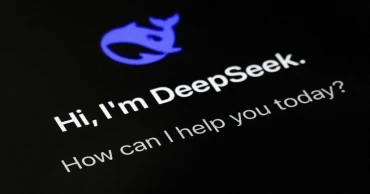
China defends DeepSeek after US ban of its AI from government systems
China hit back Tuesday at a U.S. ban on Chinese artificial intelligence startup DeepSeek's products for federal civilian agencies, highlighting friction in the two AI powers’ heated technology race.
The agencies should remove DeepSeek and its affiliated products, as well as third party products and services developed using DeepSeek, from their IT systems, the Department of Homeland Security said in a notice made public on Monday.
The department’s order, dating back to late July, also blocks civilian agencies from procuring DeepSeek products and services. DeepSeek is one of China's leading and best-known AI companies and its open-source models are widely available in countries including the United States. They are mostly free to use.
The notice in the Federal Register alleges that DeepSeek’s models “present multiple threat vectors.” It said concerns include that its servers are located in China and that Chinese authorities' could potentially access private company infrastructure and sensitive U.S. data.
In Beijing, Chinese Foreign Ministry spokesperson Mao Ning said China will “will resolutely safeguard the legitimate rights and interests of Chinese companies” when asked at a regular press conference about the U.S. ban.
“China consistently opposes the overstretching of the concept of national security and the politicizing of science, technology, economic and trade issues,” she told reporters at a routine briefing.
DeepSeek did not immediately respond to a request for comment.
U.S. President Donald Trump and Chinese President Xi Jinping are set to meet in mid-November on the sidelines of the APEC, or Asia-Pacific Economic Cooperation, leaders’ summit in Shenzhen, China.
AI is expected to be on the agenda.
China and the U.S. have recently made progress in some collaboration on AI governance, including a U.S. proposal for setting up of a notification system on national security-related incidents, but the two countries are still at odds on many issues.
U.S.-led restrictions still ban China from accessing some of the world's most advanced AI chips and the machines that make them. Last week, Beijing rolled out new proposed plans to restrict exports of certain advanced AI models.
The U.S. has also said Chinese AI startups including DeepSeek engaged in large-scale “distillation,” or extraction of capabilities, from frontier American AI models, claims that Beijing has dismissed.
Earlier this year, the U.S. Federal Communications Commission announced it was barring imports of new foreign-made humanoid robots in a move seen as targeting China.
8 days ago