tech
US firms step up efforts to reduce China dependence on critical minerals
US companies are stepping up efforts to reduce dependence on China for critical minerals used in major weapons systems, as the Trump administration pushes to expand domestic production.
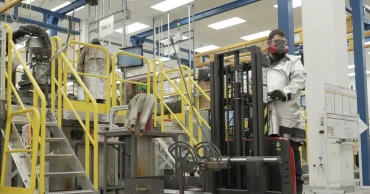
In a small refinery inside a New Hampshire office park, Phoenix Tailings uses electricity to extract critical minerals from mining waste for use in key US weapons, including missiles deployed in the Iran war.
The company recently received a $500 million Pentagon loan to expand its operations. However, building a new facility could take up to 18 months as the administration seeks to increase domestic supplies.
The need has become more urgent as the conflict with Iran reduces US stocks of weapons such as Tomahawk cruise missiles and THAAD interceptors. At the same time, the White House is pressing defense contractors to increase production while imposing stricter rules against sourcing critical minerals from China.
“It will be a tall order and a challenge to replenish these stocks and scale up in the timeframe needed to meet defense demand and regulations,” said Anthony Balladon, Phoenix Tailings’ chief commercial officer and co-founder.
Although the US is moving faster to develop critical mineral supplies outside China's control, it could take years to build new mines and increase production of the powerful magnets needed for many advanced technologies.
Mining waste could help meet demand in the meantime. Phoenix Tailings uses waste from traditional mining as well as recycled magnets and computer disk drives as raw materials.
The Massachusetts-based company plans to build a larger facility to produce critical metals for the defense, aerospace and automotive industries.
Balladon said the company calls the planned facility the “freedom facility” because its goal is to help the US and its allies reduce Chinese influence over rare-earth supplies.
The company produces metals used to make strong permanent magnets for fighter jets, missiles, radar systems and drones. Balladon said critical minerals play an “outsized role” in defense systems, noting that an expensive weapons system cannot operate if it lacks minerals that may be worth only a small fraction of its total cost.
The defense sector particularly depends on samarium and requires about 50 to 100 tons of it annually, while US production remains very limited.
Phoenix Tailings currently produces only about 200 kilograms of the metal a year. Balladon said the company expects to increase output to about five tons within three months and reach a capacity of 120 tons by next year or 2028.
US magnet maker turns to France for supplies
Arnold Magnetic Technologies, which has long depended on China for samarium used in magnets for precision-guided weapons such as Tomahawk missiles, has turned to France for an alternative supply.
The company is sourcing the material from Solvay, a Belgium-based chemical company that restarted processing rare earths from old mining waste in La Rochelle after stopping the operation in the 2000s.
China built up much of the world's rare-earth processing capacity during that period and later used its dominant position to restrict exports of processed critical materials during a trade dispute with the US.
Solvay has since resumed processing and added other rare earths, including samarium, to its operations.
The company said growing demand for permanent magnets, geopolitical concerns over supply chains and demand for more diversified and traceable sources in Europe and the US are driving the expansion.
Arnold CEO Matt Blake said the higher cost of sourcing samarium from Solvay rather than China has not been a major problem because the magnets account for only a small portion of the cost of a weapons system.
However, concerns remain over supplies of other critical minerals.
The US remains dependent on imports of tungsten, with China controlling about 80% of global mine production and an even larger share of processing, according to Brodie Sutherland, CEO of Patriot Critical Minerals Corp.
Sutherland said US efforts to increase tungsten production will take years. Until then, the Pentagon and defense contractors may have to rely on existing stockpiles, increased recycling and limited supplies from countries other than China.
Iran war adds pressure to supply chains
The need to increase production has become more urgent as renewed fighting with Iran puts further pressure on US stocks of advanced missile interceptors, including Patriots and THAADs.
A recent analysis by the Center for Strategic and International Studies said the conflict has raised concerns that the US could have less firepower available in a potential future conflict with China.
The Washington-based think tank warned in May that replenishing stocks of Tomahawks, Patriots and THAAD interceptors could take at least three years.
Meanwhile, President Donald Trump has ordered tighter restrictions on defense contractors sourcing critical materials from China.
The July 20 executive order states that critical materials and components needed to manufacture, maintain and repair US military equipment should be sourced domestically or from allied countries.
Lockheed Martin, which produces THAAD systems and other weapons, said it regularly assesses the global rare-earth supply chain to ensure access to critical materials.
Several other major US defense contractors, including Raytheon Technologies and Northrop Grumman, did not respond to requests for comment.
Balladon said he remained confident that US companies could expand production with the necessary support and partnerships.
“Ultimately, with the right support and partners across the industry, we think we can make it happen,” he said.
2 hours ago

AI-assisted staging at Wagner festival draws boos, confuses audience
An experiment using artificial intelligence (AI) at the annual Richard Wagner Festival in Bayreuth, Germany, received a mixed response on Saturday, with the AI-assisted stage production drawing boos from parts of the audience after leaving many spectators confused.
According to German news agency dpa, curator Marcus Lobbes and his team were booed and whistled at as they appeared on stage after the performance of Götterdämmerung. However, the singers, musicians and especially conductor Christian Thielemann received warm applause.
Festival organisers had announced before the performance that it would be the first time AI played a role on stage at the event, not as a performer but as a tool to generate visual projections.
The production featured constantly changing AI-created images, while the singers remained the main focus on stage. The visuals combined light, textures, historical references and artistic themes, with the AI using images selected in advance by Lobbes and his team from the Academy for Theater and Digitality in Dortmund.
The projections included scenes from earlier performances of Wagner's famous Ring cycle as well as historical images.
According to dpa, many audience members were puzzled by the visual collage, which included images of former German Chancellor Helmut Kohl, the World Trade Center towers after the Sept. 11, 2001 attacks, and a postage stamp marking German reunification in 1990.
The festival's website says each performance will be different because the AI-generated images and associations continuously change. Two more AI-assisted performances are scheduled.
1 day ago

FBI steps up investigation into water system cyberattacks
Michigan on Saturday has reported cyberattacks targeting nine of its water systems, joining neighboring Minnesota, where more than 30 systems were recently affected, as the FBI investigates the incidents amid concerns over Iranian-linked cyber threats.
Michigan officials said the state received a federal cyber alert on Tuesday warning of attempts to compromise operational technology used by water utilities. Shortly afterward, several communities reported suspicious activity matching the federal warning.
Dale George, communications director at Michigan’s Department of Environment, Great Lakes, and Energy, said nine water systems were impacted but all continued operating safely. He said local operators resolved the issues and there were no known public health risks.
The FBI said it is working with federal partners to protect critical infrastructure but has not identified those responsible. Last week, the FBI and the Cybersecurity and Infrastructure Security Agency warned that Iranian hackers have increasingly targeted water and wastewater systems and other critical infrastructure.
Minnesota officials said most confirmed attacks involved remote monitoring and control technology rather than direct disruption of water services. Braham briefly asked residents to reduce water use after a cyberattack shut down its water treatment controls, while Plymouth restored communications after a separate attack.
President Donald Trump blamed Minnesota officials for the incidents without providing evidence, prompting Democratic Gov. Tim Walz to respond that Trump knew the attacks had affected multiple states.
2 days ago

Families sue Meta, TikTok, Snapchat and YouTube over deaths of four teens
The families of four teenagers who died by suicide have filed a lawsuit against Meta, TikTok, Snapchat and YouTube, claiming the social media platforms caused years of harm that contributed to the deaths of their children.
The lawsuit, filed Thursday in Delaware Superior Court, is the latest in a growing number of legal cases accusing major social media companies of designing addictive platforms that put young users at risk.
The case was brought by the Social Media Victims Law Center on behalf of four families from Texas, North Carolina, Minnesota and Tennessee. The teenagers died over a 14-month period between July 2024 and September 2025.
According to the complaint, the four teens experienced social media addiction, severe sleep loss, depression, anxiety and suicidal thoughts after years of using the platforms. The victims were Livi Castro, 13, Riv Kelleher, 14, Nathaniel Chambers, 17, and Dawson Holden, 18.
The lawsuit alleges that the companies were aware of the harmful effects of their platforms on young users but failed to take adequate action.
Matthew Bergman, founder of the Social Media Victims Law Center, said the deaths occurred even after similar lawsuits had already been filed against the companies.
"These platforms continue to put children's lives at risk despite repeated warnings," Bergman said.
Google, the parent company of YouTube, expressed sympathy for the families and said it is reviewing the lawsuit.
A company spokesperson said Google has worked with mental health and parenting experts to develop age-appropriate experiences for young users and provide parents with stronger safety controls.
Meta, TikTok and Snap, the parent company of Snapchat, did not immediately comment on the lawsuit.
Sacha Haworth, executive director of the Tech Oversight Project, said parents, campaigners and whistleblowers have warned lawmakers for years about the dangers of social media, while progress on new safety laws has been slow.
The US Senate passed the Kids Online Safety Act two years before this lawsuit was filed, but the legislation has yet to become law because Congress has not reached agreement on its final version.
The four companies are already facing several lawsuits from states and individuals over claims that their platforms harm children's mental health.
Meta is currently defending a lawsuit in Tennessee, where state officials accuse the company of making Instagram intentionally addictive for young users without properly warning them about the risks.
The company is also due to face trial in federal court in California later this month over claims brought by several states that it contributed to the youth mental health crisis and illegally collected data from children under 13 without parental consent.
While some lawsuits against social media companies have been dismissed or settled outside court, legal challenges continue to grow.
Earlier this week, Meta said it spent $2.4 billion on legal expenses during the second quarter, contributing to a 14 percent decline in its quarterly profit.
3 days ago
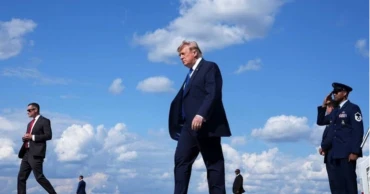
Zelenskyy seeks Trump's support for wider Starlink use in strikes on Russia
Ukrainian President Volodymyr Zelenskyy has asked US President Donald Trump to help secure approval from billionaire Elon Musk to allow Ukraine to use the Starlink satellite network for targeting military strikes inside Russia, according to people familiar with the discussions.
The request came during Zelenskyy's meeting with Trump at the White House this week and was also raised in talks with US lawmakers on Capitol Hill. However, Trump did not commit to supporting the proposal, the sources said.
Ukraine currently uses Starlink for communications within its own territory, including Russian-occupied areas. But Musk has not allowed the satellite system to be used for operations inside Russia.
Zelenskyy has been pressing US officials for several weeks to expand Starlink's use, arguing that it would improve the accuracy of Ukraine's long-range and medium-range strikes.
His request comes as Ukraine looks for alternatives to reduce its reliance on US-made Patriot air defence systems, which have become harder to obtain amid the ongoing US and Israeli military campaign against Iran.
The White House, the Ukrainian Embassy in Washington and SpaceX, which owns Starlink, did not immediately comment on the matter.
Allowing Starlink to be used inside Russia could also pose risks for Musk. Earlier this year, the Associated Press reported that intelligence agencies from two NATO countries believed Russia was developing an anti-satellite weapon that could target the Starlink network. The report could not be independently verified.
Starlink has played a key role in supporting Ukraine's communications since Russia launched its full-scale invasion in February 2022.
During his visit to Washington, Zelenskyy also urged US lawmakers to continue supporting Ukraine with more Patriot systems and to move forward with a proposed agreement that would allow Ukraine to produce the air defence system under licence.
Republican Senator Mike Rounds, a member of the Senate Armed Services Committee, said Zelenskyy stressed that wider access to Starlink would make Ukraine's longer-range weapons more accurate.
"He made it clear they need Starlink for greater precision," Rounds said.
Zelenskyy met lawmakers before the Senate voted to advance a new package of sanctions against Russia, with a final vote expected next week.
Meanwhile, Trump appeared to step back from an earlier statement suggesting Ukraine would receive a licence to manufacture Patriot systems.
Speaking to reporters at Camp David on Friday, Trump said the issue was still under discussion.
"We're talking about it. But it's a hard thing to give away that kind of technology," he said.
Relations between Trump and Zelenskyy have improved in recent months as Ukraine has gained ground on the battlefield.
Zelenskyy has also argued that the war in Ukraine is linked to tensions involving Iran. He plans to share intelligence with the United States that he says shows Russia is helping Iran use satellite surveillance to target US military bases in the Middle East.
He also told US lawmakers that Ukraine is ready to share its expertise in drone warfare with the United States, highlighting its experience in countering Russian attacks.
3 days ago
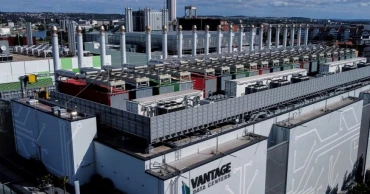
EU plans $11.4b funding for 7 AI gigafactories to catch up with US, China
The European Union is offering 10 billion euros ($11.4 billion) in public funding to help build seven large-scale artificial intelligence facilities as the 27-nation bloc seeks to narrow its technology gap with the United States and China.
The European Commission said on Thursday that the funding could attract another 20 billion euros ($22.8 billion) in private investment.
“Access to the raw scale of computing power within AI gigafactories is a strategic necessity for Europe as AI development accelerates,” said Henna Virkkunen, the Commission’s executive vice president in charge of tech sovereignty.
The EU has been stepping up efforts to build what it calls “tech sovereignty” amid growing concerns about relying too heavily on foreign technology providers. European leaders fear such dependence could leave the bloc vulnerable if technology or critical supplies are used as leverage.
US President Donald Trump has also sharply criticised the EU’s technology regulations, while China has restricted supplies of minerals that are vital to the technology industry.
Companies can now bid to build the seven planned AI gigafactories, each expected to have at least 100,000 advanced AI chips. The facilities would be about four times more powerful than the data centers currently operating in the EU.
Once the seven gigafactories are operational, the EU’s overall AI computing capacity will more than double. The bloc currently has 19 AI data centers operating across Europe, from Finland to Spain.
Europe, however, remains well behind the US and China in several key areas needed to develop AI, according to a 2025 assessment by the US Federal Reserve.
China has huge electricity capacity available for data centers, while US companies attract most of the world’s private investment in AI.
The EU also faces higher costs and supply challenges. Europe does not produce many of the millions of components needed to build data centers, while electricity prices can be two to three times higher than in the US and China, according to a European Commission report presented to the European Parliament in June.
The report warned that European companies and public authorities would continue to depend on US AI and cloud providers, putting local service providers at a disadvantage.
It also said dependence on large foreign cloud and AI computing companies, particularly for critical services, could expose European data to access from outside the bloc and create risks to the continuity of essential services.
French AI company Mistral currently operates one of the EU’s largest AI data centers at its Paris campus. The company develops the Le Chat chatbot but remains behind leading US firms such as OpenAI, the maker of ChatGPT, and Chinese competitors including DeepSeek.
European leaders, including French President Emmanuel Macron, have repeatedly warned that the bloc needs stronger homegrown AI companies. At the same time, concerns are growing across Europe about the technology’s potential impact on jobs, the economy and privacy.
The European Commission said AI products developed through the expanding network of data centers would have to meet EU standards on data protection, safety, security and ethics.
The move comes amid wider concerns about the environmental impact of AI infrastructure. In June, 40 mayors from cities around the world signed an agreement seeking to limit the impact of AI data centers on natural resources, energy prices and climate targets.
4 days ago
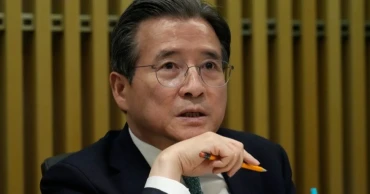
Samsung posts record profit as AI boom drives South Korean chipmakers
Samsung Electronics on Thursday reported a record operating profit of 89.5 trillion won ($62 billion) for the April-June quarter, as the South Korean technology giant and rival SK Hynix continue to benefit from surging global demand for chips used in artificial intelligence systems.
The earnings came a day after SK Hynix, the world's second-largest memory chipmaker, also reported record quarterly revenue, highlighting how the global AI boom is boosting South Korea's semiconductor industry.
However, shares of both companies have fallen sharply this week amid concerns about their huge planned investments to expand chip production and growing competition from China.
Samsung's second-quarter operating profit was more than 19 times higher than a year earlier, with almost all of the earnings coming from its semiconductor business.
The chip division benefited from higher prices, strong demand for AI servers and increased sales of advanced high-bandwidth memory (HBM) chips used in AI applications. These gains more than offset losses in Samsung's mobile devices, televisions and home appliances businesses, which were affected partly by higher component costs.
Samsung's quarterly revenue also reached a record 171.5 trillion won ($119 billion).
The company said it expects demand for memory chips to remain strong during the second half of the year, supported by continued investment in AI infrastructure and wider use of so-called agentic AI.
Demand for chips used in data centers is also expected to grow further, potentially keeping supplies below market demand, Samsung said.
SK Hynix reported record second-quarter revenue of 60.5 trillion won ($42 billion) on Wednesday. However, its profit fell short of market expectations, sending its shares down more than 9 percent. Samsung's shares have also declined this week.
Kim Jaejune, an executive in Samsung's memory chip division, said the gap between chip supply and demand could widen further in 2027.
He said Samsung plans to begin construction of its second semiconductor factory in Taylor, Texas, before the end of this year, with the facility expected to start operations by 2030.
Kim said Samsung has secured long-term chip supply agreements with five major global data center customers, possibly referring to Amazon Web Services, Google, Meta, Oracle and Microsoft.
The company is also in talks with other major technology firms as demand for AI infrastructure continues to rise.
"Despite our efforts to increase production, demand growth is outpacing our efforts," Kim said during a conference call.
Samsung and SK Hynix together account for about two-thirds of global memory chip production.
Both companies are making major investments in new semiconductor factories and data centers as South Korea seeks to strengthen its position in the global AI industry. However, some analysts have raised concerns about whether such large-scale spending will generate sufficient returns.
South Korean chipmakers are also facing pressure from concerns over stronger competition from China.
Reports that a state-owned Chinese company has started mass-producing domestically developed immersion deep-ultraviolet lithography machines, which are important for advanced chip manufacturing, have added to investor concerns.
The strong stock market debut of Chinese memory chipmaker ChangXin Memory Technologies has also increased worries about competition from China, analysts said.
Last month, Samsung and SK Hynix announced plans to jointly invest 800 trillion won ($554 billion) in a new semiconductor hub in southwestern South Korea to take advantage of rapidly growing AI-related demand.
The heads of Samsung, SK and South Korean automaker Hyundai joined President Lee Jae Myung during his trip to San Francisco last week, where they announced hundreds of billions of dollars in planned cooperation with major US technology companies.
The agreements involve AI firms OpenAI and Anthropic, as well as chip designers Nvidia and Broadcom, and cover chip technology, data centers and other AI infrastructure.
Kim Yong-beom, President Lee's chief policy adviser, said at a foreign media roundtable last week that the initiatives show how global technology companies are seeking long-term partnerships with South Korean chipmakers to secure reliable supplies of memory chips for AI systems.
However, the sharp swings in the share prices of Samsung, SK Hynix and other global technology companies suggest that investors are increasingly looking beyond short-term earnings and focusing on whether such growth can be sustained over the long term, semiconductor analyst Son In-joon of Eugene Securities said in a report this week.
5 days ago

Telegram founder Pavel Durov faces legal troubles in Russia and France
Pavel Durov, the billionaire founder and CEO of messaging app Telegram, has repeatedly faced trouble with both the Kremlin and Western authorities while portraying himself as a defender of free speech.
On Wednesday, Russia's Federal Security Service, or FSB, accused Durov of assisting what it described as terrorist activities and said it was placing his name on international wanted lists.
The Russian-born Durov, 41, responded by posting a picture of himself raising his middle finger on Telegram's official account on X. He has previously condemned Kremlin efforts to restrict Telegram, calling them attacks on freedom of expression.
The case represents an escalation in the Kremlin's efforts to tighten control over the internet and digital communications as Russia prepares for parliamentary elections in September amid growing public fatigue over the four-year war in Ukraine and its economic consequences.
Here is what to know about Durov, Telegram and the charges against him:
Durov founded a major social media platform in Russia
Durov was born in Leningrad, now St. Petersburg, and also holds citizenship in France, the United Arab Emirates and the Caribbean nation of St. Kitts and Nevis.
In 2006, at the age of 22, Durov and his brother Nikolai founded VKontakte, Russia's largest social networking platform, which is similar to Facebook.
The company came under pressure from authorities following mass anti-Kremlin protests in 2011-12, eventually leading Durov to sell his stake in VKontakte.
In 2013, the brothers founded Telegram. Durov left Russia in 2014 and moved to Dubai.
Durov, whose net worth is estimated at $6.6 billion by Forbes, said in a 2024 interview with conservative talk show host Tucker Carlson that Dubai was "the best place for a neutral platform like ours to be in" to protect users' privacy and freedom of speech.
Durov is also known for promoting fitness and healthy living. He has shared photos of his physique and described a daily routine involving 300 pushups, intensive gym workouts and outdoor activities. He follows a strict diet that excludes processed foods and alcohol.
He has six children with three former partners and once said he had donated sperm that resulted in the birth of 100 children in 12 countries.
Telegram is one of the world's most popular messaging apps
Telegram, launched by Durov and his brother in 2013, has more than 1 billion monthly active users worldwide.
The platform offers one-to-one conversations, group chats and large "channels" that allow users to broadcast messages to subscribers. Telegram group chats can have up to 200,000 members, compared with a maximum of 1,024 on WhatsApp. Experts have raised concerns that such large groups can allow misinformation to spread easily.
Telegram provides end-to-end encryption, but users have to manually activate the feature. It is available only for individual conversations and does not work in group chats.
This differs from services such as Signal and Facebook Messenger, where end-to-end encryption is enabled by default.
Telegram has long faced criticism in Russia and the West over what critics describe as insufficient content moderation. Experts say this can make the platform vulnerable to misuse for money laundering, drug trafficking and the distribution of material involving the sexual exploitation of minors.
Russian authorities and Western governments have also criticised Telegram for refusing to provide information about suspected criminals when required by law.
Durov has faced trouble in Russia and France
Russian authorities tried unsuccessfully to block Telegram between 2018 and 2020.
Since Moscow launched its full-scale invasion of Ukraine in 2022, Russian authorities have taken systematic measures to tighten control over the internet.
WhatsApp and Telegram have faced restrictions, while Facebook, Instagram and X have been banned. YouTube has also been throttled. VKontakte has come under the control of companies considered friendly to the Kremlin.
Telegram has repeatedly been fined for failing to comply with official regulations.
Some restrictions can still be bypassed using virtual private network services, although many VPNs have also been blocked.
Despite restrictions on Telegram, the Kremlin, the Russian defence and foreign ministries, and other government agencies continue to use the platform regularly.
Earlier this year, Durov said Russian authorities had opened a criminal investigation against him. He accused them of creating false justifications to restrict access to Telegram as part of an effort to "suppress the right to privacy and free speech."
In August 2024, Durov was arrested in Paris over allegations that Telegram was being used for illegal activities, including drug trafficking and the distribution of images of child sexual abuse.
He was released after four days of questioning on bail of 5 million euros.
Russian President Vladimir Putin, commenting on the arrest at the time, described France's action as "selective." He said several countries, including Russia, had raised concerns about criminals using Telegram for harmful activities and argued that "all platforms of this kind are guilty of this."
Kremlin officials have presented the French case against Durov as evidence of what they describe as Western double standards on freedom of speech.
Moscow has rejected Western accusations that Telegram has been used to coordinate and recruit people for arson and sabotage in Ukraine and elsewhere in Europe.
Russia's latest charges could carry a life sentence
The FSB accused Telegram's administration of failing to remove channels allegedly used by "Ukrainian intelligence agencies, terrorist and extremist organizations to prepare and coordinate acts of sabotage and terrorism, mass murder, and cyberfraud" in Russia.
The agency also accused Ukrainian security services of using a popular dating chatbot on Telegram to lure and recruit Russians for what it called "sabotage and terrorist activities."
The Daivinchik, or Leo-Dating, chatbot has 13.6 million monthly active users.
The FSB said 46 users of the chatbot, aged between 12 and 22, had been detained across Russia over the past year in connection with attacks on law enforcement officers, arson and other acts.
If convicted, Durov could face up to life in prison.
5 days ago
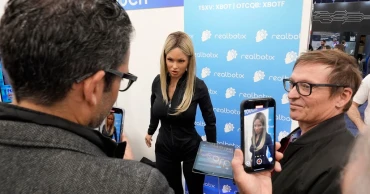
New York school pauses plan to use AI robot teacher
A school district in upstate New York has put on hold plans to introduce a humanoid, AI-powered robot in classrooms after education officials, teachers and residents raised concerns over student privacy and the robot maker’s ties to a company involved in producing highly realistic sex dolls.
The Salamanca City Central School District’s board had approved spending nearly $60,000 to purchase the robot from Realbotix. The stationary robot, nicknamed “Sally” because of its long dark hair, was intended to support high school students studying robotics and technology.
Superintendent Mark Beehler said Tuesday the robot could help students learn programming, maintenance, software updates and troubleshooting.
However, news of the planned purchase sparked concern in the small community, which is located on the Seneca Nation of Indians reservation. Parents and teachers questioned how students’ personal information would be handled.
Teachers’ union leaders also criticized Realbotix’s connection to a sister company involved in producing sex dolls, although both the district and Realbotix said the two businesses operate independently.
“A robot built by a company associated with sex dolls has no business in our classrooms,” said Melinda Person, president of the New York State United Teachers union.
The pilot program remains suspended while the district works with state education officials on stronger student data privacy agreements and continues discussions with the community, according to a statement posted by the district on Facebook Friday.
New York Education Commissioner Betty Rosa said she remained concerned about the robot’s proposed classroom role after state officials met with district representatives.
Although the district had told state officials that the robot would not be used to provide classroom instruction, Rosa said a presentation to the school board described it as a “tutoring platform.”
She also raised concerns about student data privacy and security.
Teachers’ union officials questioned whether the project could eventually lead to replacing human educators. The robot is designed to move its arms and hands but does not have working legs.
“Our students don't need robots,” Person said. “They need real relationships with caring adults.”
Beehler said the project was not intended to replace teachers or other school staff.
“There is no possible way a robot can replace a human in a school,” he said. “Even if it were possible, it would in no way be in the best interest of students. Teaching is a human-to-human process.”
The pilot would also include a virtual AI-powered teacher’s assistant and an at-home tutoring program.
Beehler, who was introduced to Realbotix through a former colleague, said the Las Vegas-based company was a suitable choice because its robots are already programmed with WozEd, an educational curriculum developed by Apple co-founder Steve Wozniak that the district already uses.
Last year, a charter school in San Diego introduced two AI-powered robots purchased from UK-based robotics company Engineered Arts for $500,000.
Salamanca school officials said “Sally” would not collect students’ personal information, record audio or video of interactions or send data to Realbotix.
The robot has also been programmed to avoid inappropriate subjects such as sex, violence and gambling. It will not be able to access the public internet or obtain responses from unverified generative AI services.
According to the district, all information used by “Sally” will be stored locally, and the life-sized robot will use roughly as much energy as a laptop.
Realbotix said Tuesday that student authentication would be handled through the district’s existing systems. Any information linked to students would remain encrypted and under the school district’s control, the company said.
The company also rejected suggestions that “Sally” was a modified sex doll, describing it as a newly manufactured, purpose-built educational robot with no altered hardware.
The robot was produced by Realbotix LLC, which focuses on healthcare, education and other nonadult commercial applications.
A sister company, Intima LLC, has an ownership stake in RealDoll, a longtime producer of sex dolls, including AI-powered models marketed as advanced sex robots.
Realbotix said the two companies have separate products and no crossover in their operations. They maintain separate management, employees, payroll, facilities, manufacturing operations, product development and marketing strategies, it said.
Beehler said isolated school districts such as Salamanca, located along the Allegheny River near the Pennsylvania border, need new ways to bring emerging technology into classrooms.
He said students in the area often have to travel one to two hours to access opportunities to experience new technologies.
One purpose of the robot, he said, was to help provide equal opportunities and encourage students to pursue careers in robotics, artificial intelligence and other STEAM-related fields.
Some residents, however, remain unconvinced.
Joplin Ficek, who graduated from Salamanca High School in 2024 and now works at a daycare, said she saw no reason for robots or AI to have such a prominent role at her former school.
“They just need to hire more people who are willing to put in the effort for the children,” Ficek said. “They need more interaction with the children than having some robot raise our kids.”
6 days ago
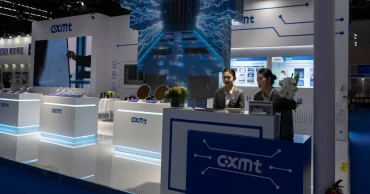
China memory chipmaker CXMT shares soar in blockbuster Shanghai listing
Shares of CXMT, China’s largest memory chipmaker, surged 466% on Monday as they began trading in Shanghai in mainland China’s biggest initial public offering (IPO) in recent years.
The sharp rise made CXMT the most valuable company listed on a mainland Chinese stock exchange, with an estimated market capitalisation of about 3.3 trillion yuan (more than $487 billion).
However, its valuation remains below those of major South Korean and US memory chipmakers such as Samsung Electronics, SK Hynix and Micron Technology.
CXMT, or ChangXin Memory Technologies, is among the Chinese chipmakers benefiting significantly from the boom in artificial intelligence. Its business is expanding as China seeks greater self-reliance in advanced technologies while facing limited access to sophisticated chipmaking equipment because of US-led export restrictions.
The company raised at least $8.6 billion through the offering, with shares priced at 8.66 yuan ($1.30) each. The shares were listed on the Shanghai Stock Exchange’s Nasdaq-style STAR Market, formally known as the Science and Technology Innovation Board.
The IPO was mainland China’s second-largest after Agricultural Bank of China raised $22.1 billion through a share offering in Shanghai and Hong Kong in 2010.
Founded in 2016 in Hefei in eastern China, CXMT is one of the world’s largest producers of DRAM, or dynamic random access memory chips. These semiconductors are widely used in AI servers, automobiles and consumer electronics such as smartphones and personal computers.
“CXMT plays a critical role in China’s AI push, particularly in the face of U.S. export controls,” said Kyle Chan, a fellow at the Brookings Institution and an expert on China’s technology policies.
US restrictions have also prevented China from importing powerful HBM, or high-bandwidth memory chips, a high-performance type of DRAM.
CXMT’s revenue jumped to 50.8 billion yuan ($7.5 billion) in the first three months of 2026, an increase of more than 700% year-on-year, driven by rising demand linked to the rapid growth of AI.
The growing use of AI has contributed to a global shortage of memory chips, pushing up prices of some computers and smartphones.
One key question is whether CXMT can help ease the broader shortage, Chan said.
He said CXMT is regarded as China’s strongest prospect for developing its own advanced HBM chips to power Chinese AI models.
But the company faces several challenges, including supply chain bottlenecks that could hinder efforts to expand manufacturing capacity. Its access to the world’s most advanced chipmaking equipment is heavily restricted, forcing it to rely on Chinese equipment manufacturers.
According to technology research firm Counterpoint Research, CXMT was the world’s fourth-largest DRAM memory chipmaker by shipments in 2025, accounting for roughly 8% of the global market.
Samsung Electronics held 36% of the market, followed by SK Hynix with 29% and Micron with about 24%.
CXMT accounted for around 9% of global shipments in the first three months of this year. Counterpoint forecasts its market share could reach about 11% by 2028, although the research firm estimates the company would need at least a 15% global share to remain competitive over the long term.
“Trade restrictions on tools are remaining as the key challenge for CXMT,” said MS Hwang, a research director at Counterpoint specialising in memory semiconductors.
Some US lawmakers have recently urged President Donald Trump’s administration to block American companies from purchasing CXMT memory chips, citing national and economic security concerns.
CXMT is among several Chinese companies that the Pentagon says have links to the Chinese military. Beijing has rejected such designations in most cases.
CXMT’s share offering came after South Korean chipmaker SK Hynix raised $26.5 billion through an IPO on the Nasdaq earlier this month.
7 days ago