World-Business
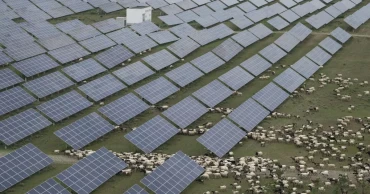
China races to build world’s largest solar farm as emissions begin to fall
China has unveiled what it says will become the world’s largest solar power project, a sprawling facility on the Tibetan plateau covering 610 square kilometers — an area roughly the size of Chicago.
The project highlights China’s rapid expansion in renewable energy. A new study released Thursday found the country’s carbon emissions dropped 1% in the first half of 2025 compared to a year earlier, continuing a trend that began in March 2024. Analysts say this suggests emissions may have peaked years ahead of Beijing’s 2030 target.
Lauri Myllyvirta of the Centre for Research on Energy and Clean Air said China must now accelerate reductions, averaging 3% annually to meet its pledge of carbon neutrality by 2060. “China needs to get to that 3% territory as soon as possible,” he said.
Unlike previous declines tied to economic slowdowns, this fall in emissions comes even as electricity demand rose 3.7%. Solar, wind, and nuclear energy outpaced growth in demand, with China adding 212 gigawatts of solar capacity in just six months — more than the U.S.’s entire total.
Li Shuo of the Asia Society Policy Institute called the development “a moment of global significance,” showing that emissions can fall even as the economy grows. Still, he warned coal dependency remains a major obstacle.
China achieves major progress in building world's highest solar observatory
On the plateau, millions of solar panels are already producing electricity while supporting grazing land for “photovoltaic sheep.” Once complete, the farm will power 5 million households.
Challenges remain, especially moving electricity from western deserts to eastern industrial hubs. Massive transmission lines are being built, but experts say China’s coal-oriented grid must be restructured to handle variable renewable energy.
Source: Agency
11 months ago

Asian shares mostly higher as Wall Street ends mixed
Asian markets were broadly higher on Thursday following a mixed finish on Wall Street, where major stocks such as Nvidia and Palantir trimmed earlier steep losses.
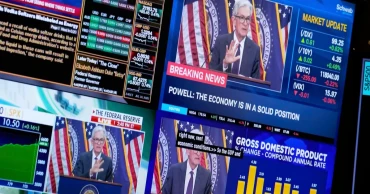
Investors are closely watching the Federal Reserve’s Jackson Hole symposium in Wyoming for signals on U.S. monetary policy. Fed Chair Jerome Powell is scheduled to speak on Friday. While the Fed has held interest rates steady this year amid concerns over inflation from President Donald Trump’s tariffs, a weaker-than-expected U.S. jobs report is drawing attention. Minutes from the Fed’s July 29-30 meeting, released Wednesday, showed officials remain more concerned about inflation than potential job losses.
In Asia, Tokyo’s Nikkei 225 fell 0.6% to 42,636.74 as Japan’s factory activity remained in contraction for a second month. Hong Kong’s Hang Seng slipped 0.1% to 25,135.09, while Shanghai rose 0.4% to 3,779.52. South Korea’s Kospi and Australia’s S&P ASX 200 both gained 1%, Taiwan’s TAIEX climbed 1.2%, and India’s Sensex added 0.1%.
Taiwan Expo USA 2025 concludes in Dallas, highlights innovation and U.S.–Taiwan ties
On Wall Street, the S&P 500 dipped 0.2% to 6,395.78, the Dow Jones edged up less than 0.1% to 44,938.31, and the Nasdaq fell 0.7% to 21,172.86. Nvidia, which drives much of the AI market, pared an early 3.9% loss to finish down 0.1%, while Palantir added to previous declines amid skepticism over returns from generative AI investments and concerns over inflated valuations.
In commodities, U.S. crude rose 30 cents to $63.01 per barrel, Brent added 26 cents to $67.10. The dollar strengthened to 147.37 yen, while the euro slipped to $1.1648.
Source: Agency
11 months ago

Taiwan Expo USA 2025 concludes in Dallas, highlights innovation and U.S.–Taiwan ties
Taiwan Expo USA 2025 wrapped up its second edition in Dallas with record success, drawing more than 10,000 visitors, including policymakers, industry leaders, and the public, over three days at the Kay Bailey Hutchison Convention Center.
Organized by Taiwan’s Ministry of Economic Affairs (MOEA), International Trade Administration (TITA), and Taiwan External Trade Development Council (TAITRA), the Expo showcased innovation, culture, and economic partnership under the theme “Shared Vision, Stronger Partnership.”
The opening ceremony, led by TAITRA Chairman James C. F. Huang, featured U.S. and Taiwanese dignitaries, including Ingrid Larson of the American Institute in Taiwan, Ashok Pinto of the U.S. Commerce Department, Taiwan’s Ambassador Alexander Tah-Ray Yui, and Texas Secretary of State Jane Nelson. It also included the launch of the Taiwan Trade and Investment Service Center in Dallas.
One of the signature sessions, the Taiwan–U.S. Supply Chain Cooperation Forum, brought together CEOs and policymakers to discuss AI, smart manufacturing, and semiconductor cooperation. Leaders from Foxconn, Phison, GlobalWafers, and the US–Taiwan Business Council stressed joint investment and industrial resilience, spotlighting Texas as a hub for semiconductor capacity and U.S. exports.
Canada forces Air Canada flight attendants back to work after strike grounds 100,000 travelers
For the first time, “U.S. Business Day” connected 30 Taiwanese importers with 50 American companies through 140 one-on-one meetings, fostering opportunities in raw materials, advanced equipment, and technology.
The Expo featured over 100 Taiwanese brands across sectors including advanced manufacturing, intelligent technology, smart healthcare, and consumer excellence. Cultural highlights included traditional tea presentations, performances, and forums on healthcare innovation.
With Dallas now hosting a Taiwan Trade and Investment Service Center, officials said the Expo reinforced Taiwan’s commitment to deepening U.S. ties through innovation, trade, and cultural exchange.
Source: Agency
11 months ago
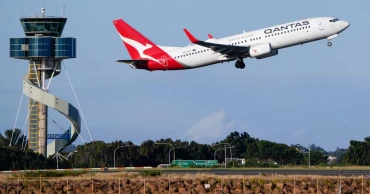
Qantas fined AU$90 million for illegal pandemic layoffs
Qantas Airways has been fined AU$90 million ($59 million) for unlawfully dismissing more than 1,800 ground staff at the start of the Covid-19 pandemic. The penalty comes on top of AU$120 million ($78 million) in compensation the airline had already agreed to pay its former employees.
Australian Federal Court Justice Michael Lee described the outsourcing of 1,820 baggage handler and cleaner positions in late 2020 as the “largest and most significant” violation of labor laws in Australia’s 120-year history.
Layoffs hit many at CDC lab program that was started to address previous failures
The Transport Workers Union, which brought the case, had sought the maximum fine of AU$121 million ($79 million). Lee said the AU$90 million penalty would serve as a deterrent, noting Qantas executives had expected annual savings of AU$125 million ($81 million) from outsourcing.
Qantas CEO Vanessa Hudson apologized to affected staff, acknowledging the hardships caused. AU$50 million ($33 million) of the fine will go to the union, with a hearing scheduled to determine the allocation of the remaining amount.
The ruling ends a five-year legal battle and is hailed as the most significant industrial outcome in Australia’s history.
Source: Agency
11 months ago

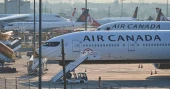
Canada forces Air Canada flight attendants back to work after strike grounds 100,000 travelers
The Canadian government has ordered Air Canada’s striking flight attendants back to work and into arbitration, ending a walkout that disrupted travel for more than 100,000 passengers worldwide at the height of the summer holiday season.
Federal Jobs Minister Patty Hajdu said Saturday the economy could not risk prolonged disruption, particularly amid U.S. tariffs on Canada. The move came less than 12 hours after about 10,000 flight attendants walked off the job.
“The talks broke down. It is clear that the parties are not any closer to resolving some of the key issues that remain and they will need help with the arbitrator,” Hajdu said, noting full resumption of service could take days.
Union leaders accused the government of trampling workers’ constitutional right to strike. Wesley Lesosky, president of the Air Canada Component of the Canadian Union of Public Employees, said Ottawa rewarded the airline’s refusal to negotiate fairly.
Air Canada operates about 700 flights daily and had canceled more than 670 by Saturday afternoon, with further cancellations already scheduled. The airline warned it may take up to a week to restore full operations, while travelers continue to face delays and cancellations.
The government has ordered the Canada Industrial Relations Board to extend the current collective agreement until arbitration concludes. Passengers whose flights are canceled will be eligible for full refunds or alternative travel arrangements, though the airline cautioned options are limited due to peak demand.
The contract dispute, ongoing for eight months, centers on wages and unpaid work hours. The airline has offered a 38% compensation increase over four years, while the union argues it falls short, particularly amid inflation. Flight attendants say they deserve parity with pilots, who secured a substantial pay raise last year.
Business groups welcomed the government’s intervention, stressing the impact on passengers and cargo, while labor advocates criticized Ottawa for undermining union leverage. Similar government action last year forced Canada’s major railroads into arbitration after a stoppage.
For many travelers, frustrations mounted. Passengers reported being stranded overseas, forced to pay out of pocket for hotels, or facing days-long waits for rebooked flights. While some expressed solidarity with flight attendants, others criticized Air Canada’s lack of communication.
Despite the government’s order, the union said workers would remain on picket lines “until further notice” as it considers next steps.
Source: Agency
11 months ago
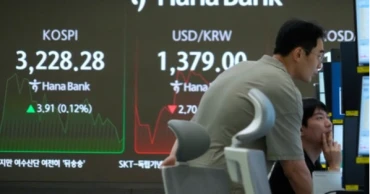
Asian shares mixed as hopes for US rate cuts wane; Bitcoin hits record
Asian shares showed a mixed performance Thursday following several days of gains fueled by expectations of lower U.S. interest rates, while U.S. futures slipped. Bitcoin surged over 3%, reaching a new record above $123,000, according to CoinDesk.
In Tokyo, the Nikkei 225 fell 1.4% to 42,657.94 as investors booked profits after recent record highs. The Japanese yen strengthened against the dollar after U.S. Treasury Secretary Scott Bessent commented that Japan is “behind the curve” in monetary tightening. The dollar dropped to 146.55 yen from 147.39.
Elsewhere in Asia, Hong Kong’s Hang Seng index edged down 0.1% to 25,597.85, Shanghai rose 0.2% to 3,690.88, South Korea’s Kospi slipped 0.3% to 3,215.61, while Australia’s S&P ASX 200 gained 0.5% to 8,871.80. Taiwan’s TAIEX fell 0.4% and India’s Sensex rose 0.1%.
U.S. stocks rose Wednesday as hopes for a Fed rate cut supported a global rally. The S&P 500 climbed 0.3% to 6,466.58, Dow gained 1% to 44,922.27, and Nasdaq added 0.1% to 21,713.14. Treasury yields eased in anticipation of the Fed’s first rate cut of the year, expected in September, while homebuilders and companies sensitive to borrowing costs led gains.
Global stocks rise as US markets hit records on rate-cut hopes
Bullish, a cryptocurrency exchange, debuted with a nearly 84% rise to $68 per share, raising over $10 billion. Analysts say rate-cut expectations continue to offset concerns over high U.S. stock valuations, amid President Donald Trump’s calls for cuts and Fed caution over potential inflation impacts.
U.S. wholesale inflation data due Thursday is expected to show a slight increase to 2.4% in July. Meanwhile, U.S. crude rose 24 cents to $62.89 per barrel, with Brent crude up 27 cents to $65.90.
Source: Agency
11 months ago
US July budget deficit rises 20% despite record Trump tariff revenue
The U.S. budget deficit in July jumped 20% from a year earlier, even as the government collected record revenues from President Donald Trump’s tariffs, according to Treasury Department data released Tuesday.
Customs revenue surged 273% year-over-year — an increase of $21 billion — as the administration’s import taxes generated the highest monthly income on record.
A Treasury official, speaking on condition of anonymity, said the higher deficit was driven partly by increased federal spending, including rising interest payments on public debt, cost-of-living adjustments to Social Security, and other expenses. The federal government’s gross national debt is now approaching $37 trillion.
While Trump has touted tariffs as a path to making America “rich,” federal spending continues to outpace revenue. Officials say the fiscal picture could improve as companies deplete pre-tariff inventories and are forced to import more goods, generating additional tariff income — though not enough to significantly reduce the deficit as promised.
US, China extend trade truce by 90 days, delaying tariff showdown
Economists warn that if tariffs fail to meet expectations, Americans could face slower job growth, higher inflation, and increased interest rates on mortgages, auto loans, and credit cards.
The Committee for a Responsible Federal Budget estimates tariff income could generate about $1.3 trillion over Trump’s four-year term. But University of Pennsylvania economist Kent Smetters cautions that tariffs will likely lead to only “modest reductions” in federal debt.
In June, the Congressional Budget Office projected Trump’s tariff plan would cut deficits by $2.8 trillion over a decade but also slow economic growth, raise inflation, and erode household purchasing power. Revenue forecasts remain uncertain as tariff rates have changed repeatedly and some emergency measures face court challenges.
Treasury Secretary Scott Bessent said last month the administration is “laser-focused” on reducing the deficit and aims to secure more trade deals with key economies, including China.
On Monday, Trump extended a trade truce with Beijing for another 90 days, maintaining 30% tariffs as part of ongoing negotiations. China’s Commerce Ministry confirmed the extension.
11 months ago
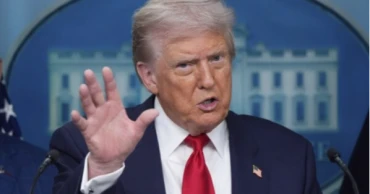
US, China extend trade truce by 90 days, delaying tariff showdown
President Donald Trump on Monday extended a trade truce with China for another 90 days, postponing a potentially damaging escalation between the world’s two largest economies.
Trump announced on Truth Social that he had signed an executive order to prolong the agreement, saying “all other elements of the Agreement will remain the same.” China’s state news agency Xinhua confirmed a parallel announcement from Beijing.
The previous deadline was set to expire at 12:01 a.m. Tuesday, which could have triggered U.S. tariffs on Chinese goods to rise from the already steep 30% rate, prompting Beijing to retaliate. The pause gives negotiators more time to address differences, raising the prospect of a summit later this year between Trump and Chinese President Xi Jinping.
Business groups welcomed the move. Sean Stein, president of the U.S.-China Business Council, called the extension “critical” for enabling talks toward a deal that could expand U.S. market access in China and restore agricultural and energy exports disrupted by past disputes.
The trade confrontation has already transformed U.S. policy into a protectionist model, with average tariffs climbing from 2.5% at the start of the year to 18.6% — the highest since 1933. China has countered U.S. measures by leveraging its control over rare earth minerals critical to industries from electric vehicles to aerospace.
Indonesia, Peru leaders meet to boost trade, sign CEPA deal
In June, both sides agreed to scale back restrictions: Washington eased export limits on chip technology and ethane, while Beijing improved access to rare earth supplies for U.S. companies. Earlier in May, they stepped back from triple-digit tariffs that threatened to halt bilateral trade entirely.
Analysts caution that a comprehensive settlement remains elusive. While limited deals on issues such as soybean purchases, fentanyl-related chemical controls, and rare earth exports are possible, major disputes over intellectual property rights, industrial subsidies, and China’s trade surplus with the U.S. are likely to persist.
“The trade war will continue grinding ahead for years into the future,” said Jeff Moon, a former U.S. trade official.
Source: Agency
11 months ago
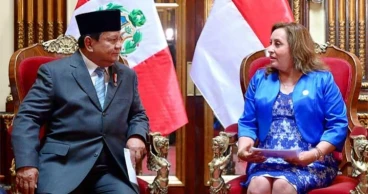
Indonesia, Peru leaders meet to boost trade, sign CEPA deal
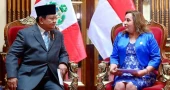
Indonesian President Prabowo Subianto met Peruvian President Dina Boluarte in Jakarta on Monday to advance economic ties, with both nations seeking new markets amid rising trade barriers and geopolitical tensions.
The meeting came just days after U.S. President Donald Trump imposed higher import tariffs on dozens of countries, including a 19% rate on Indonesian goods and a 10% baseline rate on imports from Peru.
Boluarte’s two-day visit follows an invitation from Prabowo during their meeting at the APEC Summit in Peru in November 2024. The leaders are expected to witness the signing of a Comprehensive Economic Partnership Agreement (CEPA), concluded in May after months of negotiations.
Toyota hit hard by tariffs: profit plunges 37%
Trade Minister Budi Santoso said the deal could serve as a gateway for Indonesian goods and services into Central and South American markets, strengthening the country’s regional presence. Indonesia’s trade with Peru fell from $554.2 million in 2022 to $444.4 million in 2023, though Indonesia maintained a $290.4 million surplus, driven by exports such as vehicles, footwear and biodiesel.
Indonesia is also pursuing membership in the Comprehensive and Progressive Agreement for Trans-Pacific Partnership, of which Peru is already a member, to further expand export opportunities.
Source: Agency
11 months ago
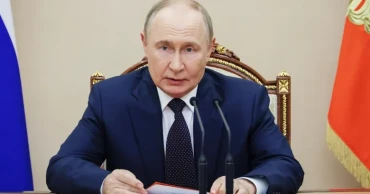
Russia, Ukraine stick to demands ahead of planned Putin-Trump summit
Russia and Ukraine remain entrenched in their positions ahead of a possible summit between Russian President Vladimir Putin and US President Donald Trump in Alaska, raising concerns that Moscow could use the meeting to pressure Kyiv into accepting a deal on unfavorable terms.
Putin continues to push the goals he set with the launch of Russia’s full-scale invasion of Ukraine on February 24, 2022, seeking recognition of its territorial gains, a bar on Ukraine joining NATO, and a ban on Western troops in the country. Moscow hopes a broad agreement with Trump could draw Ukraine back into its orbit.
Ukrainian President Volodymyr Zelenskyy has agreed to a Trump-proposed ceasefire but rejected any recognition of Russia’s annexations and reaffirmed Kyiv’s NATO aspirations.
Russia’s positionIn a June memorandum presented in Istanbul, Russia offered Ukraine two ceasefire options — one requiring withdrawal from the four partially occupied regions Moscow annexed in 2022, and another halting mobilization, freezing Western arms supplies, and banning foreign troops in Ukraine. Moscow also demands recognition of its 2014 annexation of Crimea, limits on Ukraine’s armed forces, and neutral status.
Trump says he will meet Putin in Alaska next Friday to discuss ending Ukraine war
It wants both countries to lift sanctions, resume trade, and restore diplomatic ties. Kremlin adviser Yuri Ushakov said there has been “no shift” in Russia’s stance.
Ukraine’s positionKyiv’s memorandum calls for a full, unconditional 30-day ceasefire, rejects demands for neutrality, and insists on no limits to its military or foreign troop presence. It refuses to recognize Russian territorial gains, demands security guarantees, the return of deported children, and a full prisoner exchange.
Trump’s roleTrump has alternated between admiration for Putin and frustration over his resistance to a ceasefire. He plans to meet Putin without Zelenskyy present, prompting fears in Kyiv and Europe that this could lead to concessions. Trump has suggested “swapping of territories” could be part of a peace deal.
Putin Considers United Arab Emirates as Potential Venue for Trump Meeting
Analysts warn that Putin could agree to a temporary truce to win Trump’s sympathy while keeping leverage for future aggression. Observers also note that Russia may frame its terms as concessions without altering its core demands, which amount to Ukraine’s capitulation.
Despite calls with allied leaders suggesting Putin is preparing for potential agreements, experts predict the talks are likely to fail, prolonging a conflict that could oscillate between open warfare and uneasy stalemate.
Source: Agency
11 months ago