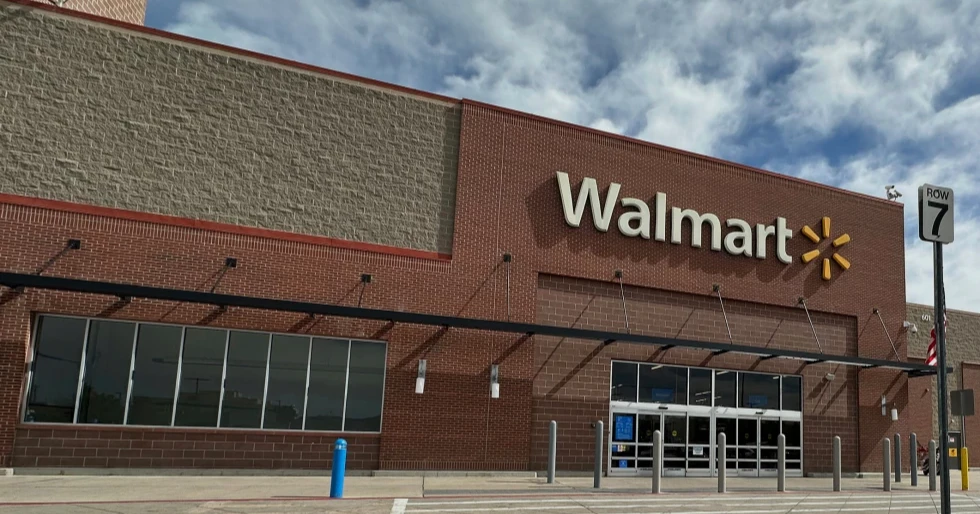
On Saturday, former President Donald Trump sharply criticized Walmart on social media, demanding that the company absorb the extra costs resulting from his tariffs.
As Trump raised import duties, he sought to reassure a doubtful public by claiming that the burden would fall on foreign exporters, not American consumers, and that businesses like retailers and car manufacturers would shoulder any additional expenses. However, most economists have cast doubt on these assertions, warning that the tariffs could fuel higher inflation. Walmart itself cautioned on Thursday that the prices of a wide range of goods — from bananas to children’s car seats — could rise.
Posting on Truth Social, Trump targeted the retail behemoth, which employs 1.6 million workers across the U.S. He argued that Walmart, headquartered in Bentonville, Arkansas, should be willing to reduce its profit margins to support his broader economic strategy, which he claims will eventually bring more manufacturing jobs back to the United States.
“Walmart should STOP trying to blame Tariffs as the reason for raising prices throughout the chain,” Trump posted. “Walmart made BILLIONS OF DOLLARS last year, far more than expected. Between Walmart and China they should, as is said, “EAT THE TARIFFS,” and not charge valued customers ANYTHING. I’ll be watching, and so will your customers!!!”
The posting by the Republican president reflected the increasingly awkward series of choices that many major American companies face as a result of his tariffs, from deteriorating sales to the possibility of incurring Trump’s wrath. Trump has similarly warned domestic automakers to not raise their prices, even though outside analyses say his tariffs would raise production costs.
So far, those tariffs have darkened the mood of an otherwise resilient U.S. economy. The preliminary reading of the University of Michigan survey of consumer sentiment on Friday slipped to its second lowest measure on record, with roughly 75% of respondents “spontaneously” mentioning tariffs as they largely expected inflation to accelerate.
In April, Walmart CEO Doug McMillon was among the retail executives who met with Trump at the White House to discuss tariffs. But the Trump administration went forward despite warnings and has attacked other companies such as Amazon and Apple that are struggling with the disruptions to their supply chains.
Walmart chief financial officer John David Rainey said he thinks $350 car seats made in China will soon cost an additional $100, a 29% price increase.
Colombia seeks to join China-based development bank as Latin America drifts away from Washington
“We’re wired to keep prices low, but there’s a limit to what we can bear, or any retailer for that matter,” he told The Associated Press on Thursday after the company reported strong first-quarter sales.
The administration recently ratcheted down its 145% tariffs on China to 30% for a 90-day period. Trump has placed tariffs as high as 25% on Mexico and Canada due to illegal immigration and drug trafficking, harming the relationship with America’s two largest trading partners.
There is a universal baseline tariff of 10% on most countries as Trump promises to reach trade deals in the coming weeks after having shocked the financial markets in early April by charging higher import taxes based on trade deficits with other countries. Trump insists he intends to preserve the tariffs as a revenue source and that a framework agreement with the United Kingdom would largely keep the 10% tariff rate in place.
Trump has also placed import taxes on autos, steel and aluminum and plans to do so on pharmaceutical drugs, among other products.
The tariffs and Trump’s own reversals on how much he should charge have generated uncertainty across the U.S. economy, such that Federal Reserve Chair Jerome Powell has held the central bank’s benchmark rates steady until there is more clarity. Powell has warned that tariffs can both hurt growth and raise prices.