World-Business
Asian markets mixed as oil prices rise amid uncertainty over Iran talks
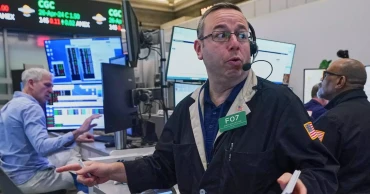
Asian stock markets showed mixed performance on Monday, while oil prices jumped sharply as uncertainty continued over talks to end tensions involving Iran.
Japan’s benchmark Nikkei 225 hit a new record, rising 1.4% to close at 60,481.21 after touching an intraday high. South Korea’s Kospi also gained 2%.
However, markets in Hong Kong and mainland China were less upbeat. Hong Kong’s Hang Seng fell 0.3%, while the Shanghai Composite edged up slightly. Australia’s S&P/ASX 200 slipped 0.3%.
Taiwan’s Taiex jumped 1.8%, supported by strong demand for technology stocks driven by the growth of artificial intelligence. India’s Sensex also rose 0.4%.
Oil prices surged as negotiations related to Iran faced setbacks. The White House canceled plans to send officials for further talks, with U.S. President Donald Trump saying discussions could continue remotely instead.
Brent crude increased by $2 to $101.13 per barrel, while U.S. crude rose to $96.24.
Investors are also watching closely as major central banks, including the Federal Reserve, European Central Bank, Bank of Japan and Bank of England, prepare to announce interest rate decisions this week.
On Wall Street, markets ended last week on a strong note. The S&P 500 rose 0.8% to a record close, while the Nasdaq Composite jumped 1.6% to a new high, helped by gains in technology shares. The Dow Jones Industrial Average slipped slightly.
A survey by the University of Michigan showed consumer confidence weakened in April, though it improved slightly after a ceasefire in the Iran conflict was announced earlier.
Despite hopes for stability, tensions between the U.S. and Iran continue to disrupt oil shipments through the Strait of Hormuz, raising concerns in global markets.
Meanwhile, tech giant Intel saw its shares surge after strong earnings, driven by rising demand for AI-related products.
In currency trading, the U.S. dollar weakened slightly against the Japanese yen, while the euro gained ground.
3 months ago

Mitsubishi enters Bangladesh manufacturing with stake in RANCON Auto
Japanese giant Mitsubishi Corporation (MC) has officially entered Bangladesh's manufacturing landscape by acquiring a 25% strategic equity stake in RANCON Auto Industries Limited (RAIL).
The partnership, announced Wednesday night in the capital, represents the largest Japanese Foreign Direct Investment (FDI) to date in Bangladesh’s four-wheeler transport industry, said a press release.
The investment transitions the relationship between the two entities from a distribution and assembly agreement to a joint ownership structure.
The primary objectives of this alliance include scaling up production capacity, fortifying distribution networks, and enhancing after-sales service for local consumers, with a long-term vision to expand into regional markets.
Finance Minister Amir Khosru Mahmud Chowdhury, who attended the event as the chief guest, hailed the agreement as a significant milestone under the current government.
“This agreement marks the first major foreign direct investment under the current government, which will send a positive message to international investors,” the Minister said.
Established in 2017, RAIL has been a key player in vehicle assembly. In June last year, the company began local production of the Mitsubishi Xpander, which has since become the top-selling family SUV in the country.
The strategic infusion of capital and expertise from MC is expected to improve supply chain resilience and modernise sales and marketing functions by leveraging Mitsubishi’s global market access.
Romo Rouf Chowdhury, Group Managing Director of RANCON Holdings Limited, described the alliance as a "pivotal" moment for the industry.
“This landmark strategic alliance — the first of its kind in the country’s automotive sector — underscores the strength of Bangladesh–Japan trade relations,” he said.
He added that the investment would facilitate technology transfer, develop a highly skilled local workforce, and increase government revenue through VAT and taxes.
Hiroyuki Egami, Senior Vice President and Division COO of Mitsubishi Corporation, reaffirmed the Japanese firm’s commitment to bringing its extensive global automotive experience to the joint venture.
The event was also attended by State Minister for Civil Aviation and Tourism M. Rashiduzzaman Millat and the Japanese Ambassador to Bangladesh, Saida Shinichi.
Industry experts anticipate that this partnership will also improve consumer access to affordable vehicle financing and ensure the steady availability of spare parts across a strengthened nationwide network.
3 months ago

Global markets rise, oil steady as uncertainty lingers over US-Iran talks
Global stock markets moved higher on Tuesday, with Wall Street also set to open stronger, while oil prices remained mostly unchanged amid ongoing uncertainty over talks between the United States and Iran.
Futures for the S&P 500 rose 0.4% before trading began, while Dow Jones futures gained 0.6%. Nasdaq futures also edged up 0.4%.
In the oil market, US benchmark crude slipped 14 cents to $87.28 per barrel. Brent crude, the international standard, fell 47 cents to $95.01 per barrel.
The conflict involving Iran has disrupted oil shipments through the Strait of Hormuz, a key route that carries about one-fifth of the world’s oil supply daily, pushing energy prices higher in recent weeks.
US President Donald Trump has called on Iran to allow safe passage through the strait and has imposed a blockade on Iranian ports. However, Iran has taken a firm stance, refusing to negotiate under pressure.
Iran’s chief negotiator and parliamentary speaker, Mohammed Bagher Qalibaf, said in a social media post that Tehran would not engage in talks “under the shadow of threats.”
Despite this, Trump said he still plans to send a delegation led by Vice President JD Vance to Islamabad for discussions. However, Iran has indicated it will not participate unless the US softens its position. Trump also signalled that extending the current ceasefire, which expires Wednesday, is “highly unlikely.”
Analysts say the situation remains fragile, with both sides facing pressure to reach an agreement before the truce ends.
Even so, oil prices remain below earlier highs, when Brent crude had surged to $119 per barrel at the peak of tensions. The S&P 500 is also still trading above its pre-conflict level.
In corporate news, Apple shares were little changed after the company announced that CEO Tim Cook will step down on Sept. 1, handing over the role to John Ternus. Cook will continue as executive chairman after leading the company for 15 years.
Shares of UnitedHealth Group jumped more than 7% in premarket trading after the company reported better-than-expected first-quarter earnings and raised its full-year profit forecast.
Investors are also watching developments in Washington, where Kevin Warsh, Trump’s nominee for Federal Reserve chair, is set to appear before the Senate Banking Committee. He is expected to face tough questions, particularly from Democrats over his financial disclosures.
In Europe, Germany’s DAX rose 0.6%, while France’s CAC 40 added 0.2%. Britain’s FTSE 100 remained unchanged.
Asian markets also closed higher. Japan’s Nikkei 225 climbed 0.9%, supported by gains in technology stocks. South Korea’s Kospi surged 2.7%, while Taiwan’s Taiex rose 1.8%.
Hong Kong’s Hang Seng index gained 0.5% and Shanghai’s Composite index edged up 0.1%. However, Australia’s S&P/ASX 200 slipped slightly by less than 0.1%.
3 months ago
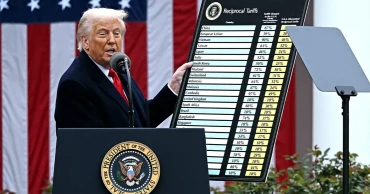
Trump administration launches $166B tariff refund system following Supreme Court ruling
The Trump administration has officially launched a digital refund portal to return approximately $166 billion in import tariffs, following a landmark U.S. Supreme Court ruling that declared the duties unlawful.
The new platform, titled Consolidated Administration and Processing of Entries (CAPE), was activated on April 20, 2026. It serves as the primary mechanism for U.S. importers and companies to reclaim duties paid on millions of shipments.
The move comes after the Supreme Court ruled in February that the International Emergency Economic Powers Act (IEEPA) did not grant the President the authority to impose these specific tariffs.
According to court filings, more than 330,000 importers were affected, having paid the now-invalidated duties on over 53 million shipments.
The initial phase of the CAPE system launched today covers roughly $127 billion of the total $166 billion. This phase specifically targets recent or "unliquidated" entries that the U.S. Customs and Border Protection (CBP) can process through automated systems. Officials expect payments for these straightforward cases to be dispersed in phases over the next 60 to 90 days.
The CBP has issued a directive stating that once a CAPE Declaration is filed and accepted, it cannot be amended. If a company identifies additional eligible entries or realizes an omission after their initial submission, they must file an entirely new declaration rather than modifying the existing one.
While thousands of businesses and direct importers are set to receive significant financial relief, the refund program is strictly limited to those who directly paid the duties to the government. Individual consumers who may have faced higher prices as a result of the tariffs are not eligible to file claims through the CAPE platform.
The ruling and subsequent refund process are expected to have a major impact on global trade dynamics, particularly for major exporting nations involved in U.S. supply chains.
3 months ago

Trade deal with US undermines energy sovereignty: Debapriya Bhattacharya
Economist and Distinguished Fellow at the Centre for Policy Dialogue (CPD), Dr. Debapriya Bhattacharya, has claimed that the trade agreement signed by the interim government with the United States undermines Bangladesh’s energy sovereignty.
Speaking as the chief guest at a pre-budget shadow parliament debate organized by Debate for Democracy in the capital, Dr. Debapriya criticized the restrictive nature of the deal.
“The trade agreement with the US is compromising our energy sovereignty. While the new government claims it will not pursue country-specific foreign policies, this agreement dictates from whom we can purchase oil. Requiring permission for such decisions is a direct hit to our independence,” he said.
CPD executive director calls for 'comprehensive economic reforms' at PRI seminar
3 months ago

Bangladesh entrepreneurs explore trade ties at Guangzhou fair
The visiting delegation of the Dhaka Chamber of Commerce & Industry (DCCI) participated in the 6th Guangzhou Sourcing Fair on Wednesday, seeking to expand trade and investment linkages between Bangladesh and China.
The delegation, led by DCCI Senior Vice President Razeev H Chowdhury, held B2B matchmaking sessions with around 150 Chinese supplier companies representing sectors, including hardware and tools, automobiles, motorcycles and spare parts, home appliances, and building and construction materials.
Speaking at a bilateral discussion on supply chain issues held on the sidelines of the fair, Razeev highlighted the depth of the bilateral relationship, noting that Bangladesh and China share a long-standing multidimensional partnership spanning trade, investment, infrastructure, education, and human resource development.
He said total bilateral trade between the two countries reached USD 18.89 billion in FY2025, with Bangladesh's imports from China amounting to USD 18.20 billion against exports of USD 694.49 million, pointing to a significant trade imbalance that both sides acknowledged needs to be addressed.
Razeev also extended an invitation to Chinese entrepreneurs to invest in Bangladesh, citing textiles and textile products, machinery, chemicals, metals, plastics, minerals, and agro-based products as priority sectors.
Nicole Fan, Director of Poly Jinhan Exhibition (Poly Events), which organises the fair, said the platform will serve as an important bridge between entrepreneurs of the two countries.
She expressed optimism that greater Bangladeshi participation in future editions of the fair will open new avenues of collaboration with China's vast supplier network.
The Guangzhou Sourcing Fair, now in its sixth edition, has emerged as a key platform for connecting South and Southeast Asian buyers with Chinese manufacturers and exporters across a wide range of industrial and consumer goods sectors.
The 22-member DCCI delegation went to on Wednesday on a five-day visit aimed at strengthening Bangladesh-China economic engagement and expand bilateral trade and investment cooperation.
3 months ago

China’s economy grows 5% in Q1, shows resilience despite Iran war impact
China’s economy picked up pace in the first quarter of the year, growing 5% compared to the same period last year, as it largely withstood the early effects of the Iran war, according to official data released .
The January–March figures, which cover the period when the conflict began, came in stronger than economists had predicted and improved from the 4.5% growth recorded in the previous October–December quarter.
On a quarterly basis, the economy expanded by 1.3% in the first three months, marking its fastest growth rate in a year.
Experts say China, the world’s second-largest economy, is likely to manage the short-term impact of the war, now in its seventh week. However, rising energy prices driven by the conflict are adding to inflation pressures and weighing on global growth. Over time, weaker global demand could affect Chinese exports.
The International Monetary Fund recently lowered its 2026 growth forecast for China to 4.4%, reflecting broader global economic concerns linked to the conflict. Chinese authorities had earlier set a growth target of 4.5% to 5% for this year, the lowest since 1991.
“China can likely weather short term disruptions, but a prolonged war and sustained high energy prices could begin to slow growth in the second half of the year,” said Lynn Song.
Separate data released showed China’s industrial output rose 5.7% in March from a year earlier, beating expectations as global demand for electronics, vehicles, semiconductors and robotics remained strong.
However, retail sales increased by just 1.7%, falling short of forecasts and slowing from 2.8% growth in the first two months of the year, highlighting weak domestic consumer demand.
China’s prolonged real estate downturn has continued to hurt consumer and investor confidence. Still, the country achieved around 5% growth last year, supported by strong exports that pushed its trade surplus to nearly $1.2 trillion, despite higher tariffs imposed by US President Donald Trump.
Economists say exports will remain a key driver of China’s economy this year, but heavy reliance on them could pose risks.
“The lack of a quick resolution to the Iran war is likely to slow global growth, reducing other countries’ capacity to import Chinese goods,” said Eswar Prasad.
He added that as countries focus on protecting their own economies from the impact of the conflict, demand for Chinese imports is likely to weaken.
China reported earlier this week that exports grew 2.5% in March compared to a year earlier, a noticeable slowdown from the previous two months, partly due to seasonal factors.
While economists believe China could still meet its annual growth target through policy support, concerns remain. Increased public investment may help sustain overall growth, but without stronger consumer demand, it could deepen deflation risks and further increase dependence on exports.
3 months ago
Oil prices to drop ‘very big’ after Iran war ends: Trump
In an interview Sunday with Maria Bartiromo of Fox News, US President Donald Trump had said fuel prices could be the same or “maybe a little bit higher” by the November congressional elections.
But in a separate interview with Bartiromo, which was taped on Tuesday at the White House and broadcast on Wednesday, Trump claimed he’d been misquoted and tried to overcome the blowback from his previous comments.
He said he’s happy with oil costing about $92 per barrel. “It’s going to come dropping down very big as soon as this is over,” he said, referring to the war. “And I think it can be over very soon.”
Later in the interview, he predicted that gas prices, now averaging slightly above $4 a gallon, will be “much lower” by the elections.
Speaking again about the war, Trump said, “When that’s settled, gas prices are going to go down tremendously.”
3 months ago
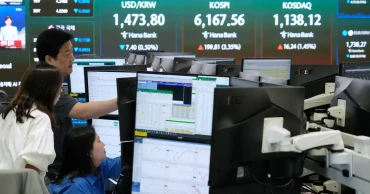
Asian shares rise on lower oil prices, tracking Wall Street gains
Asian stock markets mostly moved higher on Wednesday, following a strong rally on Wall Street as oil prices declined amid hopes that the United States and Iran may resume talks to end their conflict.
Japan’s Nikkei 225 rose 0.4% in afternoon trading to 58,122.52. Australia’s S&P/ASX 200 was nearly unchanged, edging up less than 0.1% to 8,978.70. South Korea’s Kospi jumped 2.1% to 6,092.77. Hong Kong’s Hang Seng gained 0.4% to 25,980.69, while China’s Shanghai Composite slipped slightly by less than 0.1% to 4,023.40.
On Wall Street, stocks closed higher, extending gains from the previous session. The S&P 500 climbed 1.2% and is now just 0.2% below its record high set in January. The Dow Jones Industrial Average added 317 points, or 0.7%, while the Nasdaq composite surged 2%.
In the oil market, U.S. benchmark crude fell 58 cents to $90.70 per barrel. Brent crude edged up 7 cents to $94.86 after dropping sharply by 4.6% a day earlier. Although prices remain above pre-war levels of around $70, they are well below the peak of $119 reached earlier.
Lower oil prices help reduce costs for businesses, but analysts cautioned that the ongoing conflict still poses risks.
Tim Waterer, chief market analyst at KCM Trade, said the drop in oil prices reflects growing expectations that Washington and Tehran could restart negotiations after earlier talks failed. He noted that traders appear to be focusing on the possibility of easing tensions rather than current supply concerns.
Asian economies remain heavily reliant on oil shipments through the Strait of Hormuz, a key route for crude exports from the Persian Gulf. Any disruption there can tighten global supply and push prices higher.
Meanwhile, the International Monetary Fund said global inflation is expected to rise to 4.4% this year from 4.1% in 2025, revising its earlier forecast of a slowdown to 3.8%. The IMF also lowered its global growth outlook to 3.1% from the 3.3% projected in January.
Overall, the S&P 500 gained 81.14 points to 6,967.38, the Dow rose 317.74 to 48,535.99, and the Nasdaq added 455.35 to 23,639.08.
In the bond market, U.S. Treasury yields declined as easing oil prices reduced inflation concerns. The yield on the 10-year Treasury fell to 4.25% from 4.30%.
In currency trading, the U.S. dollar strengthened slightly to 158.95 Japanese yen from 158.79 yen, while the euro slipped to $1.1790 from $1.1797.
3 months ago
IMF cuts global growth outlook, warns of rising inflation amid Iran war
The International Monetary Fund on Tuesday lowered its global growth forecast, warning that the ongoing Iran war has disrupted economic momentum and is likely to push inflation higher worldwide.
In its latest World Economic Outlook, the IMF projected global growth at 3.1% for 2026, down from the 3.3% forecast in January. The figure also reflects a slowdown from the estimated 3.4% growth in 2025.
The downgrade comes as US and Israeli strikes on Iran, along with Tehran’s closure of the Strait of Hormuz and retaliatory attacks on regional energy infrastructure, have driven up global oil and gas prices.
As a result, the IMF raised its global inflation forecast to 4.4% this year, compared to 4.1% in 2025 and its earlier estimate of 3.8% for 2026.
Before the conflict, the global economy had shown resilience despite protectionist trade policies introduced by Donald Trump, including tariffs on imports. A strong technology sector, driven by investments in data centres and artificial intelligence, had also supported growth.
“War in the Middle East has halted this momentum,” IMF Chief Economist Pierre-Olivier Gourinchas wrote in an accompanying blog post.
The IMF’s baseline outlook assumes the conflict will be short-lived and that energy prices will rise by around 19% this year. However, in a more severe scenario where disruptions persist and central banks raise interest rates to curb inflation, global growth could fall to 2% in both 2026 and 2027.
“Despite the recent news of a temporary ceasefire, some damage is already done, and the downside risks remain elevated,” Gourinchas added.
The fund slightly reduced its US growth forecast to 2.3% for this year. Growth in the eurozone is expected to slow to 1.1%, down from 1.4% in 2025, as higher natural gas prices weigh on the region.
Lower-income, energy-importing countries are expected to be hit hardest, with Sub-Saharan Africa’s growth forecast cut to 4.3% from 4.6% projected earlier.
Meanwhile, Russia could benefit from higher energy prices, with the IMF slightly raising its growth outlook to 1.1% despite ongoing sanctions following its invasion of Ukraine.
Andriy Pyshnyy said rising fuel costs linked to the Iran conflict are also affecting Ukraine, pushing inflation to 7.9% in March, above earlier projections. He warned that fuel prices could further increase inflation by up to 2.8 percentage points.
“We are trying to walk on a razor blade,” he said, highlighting the challenges facing Ukraine’s economy amid ongoing war with Russia.
The IMF, a 191-nation lending organisation, works to promote global economic stability and reduce poverty.
3 months ago