Europe
Russian attacks kill 1, injure 23 in Ukraine amid peace talks
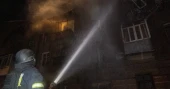
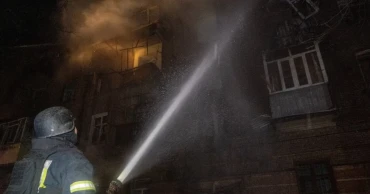
Russian strikes on Ukraine killed at least one person and injured 23 others overnight into Saturday, as negotiators from Ukraine, Russia, and the United States met in Abu Dhabi for a second day of talks aimed at ending Russia’s nearly four-year full-scale invasion.
Kyiv City Military Administration head Tymur Tkachenko said one person was killed and four others wounded in Russian drone attacks on the Ukrainian capital. In Kharkiv, Ukraine’s second-largest city, drone strikes injured 19 people, Kharkiv Mayor Ihor Terekhov reported Saturday.
The attacks coincided with the continuation of three-way talks in the United Arab Emirates, marking the first known instance of officials from the Trump administration engaging directly with both countries to push for progress toward ending the conflict.
The UAE foreign ministry said the talks are intended “to promote dialogue and identify political solutions to the crisis,” while the White House called Friday’s first day productive.
Diplomatic activity has intensified in recent days, from Switzerland to Moscow, although major obstacles remain, particularly regarding territorial issues. Ukrainian President Volodymyr Zelenskyy told a Davos forum on Thursday that a potential peace deal is “nearly ready,” but key sticking points remain unresolved.
Just hours before the talks began, Russian President Vladimir Putin held overnight discussions with Trump’s envoys Steve Witkoff and Jared Kushner on a Ukraine settlement. The Kremlin maintains that Kyiv must withdraw its troops from areas in the east that Russia illegally annexed but has yet to fully control for any deal to succeed.
6 months ago
Zelensky calls Abu Dhabi talks step toward ending war
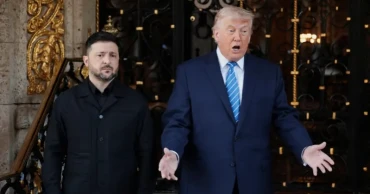
Ukrainian President Volodymyr Zelensky said the first trilateral talks involving Ukraine, Russia and the United States could be a step toward ending the war, as negotiators head to Abu Dhabi.
Zelensky said the status of eastern Ukraine’s Donbas region will be the key issue at the talks, adding that different outcomes are possible. He said he hopes for a positive result.
The meeting is expected to be the first time since Russia’s full-scale invasion in February 2022 that all three sides take part in talks linked to a possible settlement.
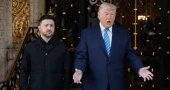
Zelensky said he discussed Donbas with US President Donald Trump on the sidelines of the World Economic Forum in Davos. He also said the two leaders finalised future US security guarantees for Ukraine if a deal is reached, and talked about additional air defence needs.
The talks come after Russia’s President Vladimir Putin met Trump’s envoys Steve Witkoff and Jared Kushner in Moscow. The Kremlin described that discussion as useful and very frank.
Speaking on Air Force One, Trump said he believed both Putin and Zelensky want to make a deal, but said it remains to be seen what happens.
Meanwhile, Ukrainian officials reported continued Russian strikes. Emergency services said four people, including a five-year-old boy, were killed in a drone attack in eastern Ukraine. Kyiv Mayor Vitali Klitschko again urged residents to consider leaving the city as thousands of buildings remain without heating during freezing temperatures.
With inputs from BBC
6 months ago
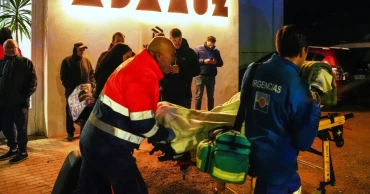
Spain begins 3 days of mourning after deadly train crash
Spain on Tuesday began three days of national mourning for the victims of a deadly train accident in the country’s south, as emergency crews continued searching the wreckage for possible additional bodies.
Flags were lowered to half-staff across the country as the official death toll from Sunday’s crash climbed to 40 by late Monday. Authorities, however, warned that the figure may rise further, with rescuers still combing through what Andalusia’s regional president Juanma Moreno described as “a twisted mass of metal.”
Interior Minister Fernando Grande-Marlaska told Spanish state broadcaster RTVE that search teams believe three more bodies remain trapped inside the wreckage, though they have not yet been added to the official death count.
The accident occurred around 7:45pm on Sunday when the rear section of a train carrying 289 passengers from Malaga to Madrid derailed and collided with an oncoming train travelling from Madrid to the southern city of Huelva, rail operator Adif said.
Spain train crash kills at least 39, dozens injured
The front of the second train, which was carrying nearly 200 passengers, bore the brunt of the impact. The collision forced its first two carriages off the track and sent them plunging down a four-metre slope. Some victims were found hundreds of metres from the crash site, Moreno said.
Investigators are continuing to probe the cause of the crash, which Spanish Transport Minister Óscar Puente described as “strange” since it occurred on a straight stretch of track and neither train was travelling at excessive speed. Puente said a broken section of track had been discovered, though it remains unclear whether it was the cause or the result of the derailment.
Ukrainian drone strike kills one, injures three in Russian city of Voronezh
Prime Minister Pedro Sánchez visited the crash site near the town of Adamuz on Monday and declared three days of mourning, ordering flags to be flown at half-mast on all public buildings and navy vessels. King Felipe and Queen Letizia are scheduled to visit the area on Tuesday.
Meanwhile, Spain’s Civil Guard is collecting DNA samples from relatives who fear their loved ones may be among the unidentified victims.
6 months ago
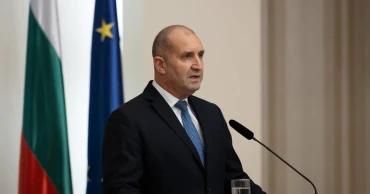
Bulgaria’s President Rumen Radev announces resignation
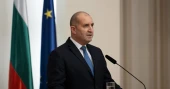
Bulgaria’s left-leaning President Rumen Radev said on Monday that he is stepping down from office.
In a televised address, Radev said he would formally submit his resignation to the Constitutional Court on Tuesday.
Trump links Greenland rivalry to not receiving Nobel Peace Prize
According to the constitution, Vice President Iliana Yotova will be sworn in by parliament and take over the presidency for the remainder of the government’s term.
Radev’s decision comes amid widespread speculation that he is preparing to launch a new political party.
6 months ago
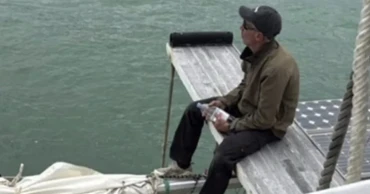
Russian court jails US Navy veteran for 5 years
A Russian court has sentenced an American citizen to five years in prison on charges of illegally transporting a firearm, court officials said on Monday.
Charles Zimmerman, 58, was convicted by a court in the Black Sea resort city of Sochi after a gun was found on his yacht in June, according to the press service of the Krasnodar regional courts. The weapon was discovered during an inspection when the vessel arrived in Sochi.
Court records reviewed by The Associated Press showed that Zimmerman was convicted in October, and the verdict was upheld two months later by the Krasnodar regional court.
Zimmerman told the court that he had travelled to Russia to meet a woman he had contacted online and said he carried the gun for self-defence, unaware of Russian laws. The court said he fully admitted guilt.
Russia expels British diplomat over spying allegations
A website supporting Zimmerman describes him as a US Navy veteran, an electrician and a father of two. His family, however, has rejected the charges, calling them a “set-up” aimed at securing a future prisoner exchange.
His sister, Robin Stultz, said Zimmerman had been sailing from the United States to New Zealand and had no intention of entering Russia. She claimed he voluntarily declared the firearm and was then charged with arms smuggling.
There was no immediate comment from US officials.
Zimmerman is among several Americans still held in Russia following a series of high-profile prisoner swaps in recent years, as relations between Moscow and Washington remain at their lowest point since the Cold War.
6 months ago
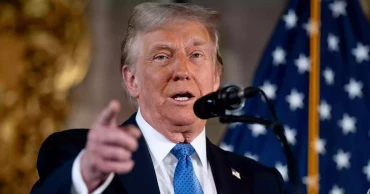
Trump links Greenland rivalry to not receiving Nobel Peace Prize
US President Donald Trump has said he no longer feels bound to think only about peace after not receiving the Nobel Peace Prize, as he again pressed his demand for US control over Greenland.
In a message sent to Norwegian Prime Minister Jonas Gahr Støre, Trump blamed Norway for not awarding him the prestigious prize and said the decision had changed his outlook.
“Considering your country decided not to give me the Nobel Peace Prize for having stopped eight wars plus, I no longer feel an obligation to think purely of peace, although it will always be predominant, but can now think about what is good and proper for the US,” Trump said in the message obtained by US media.
He added that “the world is not secure unless we have complete and total control of Greenland”.
CBS News, confirmed the authenticity of the message.
Prime Minister Støre said he received the text on Sunday in response to a message he and Finnish President Alexander Stubb had sent to Trump. He said they had opposed proposed US tariff increases linked to the Greenland dispute and urged de-escalation, proposing a three-way phone call the same day.
Nato members warn Trump’s Greenland tariff threat could trigger ‘dangerous downward spiral’
Støre also pointed out that the Nobel Peace Prize is awarded by an independent committee, not by the Norwegian government.
Trump has repeatedly said the United States needs to take over Greenland for national security reasons. The sparsely populated but resource-rich Arctic island is seen as strategically important for early warning systems against missile attacks and for monitoring shipping routes in the region.
He has again insisted that the US should buy Greenland and has not ruled out the use of military force against a Nato ally to take control of the territory.
Over the weekend, Trump said he would impose a 10 percent tariff on goods from eight Nato allies from February if they oppose his proposed takeover of Greenland, and warned the tariff could rise to 25 percent by June.
In his message to Støre, Trump said Denmark could not protect Greenland from Russia or China and questioned Denmark’s claim of ownership.
“I have done more for Nato than any other person since its founding, and now Nato should do something for the United States,” he said.
UK Prime Minister Sir Keir Starmer said on Monday that any decision on Greenland’s future “belongs to the people of Greenland and the Kingdom of Denmark alone” and described the use of tariffs against allies as wrong.
Danish Defence Minister Troels Lund Poulsen and Greenlandic Foreign Affairs Minister Vivian Motzfeldt were due to meet Nato Secretary General Mark Rutte on Monday. Last week, Denmark and Greenland, along with Nato allies, agreed to increase military presence and exercises in the Arctic and the North Atlantic, with several European countries sending small numbers of troops to Greenland on a reconnaissance mission.
EU to convene emergency summit Thursday over Trump’s Greenland threats
Trump has claimed he ended eight wars since beginning his second term last year. This year’s Nobel Peace Prize was awarded to Venezuelan opposition leader María Corina Machado.
After US forces later seized Venezuelan President Nicolás Maduro and removed him from Caracas on drug trafficking charges and other crimes, Trump did not back Machado as the country’s next leader and instead supported Maduro’s vice-president as interim head of government.
Machado, who has praised Trump, met him at the White House last week and handed her medal to him. The Nobel Foundation said the award cannot be passed on, even symbolically.
#With inputs from BBC
6 months ago
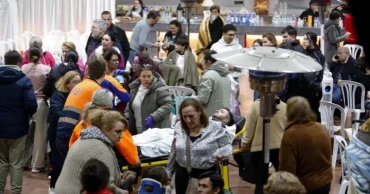
Spain train crash kills at least 39, dozens injured
At least 39 people were killed and 159 others injured after two high-speed trains collided in southern Spain late Sunday, with rescue operations continuing through the night, Spanish police said on Monday.
The crash happened around 7:45 pm when the rear section of a train carrying about 300 passengers from Malaga to Madrid derailed and slammed into an oncoming train traveling from Madrid to Huelva, according to rail operator Adif. The collision occurred near the town of Adamuz in the province of Cordoba, about 370 kilometers south of Madrid.
Authorities said five of the injured were in critical condition, while 24 others were seriously hurt. Transport Minister Óscar Puente said the death toll was not final and warned that the number could rise.
Videos and photographs from the scene showed twisted train carriages lying on their sides under floodlights as emergency crews worked through the night. Passengers were seen climbing out of shattered windows, some using emergency hammers to escape.
Salvador Jiménez, a journalist with Spanish broadcaster RTVE who was on one of the derailed trains, said passengers felt a violent jolt moments before the derailment.
“There was a moment when it felt like an earthquake and the train had indeed derailed,” he told the network by phone.
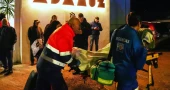
In Adamuz, a local sports centre was converted into a temporary hospital, while the Spanish Red Cross set up an assistance centre for victims and their families. Members of the civil guard and civil defence remained at the site overnight.
Transport Minister Puente described the accident as “truly strange”, noting that it occurred on a flat stretch of track renovated in May and involved a train that was less than four years old. The derailed train belonged to private operator Iryo, while the second train was operated by state-run company Renfe.
He said the rear of the first train jumped the tracks and crashed into the front of the second, knocking its first two carriages off the line and down a four-metre slope. An investigation into the cause of the crash could take up to a month, he added.
Spanish Prime Minister Pedro Sánchez expressed condolences to the victims’ families, calling it “a night of deep pain for our country.”
Train services between Madrid and cities in Andalusia were cancelled on Monday.
Spain has Europe’s largest high-speed rail network, with more than 3,100 kilometres of track. More than 25 million passengers travelled on Renfe’s high-speed trains in 2024.
6 months ago
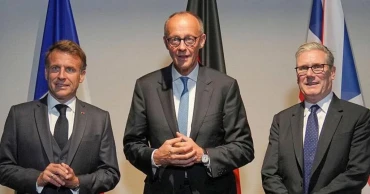
Nato members warn Trump’s Greenland tariff threat could trigger ‘dangerous downward spiral’
Eight Nato member states have warned that US President Donald Trump’s threat to impose tariffs over Greenland risks setting off a “dangerous downward spiral,” as they reaffirmed their commitment to sovereignty and territorial integrity.
In a joint statement, the leaders of Denmark, Finland, France, Germany, the Netherlands, Norway, Sweden and the United Kingdom said they stand in full solidarity with the Kingdom of Denmark and the people of Greenland.
Trump threatens 10% tariff on 8 European countries over Greenland stance
The warning came a day after Trump announced plans to impose a 10% tariff on goods from the eight countries from February 1, with the rate set to rise to 25% in June.
The Nato allies said they were ready to engage in dialogue based on the principles of sovereignty and territorial integrity, which they said they firmly uphold.
All eight countries stressed their shared commitment to strengthening Arctic security as a transatlantic priority. They said a recent Danish military exercise in Greenland, named Arctic Endurance, reflected that commitment and posed no threat to any country.
Meanwhile, thousands of people have taken to the streets in Greenland and Denmark to protest against Trump’s tariff plans.
#With inputs from BBC
6 months ago
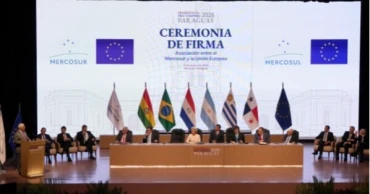
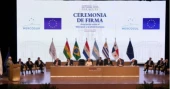
European Union and Mercosur bloc of South American nations sign landmark free trade agreement
The European Union (EU) and the Mercosur bloc of South American countries formally signed a landmark free trade agreement on Saturday, ending more than 25 years of negotiations and aiming to strengthen commercial ties amid rising global protectionism and trade tensions.
The signing took place in Asuncion, Paraguay, with leaders from Argentina, Brazil, Paraguay, Uruguay, and EU officials attending. Bolivia, Mercosur’s newest member, is not part of the deal but may join in the future, while Venezuela remains suspended.
The agreement will gradually remove over 90% of tariffs on goods such as Argentine beef and German cars, creating one of the world’s largest free trade zones, benefiting more than 700 million consumers.
EU Commission President Ursula von der Leyen called the deal a stand against protectionism, emphasizing fair trade and long-term partnerships. Brazilian President Luiz Inácio Lula da Silva hailed it as a victory for global cooperation, highlighting the commitment of both regions to democracy and multilateralism.
The deal faced delays over European demands for environmental standards, deforestation rules, and protections for farmers. Some European nations, including France, remain cautious, and the agreement still requires ratification by the European Parliament.
The accord has also revitalized Mercosur’s relevance. Argentine President Javier Milei, who previously criticized the bloc, expressed strong support, saying Argentina recognizes that protectionism leads to economic stagnation.
Once ratified, the EU-Mercosur free trade deal will mark a major geopolitical and economic milestone, deepening ties between South America and Europe and signaling a commitment to open trade in a protectionist global environment.
6 months ago
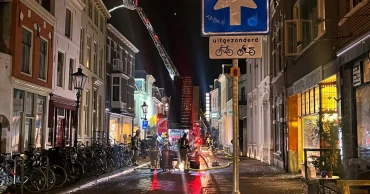
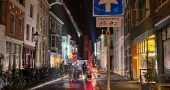
Explosion damages homes and injures at least 4 in the Netherlands
At least four people were injured after an explosion rocked a residential street in the centre of the Dutch city of Utrecht on Thursday, according to emergency services.
The cause of the blast was not immediately known. The explosion sparked a fire and caused extensive damage to nearby homes, forcing people to flee into surrounding shopping streets.
Firefighters rushed to the scene and battled the blaze but were initially unable to enter the damaged buildings due to concerns over structural stability.
Emergency services spokesman Sjaak Haasnoot said the four injured were taken to hospital, though the severity of their injuries was not yet confirmed. He added that it remained unclear whether anyone had been killed.
'All options are on the table' in emergency UN meeting, US warns Iran
“At this moment, it is very difficult to say how many people may be trapped under the rubble,” Haasnoot said, noting that firefighters could not yet enter the unstable building.
Rescue teams were working to determine how they could safely search through the debris to check for possible victims. Residents whose homes were damaged were being temporarily accommodated in a nearby hotel.
Police have launched an investigation into the incident, Utrecht Mayor Sharon Dijksma told reporters.
“This explosion has had a huge impact on the heart of our city. Everyone is deeply shocked, especially those living in the immediate area,” she said.
6 months ago