Europe
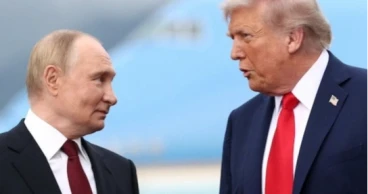
Trump, Putin discuss Iran conflict, Ukraine settlement in phone call
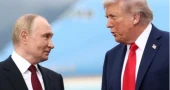
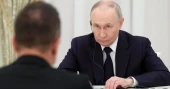
Russian President Vladimir Putin and U.S. President Donald Trump spoke by phone on Monday evening in a businesslike and constructive conversation that focused on the ongoing Iran conflict and efforts toward a settlement of the Ukraine war, the Kremlin said.
Kremlin aide Yuri Ushakov told reporters that Trump initiated the call and underlined his interest in a swift ceasefire and long‑term settlement in Ukraine. The two leaders agreed to maintain regular communications after a long gap in direct contact.
Putin outlined considerations for the earliest political and diplomatic resolution of the Iran conflict, including consultations with Persian Gulf leaders, Iran’s president and other international figures. Trump provided his assessment of developments tied to the ongoing U.S.‑Israeli military operations in the region.
Putin also briefed Trump on recent combat developments in Ukraine, saying Russian troops were advancing successfully — a factor he said could encourage Kyiv to pursue negotiated settlement talks.
The presidents also touched on Venezuela in the context of the global oil market. Ushakov described the nearly hour‑long call as substantive and of practical importance for future cooperation between the two countries on international policy matters.
This was the first known phone contact between Putin and Trump since late December 2025.
4 months ago
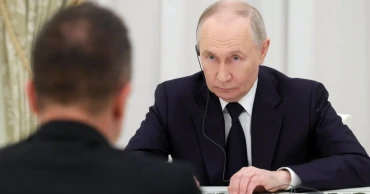
Russia may halt EU gas supplies earlier than planned, says Putin
Russian President Vladimir Putin said Russia could stop supplying natural gas to European Union countries sooner than expected, citing commercial reasons.
In a Wednesday interview, Putin said the EU plans “to introduce new restrictions on the purchase of Russian gas in a month, and in a year to tighten them to a complete ban.”
“Other markets are now opening up. Maybe it would be more profitable for us to stop supplies to the European market right now, and establish ourselves in new export directions,” he added, stressing there is no political motive and that these were merely “thoughts out loud,” not a formal decision.
In January, the Council of the European Union approved a ban on Russian pipeline gas and liquefied natural gas (LNG), set to take full effect in January 2027 for LNG and autumn 2027 for pipeline gas.
In 2025, Russia accounted for about 13 percent of total EU gas imports from pipeline gas and LNG combined, the council said.
4 months ago
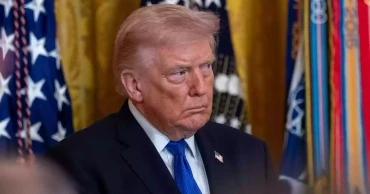
Spain denies US military base access, rejects Trump’s trade threats
Spain on Wednesday denied reports that it had agreed to allow the United States to use its military bases for operations in the Middle East, contradicting claims by the White House.
Spanish Foreign Minister José Manuel Albares said the government’s position “has not changed one iota” regarding the war in Iran and the use of Spanish bases. Albares’ remarks came after a White House spokesperson claimed Spain had agreed to cooperate with the U.S. military.
President Donald Trump earlier threatened to “cut off all trade with Spain,” citing NATO spending disputes and Spain’s refusal to let American forces use its bases in southern Spain for strikes on Iran. Spanish Prime Minister Pedro Sánchez said his government would not “be complicit in something that is bad for the world” and reiterated that Spain’s position could be summarised in four words: “No to the war.”
Sánchez warned that the conflict could escalate into a costly Middle East quagmire, similar to past U.S. interventions in Iraq and Afghanistan.
Trump had referred to the Rota and Morón bases, jointly operated by Spain and the U.S., saying, “We could just fly in and use it… nobody’s going to tell us not to use it, but we don’t have to.”
U.S. Treasury Secretary Scott Bessent said Spain’s stance “puts American lives at risk,” while the EU pledged to protect member states’ trade interests. Spanish business groups expressed concern over the threat, noting that U.S.-Spain trade accounts for around 1 percent of the country’s GDP.
Spain’s refusal adds to growing tensions with Washington, following disagreements over NATO spending and criticism of military actions in Gaza and the Middle East.
4 months ago
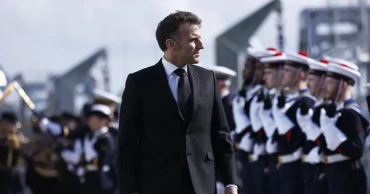
France expands nuclear shield to European allies
France will expand its nuclear arsenal and extend its deterrence framework to several European partners, marking what officials describe as the most significant shift in French nuclear doctrine in decades.
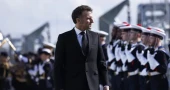
President Emmanuel Macron announced the changes during a speech to naval officers at the Ile Longue base near Brest in Brittany, warning that the coming decades would be shaped by nuclear risks amid a deteriorating global security environment.
Macron said France would increase its current stockpile of roughly 300 nuclear warheads and confirmed plans to launch a new nuclear-armed submarine, to be named “The Invincible,” in 2036.
Under a new “advanced deterrence” strategy, eight European countries – the UK, Germany, Poland, the Netherlands, Belgium, Greece, Sweden and Denmark – have agreed to participate in expanded cooperation. These nations may join exercises involving France’s air-based nuclear forces and potentially host air bases for French nuclear-capable aircraft.
Macron said dispersing France’s Strategic Air Forces across Europe would complicate any adversary’s military calculations. He also outlined plans for joint development of supporting capabilities, including space-based early warning systems, air defence against drones and missiles, and long-range conventional strike systems.
Despite the broader framework, Macron stressed that France’s president would retain sole authority over the decision to use nuclear weapons. There will be no formal nuclear guarantee extended to partner nations, maintaining continuity with the principles established under former president Charles de Gaulle.
France and the UK remain the only nuclear-armed states in Europe. Paris already cooperates closely with London on deterrence matters, and British officials recently joined French nuclear air force exercises for the first time.
Following Macron’s speech, France and Germany issued a joint statement pledging closer collaboration in nuclear deterrence. The agreement, signed with German Chancellor Friedrich Merz, said Berlin would take part in French nuclear exercises this year and work with European partners on strengthening conventional military capacities.
Both governments emphasized that the initiative would complement, not replace, NATO’s nuclear deterrence framework.
Macron also signalled a shift toward greater strategic ambiguity, saying France would no longer publicly disclose the size of its nuclear arsenal. He reiterated that any attack threatening France’s vital interests would come at an “unsustainable price,” while leaving the exact scope of those interests undefined.
Polish Prime Minister Donald Tusk welcomed the move, saying European countries were strengthening defences together to deter potential aggression.
The announcement reflects growing concerns in Europe over global instability and shifting geopolitical alignments, with France positioning itself at the centre of a more coordinated continental defence posture.
With inputs from BBC
5 months ago
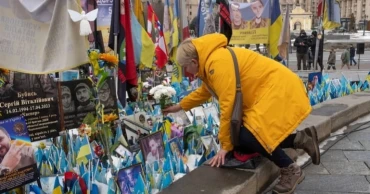
Zelenskyy says Putin has ‘not broken’ Ukrainians as war enters fifth year
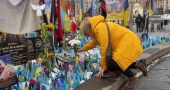
Ukrainian President Volodymyr Zelenskyy said Russia has failed to “break” Ukrainians or achieve victory, marking four years since Moscow launched its full-scale invasion that has killed tens of thousands and reshaped Europe’s security landscape.
Speaking on Tuesday, Zelenskyy said Ukraine had defended its independence despite relentless attacks from Russia’s larger and better-equipped military, which still occupies nearly one-fifth of Ukrainian territory. He insisted that Kyiv’s statehood remains intact and Moscow’s key goals have not been met.
The anniversary drew strong international support, with more than a dozen senior European leaders visiting Kyiv to show solidarity. The war has caused massive hardship for civilians, with repeated airstrikes destroying homes and disrupting electricity and water supplies.
Despite diplomatic efforts led by the United States, negotiations remain stalled over the future of the Donbas region and long-term security guarantees sought by Ukraine to prevent another invasion. Zelenskyy also invited US President Donald Trump to visit Ukraine to better understand the human cost of the war.
Western officials say Moscow is banking on prolonged fighting to erode Ukraine’s resistance and weaken international backing. However, European leaders warned that the conflict threatens wider regional stability and stressed continued unity in supporting Kyiv.
As the war grinds into its fifth year, both sides face heavy troop losses and growing reliance on drone warfare, while Ukraine’s long-term reconstruction is estimated to cost nearly $588 billion over the next decade.
5 months ago
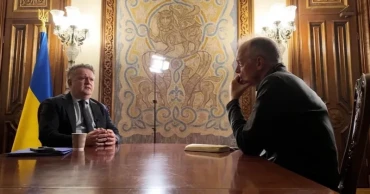
Ukraine negotiator describes tense talks with Russia
A senior Ukrainian negotiator has offered a rare insight into what it is like to sit face to face with Russian representatives amid ongoing efforts to halt the war, saying military-level talks are largely pragmatic but stopping the conflict ultimately depends on political will in Moscow.
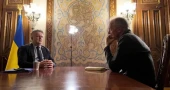
Sergiy Kyslytsya, a member of President Volodymyr Zelenskyy’s delegation, told the BBC that recent military-to-military discussions with Russia were generally business-like and free from the ideological rhetoric often heard from the Kremlin in public forums.
“The military has a better understanding of what is happening on the battlefield,” Kyslytsya said during an interview at the presidential palace. He added, however, that it remains uncertain whether Russian officers accurately convey realities on the ground to their political leadership.
His comments come ahead of a possible new round of US-mediated talks in Geneva later this week, following several previous discussions that have failed to produce a breakthrough nearly four years after Russia’s full-scale invasion of Ukraine.
Kyslytsya said the complexity of disengagement is heightened by conditions on the battlefield in eastern Ukraine, where thousands of drones operate across a vast so-called grey zone and about 200,000 civilians still live in heavily fortified Donbas cities. Any ceasefire, he stressed, would require detailed rules, clear protocols and reliable verification mechanisms.
Much of the technical groundwork for such arrangements has already been completed, he said, with significant input from US officials. Kyslytsya praised Washington’s role, noting that American representatives actively participate in discussions rather than merely observing.
He also spoke positively about the involvement of US figures including Jared Kushner and Steve Witkoff, describing them as experienced and constructive participants in the process.
According to Kyslytsya, the United States is expected to play a central role in monitoring any future ceasefire, using satellite imagery and other advanced technologies. He said a credible and authoritative third party would be essential to adjudicate violations.
Previously, this role was held by the Organization for Security and Co-operation in Europe, but Kyslytsya said its limited resources and lack of enforcement power left it unable to prevent escalation before the 2022 invasion.
A former Ukrainian ambassador to the United Nations, Kyslytsya said he has long experience dealing with Russian diplomats. He recalled being at an emergency UN Security Council meeting on February 23, 2022, when he learned Ukraine was under attack. He said Russian ambassador Vassily Nebenzia declined to contact Foreign Minister Sergei Lavrov for assurances as the invasion loomed.
Kyslytsya said that moment marked a turning point, after which he remained at the UN for three more years before returning to Kyiv.
Looking ahead to possible talks in Geneva, he said negotiations continue to focus on the mechanics of a ceasefire but argued the war could end swiftly if Russia’s leadership chose to act.
“The war could be stopped by just one call,” he said, adding that Russian President Vladimir Putin has so far shown no readiness to take that step.
With inputs from BBC
5 months ago
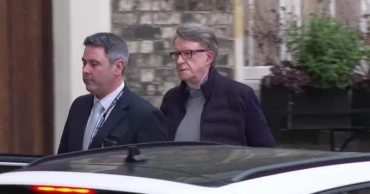
Mandelson arrested over alleged misuse of state information
British politician Lord Peter Mandelson has been arrested on suspicion of misconduct in public office, as police investigate allegations that he shared market-sensitive government information with the late financier Jeffrey Epstein while serving as a minister.
The Metropolitan Police said a 72-year-old man was detained on Monday at a residence in Camden, north London, and taken to a police station for questioning. The arrest followed the execution of search warrants at properties in Camden and Wiltshire earlier this month.
According to police, the probe centres on claims that Mandelson passed confidential government assessments and policy-related details to Epstein during his time in office. The investigation was launched after documents released last month by the US Department of Justice included email exchanges between the two men.
Mandelson has not commented publicly on the allegations in recent weeks. However, the BBC reported that his position is that he did not act criminally and was not driven by financial gain.
In one email dating back to 2009, Mandelson appeared to relay an adviser’s assessment prepared for then prime minister Gordon Brown, referring to proposed policy steps including an asset sales plan. Other correspondence suggested discussions on a tax on bankers’ bonuses and confirmation of a Eurozone bailout package a day before its official announcement in 2010.
Mandelson was appointed British ambassador to the United States in February 2025 but was removed from the post in September, after Downing Street said fresh details had emerged about the extent of his association with Epstein.
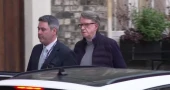
On Monday afternoon, Mandelson was seen being escorted from his London home by plain-clothes officers and placed into an unmarked vehicle. Sources said officers from the Met’s central specialist crime division carried out the arrest, with consultations between police and prosecutors continuing.
The government has said it plans to release initial documents linked to Mandelson’s appointment in early March, although officials indicated discussions are ongoing with police over what material can be made public while the investigation continues.
Political reaction was swift, with opposition figures saying the arrest raised serious questions about the prime minister’s judgment in appointing Mandelson to a senior diplomatic role.
With inputs from BBC
5 months ago
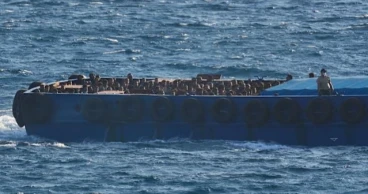
Around 30 feared dead as migrant boat capsizes off Crete
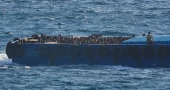
About 30 people are feared dead after a migrant boat capsized off the Greek island of Crete, Greek authorities and the United Nations’ International Organization for Migration (IOM) said Monday.
The vessel, carrying roughly 50 migrants, sank on Saturday about 20 nautical miles from the port of Kali Limenes, the southernmost point of Crete. Three men were recovered dead on the day of the accident, and a woman’s body was found floating on Sunday.
No other survivors or victims have been located so far, though passing ships continue to search the area, a coast guard spokesperson told The Associated Press.
According to survivors, the boat had departed from Tobruk, Libya, on Thursday. Authorities said high winds were reported in the region on Saturday. Two Sudanese men, aged 25 and 19, have been arrested as suspected traffickers.
The IOM said Monday that at least 606 migrants have already been reported dead or missing along the Mediterranean route in the first two months of 2026, marking the deadliest start to a year in the Mediterranean since the IOM began tracking such data in 2014.
The organization warned that human trafficking and smuggling networks continue to exploit migrants along the Central Mediterranean route, forcing them onto unsafe vessels and exposing them to severe abuse.
The IOM stressed that stronger international cooperation and protection-focused measures are essential to dismantle these criminal networks, expand safe migration routes, and save lives.
5 months ago
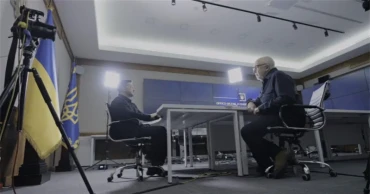
Zelensky says Putin has triggered World War III, rejects territorial concessions
Ukrainian President Volodymyr Zelensky has said Russian leader Vladimir Putin has already started World War III, insisting that only sustained military and economic pressure can force Moscow to retreat, while firmly rejecting any ceasefire deal based on Ukraine surrendering territory.
In an interview with BBC at the heavily guarded government headquarters in Kyiv, Zelensky said Ukraine would not pay the price demanded by Russia, including withdrawal from strategic areas Moscow has failed to fully capture despite heavy losses.
He dismissed Russian demands that Ukraine hand over parts of eastern Donetsk and additional land in the southern regions of Kherson and Zaporizhzhia, saying such a move would mean abandoning hundreds of thousands of Ukrainians and would fracture society. Any pause achieved through concessions, he warned, would only allow Russia time to regroup and resume the war.
Zelensky said stopping Putin and preventing the occupation of Ukraine would be a victory not only for his country but for the entire world, arguing that Moscow’s ambitions would not end with Ukraine. While reaffirming Ukraine’s ultimate goal of restoring its internationally recognised 1991 borders, he said attempting to retake all territory immediately would cost an unacceptable number of lives and requires greater support from partners.
Responding to scepticism from some Western analysts and pressure from Donald Trump, Zelensky said Ukraine is not losing the war and is fighting for its independence. He acknowledged uncertainty over Washington’s position but stressed that lasting US security guarantees must be approved by Congress to outlast changing administrations.
Zelensky also addressed calls for Ukraine to hold elections, saying they could only be considered after credible security guarantees are in place, given martial law, millions of refugees abroad and Russian occupation of parts of the country.
He reiterated his appeal for stronger air defence, including permission to produce US-made systems such as Patriot missiles under licence, noting that Ukraine has yet to receive approval for domestic manufacturing.
Despite corruption scandals and wartime pressures, Zelensky said Ukraine would continue pursuing parallel diplomatic, military and economic efforts to stop Russia, expressing confidence that sustained pressure would eventually force Moscow to step back.
With inputs from BBC
5 months ago
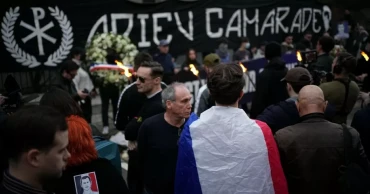
France to summon US Ambassador over remarks on far-right activist’s death
France will summon U.S. Ambassador Charles Kushner to protest remarks by the Trump administration regarding the fatal beating of a far-right activist, the French Foreign Affairs Minister Jean-Noel Barrot said on Saturday.
Barrot’s statement came after the U.S. State Department’s Counterterrorism Bureau posted on X that “reports, corroborated by the French Minister of the Interior, that Quentin Deranque was killed by left-wing militants, should concern us all.”
France rushes to avert US-style government shutdown after budget talks fail
Deranque, a far-right activist, died last week in Lyon from brain injuries sustained during an attack linked to a scuffle at a student meeting, where far-left lawmaker Rima Hassan was the keynote speaker. The incident has fueled concerns over rising political tensions ahead of France’s next presidential election.
President Emmanuel Macron urged calm as around 3,000 people marched in Lyon in tribute to Deranque, organized by far-right groups. Barrot condemned attempts to politicize the tragedy, saying, “We reject any instrumentalization of this tragedy, which has plunged a French family into mourning, for political ends. We have no lessons to learn, particularly on the issue of violence, from the international reactionary movement.”
The State Department’s post described “violent radical leftism” as a growing threat and said the U.S. will monitor the situation and expect justice for those responsible. Seven individuals have faced preliminary charges. Six were charged with intentional homicide, aggravated violence, and criminal conspiracy, while a seventh was charged with complicity in the same crimes, the Lyon public prosecutor’s office said.
France plans new aircraft carrier amid boost in defense spending
Barrot also plans to raise U.S. sanctions against former EU commissioner Thierry Breton and French ICC judge Nicolas Guillou, calling them “unjustified and unjustifiable.” The Foreign Affairs Ministry has not announced a date for the meeting.
Kushner had previously been summoned in August last year over a letter to Macron accusing France of insufficient action against antisemitism; French officials met with his representative after the ambassador did not attend.
5 months ago