Middle-East
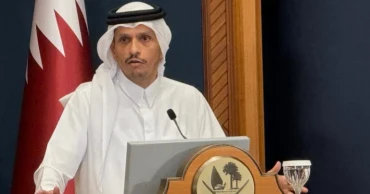
Qatar, Saudi Arabia discuss US-Iran agreement and regional developments
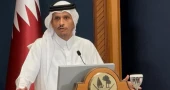
Qatari Prime Minister and Foreign Minister Sheikh Mohammed bin Abdulrahman Al Thani and Saudi Foreign Minister Prince Faisal bin Farhan Al Saud held a telephone conversation to discuss the recently signed memorandum of understanding between the United States and Iran and its implications for the region.
According to Qatar’s Foreign Ministry, the two leaders reviewed bilateral relations and exchanged views on regional developments following the signing of the agreement between Washington and Tehran.
Both Qatar and Saudi Arabia, key energy producers in the Gulf, have long supported diplomatic efforts to secure a deal between Iran and the United States, seeking to prevent further instability that has disrupted the region and affected vital oil and gas exports.
In a separate phone call, Sheikh Mohammed also spoke with Egyptian Foreign Minister Badr Abdelatty, with the US-Iran agreement featuring prominently in their discussions.
The Qatari Foreign Ministry said the two ministers discussed bilateral ties as well as the latest developments related to the accord reached between Washington and Tehran.
During the conversation, Sheikh Mohammed reaffirmed Qatar’s support for resolving outstanding issues through dialogue and peaceful means in accordance with international law, the ministry said.
Source: Al Jazeera
1 month ago
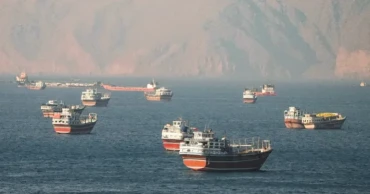
11 Iranian ships pass through US naval blockade after MoU, state media says
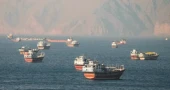
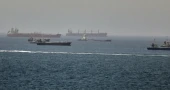
Eleven Iranian ships have sailed through a US naval blockade since Tehran and Washington finalised the text of a memorandum of understanding (MoU) on Sunday, according to Iran’s state-run Press TV.
Citing an informed source, the report said eight of the vessels moved from Iran’s territorial waters into international waters, while three others entered Iranian waters.
As previously reported, the MoU includes provisions calling for the United States to end its blockade, while Iran would allow toll-free passage through the Strait of Hormuz for at least 60 days.
#From Al Jazeera
1 month ago
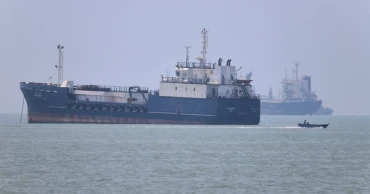
US, Iran sign initial deal to end war, ease sanctions and reopen Strait of Hormuz
President Donald Trump and Iranian President Masoud Pezeshkian signed an initial agreement on Wednesday aimed at ending the war between the two countries, easing sanctions on Tehran and reopening the Strait of Hormuz while broader negotiations over Iran’s nuclear programme continue.
According to details released by both governments, the agreement requires Iran to dilute its stockpile of highly enriched uranium and allows the United States to waive certain sanctions, enabling Tehran to resume oil exports freely.
Pakistani Prime Minister Shehbaz Sharif, whose government helped mediate the talks, said in a post on X that the agreement took “immediate effect” after it was signed by leaders of both countries.
The accord seeks to bring a permanent end to hostilities and launches a 60-day period of negotiations aimed at reaching a final agreement on Iran’s nuclear programme. However, Trump indicated that military action could resume if the process fails.
The deal had remained largely secret for days, with US officials declining to reveal details even after saying Trump and Vice President JD Vance had digitally signed it over the weekend. Trump signed a physical copy on Wednesday while attending a dinner with French President Emmanuel Macron at the Palace of Versailles.
“It’s signed,” Trump told reporters as he left the dinner following his participation in the Group of Seven summit in France.
Video released by the White House showed Trump signing the document beside Macron before handing it to Secretary of State Marco Rubio as those present applauded.
“This was not easy,” Trump said before signing the agreement, according to footage shared by Macron.
In Tehran, state-run IRNA reported that President Pezeshkian signed the accord on behalf of Iran and released photographs showing him holding the document bearing both leaders’ signatures.
Although the full text has not been officially published, US officials outlined draft provisions to reporters on condition of anonymity, while Iranian state television later released similar details.
The agreement would largely restore conditions that existed before the conflict, including ending military operations, resuming nuclear negotiations and reopening the Strait of Hormuz, a vital route for global oil and gas supplies whose closure triggered a major energy crisis.
Under the draft terms, ships will be allowed to pass through the strait without tolls for two months, although future fees are not ruled out.
In return, Washington will move to waive some sanctions imposed on Iran, though they will not be immediately removed.
The agreement also reaffirms support for Lebanon’s territorial integrity amid Israel’s military operations against Hezbollah. This remains one of the most sensitive elements of the deal, as Iran insists Israeli forces must withdraw from occupied areas of Lebanon, a demand Israel has rejected.
The United States and Israel launched military operations against Iran on Feb. 28, arguing they were necessary to prevent Tehran from acquiring nuclear weapons. Trump had previously said the war aimed to curb Iran’s nuclear and missile programmes and its support for regional proxy groups, while at times suggesting it could contribute to regime change in Tehran.
The interim agreement falls short of many of those objectives, though Trump described it as “very strong.”
At the same time, he cautioned that the arrangement could be abandoned if negotiations do not progress.
“It’s a memorandum of understanding, and if I don’t like it, we’ll go back to shooting at them, dropping bombs,” Trump said.
The US decision to immediately permit Iranian oil sales and the prospect of eventually lifting broader sanctions represent significant concessions that go beyond the provisions of the 2015 nuclear agreement between Iran and world powers, from which Trump withdrew during his first term.
Iran continues to insist that its nuclear programme is intended for peaceful purposes.
The agreement is expected to face strong opposition in Washington and could be viewed as a setback for Israeli Prime Minister Benjamin Netanyahu, who has come under growing criticism at home over the handling of the conflict.
Pakistani officials involved in mediation said some benefits for Iran, including the release of frozen assets and the eventual lifting of sanctions, would be implemented gradually and linked to progress in future nuclear talks.
However, the immediate sanctions waivers allowing Iran to export oil remove one of Washington’s key sources of leverage during the upcoming negotiations.
Iran earned more than $46 billion from oil exports in 2024, with China remaining its largest customer despite sanctions.
The agreement also leaves open the possibility of ending all US and UN sanctions against Iran, including measures linked to weapons programmes and human rights concerns. Such a move would go well beyond the scope of the 2015 nuclear accord, which only lifted selected sanctions in exchange for major reductions in Iran’s uranium enrichment activities.
In addition, the deal includes plans for at least $300 billion in reconstruction assistance for Iran, though officials said the funding would depend on future progress in negotiations.
Vice President Vance has suggested Gulf Arab countries could provide much of that investment, though analysts note that regional governments may be reluctant to do so after suffering damage from Iranian attacks during the conflict.
Trump reiterated that the United States would not contribute financially and said other countries would decide independently whether to invest.
The agreement is also expected to provide significant relief to the global economy through the reopening of the Strait of Hormuz, a strategic waterway that previously handled around one-fifth of global oil and natural gas trade.
The closure of the strait during the conflict contributed to higher global energy prices and increased costs for a wide range of goods.
The agreement states that the US naval blockade of Iranian ports will be lifted and that shipping traffic through the strait is expected to return to pre-war levels within 30 days, although it acknowledges that Iranian naval mines may still need to be cleared.
1 month ago
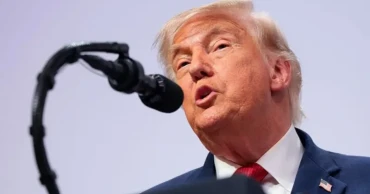
Trump says fate of Iran peace MoU will become clear soon, warns military action could resume
US President Donald Trump has indicated that the planned signing of a memorandum of understanding (MoU) aimed at ending the US-Israeli conflict with Iran could still collapse, despite ongoing preparations for a formal ceremony later this week.
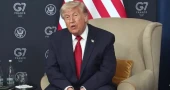
Speaking to reporters on the sidelines of the Group of Seven (G7) Summit in France on Wednesday, Trump said the outcome remained uncertain, adding that the United States could resume military strikes if Iran failed to comply with expected commitments.
“Deals are amazing. I’ve done them all my life,” Trump said during a joint appearance with Indian Prime Minister Narendra Modi. “You never know with deals. But you're going to find out pretty soon. I think it will be done.”
Trump later suggested that the formal signing, previously expected on Friday, could take place earlier, saying it might happen “tomorrow, maybe the next day.”
The proposed MoU is intended to lay the groundwork for ending hostilities between the US, Israel and Iran. Both Washington and Tehran have said the agreement would halt fighting on all fronts, lift the US naval blockade of Iranian ports and reopen the Strait of Hormuz, a critical global energy shipping route.
However, officials from both sides have stressed that the agreement would only mark the beginning of a 60-day negotiating process to address broader issues, including Iran’s nuclear programme, its regional alliances and the future governance of the Strait of Hormuz.
US officials have maintained that the MoU was digitally signed on Sunday, although they acknowledged that either side could still withdraw before the final ceremonial signing.
A senior US official, briefing reporters, said the agreement contains 14 points and includes immediate sanctions waivers for Iran’s energy sector alongside the reopening of the Strait of Hormuz and the lifting of the naval blockade.
According to the official, the document contains limited commitments regarding Iran’s nuclear programme, largely maintaining the current status quo while reaffirming Tehran’s position that it does not seek nuclear weapons.
More contentious issues, including Iran’s stockpile of enriched uranium and the future of its nuclear activities, would be addressed during the subsequent 60-day negotiations.
The MoU also outlines plans for a reconstruction and economic development package worth at least $300 billion, to be developed jointly by the United States and its regional partners to support Iran’s post-war recovery.
The agreement further envisages the gradual lifting of sanctions and the release of frozen Iranian assets, although no specific timetable has been disclosed.
Asked about the proposed reconstruction fund, Trump said the initiative would proceed only if Iran fulfilled its obligations.
“If they’re doing things right,” he said.
Trump also distinguished between releasing frozen Iranian assets and providing new financial assistance.
“We have taken a lot of their money, and we have their money,” he said. “It’s not our money, it’s their money, and we froze it at a certain point in time. I guess we’re going to have to give it back.”
Source: Al Jazeera
1 month ago
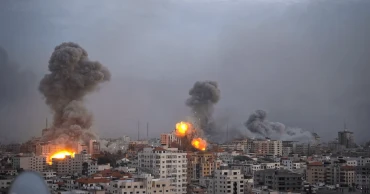
Over 1,000 Palestinians killed in Gaza since ceasefire, Health Ministry says
More than 1,000 Palestinians have been killed in the Gaza Strip since a ceasefire between Israel and Hamas took effect last October, according to Gaza’s Health Ministry.
The ministry said on Wednesday that 1,005 people have been killed in Israeli military operations since the truce began, amid continued airstrikes, shelling and gunfire in various parts of the enclave.
The latest casualties followed a series of Israeli drone strikes over recent days targeting towns, refugee camps in central Gaza and areas of Gaza City.
In the latest incident, an Israeli strike in Khan Younis in southern Gaza killed two Palestinians and injured six others, according to health officials at Nasser Hospital.
The Israeli military confirmed carrying out the strike, saying it targeted a “terrorist,” but provided no further details.
Relatives of the victims told hospital authorities that the attack hit a group of people near the beach in the Mawasi tent camp, where hundreds of thousands of displaced Palestinians are sheltering.
Israel has maintained that it continues to conduct operations against Hamas and other armed groups in Gaza and has expanded the territory under its control inside the enclave.
In a separate statement, the Israeli military said it had killed two militants belonging to Hamas and the Palestinian Islamic Jihad movement in strikes carried out over the weekend.
Meanwhile, Gaza’s Health Ministry said on Sunday that the overall death toll from the Israel-Hamas war, which began in October 2023, has surpassed 73,000.
The ministry does not distinguish between civilian and combatant casualties, though its records are generally regarded by international organizations as credible and are maintained by medical professionals.
1 month ago
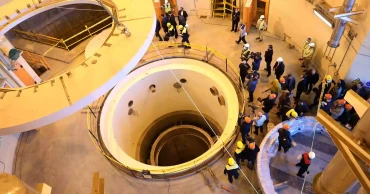
Interim US-Iran deal leaves key nuclear issues unresolved ahead of fresh talks
The interim agreement between the United States and Iran is expected to open a 60-day window for negotiations on Tehran’s nuclear programme, but major questions remain over whether the two longtime adversaries can bridge deep differences on the issue that has long dominated their relations.
US President Donald Trump has said preventing Iran from obtaining a nuclear weapon was a central reason behind the war launched alongside Israel in February. However, the tentative deal announced by Washington leaves the most contentious nuclear issues to be resolved in future talks.
Under the preliminary agreement, Iran is expected to reopen the Strait of Hormuz to international oil shipments and will be permitted to resume unrestricted oil exports, according to US and regional officials.
The accord, scheduled to be formally signed in Switzerland on Friday, also envisages Iran receiving at least $300 billion for post-war reconstruction and includes a US commitment to work toward lifting American and UN sanctions on Tehran if a final nuclear agreement is reached.
The framework agreement has triggered skepticism among lawmakers from both major US political parties, pro-Israel groups and Israeli officials, many of whom question whether a comprehensive nuclear deal can be achieved within the proposed timeline.
Republican Senator Lindsey Graham, a longtime Trump ally and advocate of a hardline policy toward Iran, said the success of any future agreement would depend on Tehran’s willingness to halt uranium enrichment.
“What would a good deal look like? No enrichment. And we’ll see if we can get there,” Graham said, while expressing uncertainty over the prospects of reaching a second-stage agreement.
Analysts have also questioned whether the Trump administration can sustain the intensive diplomatic effort required for a complex nuclear accord.
David Schenker, director of the Arab Politics Program at the Washington Institute for Near East Policy and a former senior State Department official, said nuclear negotiations require sustained attention, technical expertise and detailed engagement.
He argued that reaching a comprehensive agreement would be challenging even if the interim deal is formally signed.
The administration, however, remains confident that the phased structure of the agreement will ensure Iranian compliance.
Vice President JD Vance said many technical aspects still need to be negotiated, but stressed that any economic benefits for Iran would depend on concrete actions rather than promises.
“Our plan under this deal is that the Iranians are getting a lot of benefits so long as they dismantle that nuclear weapons programme,” Vance said in a podcast interview.
He added that the agreement is designed to link incentives such as sanctions relief to measurable steps taken by Tehran.
Iran has consistently maintained that its nuclear programme is intended for peaceful purposes and denies seeking nuclear weapons.
1 month ago
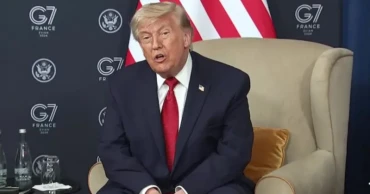
Trump warns of renewed bombing if Iran deal fails
US President Donald Trump said the proposed agreement with Iran remains unfinished and warned that military action could resume if Tehran fails to comply with its commitments.
Speaking during a meeting with Egyptian President Abdel Fattah al-Sisi on the sidelines of the G7 summit on Wednesday, Trump stressed that Washington retained the option of returning to military operations if the agreement proves unsatisfactory.
He also dismissed reports suggesting the United States would invest in Iran or support a reconstruction fund for Tehran as part of a broader settlement.
Earlier in the summit, Trump reiterated that Iran would not be allowed to obtain a nuclear weapon under any future agreement.
On regional security issues, the US president criticised Israeli Prime Minister Benjamin Netanyahu over the ongoing conflict in Lebanon, saying Israel needed to act more responsibly.
During a joint appearance with the Emir of Qatar, Trump said the fighting between Israel and the Iran-backed Hezbollah group had continued for too long and was causing excessive loss of life.
His remarks came as Israel and Hezbollah continued exchanging attacks despite the US-Iran agreement announced on Sunday night.
Turning to the war in Ukraine, Trump said he held a productive meeting with Ukrainian President Volodymyr Zelensky and renewed his call for Russia to reach a peace agreement.
He also indicated that additional sanctions targeting Russian oil exports could be imposed in the near future if efforts to end the conflict fail to progress.
The comments came as G7 leaders wrapped up discussions in France, with global security issues, including Iran, Ukraine and the Middle East, dominating the summit agenda.
Source: BBC
1 month ago
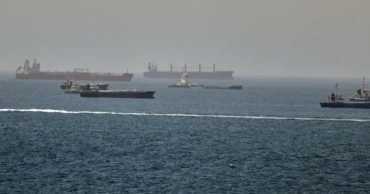
Iran to reopen Strait of Hormuz, resume unrestricted oil exports under proposed US deal
Iran is expected to reopen the Strait of Hormuz and regain the ability to export oil without restrictions under a proposed interim agreement with the United States aimed at ending the ongoing conflict between the two countries, according to leaked versions of the accord and officials familiar with the negotiations.
The agreement, which is scheduled to be formally signed in Switzerland on Friday, reportedly outlines a framework for ending hostilities and launching a two-month period of negotiations on Iran’s nuclear programme.
Under the proposed arrangement, Iran would immediately reopen the strategically important Strait of Hormuz, a key route for global oil and natural gas shipments, while the United States would allow Tehran to resume oil exports. The accord also reportedly includes plans for Iran to receive at least $300 billion for post-war reconstruction and a US commitment to work toward lifting American and United Nations sanctions if a comprehensive nuclear agreement is ultimately reached.
The conflict began on February 28 when the United States and Israel launched military operations against Iran, citing concerns over Tehran’s nuclear ambitions. The interim deal would halt the fighting before any final resolution of those concerns, instead opening the door for further diplomatic negotiations.
The reported concessions to Iran, particularly the immediate resumption of oil exports and the prospect of broader sanctions relief, are expected to draw criticism in Washington. Analysts say the terms appear more favourable to Tehran than those contained in the 2015 nuclear agreement, from which President Donald Trump withdrew during his first term.
The proposed accord would also seek to end hostilities in Lebanon involving Israel and the Iran-backed Hezbollah group, although differences remain over the future of Israeli forces in southern Lebanon.
Several officials and individuals familiar with the discussions said leaked versions of the agreement published by regional and international media outlets largely reflect the contents of the final document. However, neither the White House nor the Iranian government has released an official text.
White House Communications Director Steven Cheung said leaked versions published by media outlets do not fully represent the language of the final agreement but provided no further details.
President Trump, speaking during the G7 summit in France, praised the proposed arrangement, describing it as a strong memorandum of understanding. However, he also warned that the United States could abandon the agreement if it proves unsatisfactory.
“It’s a memorandum of understanding and if I don’t like it, we’ll go back to shooting at them, dropping bombs,” Trump said.
The agreement remains subject to formal signing and could still face political opposition from both US and Israeli leaders, as well as critics concerned about Iran’s nuclear programme and regional influence.
1 month ago
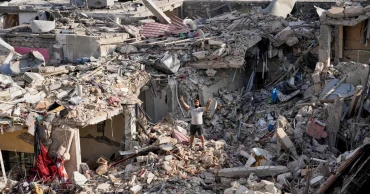
Iran says Israeli withdrawal from Lebanon key condition for ending war with US
Iran's top diplomat on Tuesday said any agreement to end the war with the United States would require Israel to withdraw from southern Lebanon, a condition already rejected by Israel and one that could jeopardize efforts to secure a lasting ceasefire.
The proposed agreement between Washington and Tehran has not yet been made public, and officials involved have at times offered differing interpretations of its terms. Although Israel is not a party to the deal, it has been directly involved in the conflict after joining US strikes against Iran on Feb. 28. Israel has also been engaged in fighting with the Iran-backed Hezbollah group in Lebanon and has taken control of large areas in the country's south.
Iranian Foreign Minister Abbas Araghchi said Israel's continued presence in southern Lebanon would violate the spirit of the agreement.
"Without the withdrawal of Israeli forces from the territories they occupied during this war, the war has not fully come to an end," Araghchi said.
However, a US official familiar with the framework of the agreement said it does not include any requirement for Israel to leave Lebanon. Israeli Prime Minister Benjamin Netanyahu also reiterated on Monday that Israeli forces would remain there "as long as necessary."
Previous attempts to end the conflict have been hindered by similar disagreements, resulting in a fragile ceasefire that failed to evolve into a permanent peace arrangement. The uncertainty has also affected the Strait of Hormuz, a key route for global energy shipments, which remains effectively closed.
Switzerland's foreign ministry said a signing ceremony for the agreement is scheduled for Friday at the Bürgenstock resort near Luzern.
Lebanon issue adds complexity
Pakistan, which helped facilitate negotiations, has said the agreement calls for an end to military operations, including those in Lebanon, in line with Iran's longstanding position. Araghchi's latest remarks, however, have highlighted fresh differences over the issue.
The dispute places Israel in a difficult position as it seeks to weaken Hezbollah's military capabilities while avoiding tensions with its closest ally, the United States. Israel launched its operation in southern Lebanon after Hezbollah fired missiles across the border during the early stages of the war. Since then, Israeli forces have expanded their presence in the area and carried out strikes deep inside Beirut.
Although Hezbollah has suffered significant setbacks, it still retains the ability to launch attacks against Israel, raising questions about the long-term effectiveness of Israel's campaign.
As of Tuesday evening, Netanyahu had not reviewed the memorandum of understanding between the US and Iran, according to a person familiar with the matter who spoke on condition of anonymity. Another source said Israeli officials had not requested a copy of the document from US negotiators.
Netanyahu's office did not immediately comment, while the White House declined to say whether Israeli leaders had been briefed on the agreement.
Israel's ambassador to the United States, Yechiel Leiter, told NPR that while Israel has not seen the details of the agreement, the reported inclusion of Lebanon was "unnecessary and unhelpful."
Differences over Lebanon have also exposed tensions between Washington and Tel Aviv. US President Donald Trump said Tuesday he was dissatisfied with Israel's handling of the conflict with Hezbollah.
"It just goes on forever," Trump said, referring to Israel's strategy.
Israeli military operations in Lebanon have killed nearly 4,000 people, including hundreds of civilians, and displaced more than one million others.
"Israel's fighting Hezbollah too long, and too many people are being killed," Trump said.
Lebanon welcomes ceasefire prospects
Israel and the Lebanese government have held separate US-mediated negotiations that excluded Hezbollah. While several ceasefires were announced during those talks, none were fully implemented.
Lebanese officials initially sought to keep Lebanon separate from the broader US-Iran negotiations but later welcomed indications that a future agreement could include a ceasefire in Lebanon.
Araghchi's comments appear consistent with the understanding of two regional officials familiar with the negotiations. According to them, the draft agreement would require Israel to withdraw from nearly all territory it currently occupies in Lebanon, except for a few strategic hilltop positions along the border.
The officials said Iran pushed for Lebanon to be included in the final phase of negotiations.
The United Nations peacekeeping mission in Lebanon, UNIFIL, reported that exchanges of fire between Israel and Hezbollah continue, though at a significantly reduced level, according to UN spokesman Stephane Dujarric.
Key issues remain unresolved
Several important questions remain ahead of the planned signing ceremony.
The agreement is intended to establish a meaningful truce in a conflict that has killed thousands across the Middle East and contributed to higher prices for fuel, food and other essentials.
According to a senior US official, the deal would provide for the immediate reopening of the Strait of Hormuz and the lifting of the American naval blockade on Iranian ports.
At least two Iranian oil tankers left the country on Tuesday and crossed the US naval blockade without interference, according to shipping-tracking data. The vessels marked Iran's first crude oil exports in two months.
Shipping-monitoring service TankerTrackers.com said the Iranian-flagged tankers Diona and Hero II were carrying a combined 3.8 million barrels of crude oil. US Central Command declined to comment.
Under the agreement, Washington and Tehran are expected to begin a 60-day negotiation process focused on Iran's nuclear programme and the possible easing of sanctions, Pakistani officials involved in mediation said.
The proposed deal also includes the possible release of Iran's frozen assets and the creation of a $300 billion reconstruction fund if Tehran meets certain conditions, according to senior US officials. Trump later clarified that the United States would not directly invest money in Iran.
Questions also remain about how the agreement would address Iran's nuclear activities, including who would verify compliance and what would happen to highly enriched uranium believed to be stored beneath nuclear facilities damaged in US strikes last year.
Regional officials said Iran has agreed to discuss options to dilute or remove the uranium stockpile. However, it remains uncertain whether Tehran's hard-line factions would support such a move.
Trump said he would consider submitting the agreement to the US Congress for review. Some Republican lawmakers have called for more details, while others have expressed doubts that the deal would be sufficient to prevent Iran from pursuing a nuclear weapon.
1 month ago
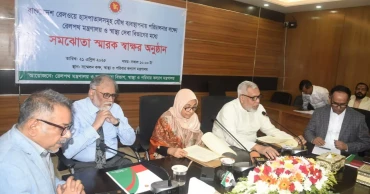
G7 leaders back US-Iran deal, say it’s a ‘historic opportunity’
The G7 leaders have welcomed the announcement of a deal between the US and Iran as a “breakthrough” and an “opportunity” to prevent Iran from acquiring a nuclear weapon.
The leaders said they support the deal and “are ready to contribute to its implementation”.
They called for passage through the Strait of Hormuz without “restrictions or tolls” and said they strongly support a “robust and comprehensive diplomatic follow-on agreement” to the deal to “bring peace and security for all in the region”.
On Lebanon, the G7 leaders expressed support for “an immediate robust ceasefire” and for the Lebanese state’s efforts to disarm Hezbollah.
On Palestine, they pledged to “accelerate humanitarian and reconstruction efforts [in Gaza] and the swift implementation of relevant political and security measures,” while also calling for an end to the “violence in the West Bank”. #From Al Jazeera
1 month ago