Gadget

UL Solutions launches first commercial and service robot testing lab in South Korea
UL Solutions Inc. (NYSE: ULS), a global leader in applied safety science, has opened its first commercial and service robot testing laboratory in Uiwang, South Korea, to provide testing and certification services for emerging safety risks, particularly in human-robot interactions.
Located 39 kilometers south of Seoul in Gyeonggi Province, the new lab is situated in the heart of South Korea’s growing robotics ecosystem and will work closely with manufacturers to ensure the safe adoption of innovative technologies.
“The robotics industry is entering a new era of growth, one where machines deliver room service in hotels, serve as companions at home, and assist shoppers in stores,” said Yun Chung, regional managing director at UL Solutions in South Korea. “Our new robot laboratory will play a critical role in addressing safety concerns while enabling businesses worldwide to harness the benefits of robotics.”
The facility will focus on compliance testing under UL 3300, the Standard for Safety for Service, Communication, Information, Education and Entertainment Robots. The standard ensures that robots can operate safely alongside people in public and commercial spaces, with requirements including speed limits, object detection, and visual and audible signals.
Elon Musk files antitrust case, accuses Apple and OpenAI of blocking competition
The launch comes amid a surge in global demand for service robots. According to the World Robotics 2024 Service Robots report, sales of professional service robots jumped 30% worldwide last year, with nearly 80% of units sold in the Asia-Pacific region. Logistics, hospitality, healthcare, and retail industries are increasingly adopting robots to improve efficiency, address labor shortages, and enhance workplace safety.
UL Solutions operates in more than 110 countries, providing testing, inspection, certification, and advisory services to support product innovation and sustainable growth.
Source: Agency
11 months ago

Xiaomi Redmi Note 15 Pro 5G Review: What’s New?
Xiaomi’s Redmi Note series has always stood out as one of the most popular mid-range smartphone lineups, combining affordability with high-end features. The Redmi Note 15 Pro, released on 21 August 2025 in China, continues this legacy, bringing exciting upgrades in performance, display, and camera capabilities. Let's dive into the main features, pros, cons, and pricing of the Xiaomi Redmi Note 15 Pro in Bangladesh.
Key Specs of Redmi Note 15 Pro 5G (China Variant)
.
Design and Build Quality
The Redmi Note 15 Pro 5G makes a strong impression with its refined design and durable build. Measuring 163.6 by 78.1 by 7.8 mm and weighing 211 g, it balances sturdiness and comfort. Xiaomi uses Dragon Crystal Glass on the front, offering premium scratch resistance while maintaining a slim profile that feels comfortable even with its massive battery.
A key highlight is its IP68/IP69 rating, making it dust-tight, water-resistant against high-pressure jets, and capable of surviving submersion for up to 30 minutes at 1.5 m. The rare IP69K protection ensures durability in extreme conditions—something uncommon in mid-range devices. Available in Midnight Black, Cloud Purple, Sky Blue, and Cedar White, the phone looks stylish and modern, pushing the Redmi Note series closer to flagship territory.
Read more: Xiaomi Redmi Note 15 Pro Plus Review: Robust processor with massive battery
Display Quality
The device sports a 6.83-inch AMOLED display that easily stands out in its segment. Supporting 68 billion colours, a 120 Hz refresh rate, HDR10+, Dolby Vision, and 3200 nits peak brightness, it offers an exceptional viewing experience. Text and visuals appear sharp thanks to the 1220 x 2772 resolution (~443 ppi), while 3840 Hz PWM dimming minimises eye strain during long usage.
Protected by Dragon Crystal Glass, the panel is resilient against scratches and accidental drops. Smooth scrolling, fluid animations, and vivid HDR playback make this screen comparable to flagships, offering superb clarity indoors and outdoors.
Camera Performance
The Redmi Note 15 Pro 5G comes with a dual rear camera setup, including a 50 MP wide sensor (f/1.5, OIS) and an 8 MP (112˚) ultrawide lens. While it lacks a telephoto lens, the main camera captures crisp photos with excellent colours, detail, and dynamic range. Optical Image Stabilisation (OIS) ensures stability in low light, and the night mode improves brightness and sharpness in darker shots.
The 8 MP ultrawide lens is serviceable for landscapes and group shots but lacks fine detail.
Read more: realme P4 Pro Review: Mid-ranger gaming phone with huge battery and robust processor
On the front, the 20 MP selfie camera performs well in portraits, offering HDR support for balanced lighting even in challenging conditions.
For video, the rear setup supports 4K at 30 fps and 1080p at 120 fps with gyro-EIS and OIS, keeping footage smooth. While not the most versatile camera system, it delivers reliable results for everyday users. The selfie sensor can shoot up to 1080p at 30/60 fps.
Processor Performance
Powered by the MediaTek Dimensity 7400 Ultra (4 nm) with an octa-core CPU and Mali-G615 MC2 GPU, the Redmi Note 15 Pro 5G performs smoothly across tasks like browsing, multitasking, and streaming. The chipset also handles AI-driven optimisations efficiently, improving photography, voice recognition, and system responsiveness.
With 5G connectivity, the phone is future-ready for high-speed networks. Combined with UFS 2.2 storage, app launches and file transfers are quick, though not as fast as flagship-grade UFS 3.1/4.0. Still, performance remains excellent for its category, delivering a fluid experience to both casual and demanding users.
Read more: realme P4 5G Review: A True Mid-Range Game Changer?
Gaming Performance
Gaming is one of this phone’s strong suits. The Mali-G615 GPU and 120 Hz AMOLED screen ensure smooth, immersive gameplay. Popular titles like PUBG Mobile, Call of Duty Mobile, and Asphalt 9 run at high settings with consistent frame rates, while the large display enhances the visual experience.
Game Turbo mode intelligently manages resources, reducing lags and boosting performance, while the thermal system prevents overheating during extended sessions. The stereo speakers with Dolby Atmos add immersive sound, making gaming more engaging. For budget-conscious gamers, this phone offers excellent performance without compromise.
Battery Life
The Redmi Note 15 Pro 5G features a huge 7000 mAh battery, easily lasting two days of moderate use or a full day of heavy gaming and streaming. 45W fast charging powers it fully in about 90 minutes, while 22.5W reverse wired charging lets it double as a power bank for other devices.
Although rivals boast faster charging speeds, Xiaomi prioritises battery health and long-term reliability. Paired with HyperOS 2’s power optimisations, the phone is perfect for travellers, heavy users, and gamers who need dependable endurance.
Read more: Vivo Y400 4G Review: Worth It or Just Hype?
Software and User Interface
Running Android 15 with HyperOS 2, the Redmi Note 15 Pro 5G provides a refined and smooth user experience. The interface is customisable, offering themes, gesture navigation, and privacy controls. A standout feature, Circle to Search, allows quick information lookups directly from the screen.
Bloatware has been reduced compared to older Xiaomi software, though a few pre-installed apps remain. Performance and power efficiency have been optimised, ensuring stability even under heavy usage. With promised updates and security patches, HyperOS 2 feels modern and polished.
Storage Options
The phone offers three storage variants: 256GB with 8GB RAM, 256GB with 12GB RAM, and 512GB with 12GB RAM, all on UFS 2.2 storage. While it lacks a microSD card slot, the generous options provide enough space for apps, media, and games.
The 512GB model is ideal for power users who store large offline content libraries, while UFS 2.2 ensures decent read/write speeds and reliable multitasking. Though not flagship-fast, storage performance is more than sufficient for everyday use.
Read more: Best 10 Smartphones Releasing in August 2025
Pros & Cons of Redmi Note 15 Pro (China Variant)
.
Pros
- Strong IP68/IP69 water and dust resistance- Large 6.83-inch AMOLED display with Hz and HDR10+- Powerful Dimensity 7400 Ultra processor with 8GB/12GB RAM- Stereo speakers with Dolby Atmos support- Includes NFC and infrared port- Huge mAh battery with 45 W fast charging- Smooth performance with HyperOS 2 and Android 15
Cons
- Lacks a microSD card slot- No 1TB memory option- Only dual rear camera setup- No telephoto lens for zoom shots- No 3.5mm headphone jack- UFS 2.2 storage is slower than newer standards- A bit heavy at 211 g due to the large battery.
Read more: Apple iPhone 17 Series: Leaks, Rumours and Probable Release Date
Price of Redmi Note 15 Pro (China Variant)
It starts at CNY 1,999 ($278) for the 12/256 GB trim and goes up to CNY 2,399 ($334) for the 16/512 GB version. The Satellite Edition (16/512GB) will cost CNY 2,499 ($348). 4 days ago
The expected price of the Xiaomi Redmi Note 15 Pro 5G in Bangladesh starts at approximately BDT 28,000 for the 8 GB/256 GB model version.
Final Thoughts
The Xiaomi Redmi Note 15 Pro 5G's China variant is a well-rounded smartphone that blends design, performance, and endurance impressively well. Its premium build, excellent gaming capabilities, and outstanding battery life make it one of the strongest contenders in the mid-range category. While it lacks a few things, the overall package offers exceptional value. For users seeking a reliable, powerful, and durable 5G phone without breaking the bank, this device is one of Xiaomi’s best releases yet.
Read more: Vivo X200 FE Review: The Compact Champion Featuring Zeiss Cameras and a Massive Battery
11 months ago
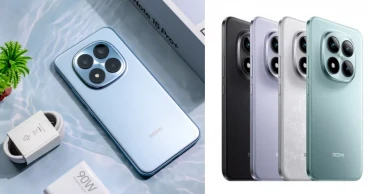
Xiaomi Redmi Note 15 Pro Plus Review: Robust processor with massive battery
The Xiaomi Redmi Note 15 Pro Plus has been officially launched in China on August 21, 2025. While the initial launch is exclusive to the Chinese market, global availability is expected to follow a few months later, with regions like India anticipated to receive the device around October 2025. The global variant is rumoured to feature slight modifications compared to the Chinese version, including changes to the battery capacity and camera sensor. Let’s take a look at the main features, specifications, strength, weakness and pricing of the Xiaomi Redmi Note 15 Pro+ (China Version) in Bangladesh.
Key Features of Xiaomi Redmi Note 15 Pro+ (China Version)
.
Display and Design
The Xiaomi Redmi Note 15 Pro Plus presents a refined and premium design that breaks away from its predecessors with a modern, flat-edged aesthetic. It features a 6.83-inch micro-curved AMOLED display, delivering a satisfying blend of immersion and practicality. This panel boasts a 1.5K resolution (2,772 by 1,280 pixels), a 120 Hz refresh rate, and peak brightness of up to 3,200 nits.
Its screen is shielded by Xiaomi’s Dragon Crystal Glass, which, combined with a fibreglass-coated rear panel, significantly enhances durability, a clear nod toward ruggedness without sacrificing style. The display comes with minimal bezels and a sleek flat border, giving the phone a clean and contemporary profile.
Despite its generous screen size, the overall frame remains slender, at around 7.9 mm thickness. Weighing approximately 211 grams, the device feels substantial yet still manageable and portable.
Read more: realme P4 Pro Review: Mid-ranger gaming phone with huge battery and robust processor
Processor and Memory
The Xiaomi Redmi Note 15 Pro Plus is powered by the Qualcomm Snapdragon 7s Gen 4, a modern 4 nm chip. The processor is built with an 8-core configuration that includes a performance-focused Kryo Prime (Cortex-A720) core clocked at 2.7 GHz, supported by 3 additional Kryo Gold (Cortex-A720) cores at 2.4 GHz and four energy-efficient Kryo Silver (Cortex-A520) cores at 1.8 GHz.
The graphics unit sports the Adreno 810 GPU, delivering smooth visuals and gaming performance across demanding tasks.
Memory-wise, the Redmi Note 15 Pro Plus comes with generous RAM options, either 12 GB or 16 GB of LPDDR5, ensuring seamless multitasking and future-proof performance. Storage configurations are equally flexible, ranging from 256 GB and 512 GB up to a massive 1 TB of UFS 2.2 internal storage, accommodating even the heaviest users. However, today many similarly priced rivals are offering UFS 3.1 mechanisms, which is disappointing for the Redmi Note Series fans.
Gaming Performance
Powered by Qualcomm’s latest Snapdragon 7s Gen 4, the Redmi Note 15 Pro Plus delivers a modest yet notable enhancement over its predecessor, offering around a 7 per cent uplift in both CPU and GPU performance, resulting in smoother gameplay and improved overall responsiveness. The chipset also introduces Snapdragon Elite Gaming features such as Game Super Resolution, which intelligently upscales visuals for sharper graphics, and Adaptive Performance Engine 3.0, which optimises thermal and load balancing to help sustain high frame rates during extended sessions.
Read more: Vivo Y400 4G Review: Worth It or Just Hype?
Benchmarks from AnTuTu 10 confirm that the Redmi Note 15 Pro Plus scores around 849,756 points, with the GPU contributing 236,053 points, a strong indicator of its capable graphical performance in this range.
To enhance thermal management further, Xiaomi has equipped the device with an innovative “ice-sealed” cold-pump cooling system, featuring a substantial 5,200 mm² heat-dissipation area that helps reduce thermal throttling and maintain stable frame rates during demanding gameplay.
Camera and Video Capacities
The Xiaomi Redmi Note 15 Pro Plus delivers a compelling photographic setup.
It comes with a 50 MP OmniVision Light Fusion 800 (OV50E) primary sensor with an f/1.6 aperture that employs intelligent light-fusion technology along with optical image stabilisation (OIS), enabling smooth and vibrant shots even in low-light or dynamic conditions.
Read more: Best 10 Smartphones Releasing in August 2025
Its 50 MP telephoto lens offers approximately 2.5× optical zoom and an f/2.2 aperture. Its 8 MP ultra-wide-angle sensor further broadens the framing options with a 112-degree field of view, perfect for sweeping landscapes and group shots.
On the front, a 32 MP wide-angle camera equips the 15 Pro Plus with crisp, detailed selfies and video calls, complete with HDR and panorama support.
Its rear setup can capture footage in up to 4K at 30 fps, with additional recording options at 1080p up to 120 fps and even high-speed 720p slow-motion capture, enhanced by both OIS and electronic image stabilisation (EIS) for steadier video. Meanwhile, the front camera supports smooth 1080p recording at 30 or 60 fps to ensure clean and reliable video calls and selfies.
Battery and Charging Capacity
The Xiaomi Redmi Note 15 Pro Plus packs an impressively large 7,000 mAh battery, marking a significant leap in endurance for the Redmi Note lineup. Xiaomi claims that this cell is designed to remain robust over time, boasting a long lifecycle of up to 1,600 charge cycles.
When it comes to recharging, the phone supports 90 W wired fast charging, enabling rapid power recovery when you're short on time. In addition, it offers 22.5 W reverse wired charging, allowing the device to act as a power source for accessories like earbuds or other phones.
Read more: Apple iPhone 17 Series: Leaks, Rumours and Probable Release Date
Pros & Cons of the Xiaomi Redmi Note 15 Pro+ (China Version)
Pros
- Sleek and resilient with certified IP68/69K water and dust protection and a fiberglass-reinforced design- Immersive 6.83-inch curved AMOLED display featuring a 1.5K resolution, 120 Hz refresh rate, and peak brightness up to 3,200 nits- Exceptional camera setup with a dual 50 MP system (wide and telephoto) and an 8 MP ultra-wide for versatile, high-quality shots- Strong performance thanks to the Snapdragon 7s Gen 4 chip, offering improved AI, graphics, and efficiency- Enduring power with a massive 7,000 mAh battery, enhanced by rapid 90 W fast charging, promising both longevity and quick recharge- Innovative BeiDou satellite messaging capability, a rare feature in this segment, for communication in remote areas.
Read more: Vivo X200 FE Review: The Compact Champion Featuring Zeiss Cameras and a Massive Battery
Cons
- No wireless charging support, limiting convenience for users who prefer cable-free charging- UFS 2.2 data transfer mechanism is outdated compared to similar priced rivals- Lacks a microSD slot, so storage cannot be expanded post-purchase.
Price of the Xiaomi Redmi Note 15 Pro+ (China Version) in Bangladesh
At launch, the base 12/256 GB storage variant of the Redmi Note 15 Pro Plus has been priced at 1,999 yuan, while the 12 GB/512 GB version is available at 2,199 yuan. The upper variant, the 16/512 GB model, has been listed at 2,299 yuan, and the top-tier Satellite Messaging Edition (16/512 GB with BeiDou satellite support) costs about 2,499 yuan.
As of now, the device hasn’t been officially released in Bangladesh, but multiple reliable sources anticipate that the base model (12/256 GB) of the Xiaomi Redmi Note 15 Pro+ will likely be priced around 45,000 TK.
Read more: realme P4 5G Review: A True Mid-Range Game Changer?
Conclusion
The blend of cutting-edge cameras, display tech, battery life, and rugged build makes the Redmi Note 15 Pro Plus (China Version) one of the most compelling mid-range devices in 2025. At the same time, it comes with some limitations, including the lack of certain premium conveniences like expandable storage, a faster data transfer mechanism, and wireless charging, combined with a less-polished software experience, which are worth considering.
11 months ago

realme P4 Pro Review: Mid-ranger gaming phone with huge battery and robust processor
The realme P Series represents the brand's mid-range smartphone lineup that focuses on delivering "power and style" without premium pricing. The P4 lineup is the fourth generation of realme’s mid-range P series. realme launches its new innovation, the P4 Pro, in India on August 20, 2025. Let’s delve into the main features, advantages, drawbacks, and pricing of the realme P4 Pro 5G in Bangladesh.
Key Features and Specs of the realme P4 Pro
.
Design and Display
The realme P4 Pro is rumoured to have a weight of around 189 grams and a thickness of 7.68 mm. The display is expected to be 6.8 inches. The display uses AMOLED technology, which provides vibrant colours, deep blacks, and excellent contrast ratios that make content consumption and everyday use more visually appealing. The display is protected by Mohs level 6.
It is equipped with an up to 144 Hz HyperGlow 4D Curve+ display featuring 1280 by 2800 pixels, 6500 nits of peak brightness, and HDR10+ technology. This high refresh rate display technology makes interactions feel more fluid compared to standard 60 Hz displays.
The overall design philosophy seems focused on delivering a premium look and feel while maintaining practicality. The large screen provides ample space for media consumption, productivity tasks, and gaming, while the AMOLED technology ensures excellent viewing quality both indoors and outdoors.
Read more: realme P4 5G Review: A True Mid-Range Game Changer?
Camera
The realme P4 Pro offers a dual rear camera setup. This pack includes a primary camera with a 50 MP Sony IMX896 sensor featuring optical image stabilisation (OIS). Its 6p lens offers a 24mm focal length, an 84.4-degree field of view and an f/1.8 aperture.
The other rear camera is an 8 MP ultra-wide angle sensor. This secondary sensor features a 5P lens, f/2.2 aperture, and 112-degree field of view.
The camera will be one of its key selling points. The combination of the large 50 MP primary sensor with OIS should help with low-light photography and video stabilisation, while the equally high-resolution front camera suggests strong focus on selfie quality and video calling performance.
The optical image stabilisation on the main camera is particularly noteworthy as it helps reduce blur from hand movement when taking photos or recording videos, making it a standout feature in this smartphone segment.
For selfies and video calls, the front camera packs a 50MP sensor with an OV50D sensor, which is quite impressive for front-facing photography. It is 5P, with an 86.7 FOV and f/2.4 aperture.
realme P4 Pro can capture maxium of 4k video footage at 60fps with both main rear and front sensors.
Read more: Vivo Y400 4G Review: Worth It or Just Hype?
Hardware: Processor, GPU, and Memory
The realme P4 Pro is powered by the Qualcomm Snapdragon 7 Gen 4 chipset, which is built on a 4nm TSMC manufacturing process. This is a significant upgrade that promises excellent performance and power efficiency for a mid-range smartphone.
What makes the P4 Pro particularly unique is that it features two distinct chipsets for processing, making it the first device in its price category to offer this dual-processor setup. Its graphic section is run by an Adreno™ GPU @ 1150 MHz with a graphics chipset X7P.
The device comes with 8 GB and 12 GB of LPDDR4X RAM options, providing smooth multitasking capabilities. The internal memory options are 128 GB, 256 GB and 512 GB, equipped with UFS 3.1 data transfer technology.
Read more: Best 10 Smartphones Releasing in August 2025
Gaming Performance
The realme P4 Pro scores over 1.1 million on AnTuTu, with the HyperVision AI chipset co-developed with Pixelworks delivering performance similar to an 8 Gen level chipset.
The standout gaming feature is the dedicated HyperVision AI Chip, built to improve the viewing and gaming experience. The HyperVision chip works alongside the GPU on the Snapdragon chip to increase the frame rate in games and video applications, providing a significant boost to gaming performance.
For actual gaming capabilities, the dual-chip configuration enables stable 144 FPS gameplay in over 100 supported titles, real-time frame generation, and resolution upscaling to 1.5K. This combination supports features such as 1.5K + 144 FPS gaming and ultra-smooth 120 FPS streaming, making it capable of handling demanding games with high frame rates and excellent visual quality.
The thermal management is equally impressive with a 7,000 sq mm AirFlow VC cooling system, ensuring the phone will not heat up even after long hours of gaming. Additionally, the device incorporates the GT Performance Engine 3.0 for thermal management and sustained performance, helping maintain consistent performance during extended gaming sessions.
Read more: Apple iPhone 17 Series: Leaks, Rumours and Probable Release Date
To help users monitor performance gains, realme has collaborated with PerfDog to introduce a "Frame Generation Index" that displays real-time data on the performance gains from the Pixelworks hardware, giving gamers detailed insights into how the dual-chip system is enhancing their gaming experience.
Battery and Charger
The realme P4 Pro comes with an exceptionally large 7000 mAh battery capacity, which is significantly larger than most smartphones on the market. This massive battery capacity promises excellent battery life that can easily last more than a day of heavy usage.
For charging, the device supports 80W fast charging technology that ensures the phone can be fully charged in less than 2 hours.
Pros and Cons of the realme P4 Pro
Pros:
• Massive battery capacity that can handle heavy usage without frequent charging concerns.
• Innovative dual-chipset design with for enhanced gaming and visual performance
• Dual 50MP camera setup with OIS on the main camera and equally high-resolution front camera
• Gaming-focused features including 144 FPS support in over 100 titles, frame generation, and 1.5K resolution upscaling
• Large AMOLED display with high refresh rate for smooth scrolling and excellent visual quality
• Advanced cooling system to prevent overheating during intensive tasks.
Read more: Vivo X200 FE Review: The Compact Champion Featuring Zeiss Cameras and a Massive Battery
Cons:
• The massive battery likely makes the device significantly heavier and thicker than typical smartphones
• realme's "breakneck speed of launching devices" may raise concerns about long-term software support and updates
• The large battery capacity, while beneficial for longevity, may lead to longer charging times despite the 80W fast charging
• The device may feel bulky for users who prefer compact smartphones due to the large battery and display size
• Limited storage options and RAM configurations compared to some competitors in the same price range.
Read more: Best Smartphones Releasing in July 2025
Price of the realme P4 Pro in Bangladesh
According to rumours, the realme P4 Pro will be priced at Rs 29,999 in India, which roughly converts to approximately 42,000 to 45,000 BDT based on current exchange rates. In the Bangladesh market, the realme P4 Pro may be priced in the range of 48,000 to 52,000 BDT for the official version when it launches.
However, as the device hasn't officially launched in Bangladesh yet, so these are estimated prices based on the Indian pricing structure and Bangladesh market patterns.
Who Should or Shouldn’t Buy the realme P4 Pro?
Heavy smartphone users who struggle with battery life throughout the day will find the P4 Pro's 7000 mAh battery particularly appealing. People who consume lots of media content, whether streaming videos, reading, or browsing social media, will benefit from the large AMOLED display.
The dual-chipset with HyperVision AI chip, 144 FPS gaming support, and efficient cooling system make P4 Pro excellent for gaming. The combination of a high refresh rate display and frame generation technology provides a premium gaming experience.
Content creators and photography enthusiasts who prioritise camera quality will appreciate the dual 50MP setup with OIS.
Read more: vivo T4 Ultra Review: A Game-Changing Mid-range Flagship
However, users who prioritise compact, lightweight phones should avoid the P4 Pro. The massive battery and large display inevitably make this device bulky and heavy, which may be uncomfortable for people with smaller hands or those who prefer one-handed usage.
People who frequently upgrade their phones or care deeply about long-term software support might want to reconsider. realme's rapid device launch cycle sometimes raises questions about how long individual models receive regular updates and security patches. Besides this, users who prefer stock Android or minimal software customisation may not enjoy realme UI, which tends to be more heavily customisable than some competitors' interfaces.
Those who primarily use their phones for basic tasks like calling, texting, and light app usage are essentially paying for features they won't fully utilise. The advanced gaming capabilities and large battery capacity represent overkill for minimal smartphone users. Therefore, the budget-conscious buyers with very tight spending limits might find better value in realme's lower-tier offerings, as the P4 Pro's advanced features come with a price premium that may not be justified for basic smartphone needs.
Read more: Infinix GT 30 Pro Review: Best Budget Gaming Phone with Flagship Features in 2025
The realme P4 Pro is fundamentally designed for power users who want maximum battery life, gaming performance, and camera quality in the mid-range segment, making it less suitable for casual users or those seeking ultra-portable devices.
11 months ago

realme P4 5G Review: A True Mid-Range Game Changer?
realme has carved its space in the mid-range smartphone market with the P series, blending performance and affordability. The latest addition, P4, expected to be launched on 20 August 2025, continues this legacy with fresh upgrades. Let's delve into the main features, drawbacks and pricing of the realme P4 5G in Bangladesh.
Key Features of realme P4 5G
.
Design and Build Quality
The realme P4 5G takes a big leap forward in terms of design, offering a sleeker profile and a more polished finish than the realme P3. At 185 grams, it feels noticeably lighter in hand compared to the P3’s 194 g, making it more comfortable for long usage.
The frame feels sturdy, with a refined matte texture that prevents smudges, while its IP68/IP69 rating ensures durability against dust and water exposure. This is an upgrade over the Samsung Galaxy A17, which only offers IP54 protection, making the P4 more reliable for users who live in environments prone to dust or heavy rain.
Read more: Best 10 Smartphones Releasing in August 2025
On the other hand, the Motorola Moto G56 matches the P4 with its rugged IP68/IP69 resistance, even going a step further with MIL-STD-810H compliance for drop resistance. While Moto’s build favours ruggedness, the realme P4 strikes the right balance between style and toughness, leaning more towards premium aesthetics without sacrificing durability.
Display Quality
The 6.77-inch HyperGlow AMOLED panel with HDR10+ support is where the realme P4 truly shines. With a maximum of 144Hz refresh rate, 1080 by 2392 resolutions, and 4500 nits peak brightness, it easily outclasses the realme P3’s 120Hz AMOLED panel capped at 2000 nits. The jump in refresh rate makes animations smoother, gaming more fluid, and everyday scrolling an absolute delight.
Compared to the Samsung Galaxy A17, which only offers a 90 Hz Super AMOLED display, the P4’s screen feels far more responsive, particularly for gaming and high-frame-rate video playback. Meanwhile, the Moto G56 packs a 120Hz IPS LCD panel, which, although solid, lacks the deep blacks and vibrant colour reproduction of the P4’s AMOLED display. Overall, the realme P4 clearly outshines its competitors in the display department, positioning itself as a strong mid-range entertainment device.
Read more: Vivo Y400 4G Review: Worth It or Just Hype?
Camera Performance
realme has packed the P4 with a dual (50 MP + 8 MP) rear setup. Its 50 MP AI primary rear sensor features a 5P lens, f/1.8 aperture, 27 mm focal length, and a 76-degree field of view. The other rear sensor is an 8 MP wide-angle camera that offers a 5P lens, f/2.2 aperture, 16 mm focal length, and a 112-degree field of view. The primary rear sensor can shoot at most 4K footage at 30 fps.
P4 5G also bears a standard 16 MP AI selfie shooter. It is a 4P lens with an f/2.4 aperture and an 85-degree field of view. It can capture a maximum of 1080-pixel video footage at 30 fps.
Daylight shots pop with colour accuracy, while low-light photography benefits from better noise reduction and optical image stabilisation (OIS)—a feature missing on the P3. The Samsung Galaxy A17 offers a triple-lens system with an ultrawide sensor, which gives it more versatility in framing, but its 13 MP selfie camera pales in comparison to the P4’s 16 MP front shooter.
Meanwhile, the Moto G56 also boasts a solid dual setup, with a 50 MP main sensor and an ultrawide lens, plus a 32 MP selfie camera.
However, realme P4 competes with good video stabilisation and selfie performance, making it particularly appealing for vloggers and social media creators.
Read more: Apple iPhone 17 Series: Leaks, Rumours and Probable Release Date
Processor Performance
At its core, the realme P4 5G runs on the MediaTek Dimensity 7400 Ultra, paired with an Adreno 810 GPU. Compared to the Qualcomm Snapdragon 6 Gen 4 powering the P3, the Dimensity chip feels more optimised for multitasking, app switching, and power efficiency. Apps launch quicker, and even heavy workloads like video editing or running multiple apps in the background are handled effortlessly.
Against the Samsung Galaxy A17’s Exynos 1330, the P4 feels significantly faster, with less stutter during prolonged usage. The Moto G56’s Dimensity 7060 offers strong competition, but the 7400 Ultra delivers slightly higher clock speeds and better GPU stability, giving the P4 the upper hand in raw performance. Simply put, the realme P4 5G offers flagship-level smoothness at a mid-range price point, easily outperforming both its predecessor and some of its closest rivals.
Gaming Performance
Gaming is where the realme P4 truly earns its place as a mid-range powerhouse. Titles like PUBG Mobile, Call of Duty, and Genshin Impact run effortlessly on high settings, maintaining stable frame rates without excessive heating. The 144Hz refresh rate display enhances gameplay fluidity, while the upgraded cooling system prevents throttling during extended sessions—a problem the realme P3 occasionally faced under load.
Read more: Vivo X200 FE Review: The Compact Champion Featuring Zeiss Cameras and a Massive Battery
Compared to the Samsung Galaxy A17, which maxes out at 90 Hz and struggles with demanding titles at higher settings, the P4 is leagues ahead. The Moto G56 also delivers a strong performance thanks to its Dimensity 7060 and 120Hz display, but it does not match the same buttery-smooth experience as the P4’s 144Hz AMOLED. If you are a mobile gamer, the realme P4 5G offers one of the best gaming experiences under 40,000 Taka.
Battery Life
One of the biggest upgrades in the realme P4 5G is its massive 7000 mAh battery, a huge step up from the 6000 mAh unit in the P3. With this battery size, the P4 can easily last two full days on moderate use, even with the high refresh rate enabled. realme pairs it with 80W fast charging, capable of reaching 50% in just 25 minutes—an improvement over the P3’s 45W charging.
Compared to competitors, the Samsung Galaxy A17’s 5000 mAh battery with 25 W charging feels underwhelming, while the Moto G56’s 5200 mAh unit with 30 W charging is solid but still falls short of the P4’s incredible endurance and charging speed. For heavy users who stream, game, and multitask, the P4 sets a new benchmark in battery reliability.
Read more: Tecno Spark 40 Pro Review: Budget Brilliance or Just Another Buzz?
Software and User Interface
The realme P4 5G ships with Android 15 layered with realme UI 6.0, offering a clean, fluid, and customisable experience. Compared to the P3, which also launched with Android 15, the P4 feels slightly more optimised thanks to performance tweaks tailored for the new chipset. While Samsung’s One UI 7 on the Galaxy A17 offers longer update support, Realme’s UI feels lighter and less bloated, appealing to users who prefer speed over excessive features.
The Moto G56’s near-stock Android 15 experience is great for purists, but Realme’s additional features like Smart Sidebar, enhanced privacy tools, and UI customisation provide a nice balance of simplicity and functionality. Overall, the P4 offers a polished software experience that bridges the gap between stock Android and heavily customised skins.
Storage Options
realme provides the P4 with 6GB or 8GB of RAM and storage variants of 128GB and 256GB, expandable via microSDXC using the hybrid SIM slot. It is equipped with UFS 3.1 mechanism.
This mirrors the storage flexibility of the realme P3 but with faster optimisation under the new chipset. Against the Samsung Galaxy A17, which maxes out at 256 GB, and the Moto G56, which goes up to 512 GB with 12 GB RAM, the P4 sits comfortably in the middle ground.
Read more: Best Smartphones Releasing in July 2025
For most users, the 128GB/8GB variant will be more than enough, especially with the expansion slot. While it does not push boundaries like Motorola, it offers a practical balance between price and performance, keeping it attractive for the majority of mid-range buyers.
Pros and Cons of realme P4 5G
.
Pros
- Premium AMOLED display with HDR10+ and 144Hz refresh rate- Powered by MediaTek Dimensity 7400 Ultra for smooth performance- Records video in 4K@30 with OIS support- Large 7000 mAh battery with 80 W fast charging- IP68/IP69 certification for dust and water resistance- Expandable storage via microSD card slot- In-display fingerprint sensor and face unlock- Stereo speakers with loud and clear sound- 5G connectivity with wideband support- Sleek and lightweight design compared.
Read more: vivo T4 Ultra Review: A Game-Changing Mid-range Flagship
Cons
- No 3.5mm headphone jack- No FM radio support- Infrared port missing- Slightly heavier than some competitors due to the big battery
Price of realme P4 5G
realme P4 5G costs Rs. 18499 in India, which converts to around 25,832 TK. However, after the official release, the device is expected to be priced at BDT 30,000 to 35,000 in Bangladesh.
Verdict
The realme P4 5G is perfect for gamers, content creators, and heavy users who want powerful performance, a vibrant display, and long battery life. However, if you need a 3.5mm jack, FM radio, or a versatile triple-camera setup, this phone may not be for you.
Read more: Infinix GT 30 Pro Review: Best Budget Gaming Phone with Flagship Features in 2025
11 months ago

Epic Games wins partial victory in Australian court against Google and Apple
Epic Games, the creator of the popular online game Fortnite, secured a partial win Tuesday in its legal battle against Google and Apple in Australia over alleged anti-competitive practices in their app stores.
The case, led by Epic’s U.S. billionaire CEO Tim Sweeney, accused the tech giants of abusing their market dominance to stifle competition and impose restrictive trade practices.
Federal Court Justice Jonathan Beach upheld key parts of Epic’s claims, finding that Google and Apple’s control of the app market substantially reduced competition and breached Australian competition laws. However, he rejected some of Epic’s allegations, including claims of unconscionable conduct under Australian law.
The ruling follows litigation launched in August 2020 after both companies removed Fortnite from their app stores when Epic introduced a direct payment system, bypassing their platforms’ billing systems. Beach found that both Google and Apple pressured app developers, including Epic, through contracts and technology to sell exclusively via their app stores.
YouTube to test AI-based age verification system in U.S.
Epic hailed the decision, saying it would allow its Epic Games Store and Fortnite to launch on Apple’s iOS in Australia. “An Australian court just found that Apple and Google abuse their control over app distribution and in-app payments to limit competition,” the company said, calling it a “win for developers and consumers.”
Apple welcomed the court’s dismissal of some claims but said it “strongly disagrees” with other findings. Google also disagreed with aspects of the ruling, saying it would review the decision. Both companies could appeal to the Federal Court’s full bench.
Justice Beach has yet to release his full judgments — 952 pages on Apple and 914 pages on Google — but delivered a 90-minute oral summary of his findings. A separate hearing will be scheduled to determine potential damages owed to Epic.
11 months ago

Delivery drones set to expand into more U.S. neighborhoods after sluggish rollout
Delivery drones that can transport ice cream before it melts have been slow to gain traction in the United States, despite the Federal Aviation Administration (FAA) approving commercial home deliveries more than six years ago. The service has largely been limited to certain suburbs and rural areas, but that could soon change.
Last week, the FAA proposed a rule to make it easier for companies to operate drones beyond the pilot’s line of sight, potentially enabling deliveries over longer distances without the need for waivers or air carrier certification. Retailers and drone firms testing such services say the change could bring drone deliveries to millions more households.
Walmart, working with Alphabet-owned Wing, currently delivers from 18 Dallas-area stores and plans to expand to 100 locations in Atlanta, Charlotte, Houston, Orlando, and Tampa by next summer. Amazon, which launched Prime Air in Texas in 2022, has expanded beyond pilot sight operations to areas including suburban Phoenix, with more locations planned in Dallas, San Antonio, and Kansas City. Other companies like Zipline and Flytrex have also been active in drone delivery abroad and in select U.S. markets.
Wing CEO Adam Woodworth said U.S. drone delivery had been “in treading water mode” due to regulatory hurdles but believes the market is now reaching a point where demand, technology, and rules are aligning. DoorDash, working with Wing and Flytrex, has tested drone food deliveries in Virginia and Dallas, with expansion to Charlotte underway. While the novelty remains, common items delivered by drones include ice cream, eggs, and candy.
Trump’s tariffs may mean Walmart shoppers pay more, his treasury chief acknowledges
Drones generally carry one small order at a time, with Wing’s models able to handle up to 2.5 pounds over a 12-mile round trip and Zipline’s up to 4 pounds over 120 miles. Amazon’s drones can carry heavier loads. Packages are secured to drones, which then follow automated routes avoiding obstacles before lowering items via retractable cords.
Advocates cite reduced emissions, faster delivery of critical supplies, and improved rural access as benefits. However, challenges include high costs — currently around $13.50 per drone delivery compared to $2 by vehicle — weather limitations, and safety risks. Privacy and noise complaints have also been raised in areas with drone operations, though some residents have embraced the service.
Businesses report positive impacts. A Texas restaurant owner said his DoorDash orders increased 15% since offering drone delivery, and customers have praised its reliability. Some residents, like Frisco, Texas, customer Janet Toth, say drone delivery has become a regular convenience — and a spectacle for her young daughter and friends.
Source: Agency
11 months ago

Elon Musk threatens to sue Apple over App Store rankings
Elon Musk says he plans to sue Apple for allegedly excluding his social media platform X and its AI chatbot app Grok from the App Store’s featured app sections.
Late Monday, Musk posted on X questioning Apple’s decision: “Hey @Apple App Store, why won’t you include X or Grok in your ‘Must Have’ section when X is the #1 news app globally and Grok ranks #5 overall? Are you playing politics?”
Grok is developed by Musk’s AI company, xAI.
Musk accused Apple of creating conditions that prevent any AI company other than OpenAI from reaching the top of the App Store rankings, calling it a “clear antitrust violation.” He said xAI would pursue legal action immediately, though he didn’t provide specifics.
Apple has not yet responded publicly.
This comes amid ongoing scrutiny of Apple’s App Store practices. A U.S. federal judge recently ruled that Apple violated an injunction in an antitrust lawsuit filed by Fortnite developer Epic Games.
In Europe, the EU fined Apple €500 million earlier this year for restricting app developers from directing users to cheaper payment options outside of the App Store. In a separate case last year, the EU also fined Apple nearly $2 billion for favoring its own music service over rivals like Spotify.
As of Tuesday morning, Apple’s top apps included TikTok, Tinder, Duolingo, YouTube, and Bumble, with ChatGPT from OpenAI ranking seventh.
11 months ago

Trump’s proposed 100% chip tariff sparks confusion among businesses and global trade partners
President Donald Trump’s recent proposal to impose a 100% tariff on imported computer chips not made in the U.S. is causing widespread uncertainty among businesses and trade partners. While the announcement boosted shares of major semiconductor companies, smaller chipmakers and electronics firms are scrambling to understand what it actually means.
“We’re still waiting for official clarification,” said Limor Fried, founder of New York-based electronics manufacturer Adafruit Industries. Her company sources chips through U.S. distributors as well as directly from suppliers in Taiwan and the Philippines. If those chips are not exempt, she says, it could significantly raise production costs, since semiconductors are among the most expensive parts in their products.
Fried added that in past situations, they often didn’t know the financial impact of new tariffs until receiving the bill, forcing them to adjust prices afterward.
The U.S. imports a relatively small amount of standalone chips; most come already embedded in finished products — like phones or cars — by the time they arrive. What’s unclear now is whether tariffs would apply to chips inside these finished goods.
“The big question is whether the tariff will also apply to components — meaning chips inside devices might require separate tariff assessments,” said Martin Chorzempa, an economist at the Peterson Institute for International Economics.
On Wednesday, Trump stated that companies with ongoing or planned chip manufacturing operations in the U.S. would be exempt from the tariff — even if they’re not yet producing domestically. “If you’re building in the United States of America, there’s no charge,” Trump said during a meeting with Apple CEO Tim Cook.
This was seen as a positive sign for large firms like Intel and Nvidia, as well as global players like Samsung and Taiwan Semiconductor (TSMC), both of which are building factories in the U.S. However, the announcement has left smaller chip producers, particularly those in Europe and Asia with limited involvement in AI, in a state of uncertainty.
German chipmaker Infineon Technologies — a key supplier for the auto industry — said it couldn’t comment due to the lack of official documentation.
Smaller firms may struggle to secure exemptions or invest in U.S.-based manufacturing, Chorzempa noted, because they lack the capital or market influence of bigger players.
It’s also unclear how this policy would interact with Trump’s existing trade agreements, such as those with the EU, Japan, and South Korea, which already include general tariffs capped at 15%.
The Semiconductor Industry Association said Thursday it was “eager to learn more” about the proposal, including which companies or products might be exempt.
Trump’s move comes three months after most consumer electronics were temporarily exempted from the administration’s harshest tariffs. It also follows lessons from the pandemic, when a global chip shortage pushed car prices up and fueled inflation.
Chorzempa warned that if car chips are not exempt, consumers could face hundreds of dollars in added costs per vehicle. “There’s a chip for nearly everything — window controls, infotainment systems, power management — especially in electric vehicles,” he explained.
The Biden administration, by contrast, has supported the domestic chip industry through subsidies. In 2022, the CHIPS and Science Act committed over $50 billion to support U.S. semiconductor manufacturing, research, and workforce development.
Trump has rejected that approach, instead using tariffs as leverage to pressure companies into moving operations to the U.S., even if it risks higher prices and reduced profit margins.
According to Long Le, a business professor at Santa Clara University, Trump’s strategy may encourage more firms to follow Samsung’s lead in building U.S. plants. At the same time, excluding Chinese chipmakers like SMIC and Huawei from exemptions could give the Trump administration more negotiating power in future trade talks with Beijing.
11 months ago
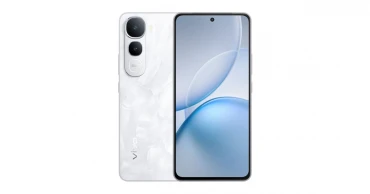
Vivo Y400 4G Review: Worth It or Just Hype?
Vivo’s Y series is known for blending affordability with trendy features, especially for young users. The Vivo Y400 5G, launched on 28 July 2025, continues that legacy with a few key upgrades. Let's take a look at the key features, specifications, pros, cons, and pricing of the Vivo Y400 4G smartphone in Bangladesh.
Key Features of Vivo Y400 4G
.
Design and Build Quality
The Vivo Y400 4G offers an impressive design language for its price. With dimensions of 162.3 mm by 75.3 mm by 7.9 mm and a weight of around 196 g (Green) to 198 g (White), it feels sturdy and sleek in hand. The combination of a glass front and a plastic back wrapped in a plastic frame is standard in this price range, but Vivo has added flair with colour options like Pearl White, Tropical Green, and Purple Twilight.
The IP68/IP69 rating for water and dust resistance, along with MIL-STD-810H compliance, adds serious durability—a rare offering at this budget level. When compared to the Vivo Y300, the Y400 feels more refined. The Y300 has a similar design with a plastic body but comes with only IP64 splash resistance. The bump up to IP68/IP69 on the Y400 makes a noticeable difference for users worried about water damage.
Against the Samsung Galaxy M36, which has Gorilla Glass Victus+ protection and a glass back, the Vivo Y400 4G does feel less premium. Motorola’s G96, though lighter at 178 g and wrapped in eco-leather, wins points for aesthetics and grip but does not match the Y400’s rugged certification.
Read more: Best 10 Smartphones Releasing in August 2025
Display Quality
The Vivo Y400 4G features a 6.67-inch AMOLED panel with a resolution of 2400 by 1080 pixels, a 120 Hz refresh rate and a peak brightness of 1800 nits, making it suitable for both indoor and outdoor use. Colours are vivid, blacks are deep, and the screen is a pleasure for media consumption. The display-to-body ratio of 87.9% and ~395 ppi pixel density make for a crisp viewing experience.
It shares its panel characteristics with the Vivo Y300, but there is a slight improvement in overall smoothness and brightness optimisation on the Y400. The Motorola G96 does outshine both with its P-OLED panel and 144Hz refresh rate, giving gamers and content consumers a buttery-smooth, punchier display.
The Samsung M36, featuring a Super AMOLED screen with Gorilla Glass Victus+ protection, holds up very well, though it maxes out at 120 Hz. While the Y400 4G may not offer the absolute best panel in its class, it competes head-to-head with more expensive rivals in display quality.
Camera Performance
The dual-camera setup on the Vivo Y400 4G includes a 50 MP wide primary lens and a 2 MP depth sensor. In daylight, it captures detailed shots with decent colour reproduction. The Ring-LED flash helps in dim settings, but low-light images suffer from noticeable noise and reduced sharpness. The 8MP selfie shooter is functional but lacks the sharpness and colour fidelity expected from front cameras today.
Read more: Apple iPhone 17 Series: Leaks, Rumours and Probable Release Date
When compared to the Vivo Y300, the Y400’s main sensor seems to have downgraded slightly in sensor size, though results are comparable under good lighting. However, the Y300's 32MP selfie camera easily beats the Y400's 8MP in terms of sharpness and dynamic range.
The Samsung Galaxy M36 and Motorola G96 are in a different league. The M36 comes with OIS on its 50MP main sensor, plus an 8MP ultrawide, giving it better low-light and wide-angle versatility. Meanwhile, the G96’s 50 MP camera with OIS and a 32 MP selfie camera produce more stabilised and vibrant shots, even in challenging conditions.
Processor Performance
The Y400 4G is powered by the Snapdragon 685 chipset built on a 6nm process. With an octa-core CPU (4x2.8 GHz Cortex-A73 & 4x1.9 GHz Cortex-A53) and Adreno 610 GPU, it handles day-to-day tasks smoothly. Whether it is multitasking, browsing, or app switching, the phone feels responsive. UFS 2.2 storage also ensures faster read/write speeds, aiding performance.
Compared to the Y300’s Snapdragon 4 Gen 2 (4 nm), the Y400's Snapdragon 685 is more power-efficient but slightly behind in raw performance—especially on tasks that require heavy GPU power. Samsung M36’s Exynos 1380 (5nm) with Cortex-A78 cores and Motorola G96’s Snapdragon 7s Gen 2 (4nm) with Adreno 710 both deliver stronger CPU/GPU performance, making them better options for performance-focused users.
Read more: Vivo X200 FE Review: The Compact Champion Featuring Zeiss Cameras and a Massive Battery
Gaming Performance
For casual gaming, the Vivo Y400 4G holds up well. Games like PUBG Mobile, Free Fire, and Asphalt 9 run comfortably at medium settings. However, it struggles when pushed to high graphic modes, where frame drops and heating become apparent. The 120Hz display does help in smoother visuals, but the Adreno 610 GPU is not built for sustained high-end gaming.
In comparison, the Vivo Y300 offers slightly better gaming performance due to the Adreno 613 GPU, and lower thermals help maintain consistency over longer sessions. The Galaxy M36 and Motorola G96 leave both behind—thanks to their more powerful GPUs (Mali-G68 MP5 in the M36 and Adreno 710 in the G96), offering higher frame rates and better thermal control during long gaming marathons.
Battery Life
A standout feature of the Vivo Y400 4G is its massive 6000 mAh battery, one of the largest in its class. Combined with the power-efficient Snapdragon 685 and AMOLED display, it easily offers 1.5 to 2 days of battery life with moderate use. 44W wired charging fills the tank in about an hour, which is a decent speed for the size.
Comparing it to the Y300’s 5000 mAh battery with 80 W fast charging, you get faster charging but slightly less endurance. Samsung’s M36 offers a smaller 5000 mAh battery with just 25 W charging, falling behind both. Motorola G96 strikes a balance with 5500 mAh and 30 W charging, giving it good endurance but not quite as lasting as the Y400.
Read more: Tecno Spark 40 Pro Review: Budget Brilliance or Just Another Buzz?
Software and User Interface
The phone runs on Android 15 with Funtouch OS 15, offering a clean, customisable, and feature-rich UI. Vivo has added useful tools like "Circle to Search", game mode optimisations, and smart split-screen functions. It is relatively bloat-free, although a few Vivo-native apps still come pre-installed.
Compared to the Y300's Funtouch OS 14, there is not a huge jump in UI experience, but minor optimisations make transitions and multitasking feel smoother. Samsung’s One UI 7 on the M36 is still arguably the best in terms of polish, animations, and long-term update promises (6 years). Motorola G96, though running near-stock Android 15, offers a smoother and bloat-free experience for purists, with Smart Connect 2.0 adding useful features.
Storage Options
The Vivo Y400 4G offers two storage variants: 128GB and 256GB, both with 8GB RAM and no SD card slot. It is enough for average users, and UFS 2.2 keeps data speeds quick. Vivo includes virtual RAM support, adding up to 8 GB of extended memory from internal storage.
The Y300 has similar internal storage options but includes microSD support (shared), which some users may prefer. The Galaxy M36 also offers a microSD slot (shared) and comes with a 6GB RAM base variant, while the Motorola G96 drops microSD entirely, offering only fixed internal options. For those who prefer expandable storage, the Y400's lack of a card slot might be a drawback.
Read more: Best Smartphones Releasing in July 2025
Pros and Cons of Vivo Y400 4G
.
Pros
- Bright 6.67-inch AMOLED display with 120Hz refresh rate- Snapdragon 685 chipset offers smooth daily performance- 8GB RAM with UFS 2.2 for faster multitasking- Large 6000 mAh battery ensures long usage- 44W fast charging support- In-display fingerprint sensor feels premium- IP68/IP69 certified for water and dust resistance- Stylish design with solid build quality.
Read more: vivo T4 Ultra Review: A Game-Changing Mid-range Flagship
Cons
- Only dual rear cameras; lacks ultra-wide or telephoto- Average low-light camera performance- No support for FM radio- NFC missing in some regions- No microSD card slot for storage expansion- Lacks a 3.5mm headphone jack
Price of Vivo Y400 4G
The Vivo Y400 4G is priced at BDT 27,999 in Bangladesh for the 8GB + 128GB variant.
Read more: Infinix GT 30 Pro Review: Best Budget Gaming Phone with Flagship Features in 2025
Takeaways
The Y400 4G is ideal for users who want a long-lasting battery, vibrant AMOLED display, and smooth daily performance. It is not suited for photography enthusiasts or gamers seeking high-end performance. On the whole, it can be said that the Vivo Y400 4G would be a reliable choice for casual and everyday use. However, if you need 5G, expandable storage, or advanced camera features, you may look for other options.
11 months ago