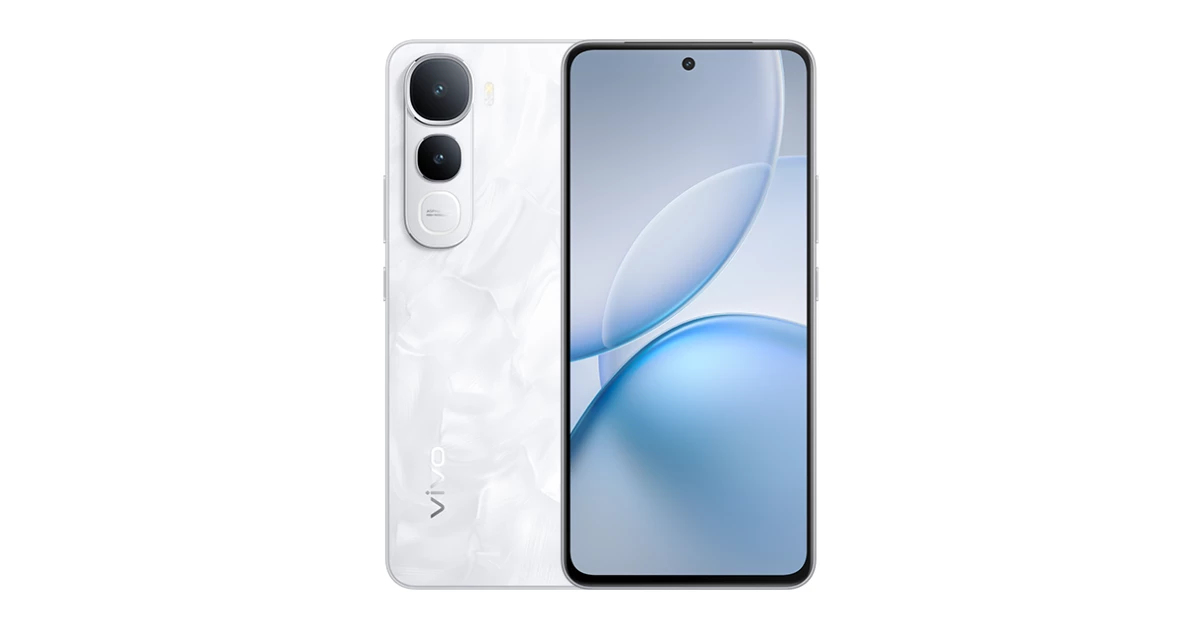
Vivo’s Y series is known for blending affordability with trendy features, especially for young users. The Vivo Y400 5G, launched on 28 July 2025, continues that legacy with a few key upgrades. Let's take a look at the key features, specifications, pros, cons, and pricing of the Vivo Y400 4G smartphone in Bangladesh.
Key Features of Vivo Y400 4G
.
Design and Build Quality
The Vivo Y400 4G offers an impressive design language for its price. With dimensions of 162.3 mm by 75.3 mm by 7.9 mm and a weight of around 196 g (Green) to 198 g (White), it feels sturdy and sleek in hand. The combination of a glass front and a plastic back wrapped in a plastic frame is standard in this price range, but Vivo has added flair with colour options like Pearl White, Tropical Green, and Purple Twilight.
The IP68/IP69 rating for water and dust resistance, along with MIL-STD-810H compliance, adds serious durability—a rare offering at this budget level. When compared to the Vivo Y300, the Y400 feels more refined. The Y300 has a similar design with a plastic body but comes with only IP64 splash resistance. The bump up to IP68/IP69 on the Y400 makes a noticeable difference for users worried about water damage.
Against the Samsung Galaxy M36, which has Gorilla Glass Victus+ protection and a glass back, the Vivo Y400 4G does feel less premium. Motorola’s G96, though lighter at 178 g and wrapped in eco-leather, wins points for aesthetics and grip but does not match the Y400’s rugged certification.
Read more: Best 10 Smartphones Releasing in August 2025
Display Quality
The Vivo Y400 4G features a 6.67-inch AMOLED panel with a resolution of 2400 by 1080 pixels, a 120 Hz refresh rate and a peak brightness of 1800 nits, making it suitable for both indoor and outdoor use. Colours are vivid, blacks are deep, and the screen is a pleasure for media consumption. The display-to-body ratio of 87.9% and ~395 ppi pixel density make for a crisp viewing experience.
It shares its panel characteristics with the Vivo Y300, but there is a slight improvement in overall smoothness and brightness optimisation on the Y400. The Motorola G96 does outshine both with its P-OLED panel and 144Hz refresh rate, giving gamers and content consumers a buttery-smooth, punchier display.
The Samsung M36, featuring a Super AMOLED screen with Gorilla Glass Victus+ protection, holds up very well, though it maxes out at 120 Hz. While the Y400 4G may not offer the absolute best panel in its class, it competes head-to-head with more expensive rivals in display quality.
Camera Performance
The dual-camera setup on the Vivo Y400 4G includes a 50 MP wide primary lens and a 2 MP depth sensor. In daylight, it captures detailed shots with decent colour reproduction. The Ring-LED flash helps in dim settings, but low-light images suffer from noticeable noise and reduced sharpness. The 8MP selfie shooter is functional but lacks the sharpness and colour fidelity expected from front cameras today.
Read more: Apple iPhone 17 Series: Leaks, Rumours and Probable Release Date
When compared to the Vivo Y300, the Y400’s main sensor seems to have downgraded slightly in sensor size, though results are comparable under good lighting. However, the Y300's 32MP selfie camera easily beats the Y400's 8MP in terms of sharpness and dynamic range.
The Samsung Galaxy M36 and Motorola G96 are in a different league. The M36 comes with OIS on its 50MP main sensor, plus an 8MP ultrawide, giving it better low-light and wide-angle versatility. Meanwhile, the G96’s 50 MP camera with OIS and a 32 MP selfie camera produce more stabilised and vibrant shots, even in challenging conditions.
Processor Performance
The Y400 4G is powered by the Snapdragon 685 chipset built on a 6nm process. With an octa-core CPU (4x2.8 GHz Cortex-A73 & 4x1.9 GHz Cortex-A53) and Adreno 610 GPU, it handles day-to-day tasks smoothly. Whether it is multitasking, browsing, or app switching, the phone feels responsive. UFS 2.2 storage also ensures faster read/write speeds, aiding performance.
Compared to the Y300’s Snapdragon 4 Gen 2 (4 nm), the Y400's Snapdragon 685 is more power-efficient but slightly behind in raw performance—especially on tasks that require heavy GPU power. Samsung M36’s Exynos 1380 (5nm) with Cortex-A78 cores and Motorola G96’s Snapdragon 7s Gen 2 (4nm) with Adreno 710 both deliver stronger CPU/GPU performance, making them better options for performance-focused users.
Read more: Vivo X200 FE Review: The Compact Champion Featuring Zeiss Cameras and a Massive Battery
Gaming Performance
For casual gaming, the Vivo Y400 4G holds up well. Games like PUBG Mobile, Free Fire, and Asphalt 9 run comfortably at medium settings. However, it struggles when pushed to high graphic modes, where frame drops and heating become apparent. The 120Hz display does help in smoother visuals, but the Adreno 610 GPU is not built for sustained high-end gaming.
In comparison, the Vivo Y300 offers slightly better gaming performance due to the Adreno 613 GPU, and lower thermals help maintain consistency over longer sessions. The Galaxy M36 and Motorola G96 leave both behind—thanks to their more powerful GPUs (Mali-G68 MP5 in the M36 and Adreno 710 in the G96), offering higher frame rates and better thermal control during long gaming marathons.
Battery Life
A standout feature of the Vivo Y400 4G is its massive 6000 mAh battery, one of the largest in its class. Combined with the power-efficient Snapdragon 685 and AMOLED display, it easily offers 1.5 to 2 days of battery life with moderate use. 44W wired charging fills the tank in about an hour, which is a decent speed for the size.
Comparing it to the Y300’s 5000 mAh battery with 80 W fast charging, you get faster charging but slightly less endurance. Samsung’s M36 offers a smaller 5000 mAh battery with just 25 W charging, falling behind both. Motorola G96 strikes a balance with 5500 mAh and 30 W charging, giving it good endurance but not quite as lasting as the Y400.
Read more: Tecno Spark 40 Pro Review: Budget Brilliance or Just Another Buzz?
Software and User Interface
The phone runs on Android 15 with Funtouch OS 15, offering a clean, customisable, and feature-rich UI. Vivo has added useful tools like "Circle to Search", game mode optimisations, and smart split-screen functions. It is relatively bloat-free, although a few Vivo-native apps still come pre-installed.
Compared to the Y300's Funtouch OS 14, there is not a huge jump in UI experience, but minor optimisations make transitions and multitasking feel smoother. Samsung’s One UI 7 on the M36 is still arguably the best in terms of polish, animations, and long-term update promises (6 years). Motorola G96, though running near-stock Android 15, offers a smoother and bloat-free experience for purists, with Smart Connect 2.0 adding useful features.
Storage Options
The Vivo Y400 4G offers two storage variants: 128GB and 256GB, both with 8GB RAM and no SD card slot. It is enough for average users, and UFS 2.2 keeps data speeds quick. Vivo includes virtual RAM support, adding up to 8 GB of extended memory from internal storage.
The Y300 has similar internal storage options but includes microSD support (shared), which some users may prefer. The Galaxy M36 also offers a microSD slot (shared) and comes with a 6GB RAM base variant, while the Motorola G96 drops microSD entirely, offering only fixed internal options. For those who prefer expandable storage, the Y400's lack of a card slot might be a drawback.
Read more: Best Smartphones Releasing in July 2025
Pros and Cons of Vivo Y400 4G
.
Pros
- Bright 6.67-inch AMOLED display with 120Hz refresh rate
- Snapdragon 685 chipset offers smooth daily performance
- 8GB RAM with UFS 2.2 for faster multitasking
- Large 6000 mAh battery ensures long usage
- 44W fast charging support
- In-display fingerprint sensor feels premium
- IP68/IP69 certified for water and dust resistance
- Stylish design with solid build quality.
Read more: vivo T4 Ultra Review: A Game-Changing Mid-range Flagship
Cons
- Only dual rear cameras; lacks ultra-wide or telephoto
- Average low-light camera performance
- No support for FM radio
- NFC missing in some regions
- No microSD card slot for storage expansion
- Lacks a 3.5mm headphone jack
Price of Vivo Y400 4G
The Vivo Y400 4G is priced at BDT 27,999 in Bangladesh for the 8GB + 128GB variant.
Read more: Infinix GT 30 Pro Review: Best Budget Gaming Phone with Flagship Features in 2025
Takeaways
The Y400 4G is ideal for users who want a long-lasting battery, vibrant AMOLED display, and smooth daily performance. It is not suited for photography enthusiasts or gamers seeking high-end performance. On the whole, it can be said that the Vivo Y400 4G would be a reliable choice for casual and everyday use. However, if you need 5G, expandable storage, or advanced camera features, you may look for other options.