Health-&-Fitness

5 simple lifestyle changes that may help slow biological ageing: Experts
Your “biological age” may say more about your health than the number of years you have lived. While chronological age counts your birthdays, biological age reflects how well your body’s systems are functioning — and how long you are likely to live.
With modern epigenetic testing, people can now estimate their biological age at home using a simple saliva sample. The results often reveal how diet, exercise, sleep and habits like smoking or drinking influence the pace of ageing. Experts say the encouraging news is that healthy choices can lower biological age, giving people more control over their long-term wellbeing.
Longevity specialists Dr Sophie Shotter and Nadine Baggott outline five lifestyle habits that can help slow the ageing process:
1. Stay active and keep a youthful mindset
Exercise is one of the strongest protective factors against age-related decline. Even a few minutes of daily physical activity — such as brisk walking or varied body movements — reduces the risk of serious illnesses. According to The Independent, exercise affects DNA methylation, a process that regulates genes linked to ageing signs like wrinkles and greying hair.
2. Choose healthier foods
Diet plays a major role in chronic disease and biological ageing. A study cited in the report found that nearly 2,700 women who adopted healthier eating habits for 6–12 months lowered their biological age by an average of 2.4 years. Experts recommend meals rich in fruits, vegetables, whole grains, nuts, legumes, lean proteins, fish and healthy fats to support cell repair and reduce stress on DNA.
3. Prioritise adequate sleep
Consistently getting about eight hours of sleep helps the body repair DNA, restore hormonal balance, reduce inflammation and clear cellular waste. Proper sleep lowers the risk of age-related conditions including diabetes, heart disease, cancer and dementia.
4. Avoid harmful habits
Smoking, vaping and excessive alcohol consumption significantly accelerate ageing. The report notes that smoking can age the lungs by more than four years and airway cells by nearly five years. These habits damage DNA, increase inflammation and put extreme stress on cells.
5. Manage stress effectively
Chronic stress disrupts hormonal responses and weakens the immune system, which can accelerate biological ageing. Experts say practising emotional regulation and stress-management techniques can add years to healthy life.
Research also indicates that external factors — such as loneliness, harsh climates, pollution and living conditions — influence how quickly people age. Their impact varies depending on genetics, level of exposure and overall lifestyle.
With inputs from NDTV
8 months ago
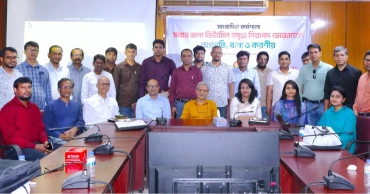
Vitamin-fortified safe edible oil essential to protect public health: Speakers
Speakers on Tuesday said ensuring the availability of vitamin-fortified and safe edible oil is now a pressing need to nurture a healthy and productive generation.
The speakers said this at a workshop for journalists titled ‘Vitamin-Fortified Safe Edible Oil for All: Progress, Challenges, and Way Forward’, at the BMA Bhaban in Dhaka.
The workshop was organised by PROGGA (Knowledge for Progress) and the National Heart Foundation of Bangladesh, with participation from 23 journalists from print, television, and online media.
They said the sale of edible oil in open drums violates government regulations and poses risks to public health.
Although Vitamin ‘A’ Enrichment in Edible Oils Act, 2013 exists, most oils in the market does not contain any vitamins or contain less than the mandated amount, they said.
A study by ICDDR, B found that 65% of edible oil in the market is sold in drums, of which 59% does not contain any vitamin A, and only 7% meet the legal standard for vitamin content.
The speakers said these non-food grade, hazardous drums are often used previously to store chemicals, engine oil, or industrial products.
These drums also do not provide information about the oil’s source or quality, allowing adulterated or substandard oils to enter the market easily. T
They called for strengthened coordinated monitoring by the Ministry of Industries, BSTI, the Directorate of National Consumer Rights Protection, and the Food Safety Authority to ensure safe, vitamin-fortified edible oil.
The speakers also pointed out that vitamin A deficiency rises the risk of childhood blindness and maternal mortality, while vitamin D deficiency is associated with greater risk of rickets, loss of bone density, cardiovascular disease, and various non-communicable diseases.
Fakir Muhammad Munawar Hossain, Former Director (Deputy Secretary), Operations and Laboratories Department, Directorate of National Consumers' Right Protection (DNCRP); Mustak Hassan Md. Iftekhar, Consultant, National Heart Foundation Hospital & Research Institute; Dr. Ashek Mahfuz, Portfolio Lead for Large Scale Food Fortification (LSFF) and Value Chain, Global Alliance for Improved Nutrition (GAIN), among others, were present.
The key presentations were delivered by Dr. Aliva Haque, Program Officer and Md. Hasan Shahriar, Head of Programs, PROGGA.
8 months ago

80% of strokes preventable through lifestyle modification: Experts
Nearly 80 percent of strokes are preventable through lifestyle modifications and controlling high blood pressure, quitting smoking, avoiding unhealthy diets and staying physically active, said experts.
The experts said this at the International Stroke Conference 2025 held on Sunday at Bangladesh Medical University (BMU), marking a significant milestone in advancing stroke awareness, prevention and treatment.
They urged community-level interventions and called for integrating stroke education into schools, workplaces, and even urban planning.
Speakers said that a new era for acute stroke care and the development of next-generation neurointervention services conference can raise public awareness, enhance prevention and ensure modern stroke treatment in Bangladesh.
With the theme of “Transformation of Acute Stroke Care and Development of Next Generation Neurointervention Services in BMU,” the scientific session highlighted innovative approaches to emergency stroke treatment and advanced neurointervention technologies.
Experts emphasised that stroke remains one of the leading causes of death and disability in Bangladesh — yet most cases are preventable.
Organised by BMU’s Department of Neurology, the event took place at Shaheed Dr. Milon Hall. BMU Vice-Chancellor Prof. Dr. Md. Shahinul Alam attended the programme as the chief guest while Pro-Vice Chancellor (Administration) Prof. Dr. Md. Abul Kalam Azad presided over the session.
Vice-Chancellor Prof. Dr. Md. Shahinul Alam said the International Stroke Conference would open a new horizon in stroke management.
“With the support of foreign experts, BMU aims to ensure state-of-the-art stroke treatment facilities in Bangladesh. Their participation today reflects a strong commitment to advancing modern neurological care in our country,” he said.
Other speakers highlighted the importance of multidisciplinary collaboration, prevention strategies, and the need for integrated stroke management.
Experts said despite progress in medical science, public knowledge about stroke remains alarmingly low.
Millions in Bangladesh still fail to recognise early symptoms, leading to treatment delays and preventable deaths, they said.
Recognising some early signs including face drooping, arm weakness, speech difficulty can save both life and brain, they said.
Speakers later emphasised the need to align Bangladesh’s stroke management guidelines with international standards, expand data sharing, and strengthen global training programs.
Sustainable progress in stroke prevention and care is impossible without global collaboration, they said.
8 months ago

Nutritionist warns: 5 protein-rich foods that may actually cause weight gain
High-protein foods are often associated with weight loss, but some popularly marketed protein-rich items may actually contribute to weight gain due to their high fat and carbohydrate content.
In an October 23 Instagram post, online nutrition coach Justin Gichaba highlighted five such foods that can add to belly fat instead of supporting fat loss.
Peanut butter – Often considered a protein powerhouse, peanut butter is actually high in fat, which significantly increases its calorie content. While it provides some protein, the accompanying fats can outweigh its benefits.
Beans – Though beans are thought to be protein-rich, they contain a large amount of carbohydrates alongside their protein, which may hinder weight loss if consumed in excess.
Quinoa – Despite being marketed as a high-protein grain, quinoa is primarily composed of carbohydrates. Its protein content is relatively modest and should not be relied on as a main protein source.
Nuts – Almonds, cashews, pistachios, and other nuts are packed with fat along with protein. The high fat content limits their effectiveness as a primary protein source.
Granola – Even varieties labeled “high protein” are typically rich in carbohydrates and fats, which outweigh the protein content, potentially impacting fat loss goals.
Gichaba cautioned, “If you rely on any of these five foods as your main protein source, losing fat will be extremely difficult, and in some cases, you may even gain weight.”
Source: NDTV
8 months ago

AIIMS-trained doctor suggests 3 drinks for fatty liver health
Dr Saurabh Sethi, an AIIMS, Harvard, and Stanford-trained gastroenterologist, has shared three easy-to-prepare drinks that he often recommends to his patients suffering from fatty liver disease — a growing health concern linked to poor diet, lack of exercise, and excessive alcohol or processed food intake.
In a short video posted on Instagram on Sunday, Dr Sethi highlighted that while medical treatment and lifestyle changes remain essential for managing fatty liver, simple dietary additions can also make a significant difference.
1. Beetroot juice
Dr Sethi said beetroot juice is rich in betalains — antioxidants that protect liver cells and reduce fat buildup. He advised moderation due to its natural sugar content, suggesting one glass a few times a week to support liver health.
2. Coffee
Coffee, he noted, can lower the risk of fatty liver and liver fibrosis. Dr Sethi recommended choosing organic coffee without sugar, adding that natural sweeteners like honey, monk fruit, or stevia can be used — but without erythritol additives.
3. Green tea
Green tea, he said, contains catechins such as EGCG that have been shown to improve liver enzymes and reduce fat accumulation. Drinking a few cups weekly can help maintain liver function while providing a mild caffeine boost.
“These drinks are backed by science and clinical experience. They can help reduce liver fat, improve digestion, and support overall liver health,” Dr Sethi wrote in his post.
He added that maintaining liver health does not require complicated detox regimens or expensive supplements. “Sometimes, the simplest daily choices — like what you drink — can make the biggest impact,” he said.
Source: NDTV
9 months ago

City strolls can be as beneficial as nature walks, say researchers
Strolling through a leafy park or along a forest trail is often seen as the ultimate stress reliever. The crunch of fallen leaves, the sound of a rushing stream, and the gentle rustle of trees all combine to calm the mind. But could a walk through busy city streets offer similar benefits?
Researchers say yes — if you know where and how to walk.
While nature walks are widely known to lower stress, improve focus, and promote mental well-being, new studies suggest that walking in urban environments can also provide meaningful psychological benefits. The key, experts say, lies in paying attention to your surroundings and finding elements that engage your senses.
Whitney Fleming, an environmental psychology researcher at Bangor University in Wales, said people shouldn’t underestimate the value of urban greenery. “Look at the green,” she said. “Most cities have greenery. No matter where you are, you can find a nice tree.”
Walking itself is a powerful form of moderate exercise that can help reduce the risk of heart disease, high blood pressure, dementia, depression, and certain cancers, she added. But being mindful of nature — even in small doses — can amplify those benefits. Fleming’s research found that people who noticed plants while walking felt significantly less anxious and more positive than those focused on man-made surroundings.
“Having natural elements to look at in cities is really important because you can still receive benefits even when not in a purely natural setting,” she said.
Other researchers argue that urban environments, too, can nurture mental well-being. Cesar San Juan Guillen, a social psychology professor at the University of the Basque Country in Spain, said earlier studies often unfairly compared peaceful nature scenes with stressful cityscapes.
His research compared visitors to a green urban park with those spending time in a lively plaza featuring a historic church, playground, and cafes. Both groups reported improved focus and fewer negative emotions, but those in the busier plaza felt even more energized and relaxed.
Historic city centers, cemeteries, and places with sweeping views can spark what psychologists call “soft fascination” — a gentle, restorative form of attention. “This type of involuntary attention may be more effective at helping people recover from mental fatigue caused by work or study,” San Juan Guillen said.
Urban design also plays a role in how people experience city walks, said Tristan Cleveland, an urban planning consultant with Canadian firm Happy Cities. His research shows people tend to walk faster past blank walls and are less likely to stop and chat.
To get the most out of a city walk, Cleveland recommends routes that evoke interest and pleasure — what he calls the “first kiss test.” “If it’s a place you’d take someone on a date, it’s probably the right kind of place for a walk,” he said.
Annabel Abbs-Streets, author of The Walking Cure and 52 Ways to Walk, agreed, saying moments of joy can be found anywhere — from the historic streets of Dubrovnik to the peaceful cemeteries of London.
“It’s not that green is good and gray is terrible,” she said. “They’re just different — and sometimes that difference itself can be good.”
Source: AP
9 months ago

Clocks ‘fall back’ tonight as experts urge morning sunlight for health
Daylight saving time ends at 2 a.m. local time Sunday across most of the United States, offering people an extra hour of sleep as clocks shift back to standard time until March 8. But health experts say enjoying the bonus rest should come with a dose of early morning sunlight to help the body adjust smoothly.
While many welcome the autumn switch, the sudden shift can still disrupt daily routines. Health groups including the American Medical Association and the American Academy of Sleep Medicine have long pushed for permanent standard time, saying the back-and-forth changes take a toll on our internal clocks.
A new Stanford University study supports that view, finding that the twice-a-year time changes are the least healthy option. Researchers concluded that although either permanent daylight saving or permanent standard time would be healthier, standard time best matches natural sunlight patterns and the body’s circadian rhythm.
Jamie Zeitzer, co-director of Stanford’s Center for Sleep and Circadian Sciences, compared the body’s internal clock to a conductor leading an orchestra, with each organ acting as a different instrument. When light exposure changes abruptly, he said, the synchronization suffers, and “each of the body’s systems just works a little less well.”
Sunlight plays the key role in this rhythm. Morning light helps the brain trigger alertness, while darkness at night increases melatonin, the hormone that promotes sleep. Too much evening light, whether from late sunset or screen exposure, delays that process.
Disrupted circadian rhythms can influence heart rate, metabolism, blood pressure and stress hormones.
The spring shift, which shortens sleep by an hour, is often harder to adjust to and has been linked to increases in traffic crashes and even heart attacks in the days that follow. People living with seasonal affective disorder may also struggle after the clocks change and daylight shortens.
Although many adapt quickly, the effects can be harsher on shift workers or the sleep-deprived. Nearly one-third of American adults get less than the recommended seven hours of nightly sleep, and more than half of teenagers fall short of the recommended eight or more hours.
Sleep experts recommend easing into the change by moving bedtime earlier in small increments ahead of the switch. They also emphasize getting sunlight early in the day, even by sitting near a window if going outdoors isn’t possible.
Most countries do not observe daylight saving time. Within the U.S., only Arizona and Hawaii remain on standard time all year.
Efforts in Washington to end the clock-changing ritual have stalled. The Sunshine Protection Act, which would make daylight saving time permanent, has yet to move forward in Congress.
Source: AP
9 months ago

Russia tightens laws to combat shrinking, aging population
President Vladimir Putin has spent his 25 years in power confronting Russia’s worsening demographic crisis, as the country battles a shrinking and aging population amid war, economic uncertainty and a migration exodus.
The number of babies born in Russia hit a record low in 1999, just before Putin took power, and despite periodic improvements births have again fallen sharply. Speaking at a Kremlin demographic conference on Thursday, Putin called boosting births “crucial” for the nation’s future.
Over the years, he has introduced policies to encourage bigger families, including free school meals for large households and reinstating Soviet-style “hero-mother” medals for women who raise at least 10 children.
“Many of our grandmothers and great-grandmothers had seven, eight, and even more children,” Putin said in 2023. “Let’s preserve and revive these wonderful traditions.”
Births initially rose alongside economic gains, from 1.21 million in 1999 to nearly 1.94 million in 2015. But the progress has slipped away as Russia faces declining living standards, the war in Ukraine and resistance to immigration.
Russia’s population has dropped from 147.6 million in 1990 to about 146.1 million this year, including Crimea’s population since its illegal 2014 annexation. The population is also rapidly aging: 30% are now 55 or older, compared to 21.1% in 1990. Deaths exceed births, and only 1.22 million babies were born last year, barely above the 1999 low. Demographer Alexei Raksha recently reported February 2025 saw the lowest monthly birth figure in more than 200 years.
Bangladesh faces a challenge in ensuring welfare of its aging population
War casualties and emigration have deepened the demographic gap, particularly among young adults.
“You’ve got a much-diminished pool of potential fathers in a diminished pool of potential mothers,” said analyst Jenny Mathers. Putin has long tied population strength to national security, she noted.
To reverse declining births, Russia is embracing what it calls “traditional family values.” That has led to laws banning promotion of abortion and “child-free ideology,” along with a sweeping crackdown on LGBTQ+ rights.
Officials view these values as a “magic wand,” said feminist scholar Sasha Talaver, arguing the state expects women to bear children “in the name of patriotism and Russian strength.”
Some social benefits remain popular, such as parental cash certificates used for education or subsidized mortgages. Others spark debate, including one-time payments to pregnant teenagers in some regions.
New symbolic initiatives include Family, Love and Fidelity Day and a state holiday celebrating pregnant women. Still, Russia’s fertility rate stands at just 1.4 children per woman, below the replacement rate of 2.1.
Access to abortion is increasingly restricted. Private clinics have stopped offering the procedure, pills are harder to obtain, and mandatory waiting periods have lengthened. Critics warn the crackdown will drive abortion underground.
“The only thing you will get from this is illegal abortions. That means more deaths,” said journalist and activist Zalina Marshenkulova.
Immigration could bolster the population, but tightening controls and surging anti-migrant sentiment push away workers from Central Asia, long a source of labor.
Experts say no set of incentives can overcome the uncertainty of wartime Russia.
“When people lack confidence about their prospects, it's not a time for having children,” Mathers said. “An open-ended major war doesn’t really encourage people to think positively about the future.”
One 29-year-old Moscow woman who has chosen to remain child-free said stability matters most. “The happiest and healthiest child will only be born in a family with healthy, happy parents,” she said.
Source: AP
9 months ago

Indonesia’s Legacy in Global Vaccine Landscape, Bio Farma and DCVMN Strengthen Health Resilience Through Global Partnership
Through PT Bio Farma (Persero), Indonesia has played a strategic and sustained role in the Developing Countries Vaccine Manufacturers’ Network (DCVMN), working to ensure equitable access to safe, high-quality, and affordable vaccines.
Since DCVMN’s founding in 2000, Bio Farma has been a key driver in advancing vaccine self-reliance and public health capacity in developing countries.
Collaboration between Bio Farma and DCVMN has been established since the inception of the network. At the first DCVMN Annual General Meeting in Noordwijk in 2000, Bio Farma was one of ten founding members dedicated to advancing vaccine collaboration. In April 2001, Bio Farma in Bandung hosted the 2nd AGM, where the network formalized the DCVMN’s structure and governance.
Chaired by then-President Director Thamrin Poeloengan, this meeting established Indonesia as a hub for vaccine collaboration and knowledge-sharing among developing countries.
Shadiq Akasya, current President Director of Bio Farma, stated that the company’s participation in DCVMN reflects Indonesia’s commitment to contributing to global health beyond national interests.
“Bio Farma’s involvement in DCVMN since its establishment is not merely about representation, but about making a tangible contribution toward global vaccine self-reliance. Through collaboration and innovation, we are committed to delivering equitable and sustainable health solutions for all,” said Shadiq.
“We believe that the true strength of the developing countries’ vaccine industry lies in collaboration. Through our active role in DCVMN, we aim to ensure that every nation has access to safe, high-quality, and affordable vaccines, a real manifestation of Indonesia’s contribution to global health security,” he added.
In 2004, Bio Farma, together with other DCVMN members, played a vital role in expanding access to the pentavalent (DPT-HepB-Hib) vaccine through a technology-transfer collaboration with the Netherlands Vaccine Institute. This achievement demonstrated that Bio Farma’s contributions within the DCVMN network are not symbolic but deeply technical and practical.
Global trust in Bio Farma has continued to grow. In 2012, Indonesia once again hosted the 13th DCVMN AGM in Bali. Mahendra Suhardono, one of Bio Farma’s directors at the time, was elected President of the Executive Committee for the 2013 - 2014 term.
Indonesia’s leadership was further recognized when Bio Farma was entrusted to serve as Chair of the Board of DCVMN for the 2023-2025 period, acting as a bridge between network members and global strategic priorities, while showcasing Indonesia’s capacity to lead the vaccine industry in developing countries.
Bio Farma’s commitment to innovation goes far beyond collaboration. In 2020, its nOPV2 vaccine became the first to receive an Emergency Use Listing from the World Health Organization, enabling faster deployment of vaccines during global health emergencies.
This achievement reflected not only Bio Farma’s scientific and technical excellence but also effective coordination and communication among multiple international stakeholders, including funders, scientists, academic researchers, policymakers, global vaccine advocates, and vaccine manufacturers. Such collaboration enabled the rapid development, approval, and rollout of nOPV2 during a critical moment for global public health.
This milestone demonstrated that a developing-country manufacturer can achieve world-class innovation, meeting the highest international standards of safety, quality, and efficacy recognized by the WHO. Beyond being a scientific breakthrough, nOPV2 represents technological self-reliance and global confidence in Indonesia’s capability to contribute meaningfully to international health security.
Bio Farma’s success serves as an inspiration to all DCVMN members to continue strengthening their research, development, and production capacity in pursuit of achieving vaccine self-sufficiency and global health resilience across developing countries.
With a production capacity of more than 3.5 billion doses per year, Bio Farma supplies vaccines to over 150 countries and holds WHO Prequalification certification for 12 types of vaccines.
As the Center of Excellence for the Organization of Islamic Cooperation (OIC) in vaccine development, production, and distribution, Bio Farma continues to strengthen Indonesia’s strategic role in the global health landscape.
The upcoming 26th DCVMN Annual General Meeting, to be held in Bali on 29–31 October 2025, marks an important moment for Indonesia to reaffirm its leadership in global health diplomacy. Through this forum, Bio Farma is committed to advancing innovation, collaboration, and vaccine self-reliance worldwide, toward a more resilient and equitable global health ecosystem.
About DCVMN
The Developing Countries Vaccine Manufacturers Network (DCVMN) is a global alliance of 46 vaccine manufacturers from 17 developing countries, established in 2000 to strengthen public health through equitable access to high-quality vaccines.DCVMN promotes collaboration among its members through advocacy, capacity building, professional training, and joint research initiatives, aimed at enhancing global immunization programs.
Working closely with international organizations such as WHO, UNICEF, GAVI, CEPI, PATH, CHAI, and the Gates Foundation, DCVMN strives to ensure that every nation has the capability to produce and supply affordable, life-saving vaccines. For further information, please visit dcvmn.org.
About Bio Farma
PT Bio Farma (Persero) is Indonesia’s state-owned life science company and the largest vaccine manufacturer in Southeast Asia.Founded in 1890 and headquartered in Bandung, Bio Farma produces and supplies vaccines to more than 150 countries, while playing an active role in biotechnology research, innovation, and global health security.As a member of DCVMN, Bio Farma continues to contribute to international collaboration to ensure equitable vaccine access and improved global public health. For further information, please visit www.biofarma.co.id .
9 months ago

UK researchers achieve first successful treatment for Huntington’s disease
For the first time, Huntington’s disease, a hereditary, degenerative brain disorder – has been successfully treated, offering hope to thousands of patients and families affected by the devastating condition, according to UK researchers.
The disease, which destroys brain cells and combines symptoms of dementia, Parkinson’s, and motor neuron disease, has now been slowed by an average of 75% in a clinical trial. Experts say this could extend the decline normally seen in a year to four years, giving patients decades of improved quality of life.
The breakthrough involves an advanced gene therapy administered through 12 to 18 hours of delicate brain surgery. A harmless virus carrying specially designed DNA is infused into key brain regions using MRI-guided microcatheters. This prompts brain cells to produce microRNA, a fragment that silences the mutant huntingtin gene responsible for neuron death, lowering levels of the toxic protein in the brain, reports BBC.
10 months ago