others

4 more die with measles-like symptoms; death toll rises to 835
Four more children died with measles-like symptoms in 24 hours until 8:00am on Thursday, bringing the combined tally of confirmed and suspected measles-related deaths to 835 in the country.
According to the Directorate General of Health Services (DGHS), all the latest fatalities were suspected measles deaths.
With the latest update, the number of suspected measles deaths has risen to 739, while the number of laboratory-confirmed measles deaths remained 96.
A total of 870 new suspected measles cases were reported during the 24-hour period, bringing the cumulative number of suspected cases nationwide to 127,410.
Meanwhile, 135 new confirmed measles cases were recorded, bringing the total number of laboratory-confirmed infections to 15,874.
Since March 15, a total of 110,182 patients with suspected measles have been hospitalised across the country, of whom 106, 053 have recovered, according to DGHS data.
4 days ago
Hasina to face legal action if she returns to Bangladesh: Law Minister
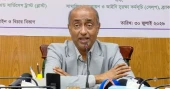
Law, Justice and Parliamentary Affairs Minister Md Asaduzzaman on Thursday said former prime minister and condemned convict Sheikh Hasina will face legal action in accordance with the law if she returns to Bangladesh.
He made the remarks while responding to questions from reporters at a ceremony for signing a Memorandum of Understanding between the National Legal Aid Services Organization and non-governmental organisations BRAC and BLAST on legal aid at the Secretariat.
Asked about a recent interview in which Hasina said she plans to return to Bangladesh in December, the law minister said the Home Ministry is making efforts for her extradition.
"If she comes, the law will take its own course. We will not do anything in violation of the law. We will exercise the authority that the law gives us," Asaduzzaman said.
Asked how Hasina could return as she does not have a passport, the minister said, "How she will come is her problem. It is not our problem."
"When she enters our jurisdiction, I will exercise the authority given to me by law and enforce the law. That's as simple as it is," he said.
4 days ago
DSCC budget prioritises drainage, dengue control, civic services: Administrator
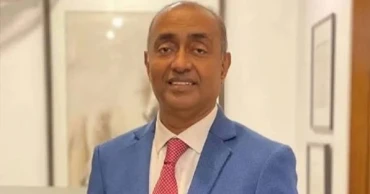
Dhaka South City Corporation (DSCC) Administrator Abdus Salam on Thursday said the city authority has prepared a realistic and implementable budget for FY2026-27 without imposing any additional tax burden on people, while prioritising balanced urban development, drainage improvement, dengue control and better civic services.
Speaking while announcing the Tk 4,004.60 crore budget at Nagar Bhaban, the administrator said the budget was designed to strengthen the vision of a "Clean City, Green City" through prudent financial management and improved public services.
"We have tried to prepare a realistic and implementable budget instead of an overly ambitious one," Abdus Salam said.
The city corporation has identified new revenue sources to enhance its own income while cutting unnecessary expenditure wherever possible, he said.
The DSCC administrator said the budget gives the highest priority to balanced development across all regions of the city, resolving waterlogging, controlling dengue, reducing environmental pollution, improving roads and traffic management, and enhancing the quality of civic amenities and public services.
He also described the budget as a reflection of the trust placed by taxpayers in the city corporation.
"This budget is not merely an account of income and expenditure; it reflects the sacred responsibility and trust entrusted to us by the taxpayers. We are committed to ensuring that every taka is spent with the highest standards of transparency, accountability and efficiency for the welfare of the people," he said.
Seeking cooperation from all stakeholders for successful implementation of the budget, Abdus Salam called for support from the Local Government Division, public and private organisations, development partners, the media, civil society, the business community and the residents of Dhaka South City Corporation.
The FY2026-27 budget, approved at the 14th meeting of the corporation on July 26, amounts to Tk 4,004.60 crore, compared to the original budget of Tk 3,841.38 crore for FY2025-26.
The revised budget for the outgoing fiscal year stood at Tk 3,138.77 crore.
4 days ago
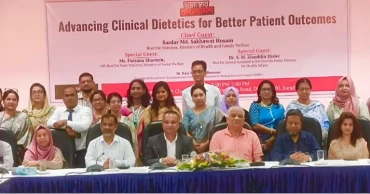
Experts call for stronger role of nutritionists, dietitians in healthcare
Health experts has underscored the need to strengthen the role of nutritionists and dietitians to improve public health, prevent non-communicable diseases and ensure evidence-based nutrition services across Bangladesh.
They said modernising clinical dietetic services and developing skilled human resources have become essential to improving patient care and accelerating recovery.
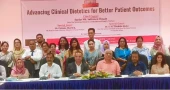
The observations came at a national dialogue titled ‘Advancement of Clinical Dietetics to Ensure Better Patient Care’ held at the CIRDAP auditorium in the capital on Wednesday.
The event was organised by Shushasther Bangladesh that brought together policymakers, physicians, nutritionists, dietitians, academics and researchers from the health, nutrition and education sectors.
Speaking as the chair, Dr Kazi Saifuddin Bennur, Chairman of Shushasther Bangladesh and Director of the Bangladesh Medical Research Council (BMRC), urged nutrition professionals to engage more actively in research.
He said the BMRC is ready to support them and stressed the need to translate research findings into entrepreneurship and public welfare initiatives.
Prime Minister’s Special Assistant on Health Affairs Dr S M Ziauddin Haider said both the quality and number of health professionals in the country must be increased.
“Our health system should not remain solely treatment-oriented. It must become prevention-focused,” he said, adding that nutritionists should play a stronger role in mainstream healthcare to ensure healthy longevity.
He also called for expanding the deployment of dietitians to the grassroots level, improving education standards, revising curricula and establishing a regulatory framework for the profession.
He said a dedicated regulatory system for dietitians would be introduced in the future.
The keynote paper was presented by Shamsunnahar Mahua, Chief Nutritionist at BIRDEM Hospital.
She said scientific nutrition services are playing an increasingly important role in preventing malnutrition, obesity, diabetes, cardiovascular disease, kidney disease and cancer.
She stressed the need to develop skilled professionals, strengthen professional capacity and expand research in clinical nutrition.
The dialogue opened with welcome remarks from Syed Md Baki Billah Tutul, a member of Shushasther Bangladesh, and Tamanna Chowdhury, Principal Dietitian at Evercare Hospital.
The concluding remarks were delivered by Chowdhury Tasnim Hasin, Chief Dietitian at Continental Hospital.
During the discussion, Health Sector Reform Committee member and researcher Dr Liaquat Ali emphasised mandatory government registration and licensing for professional dietitians.
Meanwhile, the CEO of Renata Pharmaceuticals called for greater collaboration between the public and private sectors to promote the development of therapeutic nutrition products.
4 days ago
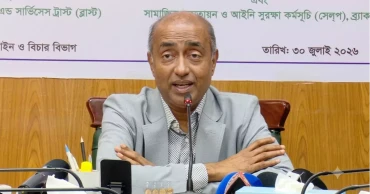
Parents to keep lifetime possession after gifting property to children under proposed law: Minister
The government is planning to amend the Transfer of Property Act to allow parents to retain lifetime possession and enjoyment of property even after transferring it to their children, Law, Justice and Parliamentary Affairs Minister Md Asaduzzaman said on Thursday.
He made the remarks at a memorandum of understanding (MoU) signing ceremony between the National Legal Aid Services Organization and non-governmental organisations BRAC and BLAST on legal aid at the Secretariat.
The proposed amendment aims to strengthen legal protection for parents who transfer property to their children but later become financially or socially vulnerable.
"We are considering amendment to the relevant law because most civil cases in Bangladesh arise from disputes over property distribution and ownership," he said.
Under Muslim law, property can be transferred through heba (gift), while Hindu law recognises wills and Muslim law also provides for wills (wasiyat), he said.
However, once parents transfer property through heba, they immediately lose ownership and often become dependent on their children, he said adding "If children do not look after their parents, the parents are left with little legal protection and become helpless.”
To address the issue, the government plans to expand provisions under the Transfer of Property Act relating to gifts, drawing on a 1963 judgment of the Pakistan Supreme Court.
Under the proposed amendment, a parent transferring property as a gift would retain a usufruct right, allowing them to possess and enjoy the property throughout their lifetime.
"A parent may choose not to transfer property through heba or a will, but instead make a gift while continuing to enjoy and occupy the property during his or her lifetime," he said.
Under the proposal, although ownership would be transferred, the parents would retain lifetime possession. Neither the parents nor the children would be able to sell the property unilaterally.
Any sale by the parents would require the children's consent, while the children would also need the parents' permission to dispose of the property during the parents' lifetime, said the minister.
Asaduzzaman said provisions would also be included for exceptional circumstances, such as when a parent requires urgent medical treatment and the property must be sold but the children refuse consent.
"In such cases, the district judge will be empowered to consider an application and decide whether the sale should be allowed," he said.
The law minister expressed hope that the proposed reform would help reduce property-related civil litigation and resolve many disputes through clearer legal safeguards.
"We believe this initiative will reduce the number of civil cases in future and address many existing problems. We want to move forward with such new legal ideas," he added.
4 days ago
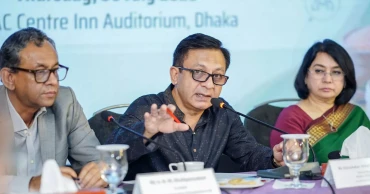
Govt working to cut logistics costs to curb food inflation: Commerce Minister
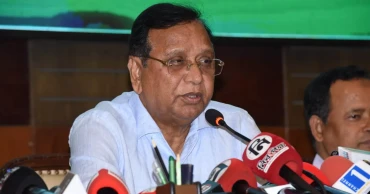
Commerce Minister Khandakar Abdul Muktadir on Thursday said the government is prioritising a reduction in logistics costs, describing them as one of the biggest obstacles to bringing down Bangladesh's persistently high food inflation.
“While logistics cost stands at around 10 percent of GDP in other countries of the world, it is 16 percent in Bangladesh. If we can rein in logistics costs, food inflation can be brought down,” the commerce minister said at an event on Bangladesh's food chain, organised by the Centre for Policy Dialogue (CPD) at the BRAC Centre in the captial.
Noting that inflation which has been rising since the post-Covid period and currently stands above 9 percent, was brought under control by other countries around six months ago but Bangladesh has failed to do so due to the complexity of its market system, he said.
“Our market system is quite complex. Alongside logistics costs, we need to bring down input costs and unaccountable financial transactions such as extortion as much as possible,” he said.=
The minister said every government in Bangladesh has focused on the agriculture sector separately, but there has been a lack of coordination among them.
“Since the famine of 1974, every government in Bangladesh has received the same message that staying in power requires paying attention to the agriculture sector. Since then, almost every government has worked for farmers. But due to a lack of coordination in this work farmers have not always received the maximum benefit,” he said.
Muktadir said accurate information does not reach farmers in Bangladesh which causes them losses.
“A farmer who cultivated potatoes extensively over the past few years and got a good yield but did not get a fair price in the market, why does he still grow potatoes in excess of demand the following year and incur losses? This is a question. The major reason is that market information does not reach the farmer. He cannot understand what would be profitable for him to cultivate,” he said.
The minister also said Bangladesh’s agriculture sector has seen very little scientific and planned work, with most agricultural activities being carried out in a “natural way,” stressing the need to bring this under a proper plan.
Muktadir stressed the need for improving farmers’ living standards and bringing the entire market system under an integrated plan.
CPD Executive Director Fahmida Khatun presided over the event.
4 days ago
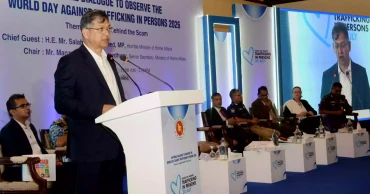
Govt maintains “zero tolerance” against human trafficking, online scams: Home Minister
The government is giving the highest priority to protecting citizens from human trafficking and technology-enabled crimes and remains firmly committed to maintaining a "zero tolerance" policy against international trafficking and scam networks exploiting digital platforms, Home Minister Salahuddin Ahmed said on Thursday.
He made the remarks at a national dialogue titled “Trapped Behind the Scam: Ending Human Trafficking for Forced Criminality”, at a hotel in the capital to mark World Day Against Trafficking in Persons 2026, jointly organised by the Home Ministry, the UN Office on Drugs and Crime (UNODC) and the Counter-Trafficking Technical Working Group of the UN Migration Network.
The minister said human trafficking has become increasingly complex and its forms are constantly changing.
Criminal networks are now using digital platforms, fake online recruitment websites and social media to lure young people and jobseekers, he said.
"Victims are being taken abroad with false promises of attractive employment and a better future. They are then held captive in cyber scam centres, subjected to severe abuse and intimidation, and forced to engage in criminal activities," he said.
Salahuddin said trafficking networks are increasingly exploiting digital technologies to facilitate their crimes.
Highlighting the government's initiatives to combat human trafficking, the minister said Bangladesh has achieved a "historic milestone" by framing the Human Trafficking and Migrant Smuggling (Prevention and Suppression) Act, 2026, in line with international standards.
He said the new law was formulated in accordance with the United Nations Convention against Transnational Organised Crime (UNTOC) and its relevant protocols.
The law brings modern forms of crime, including online scams, technology-driven deception and forcing victims into criminal activities, under strict punishment, he said.
At the same time, the government is working to update the Human Trafficking Prevention and Suppression Rules, 2017 to accelerate implementation of the law, the minister said.
The Home Ministry is also finalising the National Action Plan (2026-2030) in consultation with relevant stakeholders, he said.
The plan will further strengthen four key pillars of combating trafficking- prevention, protection, prosecution and partnership, said the minister.
Senior Secretary of the Home Ministry Monzur Morshed Chowdhury chaired the national dialogue.
Law and Justice Division Secretary Md Liakat Ali Mollah, Inspector General of Police Md Ali Hossain Fakir, EU Chargé d'Affaires Baiba Zarina, and IOM Bangladesh Chief of Mission and UN Migration Network Coordinator Dr Laura Tomm Bonde also spoke as special guests.
Bangladesh Coast Guard Director General Rear Admiral Md Ziaul Hoque and Border Guard Bangladesh (BGB) Additional Director General Brigadier General Md Sohrab Hossain Bhuiyan were also present.
Senior government officials from various ministries, members of the diplomatic corps, representatives of international development partners, law enforcement officials and media representatives attended the national dialogue.
4 days ago

DMP arrests 529 in Dhaka in 24 hours
Dhaka Metropolitan Police (DMP) arrested 529 people in its regular anti-crime drives across the capital over the past 24 hours till Thursday morning.
Thirty cases were also filed during the period, according to a press release issued by DMP.
Of those arrested, 35 were detained by the Ramna Division police, 39 by Lalbagh Division, 83 by Wari Division, 53 by Motijheel Division, 67 by Tejgaon Division, 133 by Mirpur Division, 56 by Gulshan Division, 54 by Uttara Division, eight by the Detective Branch (DB) and one by the Counter Terrorism and Transnational Crime (CTTC) unit.
Police also recovered 100 grams of cannabis, 367 yaba pills, two foreign-made pistols, three magazines, seven rounds of ammunition, six mobile phones, a switchblade and one victim from the possession of the arrestees.
Legal proceedings against the arrested people are underway, said the release.
5 days ago
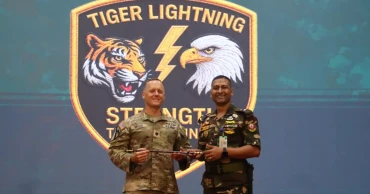
Closing ceremony of Exercise Tiger Lightning held in Sylhet
The closing ceremony of Exercise Tiger Lightning (TL)-2026 was held at Jalalabad Cantonment, Sylhet on Wednesday with the joint participation of Bangladesh Army and the United States Army Pacific Command (USARPAC).
Brigadier General Md Humayun Kabir, Director of the Military Training Directorate of Bangladesh Army, was present as the chief guest at the event.
The exercise, which began on July 19, was held with joint participation of the Para Commando Brigade of Bangladesh Army and the United States Army Pacific and Oregon National Guard, according to a press release issued by the Inter Services Public Relations (ISPR) Directorate.
Bangladesh and the United States have mutual cooperation in regional and global security, counter-terrorism, disaster management and humanitarian assistance, etc.
Bangladesh is committed to confronting any global threat, including natural disasters and has been working together with other partners, including the United States.
In continuation of this, Exercise Tiger Lightning-2026 was conducted with the aim of increasing mutual cooperation, developing strategic joint operational capabilities and strengthening readiness.
A total of 88 members of the US Army Pacific and Oregon National Guard and 92 members of the Bangladesh Army Para Commando Brigade and subject matter experts from various formations participated in this exercise.
The chief guest presented certificates to each participating member in recognition of successfully completing the exercise and insignia to each as a souvenir.
Senior military officers of both countries, including the Armed Forces Division, Army Headquarters, Sylhet Region; invited guests, instructors and participating trainees, were present at the closing ceremony.
This exercise will contribute significantly to developing the professional skills of participating military personnel and further strengthening the existing relationship between Bangladesh Army and the United States Army.
5 days ago
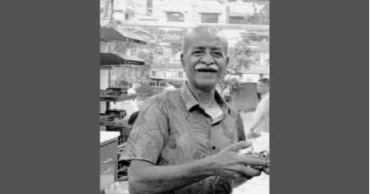
Senior journalist Kismat Khondokar dies; ERF mourns death
Senior journalist and freedom fighter Khondokar Mohammad Abul Hasnat, widely known as Kismat Khondokar, died at a city hospital on Wednesday evening. He was 69.
Kismat Khondokar, a senior correspondent at online news portal Banglanews24.com and senior member of the Economic Reporters Forum (ERF), breathed his last at Nagorik Specialized Hospital in Jahurul Islam City (Aftabnagar) around 7:30pm, family sources said.
His nephew Risat said the journalist was staying at his sister’s house at Aftabnagar and was taken to the hospital after he fell ill, where he died.
According to the ERF, he will be buried at his village home in Mirzapur of Tangail district on Thursday.
Meanwhile, ERF President Doulot Akter Mala and General Secretary Abul Kashem expressed profound shock at Kismat Khondokar’s death.
In a condolence message, they prayed for eternal peace of the departed soul and conveyed heartfelt sympathy to the bereaved family.
5 days ago