Others
Millions face growing hunger as Iran conflict fuels food crisis: UN
The United Nations food agency has warned that the ongoing war involving Iran is driving millions more people toward severe hunger, largely due to rising energy and food costs linked to the conflict.
The World Food Programme (WFP) reported that its assessment of three vulnerable countries found that an additional 2.5 million people in Somalia, 2.3 million in Afghanistan, and 1.3 million in Sri Lanka are now struggling to secure enough food to meet their basic needs.
Earlier this year, in March, the WFP projected that as many as 45 million more people could face food insecurity by the end of June, adding to the 318 million people worldwide already experiencing inadequate access to food.
Speaking to reporters at the United Nations, WFP Acting Executive Director Carl Skau said the agency continues to stand by that forecast. He explained that food and energy prices are closely connected, and in many of the world's poorest countries, families already spend most of their income on food. As prices increase, they are forced to reduce their food consumption.
According to a WFP report released Thursday, the Middle East conflict is causing significant ripple effects beyond the region, including higher food and fuel prices and disruptions to trade. These challenges are particularly harmful in countries that are already vulnerable, where they quickly undermine food security and livelihoods.
The agency warned that these pressures are likely to worsen in the months ahead, even if tensions in the Middle East ease.
Skau also highlighted other areas facing severe food insecurity, including Sudan, Gaza, southern Lebanon, Yemen, and Haiti.
At the same time, the WFP has been forced to scale back assistance programs because of funding shortages. Skau called on donor countries and organizations to increase their support, especially for Somalia and Afghanistan, warning that failure to act could lead to devastating humanitarian consequences.
1 month ago
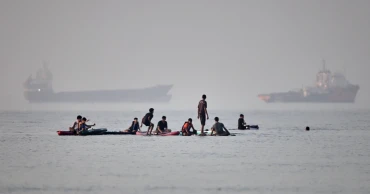
Drone clash in Strait of Hormuz deepens regional tensions
The U.S. military announced that it intercepted four Iranian drones heading toward the Strait of Hormuz on Friday and subsequently carried out strikes against several Iranian coastal radar installations. The actions have heightened concerns about the stability of an already fragile ceasefire as the Trump administration intensifies pressure on Tehran.
According to U.S. Central Command (CENTCOM), the drones posed an immediate danger to maritime traffic in the region. In response, U.S. forces targeted radar facilities, including one located on an island in the Strait of Hormuz, to prevent further attacks.
The U.S. has been enforcing a blockade on Iranian ports, citing Iran’s interference with shipping through the strategically important Strait of Hormuz, a key route for global oil and natural gas exports. The disruption has contributed to rising energy prices and created political challenges for President Donald Trump and his Republican allies ahead of congressional midterm elections.
The incident marks the latest escalation in a series of exchanges between the two sides that have threatened ongoing efforts to preserve and extend the ceasefire. Earlier in the week, Iranian drones reportedly struck Kuwait’s main airport, causing significant damage to a passenger terminal, killing one person, injuring dozens, and temporarily shutting down operations.
Despite the renewed tensions, President Trump expressed optimism, telling reporters in Wisconsin that developments involving Iran were progressing positively. He suggested that the situation could be resolved either through an agreement or through stronger measures if necessary.
Negotiators from the United States and Iran recently reached a preliminary understanding to extend the ceasefire for another 60 days and resume discussions on Iran’s nuclear program. However, progress has stalled, with Trump seeking additional changes and Iranian officials yet to publicly endorse the arrangement.
In an interview with NBC, Trump acknowledged that negotiations were taking time because of Iran’s strong sense of independence and national pride. He added that Tehran would eventually have to accept conditions it had previously resisted.
Trump also claimed that Iran still retains roughly 21–22% of its missile stockpile.
Meanwhile, the administration has highlighted a separate ceasefire agreement between Israel and Lebanon that was brokered by the United States. However, the Iran-backed Hezbollah group has rejected the deal, and renewed violence has raised doubts about its future.
On Friday, Israeli forces carried out strikes across southern Lebanon and issued evacuation orders for nine villages, including one housing many displaced residents. Lebanese state media reported that nine people were killed in six separate locations. The Israeli military also reported that two soldiers were injured, one critically, during clashes with militants in the area.
The ongoing conflict in Lebanon presents another obstacle to efforts aimed at ending hostilities involving Iran and restoring safe passage through the Strait of Hormuz. Iran has insisted that any long-term agreement must also address the situation in Lebanon.
Separately, the U.S. military reported boarding a sanctioned oil tanker linked to Iran in the Indian Ocean as part of efforts to limit Iranian oil revenues. Washington also announced additional sanctions targeting individuals, companies, and vessels associated with Iran’s energy sector.
1 month ago
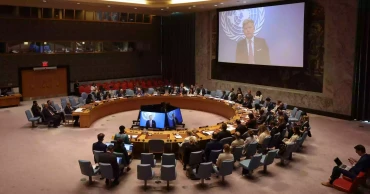
Factors behind Germany's failure to secure UN Security Council membership
Germany suffered its first-ever defeat in a UN Security Council election on Wednesday, losing to Portugal and Austria in the race for non-permanent seats.
Why did Europe's largest economy, which had successfully secured one of the Western European seats on the Security Council every eight years for decades, lose the election this time? Here is what we know.
A QUICK DEFEAT
Without going through multiple rounds of voting like Kyrgyzstan and the Philippines, Germany, a country that has long sought a permanent seat on the Security Council, was knocked out in the first round of the race in the group of Western European and Others.
According to the election rules, candidates must secure a two-thirds majority of votes cast to win a seat. In the two-of-three competition, Portugal won 134 votes and Austria 131, both surpassing the required threshold, while Germany was eliminated with 104 votes.
In a statement on Wednesday, German Chancellor Friedrich Merz congratulated the successful competitors, emphasizing their close European partnership.
German Foreign Minister Johann Wadephul told public broadcaster ARD that the result was a "real disappointment."
LATE AND VAGUE
Wadephul mainly attributed the defeat to Germany's late entry into the race. He said Austria and Portugal received more votes primarily due to their earlier applications and the resulting commitments from other states.
However, experts have also pointed to Germany's controversial diplomatic approaches, apart from its late campaigning, as key reasons for the failure.
German magazine Der Spiegel said that many states apparently used the vote to document their displeasure with Germany's foreign policy in recent years, noting that Germany had long dodged whether the U.S. military strikes on Venezuela were a violation of international law.
That ambiguity was probably one reason many states declined to back Germany's candidacy in the vote, the report said.
Multiple German media outlets also said that Germany's close relationship with Israel may have cost it crucial votes.
German broadcaster ZDF said critics have accused the German government of applying "double standards" to international law, particularly regarding its reluctance to explicitly condemn actions by Israel in Gaza, as well as actions by the United States and Israel against Iran.
Germany's policy implementation was also questioned. "What was lacking was not ambition, but the ability to translate it into results. This runs through Germany's entire foreign and security policy," said Alexander Wolf, head of the capital office of the Hanns Seidel Foundation.
The Bundeswehr has not improved as much as promised, and strategic autonomy is discussed far more often than it is put into practice, according to Wolf.
VOICES OF SMALLER COUNTRIES
A key factor behind the success of the two European countries that outperformed Germany in the election was their commitment to multilateralism.
"As a small country, Austria has made it credible to be the voice of small countries," said Austrian Foreign Minister Beate Meinl-Reisinger when talking about the country's election victory.
As a permanently neutral country, Austria has been an advocate of multilateralism in a world marked by ongoing conflicts. Austrian President Alexander Van der Bellen said on Wednesday that Austria would steadfastly promote multilateralism in the UN Security Council based on international law and human rights.
Regarding Portugal's victory, scholars generally view the election as the result of more than a decade of sustained diplomatic efforts rather than a short-term achievement.
Daniel Cardoso, associate professor in the Department of International Relations at the Autonomous University of Lisbon, told local media that Portugal launched its campaign for a seat on the UN Security Council in 2013 and maintained the effort through successive governments of different political orientations.
Portuguese Foreign Minister Paulo Rangel said that one of Portugal's greatest strengths is its ability to "build bridges." As a member of both the EU and NATO, while maintaining close ties with the Community of Portuguese Language Countries, Africa, Latin America and Asia, Portugal is widely seen as a country capable of connecting different regions and political perspectives.
1 month ago

US journalist pleads guilty to acting as an illegal agent for China
An American journalist who has lived in China since 2010 and worked for several state media organizations there pleaded guilty in a U.S. court Thursday to acting as an illegal agent for the Chinese government, the Justice Department said.
Thomas Pauken II is set to be sentenced Sept. 1 in a U.S. District Court and he faces up to 10 years in jail, the department said. He writes under the name Tom McGregor to distance himself from his father with the same name, who was a former chairman of the Texas Republican Party in the 1990s and ran for governor more than a decade ago.
It is the latest in a string of cases that the federal government has brought against people suspected of working for the Chinese government without proper disclosure.
Eileen Wang, a former mayor of Arcadia, California, agreed in May to plead guilty to acting as an illegal agent for the Chinese government. She was accused of doing the bidding of Chinese officials, including sharing articles favorable to Beijing.
Linda Sun, a former aide to New York governors, was accused of selling her influence to the Chinese government. Sun pleaded not guilty to charges that she failed to register as an agent of a foreign government, conspired with her husband to launder money and helped people commit visa fraud to enter the U.S. illegally. A December trial ended in a mistrial when a federal jury could not reach a unanimous verdict.
1 month ago
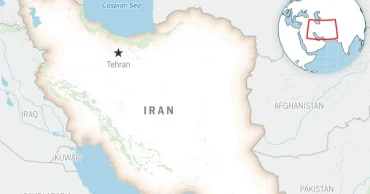
UN nuclear watchdog unable to inspect Iranian facilities
The U.N. nuclear watchdog has been unable to inspect nuclear facilities in Iran affected by the war last June according to a confidential report by the U.N. nuclear watchdog circulated to member states and seen Thursday by The Associated Press.
The International Atomic Energy Agency reported that it “cannot provide any information on the current size, composition or whereabouts of the stockpile of enriched uranium in Iran or whether Iran has suspended all enrichment-related activities.”
The IAEA warned that it was “unable to discharge its safeguards responsibilities” that it has under the Safeguards Agreement of the Nuclear Non-Proliferation Treaty, adding that it is “indispensable and urgent” for Tehran to implement its obligations under that Treaty.
The only nuclear facility inspected in Iran by IAEA inspectors since the last report in February has been the Bushehr nuclear power plant, which was visited on June 1-3. The reactor currently running at Bushehr uses uranium from Russia enriched to 4.5%, a low level needed for power generation in such plants.
The confidential report come as tensions have flared in the Middle East.
Iranian drones heavily damaged a passenger terminal at Kuwait’s main airport on Wednesday, killing one person, wounding dozens of others and briefly closing the airfield — the latest in back-and-forth attacks by Iran and the U.S. that test a fragile ceasefire.
According to the IAEA, Iran maintains a stockpile of 440.9 kilograms (972 pounds) of uranium enriched up to 60% purity — a short, technical step away from weapons-grade levels of 90%.
That stockpile could allow Iran to build as many as 10 nuclear bombs, should it decide to weaponize its program, IAEA director general Rafael Grossi warned in a recent AP interview. He added that it doesn’t mean that Iran has such a weapon.
Such highly enriched nuclear material should normally be verified every month, according to the IAEA’s guidelines.
The report said Grossi reiterates his "full support to the negotiations underway aimed at finding a mutually acceptable solution to issues related to Iran’s nuclear programme, and his readiness … to support an eventual agreement.”
Talks have dragged on for weeks as mediators seek a more enduring truce in the war, now in its fourth month. They are increasingly strained by Israel’s broadening war with Iran-backed Hezbollah militants in Lebanon.
Iran maintains its hold on the Strait of Hormuz — a crucial waterway for the world’s oil and natural gas and related products like fertilizer — and the U.S. continues its blockade of Iranian ports. Global fuel prices remain high, and the effects of the conflict are felt well beyond the region.
1 month ago
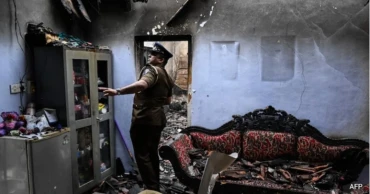
12 killed in Sri Lanka care home fire; manager arrested
The manager of a care home in Sri Lanka was arrested on Thursday, a day after a fire at the facility killed at least 12 residents and left six others injured, officials said.
The arrest came after forensic experts searched the burnt building and found seven more bodies, raising the death toll to 12.
The fire broke out at the Maupiya Sewana Elders Home on Wednesday. An AFP photographer saw the manager, wearing handcuffs, being taken to the site as police questioned survivors and local residents.
The facility housed elderly people as well as some young residents with mental health conditions.
Police said the youngest victim was a 17-year-old boy.
According to police spokesman Fredrick Wootler, 51 residents and staff members who were rescued from the fire have been moved to a nearby government-run facility.
Authorities are continuing their investigation to determine the cause of the fire.
Source: NDTV
1 month ago

UK orders Google to let publishers block AI use of their content
Britain's competition regulator has ordered Google to give news publishers and website owners the option to stop their online content from being used for the company's AI-powered search features and other artificial intelligence services.
The UK's competition watchdog, the Competition and Markets Authority (CMA), announced the move on Wednesday, describing it as a world-first measure aimed at giving publishers greater control over how their content is used by AI systems.
The decision is part of broader efforts to reduce Google's dominance in the UK's online search market. Under the new rules, Google must provide effective tools that allow publishers to prevent their content from being used in generative AI services, including AI-powered search features such as AI Overviews and AI Mode.
Google will also be required to clearly identify and link to publisher content used in AI-generated search results. In addition, publishers will be able to opt out of having their content used to train or improve Google's AI models.
According to the CMA, the new measures will strengthen publishers' position when negotiating content agreements with Google. The rules apply to anyone who publishes content online that is accessible to users in Britain.
The regulator had previously proposed the changes after designating Google as a strategic player in online search advertising under new digital competition laws.
The CMA has also found that some news publishers experienced a decline in website traffic following the launch of Google's AI Overviews, as users increasingly obtained information directly from AI-generated summaries rather than clicking through to original articles.
The new requirements will also cover major AI-related search updates unveiled by Google in May.
Google said it is working with regulators, including the CMA, to ensure website owners have the tools they need as search habits continue to evolve. The company said it has begun testing a new feature that allows website owners to control how their content and links appear in AI-powered search results.
CMA Chief Executive Sarah Cardell said the measures would promote fair treatment, greater transparency and more meaningful choices for businesses and consumers, while helping millions of users better understand and trust the information shown in search results.
1 month ago
Portugal and Austria defeat Germany for seats on the UN Security Council
Portugal and Austria defeated Germany for seats on the powerful but deeply divided U.N. Security Council on Wednesday in a hotly contested race after intense campaigning.
The 10 rotating seats on the 15-member Security Council are earmarked for different regions of the world. The assembly elects five countries by secret ballot every year to serve two-year terms alongside the council’s five permanent veto-wielding members — the United States, Russia, China, Britain and France.
In the other contested race, after four rounds of voting in the 193-member General Assembly, Kyrgyzstan defeated the Philippines by a vote of 143-49 and will join the council for the first time.
Zimbabwe, the African candidate, and Caribbean candidate Trinidad and Tobago had no opponents and both were elected with more than 180 votes.
In the race for the two seats for the group of mainly Western nations, Portugal received 134 votes and Austria 131 votes, while Germany, Europe’s economic powerhouse which had served six previous terms on the council, received 104 votes.
Austria’s foreign ministry said its election capped a 15-year campaign and is a “strong international sign of confidence” in the country.
Kyrgyzstan’s Foreign Minister Jeenbek Kulubayev told reporters “we understand now is a turbulent time” and said Kyrgyzstan will work together with other council members.
The five new members will take up their seats on Jan. 1. They will replace Denmark, Greece, Pakistan, Panama and Somalia.
The Security Council is mandated under the U.N. Charter with ensuring international peace and security, but it has failed in the three major current conflicts because of the veto power of Russia on Ukraine and of the United States, Israel’s closest ally, often on Gaza and on Iran.
There have been decades of efforts to reform the Security Council to reflect the geopolitical realities of the current world, not of the post-World War II era 80 years ago, when the United Nations was established. But they have all failed, though a new attempt is underway.
2 months ago
Iran and US exchange strikes in Gulf as fragile ceasefire comes under strain
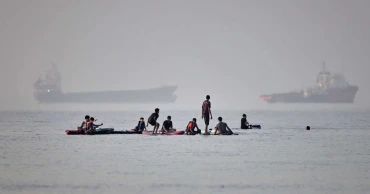
Iran and the United States carried out fresh strikes across the Persian Gulf region on Wednesday, further testing an already fragile ceasefire and briefly forcing Kuwait to shut down its main international airport after a drone attack caused damage and casualties.
Kuwait said its airport was partially shut after Iranian drones struck the passenger terminal, damaging the building and killing at least one person, according to officials. The airport later reopened in a limited capacity, with some flights resuming from an alternate terminal.
The latest violence came as Iranian semi-official media reported that Tehran had stopped communicating with mediators over extending a ceasefire with the United States and Israel. However, a regional official involved in the talks said Iran wanted the truce in Lebanon enforced before returning to negotiations. US President Donald Trump insisted discussions were still ongoing.
The repeated exchanges of attacks across the Gulf, along with the widening conflict in Lebanon involving Iran-backed Hezbollah, have further complicated ceasefire efforts that have already been dragging on for weeks.
Kuwait’s Defence Ministry said “a number of hostile drones” hit the airport’s passenger building, causing heavy damage and injuries. Later, the foreign ministry confirmed at least one death.
State media reported that Kuwait Airways suspended operations following the attack. Aviation authorities said the airport partially reopened later in the day, but operations remained severely restricted.
The airport had only reopened earlier this week after being closed due to the ongoing conflict.
The US military said Iran also fired missiles toward Kuwait, which broke apart mid-air, while American forces shot down multiple drones targeting US personnel in the country. It added that US and Bahraini forces intercepted additional missiles aimed at Bahrain, where Iran allegedly targeted areas near the US Navy’s 5th Fleet.
Bahrain’s defence ministry said it destroyed several incoming missiles and drones.
In response, the US said it struck an Iranian military ground control facility on Qeshm Island near the Strait of Hormuz, describing it as retaliation for attacks on Kuwait and Bahrain.
Iran’s Revolutionary Guard confirmed it had targeted US military facilities, including the 5th Fleet headquarters in Bahrain, though it did not specifically mention Kuwait. It said its actions were in response to earlier US strikes.
Iran’s Foreign Ministry condemned the US attack on Qeshm Island, calling it a violation of the ceasefire and describing it as an “act of aggression.”
Amid rising tensions, an Emirati diplomat called for a united Gulf response, warning that the conflict threatens the entire region rather than any single country.
Iranian news agencies reported that Tehran had paused communication with ceasefire mediators, linking the talks to conditions involving the conflict in Lebanon, where fighting involving Israel and Hezbollah has intensified.
However, a regional mediator told The Associated Press that Iran had not responded to outreach efforts on Tuesday.
President Trump rejected claims that negotiations had stopped, saying discussions had continued daily and urging Iran to reach a deal.
“The conversations between us have been going on continuously… It’s time, one way or another, for you to make a deal,” Trump wrote on social media.
The broader conflict has also become tied to Israel’s war in Lebanon, where Israeli forces have expanded operations despite a nominal ceasefire with Hezbollah. The situation has created friction between Washington and Israel, with the US urging restraint while Israel pushes for stronger military action.
Reports also suggested a tense recent phone call between Trump and Israeli Prime Minister Benjamin Netanyahu, though no official details were provided.
2 months ago

Solomon Islands to review security pact with China, says new prime minister
Solomon Islands' newly elected Prime Minister Matthew Wale has announced plans to review the country's security agreement with China, a deal that has raised concerns among the United States, Australia and other regional partners since it was signed in 2022.
The agreement was reached under former Prime Minister Manasseh Sogavare and sparked fears that it could eventually allow China to establish a naval presence in the South Pacific.
Speaking during a visit to Australia on Wednesday, Wale said he had only recently obtained a copy of the treaty and was still examining its contents.
"I've had a look at it, but not in detail," Wale told reporters in Canberra, adding that the agreement contains a confidentiality clause that prevents its immediate public release.
He said the government would review the China pact along with other security agreements the country has with foreign partners.
Wale had previously called for greater transparency regarding the treaty before becoming prime minister through a parliamentary vote on May 15.
Responding to the announcement, China's Foreign Ministry said Beijing was ready to work with the new Solomon Islands government to expand cooperation in various sectors for the benefit of both countries.
The visit to Australia marks Wale's first overseas trip since taking office. During the visit, he and Australian Prime Minister Anthony Albanese agreed to begin negotiations on a broader strategic partnership covering security and economic cooperation.
Wale said the two countries were seeking to "reset" relations after several years of difficulties under the previous administration.
Albanese reiterated Australia's position that it should remain the Solomon Islands' preferred security partner rather than China.
He said Australia wants Pacific nations to work together to maintain regional security and stability.
Wale expressed support for a regional approach to security, saying it was the direction his government wanted to pursue.
China has already provided police training and support to the Solomon Islands under the existing security agreement. The Pacific nation does not have a military, giving its police force a broader role in national security.
The Solomon Islands strengthened ties with Beijing in 2019 when the government switched diplomatic recognition from Taiwan to China, a move widely seen as a major diplomatic win for Beijing.
2 months ago