others
Louvre reopens Apollo Gallery after jewel theft, with tighter security
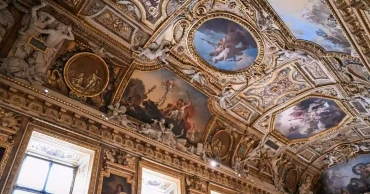
The Louvre Museum has reopened its historic Apollo Gallery to visitors for the first time since last year's high-profile theft of the French crown jewels.
The gallery no longer displays the royal jewels and other valuable treasures, as the museum has restored the space to its original 17th-century ceremonial purpose.
The Louvre has also strengthened security by installing additional surveillance cameras and new anti-intrusion systems following the robbery.
During the heist, thieves broke into the Apollo Gallery through a window and stole French crown jewels worth about 88 million euros (around $102 million). The theft took less than eight minutes and exposed major security weaknesses at the world-famous museum.
The security upgrades are part of the Louvre's long-term "Louvre New Renaissance" renovation programme, launched last year.
The project, estimated to cost up to 800 million euros (about $933 million), aims to modernise the museum, reduce overcrowding and create a dedicated gallery for the Mona Lisa by 2031.
12 days ago
Some families still waiting for $1,000 as Trump promotes child investment accounts
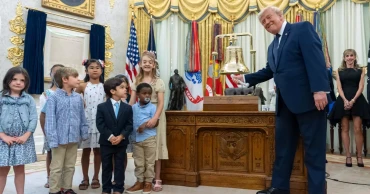
President Donald Trump is set to promote his administration's Trump Accounts program during a visit to a high school in Georgia on Wednesday, even as some parents say they are still waiting for the promised $1,000 government contribution for their newborns.
The Trump Accounts, launched on July 4, provide a $1,000 government-funded investment for every child born during Trump's second term. The tax-advantaged accounts were introduced under Trump's signature One Big Beautiful Bill and can be opened for any child under the age of 18.
According to the US Treasury Department, about 6.5 million accounts have been opened so far. Of those, around 1.5 million belong to children born between 2025 and 2028 who qualify for the $1,000 government deposit.
Supporters say the programme will help more Americans build wealth by encouraging investment in the stock market from an early age. Once the accounts are opened, parents, relatives, friends and employers can add money. The funds are invested in stock market index funds managed by private firms.
The money cannot be withdrawn until the child turns 18 and can then be used only for approved purposes, such as higher education, starting a business or buying a home.
However, some parents say they have not yet received the promised government deposit.
Masaki and Kristina McLellan of New Jersey opened a Trump Account for their daughter Maya, who was born in late March. Although they were initially hesitant because they viewed the programme as politically motivated, the $1,000 incentive convinced them to sign up.
Masaki McLellan said he applied on July 6. His first application was rejected, but the account was activated after he contacted the programme's customer service hotline. He was initially told the government contribution would arrive within 10 days but was later informed it could take up to four weeks.
Kristina McLellan said she was disappointed by the delay, although the family has already opened other investment accounts for their daughter, including a college savings plan and a custodial brokerage account.
"We definitely want to give her options for her future and make sure she can choose what she wants to do," she said.
The Treasury Department described the delay as part of the normal processing period, similar to waiting for a tax refund. It said most families receive the government contribution within one or two days, but officials provide a longer estimate to account for possible processing delays.
The department said the programme allows families of all income levels to invest in their children's future and claimed it has become the most successful government-backed savings programme in US history, with around one million new sign-ups each month before its official launch.
Trump's visit to Georgia comes as he and fellow Republicans face growing scrutiny over the economy ahead of the midterm elections. An Associated Press-NORC poll conducted in June found that only 33% of US adults approved of Trump's handling of the economy, one of his lowest ratings during his second term.
Trump Accounts resemble the "baby bonds" programmes introduced in some Democratic-led states and cities to reduce wealth inequality among children. However, unlike many of those programmes, Trump's initiative is available to families regardless of income.
Critics argue the accounts provide little help during a child's early years, when families are most vulnerable to poverty, homelessness and food insecurity. They also point out that the legislation creating the programme reduced funding for several programmes widely used by children, including Medicaid and the Supplemental Nutrition Assistance Program (SNAP).
12 days ago
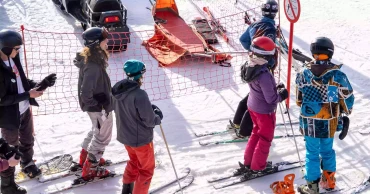
Lesotho's mountain ski resort attracts winter tourists from across southern Africa
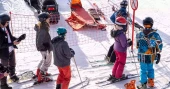
Thousands of winter sports lovers travel to the small mountain kingdom of Lesotho every year, making it one of southern Africa's most unusual tourist destinations.
Thanks to its high altitude and rugged mountains, Lesotho is the coldest country in Africa. During the winter months from June to August, temperatures in the highlands can drop to minus 8 degrees Celsius.
The country's Afriski Mountain Resort, located about 3,200 metres above sea level in the northern Maluti Mountains, is the only fully operational ski resort in sub-Saharan Africa. Spread across 17 hectares, the resort has welcomed skiers and snowboarders for the past 25 years.
Tourism contributes around 7% of Lesotho's $2.6 billion economy, and Afriski plays an important role by attracting visitors and creating jobs. The resort also uses artificial snow machines to keep its slopes open throughout the Southern Hemisphere's winter.
Visitors mainly from South AfricaAlthough U.S. President Donald Trump joked in 2025 that Lesotho was a country "nobody has ever heard of," the kingdom of 2.3 million people has been drawing growing numbers of tourists. In 2024, it celebrated 200 years since the founding of the Basotho nation and 58 years of independence from Britain.
Most visitors drive from neighbouring South Africa, while others arrive through the airport in the capital, Maseru.
Afriski CEO Theo Ferreira said nearly 70% of visitors come from South Africa, with the rest mainly from Lesotho and other southern African countries.
The resort employs 227 full-time and seasonal workers, most of them Basotho nationals, while around 30 South Africans work mainly as ski instructors.
Afriski can accommodate 420 overnight guests, with nearby towns such as Butha-Buthe and Mohlokong providing extra lodging during the busy season. The resort recorded more than 1,400 visitors on its busiest day this year, while the 2025 record exceeded 1,600 visitors.
Because snowfall can be unpredictable, the resort depends on artificial snow to keep skiing conditions suitable throughout winter.
A different side of AfricaKnown mainly for wildlife safaris and scenic coastlines, southern Africa is not usually associated with skiing. But Afriski has helped introduce winter sports to many first-time visitors.
Janko Smits, a student from Cape Town, said the resort was an excellent place to learn skiing despite a few hard falls at the beginning.
Another first-time visitor, Thato Ramaphoko from Pretoria, said it was surprising to experience snow in Africa, where many people expect only sunshine and deserts.
Besides skiing, visitors can enjoy local food, Maluti Lager beer and the colourful Basotho blanket, one of Lesotho's best-known cultural products.
13 days ago
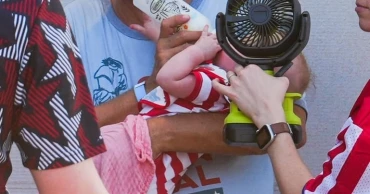
How to protect babies and young children during extreme heat
Health experts say babies, toddlers and young children need outdoor play for healthy growth and development, but parents should take extra precautions to protect them during periods of extreme heat.
As climate change contributes to longer and more intense heatwaves, doctors say heat-related illnesses are becoming a growing concern for children.
"We've always warned parents about risks like drowning and choking, and now heat is becoming another major safety concern," said Dr. Katherine Williamson, a pediatrician at Rady Children's Health in Orange, California.
Why children are more at risk
Experts say young children overheat more quickly than adults because they sweat less and have a faster metabolism. Their bodies also absorb heat more easily due to a higher surface-area-to-body-mass ratio.
Since children often spend more time outdoors, parents should closely watch for signs of heat-related illness.
For infants, fewer wet diapers or a lack of tears when crying may indicate dehydration. Doctors recommend feeding babies smaller amounts more frequently to help keep them hydrated.
Tiredness, flushed skin and unusual irritability are also signs that a child may be getting too hot and needs to cool down.
Ways to keep children safe
Doctors recommend avoiding outdoor activities during the hottest part of the day whenever possible. Children should wear loose-fitting, light-coloured clothing, use sunscreen and drink plenty of fluids.
Water-rich fruits such as watermelon and strawberries can also help keep children hydrated.
"If you feel hot, your baby is almost certainly feeling even hotter," said Dr. Debra Langlois of the University of Michigan Health C.S. Mott Children's Hospital.
She advised limiting the amount of time babies and toddlers spend outside during very hot weather, although she said there is no need to stay indoors all day.
Avoid covering strollers with blankets
Health experts warn against placing blankets or cloth covers over baby strollers to block the sun.
Although it may seem helpful, coverings reduce airflow and trap heat inside the stroller, making it much hotter for the child.
Instead, parents should use the stroller's built-in sunshade or canopy. They should also check metal parts of the stroller, which can become hot enough to burn a child's skin.
Never leave children in a parked vehicle
Doctors also stress that children should never be left alone inside a parked vehicle, even for a short time.
Temperatures inside a car can rise rapidly, even if the windows are partly open or the vehicle is parked in the shade.
According to the US National Highway Traffic Safety Administration, 31 children died from heatstroke in vehicles in 2025.
The agency recommends placing a personal item, such as a handbag, in the back seat or putting a stuffed toy on the front passenger seat as reminders to check the back seat before leaving the vehicle.
When placing a child in a parked car on a hot day, parents should also make sure the car seat and metal buckles are not too hot.
Experts recommend using sunshades to keep the vehicle cooler and running the air conditioner while opening the windows briefly to help remove trapped hot air before putting a child inside.
14 days ago

Sai Pallavi's Coimbatore home reflects simplicity, tradition and family values
As actress Sai Pallavi prepares for the release of Ramayana: Part 1, where she will play the role of Sita, her family home in Coimbatore has drawn attention for its simple and traditional design.
The actress recently attended the Pratham Sankalp event in New Delhi ahead of the film's release later this year.
Unlike the glamorous image often associated with film stars, Sai Pallavi's family residence reflects a modest lifestyle rooted in comfort and tradition. According to property platform NoBroker, the house is estimated to be worth between Rs 5 crore and Rs 8 crore.
The home focuses on warmth and practicality rather than luxury, with interiors that highlight family values and cultural traditions.
The spacious living room serves as the main gathering space for the family. Designed with comfort in mind, it features classic wooden furniture and comfortable sofas arranged to encourage conversation and togetherness.
Natural stone or tiled flooring adds a simple yet elegant touch to the home.
The residence also reportedly includes a prayer area, comfortable bedrooms and a lush green garden, creating a peaceful environment that reflects Sai Pallavi's grounded lifestyle despite her growing success in the film industry.
Source: NDTV
14 days ago
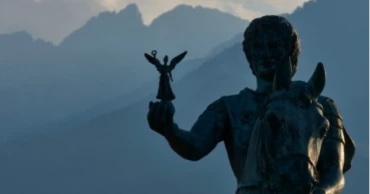
Mount Olympus seeks UNESCO World Heritage status for its cultural and natural value
Greece is hoping to secure UNESCO World Heritage status for Mount Olympus, the country's highest peak and the legendary home of the ancient Greek gods, by highlighting its unique blend of mythology, history, biodiversity and natural beauty.
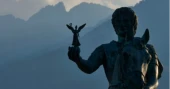
The 2,918-metre (9,573-foot) mountain, snow-covered for much of the year, has long been linked to ancient Greek mythology. According to legend, Zeus, the king of the gods, ruled from its highest peak after defeating the Titans.
Greece's nomination for Mount Olympus as a mixed cultural and natural World Heritage site will be considered during the UNESCO World Heritage Committee meeting in Busan, South Korea, running from Sunday to July 29.
"Olympus is part of our everyday life," said Evagelos Geroliolios, mayor of Dion-Olympus municipality, based in the mountain town of Litochoro. "It represents mythology, history, biodiversity, stunning landscapes and a rich cultural heritage."
Interest in the mountain may also increase with the release of Christopher Nolan's latest film, The Odyssey, based on Homer's epic, where Mount Olympus is portrayed as the home of Zeus and the Olympian gods who shape Odysseus' journey.
Archaeological discoveries have added to the mountain's historical importance. Excavations on one of its lower peaks uncovered an ancient open-air sanctuary dating back to the Hellenistic era (323 B.C. to 30 B.C.). Historians believe it may be the sanctuary mentioned by the ancient writer Plutarch, who described religious processions and animal sacrifices dedicated to Zeus.
Mount Olympus also remained an important religious site during the Christian era. It is home to what is believed to be the world's highest Orthodox Christian chapel, located on the Prophet Elias peak at 2,803 metres. The mountain also contains the remains of a monastery founded in 1542 and the Holy Cave of St. Dionysios, where a small spring is believed by many to have holy water.
Beyond its cultural and religious importance, Mount Olympus is known for its rich wildlife and plant life, including many species found nowhere else. Local officials believe this combination of natural and cultural significance makes it a strong candidate for World Heritage recognition.
"We want to preserve this place for future generations," Geroliolios said, adding that UNESCO recognition would be an achievement of global importance rather than just a local or national one.
Greece first placed Mount Olympus on UNESCO's Tentative List in 2014, the required first step before submitting a formal nomination. The application has since undergone detailed evaluations by international heritage and conservation experts.
However, the mountain's inclusion is not guaranteed. A draft agenda for the UNESCO meeting suggests the committee may ask Greece to provide additional information before making a final decision.
Despite the uncertainty, local residents remain hopeful that the mountain's exceptional natural and cultural value will earn it a place on the prestigious list.
Supporters also believe World Heritage status would strengthen efforts to protect the mountain, although it could also bring more visitors.
Mountain guide Babis Marinidis, president of the Alpine Club of Litochoro, said increasing tourism could put additional pressure on the fragile ecosystem.
"How many visitors can this mountain and its ecosystem really support?" he asked, noting that many tourists ignore restrictions such as bans on camping and swimming.
Because of the growing number of visitors, local authorities are considering measures such as entry fees and visitor registration to better manage tourism. Marinidis said he had previously opposed such restrictions but now believes limits may be necessary.
Mount Olympus remains a popular destination for hikers and climbers from around the world. Although reaching the summit does not require advanced climbing skills, rapidly changing weather and difficult terrain can make the mountain dangerous.
On July 11, a 64-year-old Greek hiker died after collapsing on a trail. In May, rescue teams recovered the body of a 25-year-old Spanish climber who went missing while attempting to reach the summit through snowy conditions.
First-time visitor Triantafyllos Giannospyros said careful planning and proper preparation are essential.
"You need to respect the mountain and always put safety first," he said.
Hotel owner Stavroula Vourou, whose business serves many hikers visiting Litochoro, shared the same view.
"People come here to conquer the mountain," she said. "But if you respect Mount Olympus, it will respect you too."
15 days ago
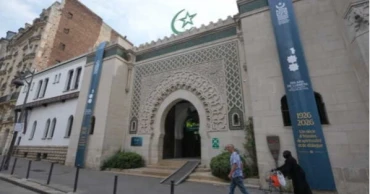
Paris Grand Mosque marks 100 years, highlights unity and interfaith dialogue
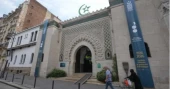
The Grand Mosque of Paris marked its 100th anniversary on Friday, with worshippers and religious leaders celebrating its history while calling for greater unity, religious tolerance and understanding in France.
Built a century ago to honour Muslim soldiers from France's former colonies who fought and died in World War I, the mosque has become one of Paris' best-known landmarks and an important place of worship for the country's Muslim community.
Chems-eddine Hafiz, rector of the Grand Mosque, described the mosque as a symbol of France's diversity and interfaith dialogue. However, he expressed concern over growing religious tensions linked to conflicts in the Middle East and the country's increasingly polarised political climate ahead of next year's presidential election.
"It is everyone's responsibility to see Muslims as part of the national community," Hafiz told The Associated Press.
People from across the Paris region attended the centenary prayers, including French-born Muslims and families with roots in Algeria, Senegal and other former French colonies.
Located in the historic Latin Quarter, the mosque is also a popular tourist attraction. Inspired by Spain's Alhambra Palace in Granada, it features an ornate prayer hall, a 33-metre-high minaret overlooking the Seine River, a traditional tea room and a hammam.
Built to honour Muslim soldiers
Hafiz said the mosque was built to recognise the sacrifices made by Muslim soldiers who fought for France during World War I, particularly those who died in battles such as Verdun.
He noted that when the mosque opened in 1926, then French President Gaston Doumergue described France's diversity as a source of national strength.
While he believes that message remains relevant today, Hafiz said prejudice against Muslims continues.
"Anti-Muslim acts are still committed, and Islam is often misunderstood," he said.
Calls for greater acceptance
Islam is the second-largest religion in France, which has Western Europe's biggest Muslim population. However, many Muslims say they still face discrimination and negative stereotypes, especially after a series of extremist attacks over the past decade.
The issue has become more prominent as campaigning begins for France's 2027 presidential election, with far-right leader Marine Le Pen and her National Rally party continuing to focus on immigration and Islam.
Volunteer Fatma Chouchane said Muslim women should be free to choose whether to wear headscarves without restrictions in schools or workplaces.
"I ask France to leave these people alone and let them make their own religious choices," she said.
Despite those concerns, Chouchane said the mosque's centenary should be a celebration of unity.
"It is a symbol. It is the Paris museum for Muslims. We must all stand together," she said.
For Ibrahima Seye, who moved to France from Senegal, the Grand Mosque was one of the first places he visited after arriving in the country.
"It's always open," he said. "It is important for the Muslim community, and many tourists also appreciate it."
16 days ago
Cutting daily choices can reduce stress and improve decision-making, experts say
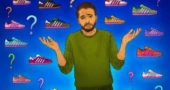
Modern life often encourages people to believe that having more choices leads to better decisions whether it is buying clothes, choosing entertainment or finding the right partner. But psychologists say too many options can have the opposite effect, making people feel overwhelmed, anxious and less satisfied with their decisions.
Barry Schwartz, emeritus professor of psychology at Swarthmore University and author of The Paradox of Choice, said research over the years has consistently shown that too many choices can create mental stress rather than freedom.
"There have been hundreds of studies showing that there can be too much of a good thing," Schwartz said.
He advised people to reduce the number of decisions they make every day, saying it helps lower mental pressure and makes decision-making easier.
Too many options can discourage decisions
Schwartz cited several studies showing that people often avoid making decisions when faced with too many choices.
For example, people were less likely to select a Medicare Part D prescription drug plan in US states offering more plan options. A similar pattern was found with 401(k) retirement savings plans, where employees were less likely to join when employers offered too many investment choices—even when matching contributions were available.
The same trend appears in everyday life. One well-known study found that shoppers bought more jars of jam when offered six flavours than when they had 24 choices. Another study showed students were more likely to complete an extra-credit assignment when they could choose from six topics instead of 30.
According to Schwartz, too many options can leave people feeling stuck.
"Instead of being liberated by all this choice, you're paralyzed," he said.
He added that people may also become less satisfied with their final decision because they keep wondering whether another option would have been better.
This is especially true for people psychologists describe as "maximizers"—those who always want the absolute best choice.
However, Schwartz noted that not everyone reacts the same way. People with a strong interest in a particular subject, such as car enthusiasts, often enjoy comparing many options before making a purchase.
Brain prefers familiar decisions
Daniel Willingham, a psychology professor and neuroscience researcher at the University of Virginia, said the human brain naturally tries to avoid unnecessary thinking because problem-solving requires more energy than relying on habits or memory.
He explained that when people face a task, the brain first searches for familiar solutions before using deeper thinking.
"Another way to put it is that if you're thinking, things are not going well," he said.
This is why many people follow the same daily routines, such as taking the same route to work, even though they have other options.
Schwartz added that social media has made the problem worse by encouraging constant comparisons with other people's choices, increasing expectations that every decision should be perfect.
Aim for "good enough"
Author David Epstein said researching his book Inside the Box: How Constraints Make Us Better changed the way he makes decisions. Instead of endlessly comparing products, he now limits his choices—for example, buying several of the same T-shirt in different colours once he finds one that fits well.
His approach follows the idea of "satisficing," introduced by Nobel Prize-winning economist and psychologist Herbert Simon. The concept encourages people to choose an option that meets their needs instead of searching endlessly for the perfect one.
Epstein said he now sets simple rules before shopping online. Once he finds a product that meets his main purpose, he buys it instead of continuing to compare endless features and reviews.
Both Willingham and Schwartz also recommend relying on trusted advice for some decisions. Instead of researching every available phone, for example, people can simply buy a model recommended by a satisfied friend.
For more important decisions, such as financial planning, Willingham said seeking professional advice often leads to better outcomes than trying to figure everything out alone.
Schwartz acknowledged that changing decision-making habits can be difficult, but said the benefits are significant.
Over time, he said, people become more confident in their decisions, feel happier with their choices and save valuable time each day.
16 days ago
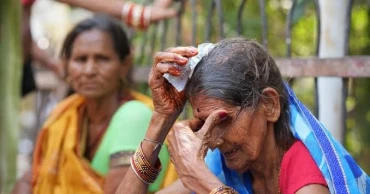
Life in one of the world's hottest towns: How Banda residents struggle with extreme heat
Scorching temperatures around the clock, frequent power cuts and sleepless nights have become part of daily life for residents of Banda, a town in northern India that has repeatedly ranked among the hottest places on Earth.
Climate change, driven largely by the burning of fossil fuels such as coal, oil and gas, is making heatwaves across India more frequent and severe, according to experts. Banda, in Uttar Pradesh state, has been among the worst-hit areas.
In May, the town recorded a temperature of 48.2 degrees Celsius (118.8 degrees Fahrenheit), one of several occasions this year when it was India's hottest location. Climatologist and weather historian Maximiliano Herrera said Banda also ranked as the hottest place on Earth on seven different days this year, most of them in April.
Although temperatures have eased slightly since then, high humidity brought by the monsoon has kept conditions uncomfortable.
An Associated Press team visited Banda in June to see how residents cope with the extreme heat.
Before sunrise, 70-year-old Munni Devi and her four sons begin unloading vegetables at the local market while temperatures are already around 30 degrees Celsius.
Despite the exhausting conditions, Devi said missing work is not an option.
"Everyone feels the heat, but because of our circumstances, we have to bear it," she said.
She said the heat has become more intense every year, while unreliable electricity leaves many families without even ceiling fans for hours at a time. To keep cool, her grandchildren are often sprayed with water using a hose.
As temperatures climb during the afternoon, many people remain indoors if possible. But street vendors and auto-rickshaw drivers continue working outside to earn a living.
Meanwhile, 70-year-old animal lover Shobharam Kashyap spends his afternoons building wooden birdhouses to help birds survive the extreme weather.
He and other volunteers have installed more than 15,000 birdhouses across Banda, many painted green because he believes birds prefer that colour. He has also placed clay bowls filled with water around his home for birds to drink and cool off.
Kashyap said caring for birds reflects a long-standing cultural tradition in India, where people often leave food for birds at temples.
The rising temperatures are also putting pressure on Banda's healthcare system.
Doctors at the town's main hospital say patient numbers increase every summer, with many suffering from dehydration, heat exhaustion, diarrhoea, vomiting and abdominal pain.
Hospital superintendent Dr Abhishek Pranayami said admissions continue to rise every year, placing growing pressure on doctors and medical staff.
Even after sunset, temperatures remain high, forcing many residents to spend the night outdoors.
At Banda railway station, families gather on open platforms hoping for cooler air. Some sleep on blankets spread across the platform, while others rest on benches or near the station entrance. Labourers whose homes remain unbearably hot often sleep on nearby pavements or even on gravel despite traffic and noise.
Parents with young children sometimes stay awake through the night, waiting at the station where the open space offers some relief from the heat.
Climate and health expert Abhiyant Tiwari of NRDC India said Banda has always experienced hot summers, but climate change is making heatwaves more intense, longer-lasting and more dangerous.
He warned that persistently high night-time temperatures are especially harmful because they prevent the human body from recovering after prolonged daytime heat exposure.
District Magistrate Amit Aasery said local authorities have opened cooling centres, distributed hundreds of thousands of oral rehydration solution (ORS) kits and strengthened hospital preparedness during heat alerts.
Officials are also monitoring groundwater levels, soil moisture and vegetation while working to improve water supplies and raise public awareness about heat risks.
However, Aasery acknowledged that local efforts alone cannot solve the problem.
"What is happening here is a global phenomenon. It is because of climate change. We are the recipient of this," he said.
18 days ago
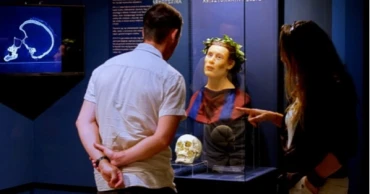
Ancient Roman faces recreated in Hungary exhibition using DNA and forensic science
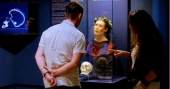
A new exhibition in Hungary is giving visitors a rare chance to meet the people of ancient Rome through lifelike facial reconstructions based on DNA analysis and forensic science.
The exhibition, titled "Once We Were Like You," is being held at the Aquincum Museum in Budapest until Oct. 31. It features highly detailed reconstructions of more than a dozen people whose skulls were unearthed in Aquincum, a thriving Roman settlement on the Danube frontier nearly 2,000 years ago.
The reconstructed faces include a blacksmith, a stable boy, a soldier and a slave, offering a glimpse into the lives of ordinary people who once lived in the Roman city.
"Our main goal was to bring some of these individuals closer to people today," said Loránt Vass, an archaeologist and co-curator of the exhibition.
According to the museum, the exhibition seeks to answer questions about everyday people in ancient times—what they looked like, who they were and how they lived.
Experts used DNA extracted from the bones to identify features such as skin, hair and eye colour, and even whether a person likely had freckles. The skulls also provided clues about facial structure, age, injuries and diseases.
Using these findings, curators created names, occupations and life stories for each reconstructed individual, based on historical evidence and scientific analysis.
"We don't know their real names, unfortunately, but we tried to include everything anthropology and genetic studies could tell us about their lives," said co-curator Péter Vámos.
One reconstructed figure, named Respectus, is portrayed as a construction worker who earned a living plastering walls and cutting stone. According to the exhibit, years of hard labour left visible marks on his bones. It also suggests he broke his nose and lost a tooth during a tavern fight after drinking wine.
Vass said Respectus reflects the lives of many people who lived in Aquincum. Analysis showed that most of the skeletons had signs of inflammation, indicating years of physically demanding work.
"They regularly performed hard labour, and many also experienced periods of hunger," Vass said. "This suggests that most belonged to the lower middle class, a group that is rarely remembered in Roman history."
Among the 16 reconstructions, six are life-size silicone models that have been carefully painted and fitted with realistic hair, clothing and jewellery.
Artist Emese Gábor, who created the silicone models, said artificial intelligence can generate digital images of ancient faces, but physical reconstructions provide a more meaningful museum experience.
"They can be viewed from every angle and are life-size," she said. "I rely on scientific methods and combine traditional and modern techniques in this work."
DNA analysis also revealed the ethnic diversity of Aquincum's population. The findings showed that, alongside Roman citizens from what is now Italy, the city was home to people whose ancestors came from present-day Scotland and Syria, as well as members of the nomadic Sarmatian tribes. The region's earlier Celtic inhabitants were also represented.
Vass said archaeological discoveries often end up as stored artifacts, with little attention paid to the people behind them.
"The bodies have no weight, no life, no soul," he said.
By recreating the faces of Aquincum's former residents, the museum hopes visitors will see them as people much like themselves.
"The title of the exhibition reminds us that they were like we are today," Vass said. "They had jobs, faced challenges and lived ordinary lives. Their circumstances may have been different, but people are still people. I don't think that has changed much throughout history."
19 days ago