Foreign-Affairs

Members to discuss roadmap, action plan for 2026 on key security matters
Bangladesh, India and other Member States will sit together in New Delhi on Thursday to promote closer cooperation on vital matters of security and to strengthen partnership for enhancing regional security in the Indian Ocean region.
India is hosting the 7th meeting of the National Security Advisers (NSAs) of the Colombo Security Conclave (CSC).
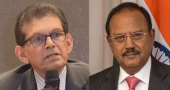
Indian NSA Ajit Doval will host his counterparts from Member States including Maldives, Mauritius, Sri Lanka and Bangladesh.
Seychelles is participating as an Observer State, and Malaysia has been invited as a Guest.
In keeping with this vision and objective, the 7th meeting of the NSAs will be an opportunity for the participants to review the activities under the different pillars of cooperation, namely- maritime safety and security; countering terrorism and radicalization; combating transnational organized crime; cyber security and protection of critical infrastructure and humanitarian assistance and disaster relief, and discuss the roadmap and action plan for 2026, said the host country- India.
Earlier, National Security Adviser (NSA) and High Representative for the Rohingya Issue Dr Khalilur Rahman on Wednesday met his Indian counterpart Doval in New Delhi.
“They discussed work of the CSC (Colombo Security Conclave) and key bilateral issues,” said an official at the Bangladesh High Commission in New Delhi.
Dr Rahman invited Doval to visit Bangladesh at his convenience.
Bangladesh delegation to the seventh NSA-level meeting of the Colombo Security Conclave (CSC), led by Dr Rahman, met with the NSA of India and his team, said the High Commission.
Dr Rahman reached New Delhi on Tuesday night at the invitation of National Security Adviser of India Ajit Doval to attend this regional forum, the official told UNB.
“I don’t want to interfere with the agenda that he (Dr. Rahman) has,” Foreign Affairs Adviser Md Touhid Hossain said when asked whether his colleague would raise the extradition issue with India amid Dhaka’s renewed call for former Prime Minister Sheikh Hasina’s extradition.
Adviser Hossain, however, said if feels necessary he (Dr Rahman) can certainly raise the issue but they will go by through their official channel.
Bangladesh on Monday urged the government of India to immediately hand over former Prime Minister Sheikh Hasina and former Home Minister Asaduzzaman Khan Kamal, both convicted already, to its authorities.
The 6th meeting of the NSAs of CSC was held in December 2023 in Mauritius, and Member States met again during the Signing Ceremony for the Founding Documents of CSC in Sri Lanka in August 2024.
The Deputy National Security Advisers (DNSAs) of CSC countries have also been meeting at regular intervals.
The CSC’s core objective is to promote regional security by addressing transnational threats and challenges of common concern to the Member States.
NSA Dr Rahman’s participation at the Colombo Security Conclave in New Delhi is in continuation of the interim government's efforts to foster mutually beneficial regional cooperation, Bangladesh said.
The interim government emphasises regional cooperation as a priority and has actively participated in meetings of various regional bodies.
In April this year, Chief Adviser Prof Muhammad Yunus was elected Chair of BIMSTEC. He has been working hard to reactivate SAARC, said the press wing.
NSA Dr Rahman earlier led a Bangladesh delegation to the China-Indian Ocean Region Forum in Kunming, China.
Bangladesh was officially welcomed in 2024 as the fifth Member State of the Colombo Security Conclave (CSC), a grouping that includes India, Sri Lanka, Mauritius and the Maldives. Seychelles participates with observer status.
8 months ago

EU lauds Labour Law revision; seeks swift post-election action
The European Union (EU) has welcomed the revision of the Bangladesh Labour Act by the interim government, saying this is a crucial step toward stronger labour rights and part and parcel of Bangladesh’s long-term preferential access to the EU market.
"As the country prepares for elections in early 2026, the EU underlines the importance of implementation and of policy consistency," said the EU Embassy in Dhaka on Wednesday.
The EU said they look to whichever party or parties form the next administration to swiftly confirm the revision after election.
The EU also welcomed Bangladesh’s ratification of ILO Conventions 155, 187 and 190, which address safety, health, and the elimination of violence and harassment at work.
All of this builds positive momentum for the Bangladesh-EU relations.
Meanwhile, the International Labour Organization warmly congratulated the interim government of Bangladesh on the publication of the Bangladesh Labour Act (Amendment) Ordinance, 2025 in the official gazette on November 17.
This amendment reflects the government's strong commitment to strengthening labour rights and improving working conditions for all workers across the country, ILO said.
Govt clears Labour Law amendments to expand workers’ protections
"We commend the inclusive and participatory approach taken throughout the amendment process," said the UN agency.
The tripartite consultations held through various committees and the Tripartite Consultative Council (TCC) stand as a strong example of meaningful social dialogue.
The amendments send a positive signal to both workers and employers helping to foster a fairer labour market, attract new investment, and expand Bangladesh’s access to global markets, ILO said.
The ILO reaffirmed its commitment to supporting the tripartite constituents in ensuring effective implementation and enforcement of the law—promoting a level playing field and safeguarding workers’ rights.
8 months ago

Bangladesh seeks climate justice, stronger global action at COP30
Bangladesh has emphasized justice, ambition, and urgent global solidarity in the face of escalating climate impacts at COP30 in Brazil’s Belém.
Speaking at a moment when the world grapples with irreversible climate damage and a profound trust deficit in multilateralism, Mohammad Navid Shafiullah, Additional Secretary (Climate Change) of the Ministry of Environment, Forest and Climate Change, reminded delegates on Tuesday that for Bangladesh, climate change is not an abstract threat but a daily reality.
Extreme temperatures, cyclones, floods, sea-level rise, and riverbank erosion continue to displace millions, undermine biodiversity, and push vulnerable communities to the brink.
He added that Bangladesh confronts extreme climate events while simultaneously bearing the humanitarian burden of the Rohingya crisis—demonstrating how climate, conflict, and displacement multiply pressures on vulnerable nations.
Despite contributing less than 0.5% of global emissions, Bangladesh has chosen leadership over despair.
Shafiullah highlighted that the country is advancing NDC 3.0, aligned with the Global Stocktake outcome, targeting 25% of electricity generation from renewables by 2035—five times higher than the current level. He noted that Bangladesh is operationalizing its National Adaptation Plan and investing heavily in locally led adaptation.
However, he cautioned that without predictable climate finance and accessible technology, climate-vulnerable countries cannot survive, as limited national budgets are diverted to disaster response at the expense of essential sectors like health and education.
Calling for decisive global action, he urged four pathways: perceiving climate action through the lens of justice by translating the ICJ advisory opinion into measurable accountability; strengthening public finance and ensuring that adaptation finance reaches at least USD 120 billion annually; scaling up grant-based adaptation finance and swiftly operationalizing the Loss and Damage Fund for vulnerable countries; and investing in Locally Led Adaptation and Nature-Based Solutions such as mangrove protection—including the Sundarbans—climate-resilient agriculture, and community-based flood-risk management.
He warned that the politicization and commercialization of climate initiatives have only deepened delays and escalated the cost of inaction.
COP30 will either become another missed opportunity accelerating climate collapse, or a turning point that redeems years of inertia, he said, adding that “let courage rise, let justice lead, and let collective action begin—to build a safer planet for future generations.”
8 months ago

NSA Dr Rahman discusses bilateral issues, CSC work with Ajit Doval
Amid Dhaka’s renewed call for former Prime Minister Sheikh Hasina’s extradition, National Security Adviser (NSA) and High Representative for the Rohingya Issue Dr Khalilur Rahman on Wednesday met National Security Adviser of India Ajit Doval in New Delhi.
“They discussed work of the CSC (Colombo Security Conclave) and key bilateral issues,” said an official at the Bangladesh High Commission in New Delhi.
Dr Rahman invited Doval to visit Bangladesh at his convenience.
Bangladesh delegation to the seventh NSA-level meeting of the Colombo Security Conclave (CSC), led by Dr Rahman, met with the NSA of India and his team, said the High Commission.
Delhi highlights strategic importance of Pharma sector in economic partnership with Dhaka
NSA Doval is hosting his counterparts from member states, including the Maldives, Mauritius, Sri Lanka and Bangladesh. Seychelles is participating as an Observer State, while Malaysia has been invited as a guest.
Dr Rahman reached New Delhi on Tuesday night at the invitation of National Security Adviser of India Ajit Doval to attend this regional forum, the official told UNB.
“I don’t want to interfere with the agenda that he (Dr. Rahman) has,” Foreign Affairs Adviser Md Touhid Hossain said when asked whether his colleague would raise the extradition issue with India.
Adviser Hossain, however, said if feels necessary he (Dr Rahman) can certainly raise the issue but they will go by through their official channel.
Bangladesh on Monday urged the government of India to immediately hand over former Prime Minister Sheikh Hasina and former Home Minister Asaduzzaman Khan Kamal, both convicted already, to its authorities.
The CSC’s core objective is to promote regional security by addressing transnational threats and challenges of common concern to the Member States.
NSA Dr Rahman to attend Security Conclave in New Delhi
There are five pillars of cooperation under the CSC namely maritime safety and security; countering terrorism and radicalisation; combating trafficking and transnational organised crime; cyber security and protection of critical infrastructure and technology; and humanitarian assistance and disaster relief, an official told UNB.
NSA Dr Rahman’s participation at the Colombo Security Conclave in New Delhi is in continuation of the interim government's efforts to foster mutually beneficial regional cooperation, said the interim government.
The interim government emphasises regional cooperation as a priority and has actively participated in meetings of various regional bodies.
In April this year, Chief Adviser Prof Muhammad Yunus was elected Chair of BIMSTEC. He has been working hard to reactivate SAARC, said the press wing.
NSA Dr Rahman earlier led a Bangladesh delegation to the China-Indian Ocean Region Forum in Kunming, China.
Bangladesh was officially welcomed in 2024 as the fifth Member State of the Colombo Security Conclave (CSC), a grouping that includes India, Sri Lanka, Mauritius and the Maldives. Seychelles participates with observer status.
8 months ago
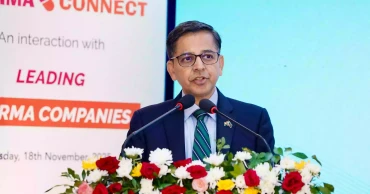
Delhi highlights strategic importance of Pharma sector in economic partnership with Dhaka
Indian High Commissioner to Bangladesh Pranay Verma has underscored the strategic importance of the pharmaceutical sector in the economic partnership between Bangladesh and India.
Speaking at a networking and knowledge-sharing event, he said India remains a trusted and reliable partner for Bangladesh—especially in API (Active Pharmaceutical Ingredient) sourcing, process technologies, and pharmaceutical machinery.
The High Commissioner emphasised that greater collaboration in this sector will not only boost industrial growth but also support affordable and accessible healthcare for millions across the region.
High Commissioner Verma expressed confidence that “PharmaConnect” will help build new business linkages and enhance India–Bangladesh engagement in a future-oriented, innovation-driven framework.
The High Commission of India in Dhaka hosted the “PharmaConnect”, a networking and knowledge-sharing event bringing together senior leaders from top Bangladeshi pharmaceutical companies on Tuesday.
The event preceded the upcoming participation of Bangladeshi pharmaceutical companies at CPHI–PMEC India 2025, one of the world’s largest pharmaceutical exhibitions.
The programme featured remarks from leading industry figures, including the President of the Bangladesh Association of Pharmaceutical Industries (BAPI), Abdul Muktadir, who highlighted Bangladesh’s expanding global reach in pharmaceuticals and the potential for deeper cooperation with India in areas such as technology transfer, R&D tie-ups, and supply-chain integration.
Representatives from the Bangladeshi pharmaceutical industry expressed strong confidence that such engagements will strengthen cross-border collaboration, facilitate technology access, improve supply-chain resilience, and open new avenues for trade and investment.
The event was organised as part of the High Commission’s broader efforts to deepen bilateral economic engagement in the health and pharmaceutical sectors.
Many Bangladeshi companies will be participating in CPHI–PMEC India 2025, scheduled from 25th to 27th November, which is recognised as one of the largest industry platforms connecting global manufacturers, innovators, investors, and policymakers.
“PharmaConnect” highlighted the longstanding complementarities between India and Bangladesh in the pharmaceutical sector.
The event showcased how India’s globally competitive pharmaceutical industry and Bangladesh’s fast-growing manufacturing capabilities can work together to strengthen supply chains, access new technologies, and deepen commercial linkages.
8 months ago
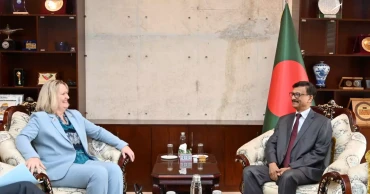
Denmark vows continued support for democratic, equitable Bangladesh
State Secretary for Trade and Investment of the Danish Foreign Ministry Lina Gandløse Hansen has reaffirmed Denmark’s commitment to supporting the interim government in its transition towards a “peaceful, democratic, and equitable” Bangladesh.
She echoed that the Laldia Container Terminal (LCT) project is the beginning of a new phase in their relations and the cooperation will add values in great ways to the existing excellent relations between the two countries for the benefit of the two peoples.
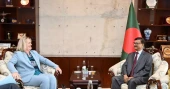
The Danish State Secretary paid a courtesy call on Foreign Adviser Md Touhid Hossain at the Ministry of Foreign Affairs on Monday. Danish Ambassador to Bangladesh Christian Brix Møller accompanied her in the meeting.
Earlier in the day, State Secretary Hansen met with Chief Adviser Prof Muhammad Yunus following an inauguration ceremony pertaining to the Laldia Container Terminal (LCT) project.
During the meeting, the Foreign Adviser highlighted the investment of $550 million by the Danish company APM Terminals in the Laldia Container Terminal (LCT) Project, which is going to be the largest single European investment in Bangladesh till date.
He thanked the Danish sides for the deal. Acknowledging Denmark’s longstanding support to Bangladesh, Foreign Adviser also requested for Danish support to meet up Bangladesh’s challenges after graduation from LDC.
The Foreign Advisor also touched upon capacity building and collaboration on bilateral trade, investment opportunities, energy efficiency and sustainable economic development, said the Ministry of Foreign Affairs on Tuesday.
The Danish State Secretary also apprised the Adviser about the potential Danish investment in the proposed 500 MW Offshore Wind Power Project near Cox’s Bazar.
Hansen also underscored about Denmark's development finance institution’s (IFU) reinvestment initiatives in Bangladesh.
Both sides expressed satisfaction with the continued progress in bilateral relations and reiterated their commitment to further strengthening economic and development partnership.
8 months ago
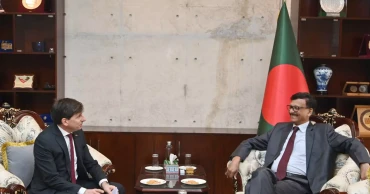
France reaffirms commitment to deepening ties with Bangladesh
Ambassador of France to Bangladesh Jean-Marc Séré-Charlet has reiterated France’s view of Bangladesh as a peaceful and democratic country, and expressed his eagerness to explore more links in the development sector.
He reaffirmed France’s commitment to further deepening bilateral cooperation, enhancing trade, investment and people-to-people exchanges.
Ambassador Jean-Marc Séré-Charlet paid a courtesy call on Foreign Affairs Adviser Md Touhid Hossain at the Ministry of Foreign Affairs on Monday.
The Foreign Adviser warmly congratulated the Ambassador on his assumption of duties and expressed confidence that Bangladesh-France relations will grow even stronger during his tenure.
During the meeting, both sides exchanged views on a broad range of bilateral issues, including Bangladesh’s upcoming national election, trade and investment, defence collaboration, diaspora, migration issues and France’s support to meet up Bangladesh’s challenges after graduation from LDC.
The Foreign Adviser acknowledged France’s longstanding development partnership and conveyed appreciation for French support to the Interim Government in Bangladesh’s democratic transition, said the Ministry of Foreign Affairs on Tuesday.
Adviser Hossain also encouraged the French Ambassador to broaden and deepen French ventures in trade and investment, development cooperation, skills development, climate change, energy cooperation etc.
Later in the day, Ambassador Séré-Charlet also met Foreign Secretary Asad Alam Siam and discussed bilateral, regional, and global matters of mutual interest. He ensured the new French Ambassador of full cooperation during his tenure in Bangladesh.
8 months ago

NSA Dr Rahman to attend Security Conclave in New Delhi
Amid Dhaka’s renewed call for former Prime Minister Sheikh Hasina’s extradition, National Security Adviser (NSA) and High Representative for the Rohingya Issue Dr Khalilur Rahman will attend the Colombo Security Conclave (CSC) which will be held in New Delhi on November 19-20.
National Security Adviser of India Ajit Doval extended the invitation to Dr Rahman to attend this regional forum, said the Chief Adviser’s press wing.
“I don’t want to interfere with the agenda that he (Dr. Rahman) has,” Foreign Affairs Adviser Md. Touhid Hossain said when asked whether his colleague would raise the extradition issue with India.
Adviser Hossain, however, said if feels necessary he (Dr Rahman) can certainly raise the issue but they will go by through their official channel.
Bangladesh on Monday urged the government of India to immediately hand over former Prime Minister Sheikh Hasina and former Home Minister Asaduzzaman Khan Kamal, both convicted already, to its authorities.
The CSC’s core objective is to promote regional security by addressing transnational threats and challenges of common concern to the Member States.
There are five pillars of cooperation under the CSC namely maritime safety and security; countering terrorism and radicalisation; combating trafficking and transnational organised crime; cyber security and protection of critical infrastructure and technology; and humanitarian assistance and disaster relief, an official told UNB.
NSA Dr Rahman to attend Colombo Security Conclave in New Delhi
NSA Dr Rahman’s participation at the Colombo Security Conclave in New Delhi is in continuation of the interim government's efforts to foster mutually beneficial regional cooperation, said the interim government.
The interim government emphasises regional cooperation as a priority and has actively participated in meetings of various regional bodies.
In April this year, Chief Adviser Prof Muhammad Yunus was elected Chair of BIMSTEC. He has been working hard to reactivate SAARC, said the press wing.
NSA Dr Rahman earlier led a Bangladesh delegation to the China-Indian Ocean Region Forum in Kunming, China.
Bangladesh was officially welcomed in 2024 as the fifth Member State of the Colombo Security Conclave (CSC), a grouping that includes India, Sri Lanka, Mauritius and the Maldives. Seychelles participates with observer status.
8 months ago
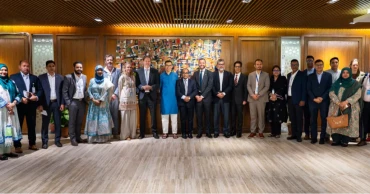
LDC graduation an opportunity to match growth with dignity: Lutfey Siddiqi
Special Envoy for International Affairs Lutfey Siddiqi on Tuesday said Bangladesh’s graduation from LDC status is a chance to build a new kind of competitiveness, one based on value, skills, quality and fairness.
“This platform connects government, private sector and partners to shape the next chapter of our economic development, matching growth with dignity and sustainability,” he said while speaking as the chief guest at a programme.
The Ministry of Commerce, Bangladesh Investment Development Authority (BIDA), International Labour Organisation (ILO) and United Nations Development Programme (UNDP) launched the Resilient Supply Chains for Sustainable Trade and Investments Platform at the BIDA auditorium.
The platform aims to strengthen Bangladesh’s trade and investment ecosystem, ensuring sustainable, inclusive growth as the country prepares for graduation from Least Developed Country (LDC) status.
BIDA Executive Chairman Chowdhury Ashik Mahmud Bin Harun said, "Let’s set a clear roadmap and hold ourselves accountable, so by the end of 2026, we know exactly where we stand. This platform is about real progress, not just conversation."
Commerce Secretary Mahbubur Rahman as Bangladesh prepares for LDC graduation; they are advancing regulatory reforms and aligning the trade and investment policies with global best practices.
“Our goal is to create a stronger, more competitive environment for both domestic and cross-border investment, ensuring sustainable growth and decent work for all,” he said.
Country Director, ILO Bangladesh Max Tuñón said supply chains are ultimately about people, the workers and entrepreneurs who drive Bangladesh’s economy forward. “This platform is our opportunity to build joint solutions that put dignity and opportunity at the centre, making a real difference in everyday lives as Bangladesh transitions beyond LDC status."
Resident Representative UNDP Bangladesh Stefan Liller said they are now poised to formally launch a platform for pooling their efforts to make the future growth of Bangladesh greener and more inclusive. “This platform will serve as a hub for collaboration and knowledge sharing. It will help in aligning investments, production and trade to environmental sustainability and social safeguards."
Both UN agencies emphasised their appreciation for the close partnership with BIDA and the Ministry of Commerce, and called for more actors, including other UN agencies to join the platform network.
The UN agencies acknowledged the major support received from the country's development partners, including Team Europe and Global Affairs Canada.
The platform will act as a hub for policy dialogue, capacity building, and knowledge sharing, driving policy coherence, supply chain development, and public-private partnerships.
This initiative supports Bangladesh’s LDC graduation by promoting international labour standards, inclusive growth and decent work.
8 months ago
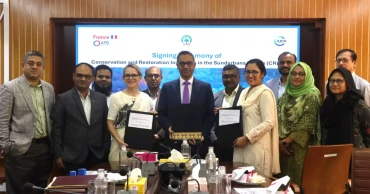
France reaffirms support to protect Sundarbans
Deputy Country Director of Agence Française de Développement (AFD) Bangladesh Cecilia Cortese has reiterated France’s unwavering commitment to supporting climate action, biodiversity preservation and resilient communities.
“This partnership reflects our shared responsibility to protect the Sundarbans, a vital shield for millions and a sanctuary for irreplaceable wildlife,” she said while launching the Conservation and Restoration Initiatives in the Sundarbans Region (CRIS) project on Monday.
The Bangladesh government, through the Bangladesh Forest Department (BFD) under the Ministry of Environment, Forest and Climate Change (MoEFCC), together with IUCN Bangladesh, officially launched the project.
The initiative, led by national authorities and implemented by IUCN Bangladesh, receives financial support from the French Development Agency/Agence Française de Développement (AFD).
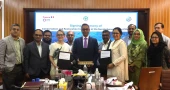
The launch was marked by the signing of a Memorandum of Understanding between BFD and IUCN Bangladesh, followed by the grant financing agreement between AFD and IUCN Bangladesh.
This EUR 3 million grant represents AFD’s first direct support to biodiversity conservation in Bangladesh and lays the foundation for a long-term partnership with MoEFCC.
The Sundarbans, home to exceptional biodiversity and a critical source of protection and livelihood for more than six million people, is under increasing pressure from human activity and the accelerating impacts of climate change.
To address these challenges, the CRIS project will strengthen biodiversity conservation, climate resilience, and sustainable livelihoods in the region through an integrated, science-based approach, according to AFD.
Activities will be implemented by IUCN Bangladesh in close collaboration with BFD, with AFD supporting the effort as a development partner.
The overall ambition of CRIS is to contribute to improved conservation and sustainable management of the Sundarbans, while supporting local communities through effective restoration practices.
The project will deliver four key outcomes - risk-informed conservation and restoration plans developed for the Sundarbans Region; improved biodiversity conservation in Sundarbans through faunal inventory and management plan development; enhanced ecological resilience through restoration and sustainable management of Sundarbans Impact Zone; and improved knowledge management and stakeholder collaboration.
Chief Conservator of Forests Md Amir Hosain Chowdhury said the government of Bangladesh is committed to protecting the Sundarbans in line with national and international goals. “This project will help us restore degraded areas and work more closely with communities,” he said.
Country Representative of IUCN Bangladesh Bipasha Hossain underscored the need for strong coordination and science-based action to secure the future of the Sundarbans.
She said the Sundarbans is a fragile ecosystem and a lifeline for millions of people. “Through CRIS, we want to bring scientific evidence, traditional knowledge and community experience together.”
The CRIS project will conduct climate-risk assessments, hydrological studies, socioeconomic research, faunal surveys and community-based ecological restoration.
8 months ago