Bangladesh'A=0
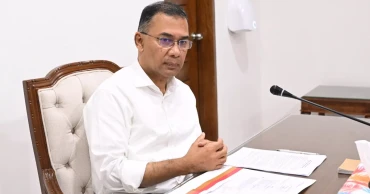
PM urges frugal electricity use after switching off half the lights at office
Prime Minister Tarique Rahman on Thursday switched off half the lights at his Secretariat office and lowered the air-conditioner use, urging all government offices and institutions to be more frugal in electricity use.
Prime Minister’s Additional Press Secretary Atikur Rahman Rumon said Tarique Rahman took the initiative shortly after he arrived at his office in the morning.
“The Prime Minister reached his office at around 9:10am. After entering the room, he switched off about 50 per cent of the lights and adjusted the air-conditioner to 25.1 degrees Celsius to reduce electricity consumption,” he said.
Rumon also said the Prime Minister asked officials to switch off half the lights and lower the air-conditioning level when he entered the Cabinet meeting room.
The Prime Minister’s Office is located in Building No. 1 of Secretariat which houses several departments under the Prime Minister as well as the Cabinet Division.
Following the Prime Minister’s initiative, lights were immediately reduced and air-conditioner settings lowered in other rooms of his office.
He said the Prime Minister also called upon all ministries, government offices across the country,m as well as private institutions, shopping centres and commercial establishments to use electricity more efficiently and frugally.
The Prime Minister also urged people across the country to reduce the use of artificial lighting during the day and make better use of natural sunlight by opening curtains and windows at offices and homes, Rumon added.
He said the Prime Minister has asked the Power and Energy Minister to take proper steps to ensure the efficient use of electricity and to seek expert opinions on what further measures can be taken.
The Prime Minister took the initiative amid rising fuel prices and growing concerns about the supply of petroleum fuel and natural gas — the two main sources used to generate electricity in the country — due to the ongoing conflict in the Gulf region, which has spread to the Strait of Hormuz, one of the world’s most important routes for energy shipments.
Bangladesh, which already faces energy shortages, depends heavily on the Gulf region for its primary energy supply.
The country imports most of its petroleum fuel, liquefied natural gas (LNG) and liquefied petroleum gas (LPG) either directly or indirectly from the region.
29 days ago

Inflation inches up in January amid higher food prices: GED
Inflationary pressure in Bangladesh remained elevated at the start of 2026 as rising prices of fish, fruits and vegetables continued to push up food costs, even though rice prices showed signs of easing, according to the latest report of the General Economics Division (GED).
Inflation rose slightly to 8.58 percent in January 2026, up from 8.49 percent in December 2025, reflecting persistent pressure from food prices, the GED said in its Economic Update and Outlook for February 2026.
Food inflation increased to 8.29 percent in January, compared with 7.71 percent in December, while non-food inflation declined to 8.81 percent from 9.13 percent during the same period.
The report said food remained the largest contributor to overall inflation, accounting for 43.06 percent of headline inflation in January, up from 40 percent in December.
Housing and utilities contributed 15.05 percent, while miscellaneous goods and services accounted for 9.31 percent.
Within the food basket, the impact of rice prices eased considerably in January as price growth slowed across all varieties.
The contribution of rice to food inflation dropped sharply to 22.16 percent in January, down from 37.34 percent in December.
Overall rice inflation fell to 7.61 percent in January, compared with 11.92 percent in December, with medium, coarse and fine rice all recording lower price increases.
However, the easing in rice prices was offset by rising costs of vegetables, fruits and fish, which continued to keep food inflation high.
Vegetables, which had a negative contribution to inflation in December, turned positive in January. Fish and dry fish remained among the largest contributors to food inflation.
The GED attributed the increase in vegetable prices largely to higher transportation costs and excessive profit-taking by wholesale and intermediary traders.
Experts, farmers warn of food security crisis over poultry import ban
The report also warned that rising inflation combined with stagnant wage growth is putting pressure on household purchasing power.
While inflation stood at 8.58 percent in January, wage growth remained almost unchanged at 8.08 percent, compared with 8.07 percent in December.
Since September 2025, inflation has consistently outpaced wage growth, creating a widening gap between price increases and income gains.
According to the GED, this trend is eroding real incomes, particularly for low-income households, whose spending is heavily concentrated on essential goods.
Meanwhile, the National Board of Revenue (NBR) failed to meet its revenue target for January despite modest growth in collection.
Against a revised monthly target of Tk 52,545 crore, the NBR collected Tk 37,033 crore, leaving a shortfall of Tk 15,512 crore.
Shortfalls were recorded in all major tax segments, including import and export duties, domestic VAT, and income tax and travel tax.
Overall, the NBR achieved 70.48 percent of its January target, with revenue collection rising slightly from Tk 36,191 crore in December to Tk 37,033 crore in January, marking a 2.3 percent month-to-month growth.
On a year-on-year basis, revenue increased by 3.81 percent compared with January 2025.
The report also highlighted slow implementation of the Annual Development Programme (ADP) in the current fiscal year.
By January 2026, only Tk 50,556 crore, or 21.18 percent of the annual allocation, had been spent—well below the expected 50–58 percent mid-year implementation level.
Although Tk 8,679 crore was spent in January alone, the overall pace remained slow.
The GED warned that even with faster spending in the remaining months, FY2025–26 may record one of the lowest ADP implementation rates in recent years, potentially delaying infrastructure projects and increasing costs.
The slowdown was attributed to weak project preparation, procurement delays, land disputes and coordination challenges.
Despite domestic challenges, the country’s external sector showed relative stability, the report said.
Foreign exchange reserves stood at about $33.18 billion in January 2026, while remittance inflows reached $3.17 billion, significantly higher than the $2.19 billion recorded in January last year.
The GED expects remittance inflows to increase further during Ramadan due to seasonal transfer patterns.
Merchandise exports also grew, mainly driven by the ready-made garments (RMG) sector.
Rice biggest driver of October’s food inflation in Bangladesh: GED
RMG exports increased from $3.23 billion in December to $3.61 billion in January, while non-RMG exports rose to $798.9 million after a slight dip in December.
However, imports of capital machinery remained volatile, suggesting relatively weak private investment despite rising overall imports.
The GED expressed hope that the new government would take prudent measures to ensure macroeconomic stability, including attracting investment, generating employment, controlling inflation and strengthening investor confidence.
It also stressed the importance of improving ADP implementation, maintaining debt sustainability and ensuring policy consistency to support long-term economic growth.
The planned introduction of the government’s Family Card programme was also highlighted as a possible step to strengthen social protection and support vulnerable groups.
29 days ago
Never committed corruption in my entire life, says Asif Nazrul
Former Law Adviser Dr Asif Nazrul on Wednesday night strongly denied corruption allegations circulating on social media, asserting that he did not take “not a single taka” corruptly during his tenure in the interim government.
In a statement posted on his verified Facebook page, Nazrul said that following the departure of the interim administration, “so-called” reports of corruption involving him and some of his colleagues began spreading online.
“I have never committed any corruption while in government, nor before or after that in my life. Not one taka — I repeat, not a single taka — have I taken corruptly,” he wrote.
The former adviser also claimed that he did not open any new bank accounts, acquire new assets or conceal any wealth in his tax filings during his time in office.
Nazrul further rejected allegations of nepotism, saying he did not extend any undue benefits to family members or relatives. He noted that nearly 5,000 law officers were appointed during his tenure and none of them were his relatives.
Addressing claims of favouritism, he said he did not prioritise his own locality while serving as adviser, though he acknowledged facilitating limited financial assistance through proper procedures for the development of Lalbagh Shahi Mosque and securing support for the improvement of Dhaka University’s playground at the request of the university authorities.
Describing the allegations as “vile and false,” Nazrul said he has faced accusations over the past two decades but expressed confidence that the latest claims would also fail to harm him.
“Allah is there, and He is sufficient for me,” he added.
29 days ago
Ex-Sramik Dal leader shot dead in Khulna; suspect held
A former leader of Sramik Dal, BNP’s labour wing, was shot dead by some miscreants at Dakbangla intersection in Khulna city on Wednesday night.
The deceased was identified as Masum Billah, 55, former president of Rupsha Upazila Sramik Dal and former president of Rupsha–Bagerhat inter-district road transport workers’ union.
Police arrested a suspect, identified as Ashok Ghosh, from the spot along with a foreign-made pistol.
According to police and witnesses, Masum Billah was standing at Dakbangla intersection when a group of miscreants opened fire on him.
The attackers hacked him with sharp weapons, leaving him critically injured and fled the scene.
Locals rushed him to Khulna Medical College Hospital where the on-duty doctor declared him dead.
Khulna Metropolitan Police Deputy Commissioner (South) Tajul Islam said around six to seven assailants took part in what appeared to be a contract killing.
“They came with a plan to kill Masum Billah. After shooting and attacking him with sharp weapons, they fled,” he said.
A traffic inspector noticed one of the suspects, Ashok Ghosh, carrying a pistol at his waist while attempting to escape.
With the help of local people, police managed to detain him from the spot and recovered a foreign-made pistol and bullets from his possession.
Police said efforts are underway to arrest the remaining suspects.
29 days ago
Bangladesh seeks enhanced cooperation with Argentina
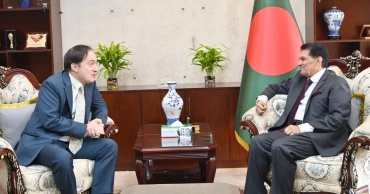
Foreign Minister Dr Khalilur Rahman has reaffirmed Bangladesh's firm commitment to consolidating and deepening the longstanding friendly ties between Bangladesh and Argentina with enhanced cooperation in priority areas.
Ambassador of Argentina to Bangladesh Marcelo Carlos Cesa met the Foreign Minister at the Ministry of Foreign Affairs on Wednesday and both sides identified priority areas to enhance cooperation.
The particularly discussed ways to expand bilateral trade with a focus on diversification of exports and imports, strengthening technical collaboration in agriculture, advancing sports cooperation, including through effective implementation of the existing MoU on football, and exploring opportunities for cooperation in energy trade and supply chain partnerships and enhanced apparel exports from Bangladesh.
The Foreign Minister proposed a multi-sectoral dialogue among relevant stakeholders with a focused agenda to advance bilateral cooperation.
He also appreciated the reopening of the Argentine Embassy in Dhaka and Argentina's recent concurrence to the reopening of the Embassy of Bangladesh in Buenos Aires.
He underscored Bangladesh's commitment to operationalising its resident mission in Buenos Aires at the earliest opportunity to further institutionalise bilateral engagement, said the Ministry of Foreign Affairs.
29 days ago

Expanded ME conflict poses significant risks to Bangladesh: Selim Raihan
Bangladesh’s economy faces a significant risk of sudden uncertainty if the conflict in the Middle East expands further, economist Professor Selim Raihan has warned.
In a Facebook post on Wednesday, Raihan said the situation became more alarming after Iran on Monday declared the closure of the Strait of Hormuz, triggering sharp volatility in the global energy market.
“Tehran has reportedly warned that its Revolutionary Guard and navy would take strict action against any vessel attempting to cross the strategic waterway.”
He said that a substantial share of the world’s crude oil and liquefied natural gas (LNG) shipments pass through the Strait of Hormuz.
“Any disruption to shipping along this route could cause major interruptions in global energy supply, with immediate consequences for import-dependent economies such as Bangladesh.”
Raihan noted that Bangladesh’s energy security could come under serious strain in the current circumstances.
“Although the country has some reserves of oil and LNG, prolonged disruption to fresh imports may quickly deplete existing stocks.”
He observed that LNG prices in the international market have already started to rise amid growing uncertainty.
“Higher import prices would increase the cost of electricity generation, as Bangladesh relies heavily on imported fuel for power production.”
If electricity and fuel prices rise, production costs across industries would increase, transport expenses would go up and overall inflationary pressure would intensify, he said.
“The combined effect would push up the cost of living for ordinary people while weakening the competitiveness of the country’s industrial sector in export markets.”
Raihan cautioned that there is little ground for optimism that the crisis will be resolved quickly.
“A prolonged war could create significant global economic stress, which would inevitably spill over into Bangladesh’s economy through trade, energy and financial channels.”
He stressed the need for immediate government preparedness to manage potential fallout.
According to Raihan, policymakers should convene urgent consultations with business leaders, energy experts and economists to formulate a coordinated response strategy.
Among the measures he suggested are exploring alternative sources of energy supply, diversifying import origins, strengthening strategic fuel reserves and curbing non-essential expenditure to ease fiscal pressure.
He emphasised that timely and coordinated action would be crucial in mitigating the impact of a possible prolonged global energy shock.
He mentioned that proactive planning and swift policy coordination would be essential to safeguard macroeconomic stability and protect vulnerable groups from the brunt of potential price shocks.
29 days ago
Committee for Administrative Reform formed with PM Tarique Rahman as chairman
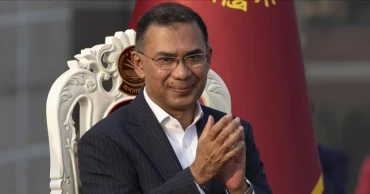
The government has formed the National Implementation Committee for Administrative Reform (NICAR) with Prime Minister Tarique Rahman as its chairman.
The Cabinet Division on Wednesday issued a notification in this regard on Wednesday constituting the 20-member committee.
The members of NICAR include the ministers of Local Government, Finance, Home Affairs, Industry and Law, the State Minister for Public Administration, and the Prime Minister’s Principal Secretary.
In addition, senior officials from the Public Administration, Land, Home Affairs, Finance, Legislative and Parliamentary Affairs, Coordination and Reforms, Law and Justice, Local Government, and Physical Infrastructure divisions of the Planning Commission, as well as secretaries of the concerned ministries and departments, have been included as members.
NICAR is tasked with reviewing proposals related to the establishment, reorganisation and renaming of ministries, departments, directorates and offices.
The committee will also examine proposals concerning the creation of new divisions, districts, upazilas, city corporations, municipalities and police stations, as well as any proposals to redraw the boundaries of these administrative units.
29 days ago

Govt to operate women-dedicated BRTC buses
The government has taken the initiative to introduce women-only Bangladesh Road Transport Corporation (BRTC) bus services in the capital, following directives from Prime Minister Tarique Rahman.
The special bus service will be operated entirely by female drivers, conductors and helpers to ensure safe and comfortable travel for women commuters, an official handout said on Wednesday.
As part of the initiative, a set of awareness slogans has been finalised for the women-friendly BRTC buses. The slogans focus on safety, empowerment and economic participation of women, including: “Another name for comfort, women-friendly BRTC bus,” “End fear in women’s mobility, the nation moves forward with safe buses,” “Safe journey, faster work – economic strength in women’s hands,” and “Women at the wheel will transform tomorrow’s Dhaka.”
Other slogans highlight women’s right to safe travel and their role in building a secure and prosperous Bangladesh, such as: “Safe journey is women’s right, let women-friendly buses be everyone’s commitment,” and “With women driving the wheels, build a safer Bangladesh.”
29 days ago

4,051 cases settled in February by DMP magistrate
The Special Metropolitan Magistrate of Dhaka Metropolitan Police disposed of 2,273 criminal cases and 1,778 traffic cases in February this year through summary trials.
A total of 3,706 people were arrested and produced before the summary courts. Of them, 2,113 were given different jail terms.
Law Official (District Judge) Mohammad Ataul Haque said the arrests were made by DMP divisions including Motijheel, Tejgaon, Wari, Gulshan, Mirpur, Ramna, Lalbagh and Uttara during February.
The court fined the accused a total of Tk 2,32,950 in criminal cases and sentenced to different terms of imprisonment to 2,113 people.
In traffic cases, police filed 1,833 cases in February. The magistrate disposed of 1,778 cases, including 359 pending cases, and fined offenders Tk 6,44,400.
It is notable that minor offences and cases with lighter punishment can be tried under summary procedure at the Special Metropolitan Magistrate Court as per the Code of Criminal Procedure.
29 days ago

Ex-adviser Asif discloses own, family bank details amid graft allegations
Asif Mahmud Shojib Bhuiyan, spokesperson of the National Citizen Party (NCP), on Wednesday publicly disclosed his and his family members’ bank statements in response to corruption allegations that surfaced following discussions over his possible candidacy in the upcoming city corporation elections.
At an emergency press conference held at the NCP office in Banglamotor at night, Asif unveiled bank account details of his own as well as those of his parents and wife.
Asif said he had submitted a full statement of his income and assets to the Cabinet Division while stepping down from his post as adviser to the interim government. “Even after that, when attempts are being made to create speculation about my assets, I think it is necessary to make my and my family’s bank accounts public so that no one can spread confusion over the matter.”
Although he initially planned to disclose only his own bank statements, he later decided to make public the accounts of all family members to remove any remaining questions.
Providing details, Asif said that during his 16 months as adviser, his average monthly salary was Tk 1.65 lakh and all transactions, including allowances, were conducted through his salary account.
He said the total credit in the two accounts, including salary and other deposits, stood at more than Tk 85 lakh, while total debit amounted to more than Tk 76 lakh. Currently, the combined balance in the two accounts is around Tk 9,88,000.
Asif also disclosed that his father has five bank accounts with a total credit of Tk 5,47,711. However, his father had taken a service loan of Tk 10 lakh, of which Tk 6,39,746 remains outstanding. According to Asif, his father is still in debt by around Tk 82,000.
His mother has one bank account with a balance of Tk 21,154, while his wife’s single bank account contains Tk 613.
Claiming that the allegations were politically motivated, Asif said individuals associated with the Awami League and driven by vested interests were behind the accusations. “No one raised these allegations when I stepped down as adviser. Only after the announcement of the city corporation elections did a group start this campaign with ill motives.”
On March 2, the Bangladesh Financial Intelligence Unit (BFIU) sent letters to all banks and financial institutions asking them to provide details of Asif’s personal bank accounts within three working days.
Following the fall of the Awami League government in the July mass uprising on Aug 5, 2024, an interim government was formed on Aug 8, where Asif served as one of three advisers representing student leaders of the movement.
He initially oversaw the Ministry of Labour and Employment and the Ministry of Youth and Sports, and later took charge of the Ministry of Local Government, Rural Development and Cooperatives along with the Youth and Sports Ministry.
Ahead of the 13th national parliamentary election, Asif resigned from his advisory post on Dec 10, 2025. He is currently serving as spokesperson of the National Citizen Party.
Earlier on Feb 10 this year, the interim government published asset statements of its advisers, which showed that as of June 30, 2025, Asif’s total assets stood at Tk 15,34,717, while his liabilities amounted to Tk 28,669.
29 days ago