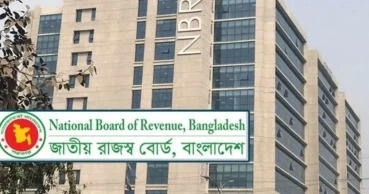
The National Board of Revenue (NBR), under the interim government, has implemented a series of significant reform initiatives within a short period to modernise revenue administration, enhance trade facilitation, accelerate digitalisation and expand the tax base.
These measures aim not only to increase revenue collection but also to make the tax system more transparent, accountable and investor-friendly. Early indications suggest that the initiatives have already begun yielding positive results, according to a release from the revenue collecting authority.
Read: NBR targets faster cargo clearance, simpler customs rules, says its chairman
As part of structural reforms, the government promulgated the Revenue Policy and Revenue Management Ordinance, 2025, separating revenue policy formulation from revenue management.
The National Implementation Committee for Administrative Reform (NICAR), chaired by the Chief Adviser, has approved amendments to the Rules of Business and Allocation of Business to operationalise two separate divisions—Revenue Policy Division and Revenue Management Division. This decision is being seen as a major milestone in reforming the NBR’s institutional framework.
Through enhanced monitoring, transparency and accountability measures, the NBR has intensified efforts to curb tax evasion and recover previously evaded taxes. As a result, revenue collection has gained momentum. From July to December 2025, the NBR collected Tk 1,85,229 crore, which is Tk 23,020 crore higher than the collection during the same period of the previous fiscal year.
With World Bank financing, international tenders have been floated for the construction of a world-class, modern Customs House and Customs Academy in Chattogram. Separately, the tender process for constructing a state-of-the-art tax building in Chattogram using government funds has been completed, and construction is set to begin shortly. The Khulna Tax Building has already been completed and is scheduled to be inaugurated on January 29, 2026.
Read More: NBR’s two divisions, health sector reforms among proposals get NICAR nod
As part of long-term planning, the NBR has adopted a 10-year Medium and Long-Term Revenue Strategy (MLTRS) aimed at increasing the revenue-to-GDP ratio and strengthening structural capacity. To advance digital revenue management, the World Bank-funded Strengthening Domestic Revenue Mobilization Project (SDRMP), with an estimated cost of nearly Tk 1,000 crore, has been undertaken to bring all NBR operations onto digital platforms.
To gradually move away from a culture of tax exemptions, the government has formulated and gazetted the Tax Expenditure Policy and Management Framework (TEPMF). Amendments to the Income Tax Act 2023, Customs Act 2023 and VAT and Supplementary Duty Act 2012 have withdrawn the NBR’s authority to grant tax exemptions, making parliamentary approval mandatory for any future exemptions.
Authentic English texts of the VAT and Supplementary Duty Act 2012, Customs Act 2023, Income Tax Act 2023 and VAT Rules 2016 have been published in the official gazette. This move is expected to reduce ambiguity in legal interpretation, boost investor confidence and improve the overall investment climate.
To expand the income tax base and improve taxpayer services, the NBR has awarded Income Tax Practitioner (ITP) certificates to 13,500 individuals through competitive examinations. For the first time, income tax professionals were involved in the entire written and viva examination process.
In collaboration with the Finance Division, the NBR has introduced an online system allowing importers, exporters and their nominated C&F agents to pay customs duties and taxes directly into the government treasury through A-Challan. The system has been integrated with ASYCUDA World and iBAS++, enabling payments from bank accounts or mobile financial services (MFS). bKash has already enabled tax payments without service charges, with the facility open to other MFS providers as well.
Read More: NBR launches automated system easing compliance for importers
Giving top priority to trade facilitation, the NBR has been holding monthly stakeholder consultations, allowing business representatives to directly raise field-level customs, VAT and income tax issues with senior officials, leading to quicker resolution of problems.
To strengthen cyber security, a Security Operations Centre (SOC) has been established at the NBR in line with National Cyber Security Agency (NCSA) guidelines. The SOC now provides round-the-clock monitoring and protection against cyber threats targeting customs systems and sensitive data.
To support the government’s initiative to reduce Hajj costs, excise duty exemptions have been granted on airline tickets for Hajj pilgrims for 2025 and 2026. VAT exemption on metro rail services has been extended until June 30, 2026, to promote environmentally friendly mass transport.
Ahead of Ramadan, import duties on dates have been reduced by 40 per cent and advance income tax by 50 per cent. To keep essential commodity prices within public reach, various taxes and duties on rice, potatoes, onions, sugar, eggs, fresh fruits, edible oil, canola oil and pesticides have been waived.
New baggage rules issued in 2025 now allow travellers to bring one new mobile phone per year without duty, while eligible expatriate Bangladeshis can bring two duty-free phones annually. Customs duty on mobile phone imports has been reduced from 25 per cent to 10 per cent, alongside a reduction in duties on components for local assemblers, which is expected to lower handset prices significantly.
The NBR has expanded VAT digital services, including online registration, e-returns, e-payment, e-refund, VAT smart invoices and risk-based audits. A nationwide VAT registration campaign in December 2025 brought 131,000 previously unregistered businesses into the VAT net, raising the total number of registered entities to 775,000 from 516,000 before the interim government assumed office.
Online VAT refund modules have been launched, enabling direct transfers to taxpayers’ bank accounts through BEFTN. On the income tax side, online return filing has been made mandatory for most taxpayers, resulting in more than 3.4 million e-returns submitted this fiscal year.
Special facilities have been introduced for expatriate taxpayers, automated risk-based audit selection has been implemented, and spot assessment programmes have been launched nationwide to encourage voluntary compliance.
In customs, the Bangladesh Single Window (BSW) is now operational, integrating 19 agencies and issuing nearly 900,000 certificates, licences and permits online. New regulations for shipping agents and C&F agents have been introduced, alongside digital systems for bonded warehouse management, truck movement tracking and valuation transparency through integration with Bangladesh Bank systems.
The NBR has also taken decisive steps to reduce container congestion at Chattogram Port by auctioning long-stalled containers, significantly easing port pressure.
Overall, through policy reforms, technology-driven management and enhanced administrative capacity, the NBR has demonstrated visible transformation of the revenue system during the interim government’s short tenure—contributing to fiscal stability and laying a foundation for sustainable economic development.