Bangladesh’s latest solar power procurement drive under the Public Procurement Act (PPA) and Rules (PPR) has emerged as largely unattractive to both foreign and local firms, raising fresh concerns over the country’s renewable energy transition, according to a study.
The study, by the Centre for Policy Dialogue (CPD), conducted in partnership with the Australian High Commission in Dhaka, found that weak competition, stringent qualification criteria and limited risk mitigation measures have significantly dampened investor interest in solar power projects tendered since December 2024.
As part of reform initiatives, the interim government repealed the Quick Enhancement of Electricity and Energy Supply (Special Provision) Act, 2010, bringing power and energy procurement fully under the PPA and PPR framework.
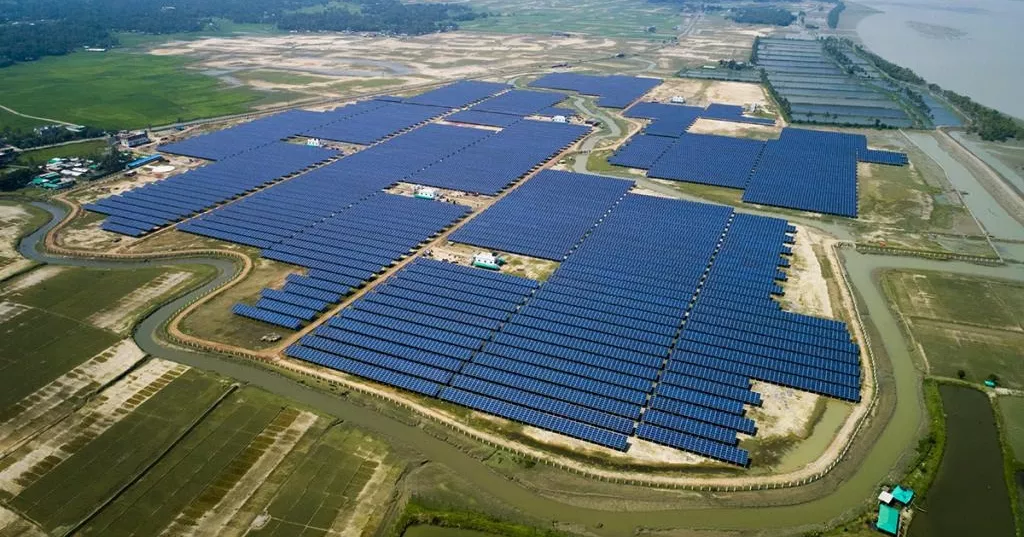
Subsequently, the Ministry of Power, Energy and Mineral Resources (MoPEMR) invited tenders for 55 solar power plants ranging from 10 MW to 250 MW in four lots.
The CPD survey released on Tuesday, however, revealed that participation has been strikingly low. Of the 55 packages, 23 received only a single bid, while 13 failed to attract any bids at all. On average, just 1.4 bids were submitted per package.
Titled ‘Renewable Energy Procurement under the Public Procurement Act and Rules: Enterprise Survey Findings on Transparency, Accountability, and Efficiency’, the study reviewed the regulatory provisions of the PPA (2006) and PPR (2008), monitored the procurement process for the newly launched solar packages and assessed them against international standards in the power sector.
According to the findings, financial capacity requirements emerged as a major deterrent, particularly for local firms. Bidders are required to demonstrate access to liquid assets or credit facilities of at least USD 1.14 million per MW equivalent to USD 57.2 million for a 50 MW plant and USD 114.4 million for a 100 MW plant.
While 61.1 per cent of foreign firms found the requirement manageable, 83.6 per cent of local firms said it was difficult to meet.
The absence of sovereign guarantees further undermined investor confidence. As no Implementation Agreements are being signed for the solar projects, power purchase agreements lack sovereign backing, affecting bankability. About 68.4 per cent of firms said this negatively influenced their decision to participate.
Big push for renewables: 220 MW Sonagazi solar plant gets green light
Land acquisition responsibilities placed entirely on winning bidders also discouraged participation, the study noted, citing land scarcity and bureaucratic hurdles. Around 31.5 per cent of firms found this very discouraging, while 27.1 per cent described it as moderately discouraging.
According to the study, technical and contractual terms were also flagged as problematic. A fixed annual generation requirement over a 20-year period for example, 109.5 million kilowatt-hours per year for a 50 MW plant was viewed as unrealistic by 76 per cent of firms, given solar panel degradation and fluctuating irradiation.
Besides, a provision allowing contract termination with just 28 days’ notice was considered very problematic by nearly two-thirds of respondents.
While 91.3 per cent of firms reported receiving tender-related information on time and 66.3 per cent said pre-bid queries were addressed promptly, perceptions worsened after bid submission.
Half the firms expected decision-making to be slow, with over 20 per cent anticipating very slow procedures.
Overall, 44.6 percent of firms rated the procurement process as inefficient and 18.5 per cent as very inefficient.
Among fully local firms, more than half described the process as inefficient or very inefficient, while all foreign firms surveyed characterised it as inefficient to varying degrees.
Concerns were also raised about documentation and transparency, the study noted, citing only 40 per cent of firms found tender documents clear and complete, while many pointed to missing or insufficient technical specifications.
Access to information was rated moderately easy by 44.8 percent of firms, though late publication and unavailability of documents on official websites were cited as recurring issues.
On transparency, nearly 30 percent of bidders said the evaluation process was only slightly transparent, and 45.5 percent reported facing discrimination.
All foreign firms that submitted bids said they experienced discrimination, compared to none among two-thirds of local firms.
Despite these issues, a majority of firms, about 59 per cent rated overall transparency as moderate, neither good nor bad. Almost all foreign firms shared this assessment, while most joint ventures described transparency as poor, according to the CPD findings.
Without targeted reforms to procurement design, risk-sharing mechanisms and institutional capacity, Bangladesh’s ambition to scale up renewable energy, particularly solar, may remain constrained, despite policy intentions to improve governance under the PPA-PPR regime, the CPD study says.