Bangladesh must ensure the participation of the future Prime Minister or the highest number of ministers or advisers at the UN climate summit (COP) to gain due global attention, Fisheries and Livestock Adviser Farida Akhter said on Monday.
“The presence of the Prime Minister (future) or members of the Council of Advisers brings a level of importance and visibility that cannot be achieved by lower-tier delegations,” she said, stressing that active engagement of top leadership at COP is essential to effectively project Bangladesh’s position and priorities on the global stage.
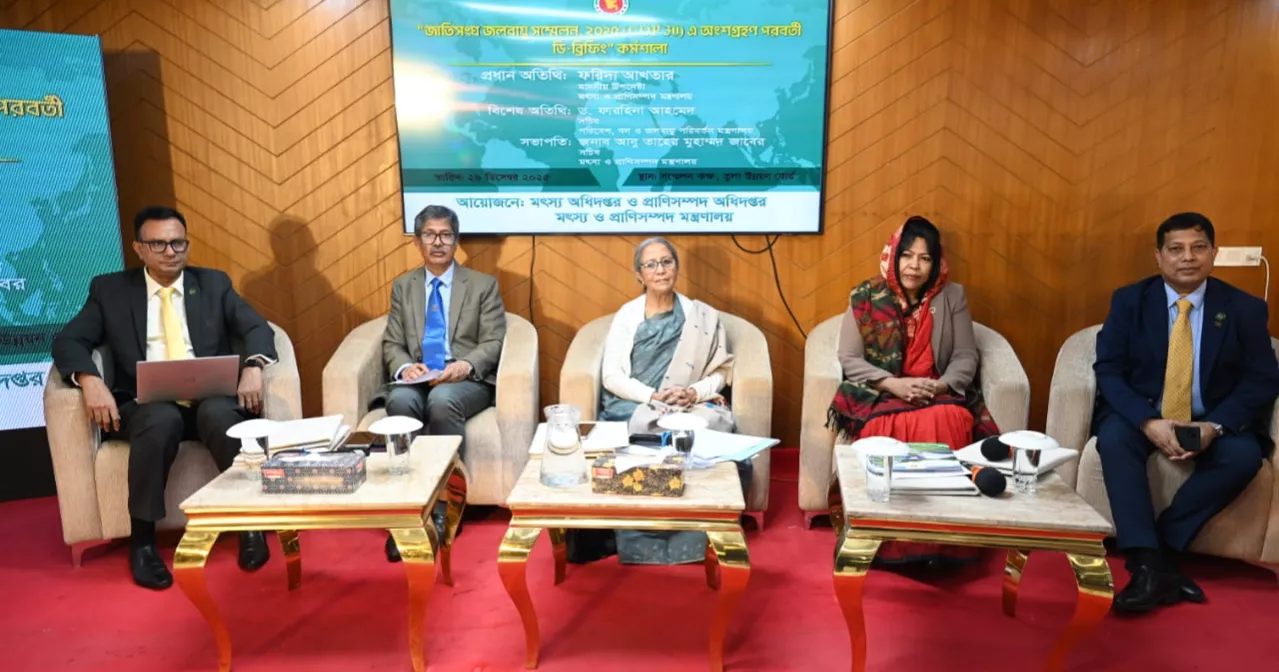
Farida made the remarks while speaking at a post-COP 30 debriefing workshop on participation in the UN Climate Conference 2025, organised by the Ministry of Fisheries and Livestock at the Cotton Development Board in the city's Farmgate area.
Farida said Bangladesh is a biodiversity-rich country and, despite facing multiple challenges, possesses the capacity to address them internally. “If we can collectively take initiatives to resolve these problems, the potential losses caused by climate change can be reduced significantly. That should be our focus.”
Highlighting the livestock sector, the adviser noted that although farmers often turn to foreign breeds to boost production, indigenous breeds are far better suited to adapting to climate change.
“Foreign breeds require a much higher level of care, management and services, while local breeds need comparatively less. Importing foreign breeds solely for higher production is not a sustainable solution. We must prioritise the conservation and development of indigenous breeds,” she said.
Farida also called for the formation of a competent expert group for Bangladesh and urged greater attention to the challenges posed by genetically modified organisms (GMOs), noting their impact on the fisheries and livestock sectors.
Alongside technology, she emphasised the equal importance of human knowledge and experience.
Speaking at the event, Environment, Forest and Climate Change Secretary Farhina Ahmed said the government aims to bring together both public and private expertise to tackle climate change. “Even if COP funds are not secured, we must continue working in the national interest through our own initiatives.”
In this regard, the adviser said the government is allocating $3.5 million from its own funds to support climate-related activities.
Senior officials from various ministries and departments, along with NGO representatives, attended the workshop.