Adviser Farida
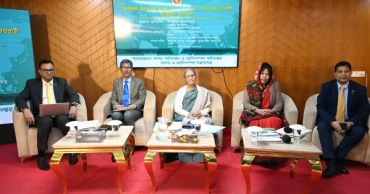
COP leadership crucial to elevate Bangladesh’s global standing: Adviser Farida
Bangladesh must ensure the participation of the future Prime Minister or the highest number of ministers or advisers at the UN climate summit (COP) to gain due global attention, Fisheries and Livestock Adviser Farida Akhter said on Monday.
“The presence of the Prime Minister (future) or members of the Council of Advisers brings a level of importance and visibility that cannot be achieved by lower-tier delegations,” she said, stressing that active engagement of top leadership at COP is essential to effectively project Bangladesh’s position and priorities on the global stage.
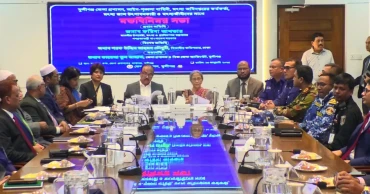
Farida made the remarks while speaking at a post-COP 30 debriefing workshop on participation in the UN Climate Conference 2025, organised by the Ministry of Fisheries and Livestock at the Cotton Development Board in the city's Farmgate area.
Farida said Bangladesh is a biodiversity-rich country and, despite facing multiple challenges, possesses the capacity to address them internally. “If we can collectively take initiatives to resolve these problems, the potential losses caused by climate change can be reduced significantly. That should be our focus.”
Highlighting the livestock sector, the adviser noted that although farmers often turn to foreign breeds to boost production, indigenous breeds are far better suited to adapting to climate change.
“Foreign breeds require a much higher level of care, management and services, while local breeds need comparatively less. Importing foreign breeds solely for higher production is not a sustainable solution. We must prioritise the conservation and development of indigenous breeds,” she said.
Farida also called for the formation of a competent expert group for Bangladesh and urged greater attention to the challenges posed by genetically modified organisms (GMOs), noting their impact on the fisheries and livestock sectors.
Alongside technology, she emphasised the equal importance of human knowledge and experience.
Speaking at the event, Environment, Forest and Climate Change Secretary Farhina Ahmed said the government aims to bring together both public and private expertise to tackle climate change. “Even if COP funds are not secured, we must continue working in the national interest through our own initiatives.”
In this regard, the adviser said the government is allocating $3.5 million from its own funds to support climate-related activities.
Senior officials from various ministries and departments, along with NGO representatives, attended the workshop.
9 months ago
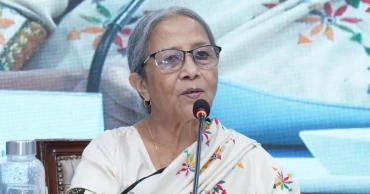
Bangladesh wastes 21 million tonnes of food annually: Adviser Farida
Bangladesh loses more than 21 million tonnes of food annually across the supply chain, from farms to dining tables, Fisheries and Livestock Adviser Farida Akhter said on Monday.
She said the absence of proper storage facilities, poor price management and inadequate infrastructure are the main reasons behind such massive food losses, despite farmers’ hard work in production.
Farida was speaking at a seminar titled ‘Towards Zero Food Waste: Building a Sustainable Food Supply System in Bangladesh’ held at a city hotel.
The Centre for Policy Dialogue (CPD), the Royal Danish Embassy in Dhaka, the Food and Agriculture Organization (FAO), the World Bank, and the World Food Programme (WFP) jointly organised the event.
Dr Salehuddin warns against misinformation to safeguard economy
Citing World Bank and WFP assessments, she said about 15.5 to 16 million people in Bangladesh still suffer from acute food insecurity, a situation likely to persist until the end of 2025.
“The government is trying to increase and ensure safe food production, but at the same time, a massive amount of food is wasted — whether it is milk, eggs, meat or fish,” the adviser said.
She highlighted that indiscriminate fishing also contributes to waste. “When targeting hilsa and other species, fishing boats end up discarding nearly two-thirds of their catch back into the sea, causing serious damage to biodiversity and resources.”
Anders Karlsen, Chargé d’Affaires of the Danish Embassy in Bangladesh, said globally, one-third of all food produced is wasted.
“The land used to produce this wasted food is larger than China, and in the end, nobody eats it,” he said, stressing that along with food, agricultural land and greenhouse gases are also wasted in the process.
“The best time to take action was yesterday. If not, then it must be today,” Karlsen urged.
5 new products to be included in TCB sales from Nov: Commerce Adviser
FAO Deputy Representative Dia Sanou explained the local and global impacts of food waste.
“The world produces enough food to feed 1.5 times the global population, yet due to poor distribution, weak infrastructure and, most importantly, food waste, hunger and malnutrition persist. Despite having surpluses, the most vulnerable people still go without adequate food,” he said.
WFP Bangladesh Deputy Country Director Jesse Wood said studies reveal that 8–15% of paddy and 20–40% of fruits and vegetables are wasted after harvest, with an estimated financial loss of $2.4 billion annually.
He noted that despite being a major producer of vegetables, fish and other essentials, Bangladesh still imports these items due to inadequate storage and cold-chain facilities.
“This is a missed opportunity for both farmers and the economy,” he added.
CPD Executive Director Dr Fahmida Khatun pointed to the environmental costs, saying, “When we waste food, we also deplete scarce environmental resources. As one of the most climate-vulnerable countries, Bangladesh must prioritise reducing food waste.”
Government officials, private sector innovators, experts and development partners attended the seminar and stressed the need for having effective strategies to minimise food wastes in Bangladesh.
1 year ago
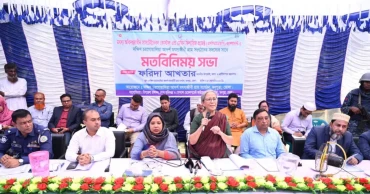
Fishing has potential to earn significant foreign currency: Fisheries Adviser
Fisheries and Livestock Adviser Farida Akhter on Monday emphasised the importance of protecting fish resources, saying that exporting fish can contribute to foreign currency earnings.
The adviser stressed that Bangladesh has gained international recognition for its fish, especially hilsa. "No other country produces hilsa like Bangladesh, and even if they do, the taste does not compare to ours," she said while visiting the Dakkhin Char Goalini Ideal Fishing Village in Monpura upazila of Bhola and holding a discussion with local fishermen.
Addressing the fishing community, she highlighted that expatriates play a significant role in strengthening the economy through remittances, and similarly, fishermen can contribute by ensuring sustainable fish production and exports.
She explained that restrictions are imposed during the breeding season to allow fish to spawn and grow naturally. While fishermen generally comply, some traders violate these regulations by encouraging fishing during the ban period. To prevent such illegal activities, the Coast Guard and the River Police are actively working, she noted.
Restoring rivers challenging but possible: Adviser Rizwana
Addressing Monpura’s fishermen, she said, "If we work together, we can bring about positive change. Fisheries officials regularly discuss your challenges and opportunities, even in Dhaka. However, hearing directly from you is different, which is why I am here today."
The adviser also emphasised that merely issuing cyclone warnings is not enough; it is the government’s duty to protect fishermen. The Ministry of Fisheries and Livestock will distribute life jackets, lifebuoys, and torchlights to ensure their safety, she added.
She urged the fishing community to diversify their livelihoods by engaging in agriculture, poultry, and livestock farming to achieve greater financial stability.
When the fishermen raised concerns about the lack of cyclone shelters, tube wells, schools, and poor road conditions in Monpura, the adviser assured them that she would convey these issues to the relevant ministries.
Recognising that both human-induced and natural disasters pose significant challenges to fishermen, she said, “To deal with natural disasters, the suffering of fishermen will be alleviated by digging canals,” instructing the local administration to reduce the violence of robbers in the river and sea.
Later, the adviser distributed life jackets, lifebuoys, and torchlights among 80 fishermen.
1 year ago
Govt to regulate size and threads of 'current' nets: Fisheries Adviser Farida
Fisheries and Livestock Adviser Farida Akhtar has said that the government will regulate the size and threads of current nets used in fishing.
Speaking at a meeting held at the Deputy Commissioner's office in Munshiganj on Tuesday, she emphasised that fisheries officials would have enhanced authority to address the issue, with consultations involving experts from the Department of Fisheries to determine the appropriate size and specifications for the nets.
"Current nets are harmful because there is no control over their size. We will collaborate with experts to set the guidelines for these nets," she said.
The adviser also highlighted the role of local factories in Munshiganj, which manufacture current nets. She pointed out that the nets produced by these factories have sizes that trap all types of fish, exacerbating the problem.
Mongla Port Development: Work on Pashur Channel Dredging begins
"We have received consistent reports about this issue and several raids have been conducted at different factories. Many nets have been seized and it is evident that the net traders and factory owners are also involved in this matter," she added.
While addressing the technical aspects, she said, "This issue requires a technical approach, not just raids. The nets must be designed to capture specific types of fish and we will provide clear instructions on the proper size, the material to be used and the manufacturing process."
After the meeting, the adviser inaugurated two exhibitions at the District Commissioner's office.
1 year ago
Ensure food safety while boosting production: Adviser Farida
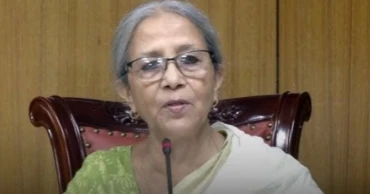
Fisheries and Livestock Adviser Farida Akhter on Sunday warned against the use of harmful pesticides that compromise nutritional value, highlighting the critical importance of ensuring public health and nutrition security.
She made these remarks while addressing a roundtable discussion on “Opportunities, Experiences and Challenges in Implementing Multi-Sectoral Nutrition Services at the District Level,” held at a hotel in Cox’s Bazar.
The adviser pointed out that industrial pollution remains a major obstacle to safe food production, with rivers and seas increasingly contaminated. “Microplastics have been found in fish. We are also opposing golden rice, as there are many local foods rich in zinc that can address the deficiency,” she said.
Highlighting the need for grassroots-level awareness, the advisor called for a social movement to promote nutritional consciousness and emphasised empowering women to achieve this goal.
She also stressed the importance of safe practices in fish and livestock feed production, underscoring the need to focus on native fish varieties and region-specific livestock.
"Nutrition is a fundamental right and ensuring it requires coordinated efforts from all sectors. Departments and agencies must work together to raise awareness on nutritional security," she added.
The advisor also expressed concerns about prioritising farmed fish over native species and the unsafe practices in animal feed. "Increasing local fish production is essential, as we have significant biodiversity that must be preserved,” she noted.
On women's empowerment, Farida Akhter stated, "Nearly half of pregnant women in Bangladesh suffer from anemia. Women's malnutrition is closely tied to their lack of rights. For the betterment of future generations, both men and women must be made aware of nutritional needs. However, women are key agents of change and empowering them will enable them to take a stand."
River, forestland encroachers to face strict action: Rizwana
The roundtable was moderated Samakal’s Online-in-charge Goutam Mandal and presided over by Sayka Siraj, country director of Nutrition International.
Nutrition International’s National Program Manager Iftia Zerin presented the keynote paper.
Later in the afternoon, the adviser visited the Cox’s Bazar district's ‘Dried Fish Processing Industry Establishment (1st Revised)’ project.
1 year ago