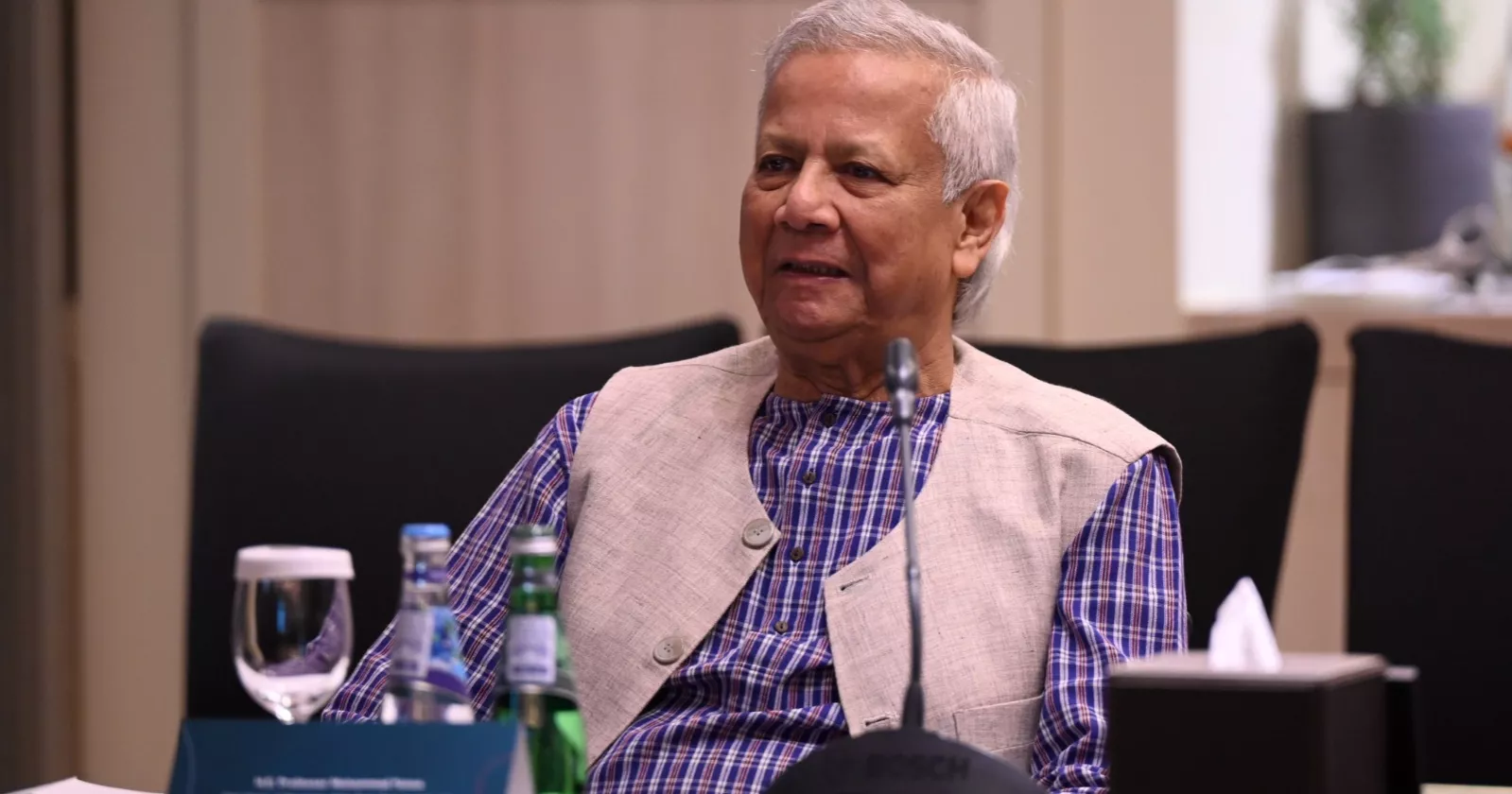
Given the renewed international geopolitical and geostrategic scenario, Chief Adviser Prof Muhammad Yunus on Wednesday said Qatar can strongly express their solidarity to resolve the Rohingya issue and be proactive to engage the OIC countries to raise more funds and impose pressure on the international community to advocate for the repatriation of the Rohingyas.
"Qatar can use its good offices to put pressure on Myanmar for starting repatriation of Rohingya people without any further delay," he said.
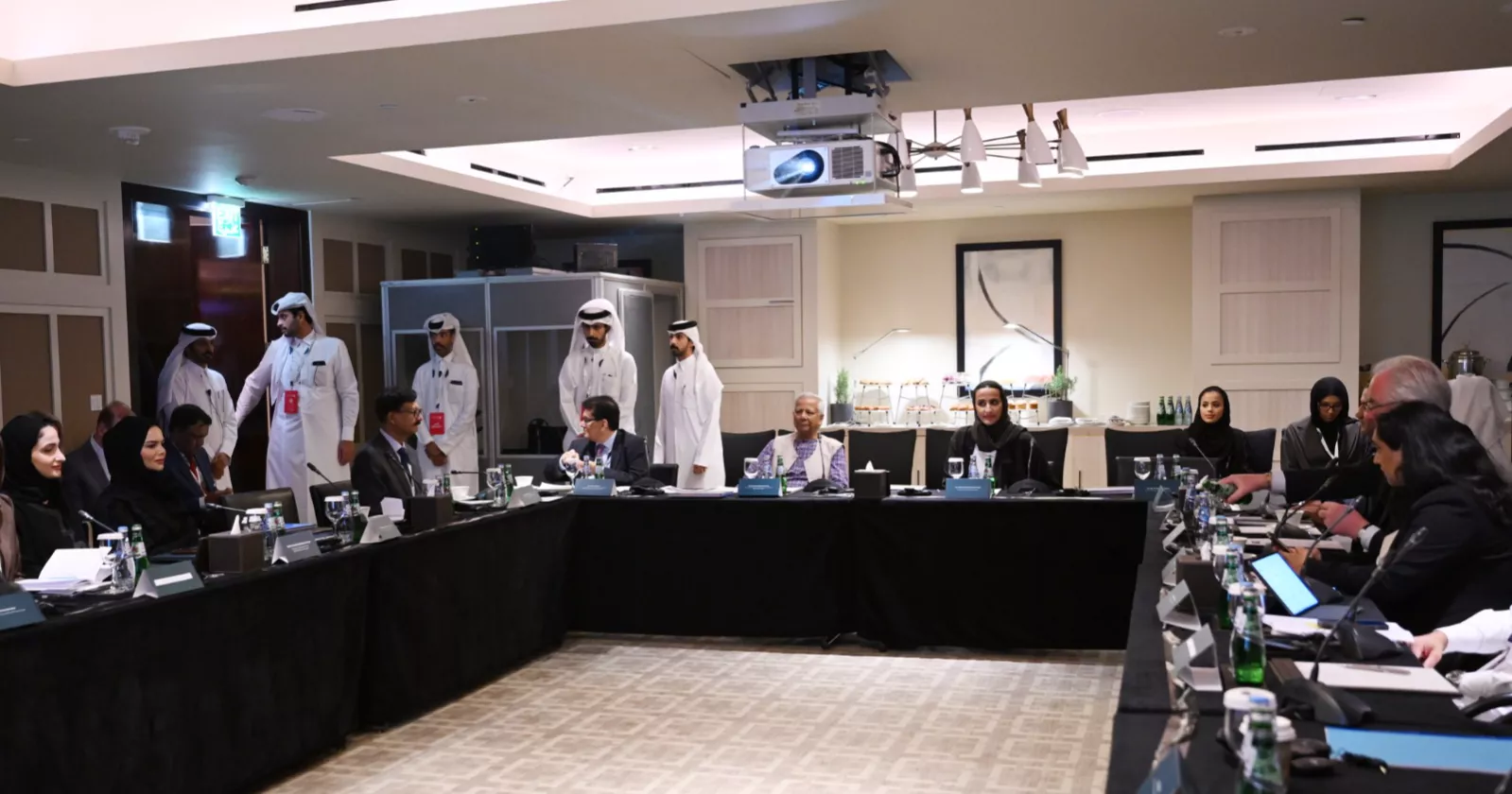
The Chief Adviser and Qatar Foundation Chief Executive Officer Sheikha Hind bint Hamad Al Thani, also the sister of Qatar Amir and the host of Earthna Summit, joined the high-level roundtable discussion on "Social and Environmental Challenges around Forcibly Displaced Populations: The Case of the Rohingyas."
Prof Yunus called for working together for humanity, for stability and for justice.
"Let us ensure that today’s discussion does not conclude with formalities alone, but marks the beginning of a meaningful partnership—one that keeps the Rohingya crisis at the forefront of our shared humanitarian priorities and works collectively towards lasting solutions," he said.
Prof Yunus said prolonged stay of the Rohingyas poses enormous challenges to Bangladesh and makes these Rohingyas frustrated.
He said the rise in criminal activities in the camps and attempts of illegal migration are clear signs of desperation among them. "If the problem persists further, it may affect the security and stability of the entire region and jeopardize development initiatives," Prof Yunus said.
Unfortunately, he said, international attention is gradually shifting from the Rohingya crisis due to various conflicts arising at different corners of the globe.
As of 19 March 2025, out of the data of a total of 8,29,036 submitted by the Bangladesh government, as many as 2,39,056 people were verified by the Myanmar government, and among them, 1,76,198 people were cleared as “Persons who resided in Myanmar” by the government of Myanmar.
Bangladesh is working with international and regional partners to resolve the Rohingya crisis by sustainable repatriation.
Prof Yunus said Bangladesh will organize a “High-Level Conference on the Situation of Rohingya Muslims and Other Minorities in Myanmar” under UN auspices, probably in September 2025 in New York.
Bangladesh expects high-level political participation and cooperation from Qatar in the conference.
Qatar was among the first few countries to immediately provide assistance and support after the outbreak of Rohingyas crisis in 2017.
US lauds Dr Yunus' approach towards Rohingya issue
Prof Yunus extended his sincere gratitude to the Qatar Foundation for organizing this gathering and for continuing to champion conversations that go beyond policy statements—conversations that strive for solutions, accountability, and solidarity.
Bangladesh is currently hosting about 1.3 million Forcibly Displaced Myanmar Nationals (Rohingya), while 32,000 newborns are being added yearly.
Despite numerous challenges and constraints, Prof Yunus said, Bangladesh is giving shelter to such a huge number of Rohingyas only on humanitarian considerations.
"Bangladesh considers sustainable repatriation as the only solution to the current crisis," he said.
Justice and Accountability
Chief Adviser Prof Yunus said ongoing justice and accountability initiatives in International Court of Justice (ICJ), the investigation of the International Criminal Court (ICC), and the activities of the Independent Investigative Mechanism for Myanmar (IIMM) regarding the atrocities committed against Rohingyas are very crucial.
Bangladesh as state party of UN and Rome Statute, he said, strongly believes crimes like genocide and crime against humanity should never go unpunished.
Attributing the crimes to Myanmar/officials of Myanmar will also be a crucial tool to build the confidence of Rohingyas for their repatriation to Rakhine, said the Chief Adviser.
Bangladesh is facilitating the accountability initiatives at the International Court of Justice (ICJ), the investigation of the International Criminal Court (ICC), and the activities of the Independent Investigative Mechanism for Myanmar (IIMM).
The case is expected to be in its merit phase by early 2025. Law firm Foley Hoag informed that after successful completion of the three phases (Provisional, Objection and Merit phases) of the Court proceedings, they would request the ICJ for reparation by the Myanmar government to the victims of the genocide.
The Gambian government is undertaking concerted efforts to secure necessary funding from OIC member states.
OIC has so far raised USD 2.77 million, with Bangladesh being the most significant contributor, worth USD 0.7 million.
Considering the severe budgetary constraints to meet up the expenditures of the ongoing judicial proceedings pending at the ICJ, Prof Yunus said, as an affluent member of the OIC, Qatar may be requested to make financial contribution to the OIC Fund for Rohingya, created to meet the expenditure of the case and to remain seized with the issue to maintain the momentum.