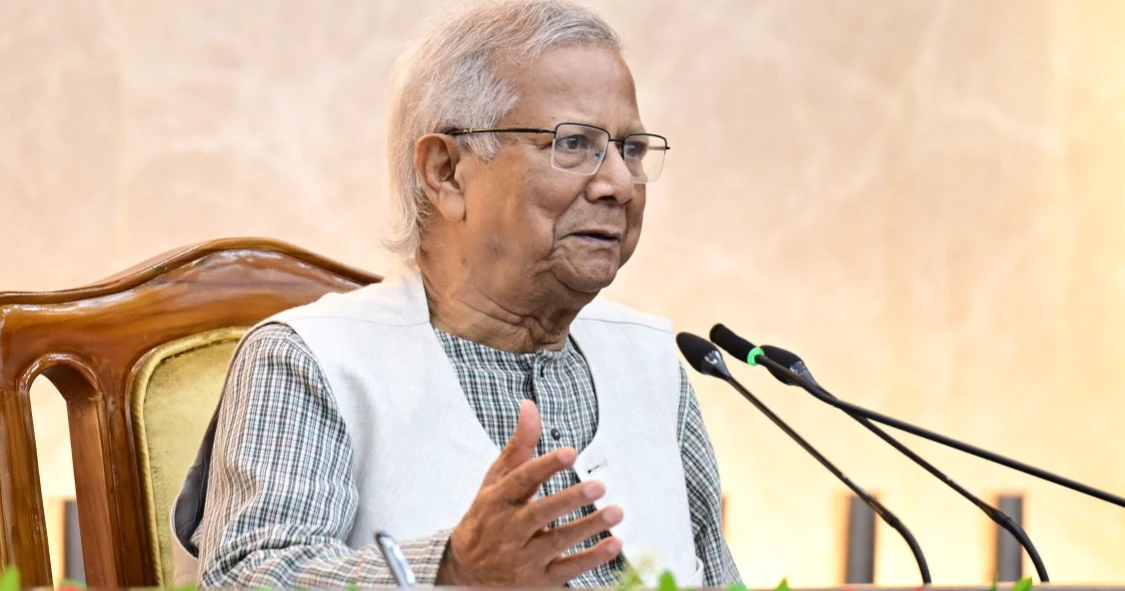
Chief Adviser Professor Muhammad Yunus visited the National Institute of Burn and Plastic Surgery on Saturday night to enquire about the treatment of those injured in the recent plane crash into Milestone School and College.
He reached the hospital at 9:10 pm and was briefed by the institute's director, Professor Mohammad Nasir Uddin, about the incident and the present condition of the patients.
Professor Nasir told the Chief Adviser that the injured patients are receiving treatment as per the advice of a multidisciplinary consultation board.
He said the patients’ conditions are being assessed following international medical standards, and both local and foreign specialists are involved to make sure they get the best care.
At present, Professor Nasir informed the Chief Adviser the hospital is treating four patients in critical condition, nine in serious condition and 23 in moderate condition.
Govt committed to highest standard of care for plane crash victims: Health Adviser
He also mentioned that these numbers might change depending on how the patients respond to treatment.
The Chief Adviser asked the hospital director if there is any shortage of equipment, medicine, or other medical supplies.
The director assured him that all necessary items for treatment are being provided by the government.
“A few extra items were brought in by a team of doctors from Singapore,” he told Prof Yunus.
When the Chief Adviser asked for more details about the incident, his Special Assistant, Prof Md Sayedur Rahman, explained that the injured were first taken to nearby hospitals for emergency treatment.
After getting initial care, he said they were quickly shifted to the Burn Institute and the Combined Military Hospital (CMH).
China assures continued medical support to Bangladesh
Prof Sayedur said the Health Ministry had asked the Burn Institute to stay ready, and all doctors, nurses, and staff were well prepared. “They were able to treat around 30 burn victims as soon as they arrived at the emergency section.”
He also said in the beginning, there was some confusion about the number of injured and deceased because patients were taken to nearly 10 different hospitals. “Some of the deceased could only be identified through DNA testing, which took some time.”
While shifting patients, Prof Sayedur said the lack of ambulances was a big challenge. “This tragic incident has shown some clear weaknesses in the country’s emergency healthcare system.”
The Chief Adviser instructed the authorities concerned to send clear and specific suggestions on what should be done next, and he promised that quick action would be taken.
He also stressed the need for mental health support and trauma counselling for the injured and the families of the victims.
Prof Yunus advised including mental health experts and making sure that all victims, their families, and everyone connected with Milestone School get proper support.
He also asked the hospital director to ensure that the relatives of burn patients are taken care of during their time at the hospital.
Milestone tragedy: Death toll now stands at 35
“We are sincere and determined to ensure the best treatment for the patients,” he said.
The Chief Adviser gave heartfelt thanks to all the doctors, nurses and healthcare staff working tirelessly in different hospitals to treat the injured.
He also thanked the international medical teams who came forward to support Bangladesh during this difficult time.
Health Adviser Nurjahan Begum was also present during the Chief Adviser’s hospital visit.