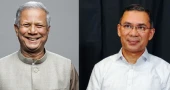
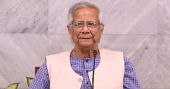
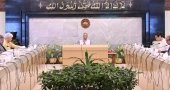
Prof Yunus
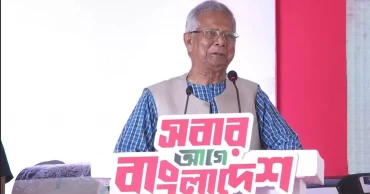
July Museum to guide nation whenever it loses its way: Prof Yunus
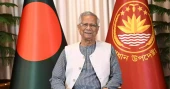
Former interim government Chief Adviser Prof Muhammad Yunus on Wednesday described the July Mass Uprising Memorial Museum as the starting point of Bangladesh's new journey, saying the nation should return to the museum whenever it loses its way to rediscover its democratic ideals and future direction.
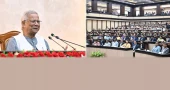
Speaking as a special guest at the discussion titled "July 36" following the museum's inauguration, he also said the museum will serve as a bridge between Bangladesh's past and future, inspiring future generations to uphold the spirit of the July uprising and build a better nation.
"This museum stands between the past and the future. It has preserved the past instantly, but it has also created the future. It tells us who we are, what we wanted and what kind of Bangladesh we dreamed of building," Prof Yunus said.
He said the museum will serve as a guide whenever the nation faces uncertainty.
"If we ever lose our way, we will come here to find our path. If confusion clouds our thinking, we will rediscover our direction here and begin our journey anew," the former chief adviser said.
He said the institution is unlike conventional museums because it documented a defining chapter of Bangladesh's history almost immediately after the events unfolded. "There are many museums around the world that preserve objects from the distant past. This museum is different because it has preserved the memories, documents and artefacts of a historic event almost instantly," he said.
Prof Yunus, also a Nobel laureate, said the museum has created a new dimension in preserving the nation's history by connecting the past with the future.
He said the museum captures the aspirations and sacrifices of ordinary people, particularly young protesters who took to the streets hoping to build a new Bangladesh.
Referring to the handwritten farewell letter left by July uprising martyr Shariar Khan Anas, the former interim government head said it reflected the courage and conviction of an entire generation.
"He was not following a script. His parents tried to stop him, but he felt compelled to join the movement. His letter captured the emotions of a generation," he said.
Prof Yunus urged young Bangladeshis to draw inspiration from the museum and contribute to building the country the martyrs had envisioned.
He hoped students from schools, colleges and universities across the country will visit the museum, reflect on the July uprising and record their own dreams for Bangladesh's future.
"I hope visitors will not simply walk through the galleries and leave. They should think about what kind of Bangladesh they want to build," the Nobel laureate said.
He also envisioned the museum becoming a vibrant cultural hub where young people will express their aspirations through literature, music, art and other creative works.
Referring to the symbolic graves displayed on the premises, Prof Yunus said each memorial will tell the story of a martyr, enabling visitors to understand the sacrifices made by ordinary citizens.
"These were ordinary sons and daughters from ordinary families. They came to the streets because they believed Bangladesh deserved a better future," he said.
2 months ago
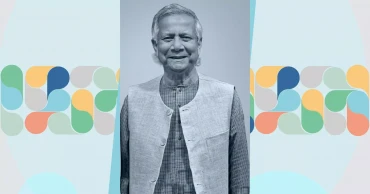
Imagination, collective action key to creating better future, building three-zero world: Prof Yunus
Nobel Peace Laureate Muhammad Yunus on Saturday urged social business practitioners from across the globe to renew their commitment to building a world of "three zeros", saying imagination and collective action are key to creating a better future.
Prof Yunus described the annual gathering as an opportunity for participants to "recharge their batteries" by exchanging ideas, sharing experiences and inspiring one another.
"We gather together again on Social Business Day and talk to each other, getting inspired by each other's work. Our batteries are completely recharged, ready to go and take the whole world with us," he said while speaking at the 16th edition of Social Business Day, organised by the Yunus Centre and Grameen Group, at the Samajik Convention Centre in Zirabo, Savar.
Expressing confidence in the social business movement, Yunus said it would ultimately succeed because it offers solutions to the world's pressing challenges.
"If the world has to survive, we will win. We'll make sure the world becomes a world of three zeros," he said, referring to his vision of zero poverty, zero unemployment and zero net carbon emissions.
Yunus stressed that imagination is the greatest strength of humanity and urged participants never to abandon their dreams of creating a better world.
"Imagine the world that we want in detail, and just keep on imagining, and it will happen. That has a strange power," he said.
Calling on delegates to translate their ideas into action, Yunus said imagination alone is not enough unless it is backed by sustained efforts.
He welcomed participants from different countries and expressed optimism that the exchanges during Social Business Day would further strengthen the global movement for social business and accelerate progress towards a more inclusive and sustainable world.
Prof Yunus called for a fundamental transformation of the education system, saying it should inspire young people to become creative entrepreneurs and problem-solvers instead of producing job seekers.
He said the conventional education system confines human potential in what he described as a "bonsai" mindset, limiting people's creativity and independence.
"Human beings are not born to work for somebody else," he said, arguing that every individual possesses the innate capacity to create, innovate and contribute to solving social problems.
According to Prof Yunus, schools and universities currently take pride in producing graduates who quickly secure jobs, whereas education should encourage students to build enterprises that address societal challenges.
To put that vision into practice, he announced the establishment of Grameen University in Bangladesh as a social business university dedicated to creating a world of "three zeros" - zero poverty, zero unemployment and zero net carbon emissions.
He said prospective students will be required to submit essays describing the kind of world they aspire to create, placing imagination and creativity at the heart of the university's academic philosophy.
Prof Yunus also congratulated Foreign Minister Dr Khalilur Rahman on becoming President of the 81st session of UN General Assembly, expressing hope that his tenure would bring further honour for Bangladesh.
Welcoming delegates from around the world, he said Japan sent the largest overseas delegation to this year's Social Business Day, followed by Pakistan and Malaysia. He urged participants to continue working together to realise the vision of a world based on social business and the three-zero philosophy.
Lamiya Morshed, Executive Director, Yunus Centre; Ashraful Hassan, Chairman, Grameen Group; and Abdul Hannan Chowdhury, Chairman, Grameen Bank also spoke at the opening ceremony with video messages from António Guterres, Secretary-General of the United Nations and José Ramos-Horta, President of Timor-Leste.
The event brought together entrepreneurs, global leaders, academics, policymakers, innovators and youth from around the world.
This year’s theme is “Social Business: The Language of Peace in a Fractured World.”
The two-day conference will feature five plenary sessions and seven breakout sessions, including keynote addresses, innovation showcases, country forums and networking opportunities centred on critical global challenges such as poverty, healthcare, financial inclusion, climate action, education, food security and youth empowerment.
Lamiya Morshed said Social Business Day serves as a platform for sharing experiences, exchanging ideas and exploring innovative solutions to address social and economic challenges.
In 2026, Grameen will mark two historic and deeply connected milestones: 50 years of Grameen Bank and 20 years since the Nobel Peace Prize was awarded to Professor Muhammad Yunus and Grameen Bank, recognising the idea that poverty is not created by the poor but by the systems that surround them.
This gives Social Business Day added weight as a moment to celebrate its achievements and reflect honestly on the chances missed along the way, the Yunus Centre said.
3 months ago
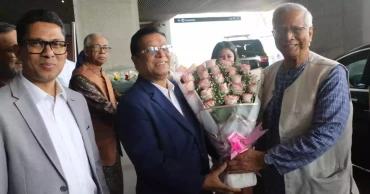
Prof Yunus returns to former role after leading interim govt
Nobel Peace Prize laureate and former Chief Adviser Prof Muhammad Yunus returned to his previous duties on Sunday following an 18-month hiatus, during which he led Bangladesh’s interim government.
"A warm welcome to Professor Muhammad Yunus," said the Yunus Centre.
7 months ago
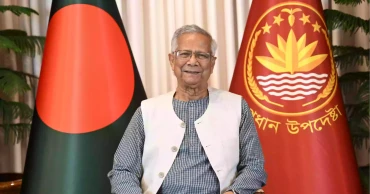
Prof Yunus sees vast economic prospects in wider regional cooperation
Chief Adviser Prof Muhammad Yunus on Monday renewed his emphasis on the economic opportunities in the region, underscoring the vast growth potential of a broader regional cooperation encompassing Nepal, Bhutan and northeastern India.
In a televised address to the nation ahead of Tuesday’s handover of power, Prof Yunus outlined Bangladesh’s maritime access as a strategic asset.
“Our open sea is not merely a geographical boundary; it is a gateway to the global economy,” he said, highlighting connectivity as central to the country’s next phase of development.
Prof Yunus said through economic zones, trade agreements and access to duty-free markets, a strong foundation will be established for this region to become a global manufacturing hub.
“We have come a long way in signing agreements with the best international port management companies to take the efficiency of our ports to the international level. If we cannot increase its efficiency, we will lag behind in economic achievements,” he said.
The Chief Adviser said they have been able to firmly restore these three fundamental foundations of Bangladesh's sovereignty, national interests, and the country's dignity in foreign policy.
“Bangladesh is no longer a country with submissive foreign policy or dependent on the instructions and advice of other countries, today's Bangladesh is confident, active and responsible in protecting its independent interests,” he said.
Prof Yunus said they are committed to building relations with all countries of the world based on mutual respect and interests.
At the same time, he said, Bangladesh has established itself today as a state capable of taking necessary strategic decisions for the future while maintaining balance.
Prof Yunus said the Rohingya crisis has created a serious and long-term strain on the national security, regional stability and economy.
CA Prof Yunus thanks NCP for signing July Charter
Unfortunately, he said, for a long time, no effective and coordinated international initiative was visible to resolve this crisis. “Since assuming office, we have been able to bring this issue, which was moribund in the international arena, back to the center of global attention.”
Realising the importance of this crisis, he said, the United Nations has stood by Bangladesh.
The UN Secretary-General himself has visited Bangladesh and pledged to help find a sustainable solution to the problem, he said, adding that at his request, a special conference on the Rohingya issue was held at the UN.
7 months ago
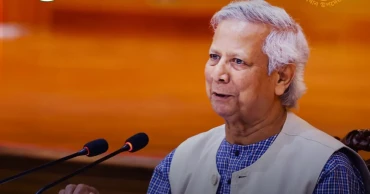
CA Prof Yunus to address nation at 9:15pm
Chief Adviser Prof Muhammad Yunus will address the nation at 9:15pm on Monday.
Bangladesh Television and Bangladesh Betar will broadcast his speech, said the Chief Adviser’s press wing.
Earlier, he delivered a farewell address to officers and staff at the Chief Adviser’s Office, marking the end of the interim administration’s tenure.
Following his speech, he joined officials and employees for a photo session at the office.
The interim government, which assumed office on August 8, 2024 under Prof Yunus, is set to conclude its term with the swearing-in of a new government on Tuesday (February 17).
The BNP-led alliance is poised to form the next government after securing a landslide victory in Thursday’s national election, winning 212 seats, while the Jamaat-e-Islami led alliance won 77 seats.
7 months ago
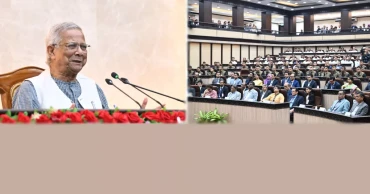
Prof Yunus delivers farewell speech as interim govt prepares to hand over power
Chief Adviser Prof Muhammad Yunus on Monday delivered a farewell address to officers and staff at the Chief Adviser’s Office, marking the end of the interim administration’s tenure.
Following his speech, he joined officials and employees for a photo session at the office.
The interim government, which assumed office on August 8, 2024 under Prof Yunus, is set to conclude its term with the swearing-in of a new government on Tuesday (February 17).
37 houses ready for incoming ministers: Adviser Adilur
The BNP-led alliance is poised to form the next government after securing a landslide victory in Thursday’s national election, winning 212 seats, while the Jamaat-e-Islami led alliance won 77 seats.
7 months ago
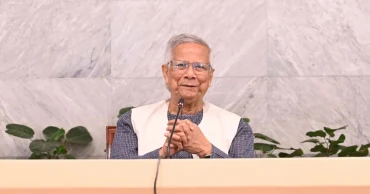
We’re lucky to have opportunity to serve nation: Prof Yunus
Chief Adviser Prof Muhammad Yunus on Sunday expressed his sincere appreciation to the members of the Council of Advisers, describing the recently concluded national election as both historic and highly successful.
“We are lucky people who got the opportunity to serve the nation,” Chief Adviser’s Press Secretary Shafiqul Alam quoted Prof Yunus as saying at the last meeting of the Council of Advisers.
Describing the election a ‘massive success’, Prof Yunus extended his gratitude to all those involved in ensuring its smooth conduct, particularly the law enforcement agencies and the Armed Forces for their active and professional roles.
Prof Yunus calls upon all to work together to fulfill people’s expectations
Press Secretary Alam briefed reporters at the Foreign Service Academy following the meeting. Senior Assistant Press Secretary Foyez Ahammad and Assistant Press Secretary Shuchismita Tithi were also present.
Alam said the Council adopted a formal resolution expressing deep appreciation to all stakeholders for their outstanding contributions towards organising what it termed a successful, historic and festive national election.
The Council conveyed special thanks to Home Affairs Adviser Lt Gen (retd) Md Jahangir Alam Chowdhury for his ministry’s leadership, noting that Bangladesh may not have previously witnessed an election of such high standard.
The Council extended gratitude to all agencies under the Ministry of Home Affairs, including the police, Border Guard Bangladesh (BGB), Coast Guard, Ansar, and the Armed Forces, for their commendable performance in ensuring a peaceful electoral process.
The Council approved a vote of thanks to immediate past Cabinet Secretary Dr Sheikh Abdur Rashid for effectively coordinating the administration and contributing to the conduct of a free, fair, peaceful and festive election.
It feels like Eid, creating a new Bangladesh: Prof Yunus
Information and Broadcasting Adviser Syeda Rizwana Hasan moved the motion of thanks, which was unanimously adopted.
A key point highlighted during the meeting was the anticipated emergence of a strong opposition in Parliament, comprising individuals who had been victims of enforced disappearance and killings, as well as those who were at the forefront of the July Revolution, reflecting broader representation across Bangladesh society.
The Council also underscored that individuals from similar backgrounds would be represented on the treasury bench, marking what it described as a new and inclusive chapter in the country’s parliamentary history.
7 months ago
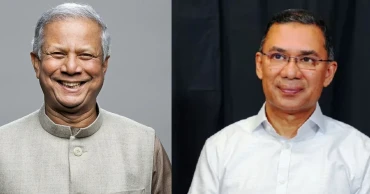
Prof Yunus, Tarique Rahman to cast votes at same polling centre
Chief Adviser Prof Muhammad Yunus and BNP Chairman Tarique Rahman will cast their votes at the Gulshan Model School and College centre in the capital on Thursday.
The Chief Adviser will cast his vote at 10am, according to his press wing.
Tarique Rahman is expected to cast his vote between 9:30am and 10am, said Shamsuddin Didar, a staff member of the BNP chairperson’s media wing.
Finance Adviser Dr Salehuddin Ahmed will also cast his vote at the same centre around 12pm, the ministry said in a statement on Wednesday.
A total of 127,298,522 voters (in 299 constituencies) are eligible to cast their ballots in this election. Of them, 64,620,077 are male voters, 62,677,232 are female voters and 1,213 are third-gender voters.
The country has a total of 127,711,899 voters (in 300 constituencies) –64,825,154 males, 62,885,525 females and 1,220 third-gender.
Nearly 800,000 officials will be engaged in election duties in more than 42,600 polling stations in the 299 constituencies, while nearly another 800,000 security personnel will protect the polling stations.
Meanwhile, some 50,000 observers from 80 registered domestic organisations will monitor the election, while nearly 500 foreign observers are expected to oversee the election.
8 months ago
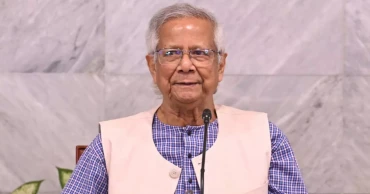
Prof Yunus sees renewed global confidence in Bangladesh democracy
Expressing satisfaction over the peaceful election campaign across the country, Chief Adviser Prof Muhammad Yunus on Monday said the presence of a large number of international observers coming from different countries reflects the renewed global confidence in Bangladesh’s democracy.
He said it also demonstrates the international community’s serious approach towards the twin elections - the national election and referendum scheduled for February 12- in Bangladesh.
“We expect that this election will be better than any other elections that the country witnessed in the past,” Chief Adviser’s Press Secretary Shafiqul Alam quoted Prof Yunus as saying during a get-together event with the senior secretaries and secretaries of the government.
Prof Yunus happy over polls preparations, says next ‘week very crucial’
Cabinet Secretary Dr Sheikh Abdur Rashid presided over the function.
The Chief Adviser said huge numbers of observers are coming from various countries which reflect that they got back the confidence in Bangladesh democracy.
Press Secretary Alam, while briefing the reporters at the Foreign Service Academy, said the elections, held during the regime of Sheikh Hasina’s regime, did not have any legitimacy and no prominent election observers came to observe the elections at that time.
Prof Yunus observed that so far there has been no significant tension surrounding the election and political parties carrying out campaigns peacefully across the country.
"Election campaigns are taking place peacefully across the country. Political parties are playing a responsible role, and large public gatherings at campaign events are being conducted without violence or disorder," he said.
The Chief Adviser if the ‘Yes’ vote wins in the referendum, the country will change fundamentally and mis-governance will not return. "If the ‘Yes’ vote wins in the referendum, Bangladesh’s future will be built in a more positive way," he said.
Prof Yunus expressed optimism that the upcoming national election would be a free, fair, peaceful and festive one.
Speaking about past elections, he said previous polls in Bangladesh could hardly be called elections, describing them instead as ‘mockery’ in the name of elections.
Prof Yunus calls for ethical use of technology, rejects fraud for prosperity
"In contrast, the forthcoming election will be held in a free, fair and peaceful manner. With only two days remaining, we have almost reached the destination (peaceful, credible election)," the Chief Adviser said.
This election, he said, together with the referendum, would bring an unprecedented change to Bangladesh politics and structure.
Prof Yunus said Bangladesh will continue to move forward and attract investors from around the world who will come to establish factories in the country and described Bangladesh’s young population as a vast and powerful resource.
Referring to the Japan-Bangladesh Economic Partnership Agreement (EPA), he said this will encourage many foreign companies to set up production facilities in the country.
The Chief Adviser reiterated that the Japan-Bangladesh EPA is the first of its kind and should be seen as a model, adding that Bangladesh will pursue more free trade and preferential trade agreements.
Such agreements, Prof Yunus said, will open many new doors for the economy and for Bangladeshi products.
The Chief Adviser highlighted that, for the first time, expatriate Bangladeshis have been formally included in the political process.
He said their role in Bangladesh’s political movements and uprisings in the past is now being fully recognized, and going forward they will be able to play a stronger and more meaningful role in national affairs.
The Chief Adviser highlighted the extensive use of technology in this election, saying it has made the process easier and more accessible for everyone.
He said that a mobile app has been developed to guide voters on how to cast their votes, while election-related apps will be used to monitor security across nearly 43,000 polling centres across the country.
The ‘Election Bondhu’ initiative has been introduced, body-worn cameras have been provided to around 25,700 law enforcement personnel, and CCTV cameras are being installed at polling centres, Prof Yunus said, expressing hope that this election would be better than any previous election held in the country.
He thanked the secretaries for their performance over the past 18 months, particularly for their cooperation in expediting work related to around 130 ordinances issued during this period.
The Chief Adviser said their support and efficiency have been critical to the government’s work.
Later, the Chief Adviser posed for photographs with the senior secretaries and secretaries of the government.
If employers lose trust, all skills development initiatives would fail: Prof Yunus
8 months ago
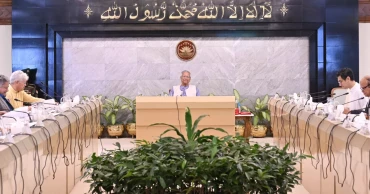
If employers lose trust, all skills development initiatives would fail: Prof Yunus
Highlighting the significant demand for Bangladeshi workers abroad, Chief Adviser Prof Muhammad Yunus on Sunday said all forms of fraud, related to skills training certificates, must be stopped to unlock the country’s untapped employment potential overseas.
“All these frauds must be stopped. The reputation of the country’s workforce is being undermined due to fraud and forgery related to skills training certificates,” he said, stressing that if employers lose trust, all skill development initiatives would fail.
The Chief Adviser made the remarks while presiding over a meeting of the Governing Body of the National Skills Development Authority (NSDA) at his office.
Prof Yunus instructed the concerned authorities to take effective measures to prevent the forgery of skill development training certificates and the use of fake credentials in order to safeguard Bangladesh’s reputation in the international labour market.
Stressing the importance of building the country’s brand image, he said, “Employers should say that workers who come from Bangladesh will definitely do well.”
Established in 2018, this was the second meeting of the NSDA Governing Body. The first meeting was held in 2022.
Prof Yunus said the NSDA has provided a strong framework for developing skilled human resources in line with the needs of both national and international labour markets.
With the growing demand for Bangladeshi workers abroad, he added, the role of the authority will become even more important.
Expressing optimism, the Chief Adviser said the NSDA’s initiative to introduce a unified standard certification system across all training institutions would play a crucial role in preventing such fraud.
“Our young generation is highly creative and full of potential. Our responsibility is to open doors of opportunity for them,” he said.
Prof Yunus happy over polls preparations, says next ‘week very crucial’
Prof Yunus also emphasised the need for necessary initiatives and coordination to enable private entrepreneurs to operate in a more transparent and effective manner.
The meeting reviewed the implementation progress of decisions taken at the previous Governing Body meeting and decided to establish an integrated skills ecosystem.
Under this ecosystem, uniform curricula and standards will be ensured for training programmes conducted by different ministries.
Once fully implemented, the system is expected to enhance the quality and credibility of certificates in the international market, reduce the wastage of public funds, and facilitate centralised and effective planning and implementation for assessing industrial labour demand and workforce development.
The Governing Body approved the long-term goals of the NSDA to address global challenges following Bangladesh’s graduation from Least Developed Country (LDC) status.
Key components of these long-term plans include conducting skills gap analyses in emerging sectors, bringing all development projects under NSDA curricula and competency standards, aligning the Bangladesh National Qualifications Framework (BNQF) with international benchmarks, and bringing the large informal-sector workforce under national skills certification through recognition of prior learning.
Among other issues, the meeting discussed the provision of Continuous Discharge Certificates (CDC) to students trained at the Institutes of Marine Technology (IMTs) under the Ministry of Expatriates’ Welfare and Overseas Employment.
Dhaka, Beijing cooperation must continue with new govt: Prof Yunus
Shipping and Labour and Employment Adviser Brigadier General (Retd) Dr M Sakhawat Hussain, Industries Adviser Adilur Rahman Khan, Bangladesh Investment Development Authority (BIDA) Executive Chairman Chowdhury Ashik Mahmud Bin Harun, Chief Adviser’s Principal Secretary M Siraz Uddin Miah, NSDA Executive Chairman Dr Nazneen Kawshar Chowdhury, secretaries of different ministries, and other senior officials attended the meeting.
8 months ago