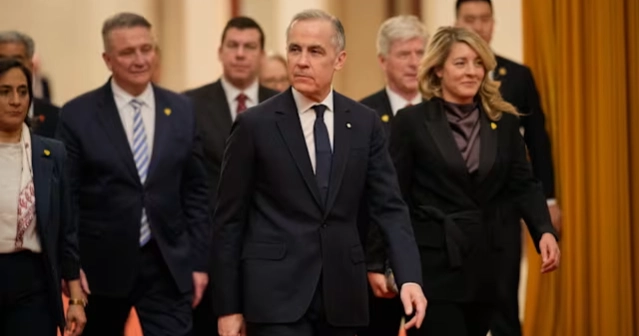
Canada has agreed to reduce its 100% tariff on Chinese electric vehicles in return for sharp cuts to Chinese duties on key Canadian farm products, Prime Minister Mark Carney said Friday.
Speaking after two days of talks with Chinese leaders, Carney said the deal will initially allow up to 49,000 Chinese-made EVs to enter the Canadian market. In exchange, China will lower its tariff on Canadian canola seeds from about 84 percent to around 15 percent.
The announcement came as Canada and China signaled a broader effort to reset relations after years of tension.
Carney said his visit, the first by a Canadian prime minister in eight years, marked “a historic and productive” step toward rebuilding ties and adapting cooperation to new global realities. He called for closer collaboration in agriculture, energy and finance.
Chinese President Xi Jinping said talks since an initial meeting last October had helped open a new chapter in bilateral relations and that Beijing was willing to continue working to improve ties.
Venezuela’s new leader signals oil sector reforms and warmer US ties
Relations between the two countries deteriorated in recent years after Canada followed the United States in imposing steep tariffs on Chinese electric vehicles, steel and aluminum under former prime minister Justin Trudeau. China retaliated with heavy duties on Canadian canola oil, meal and seeds, as well as pork and seafood, effectively shutting Canadian canola out of the Chinese market.
The renewed engagement comes as both countries face economic pressure from US President Donald Trump’s America-first trade policies, which have disrupted global commerce and hit both the Canadian and Chinese economies.
Carney said his government is seeking to build an economy less dependent on the United States and to diversify trade partnerships during a period of global trade disruption.
After leaving China on Saturday, Carney will visit Qatar before heading to Switzerland for the World Economic Forum, where he is expected to meet business leaders and investors to promote trade and investment.