tariffs
EU faces higher US tariffs if trade deal not cleared by July 4: Trump
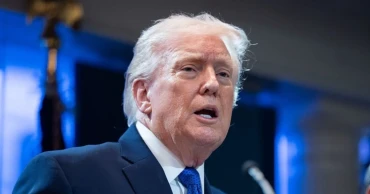
President Donald Trump said in a Thursday social media post that goods from the European Union would face higher tariff rates if the 27-member bloc fails to approve last year’s trade framework by July 4.
The announcement appeared to be a deadline extension after the president said last Friday that EU autos would face a higher 25% tariff starting this week. Trump made the updated announcement after what he described as a “great call” with European Commission President Ursula von der Leyen.
Still, the U.S. president was displeased that the European Parliament had yet to finalize the trade arrangement reached last year, which was further complicated in February by the U.S. Supreme Court ruling that Trump lacked the legal authority to declare an economic emergency to impose the initial tariffs used to pressure the EU into talks.
“A promise was made that the EU would deliver their side of the Deal and, as per Agreement, cut their Tariffs to ZERO!” Trump posted. “I agreed to give her until our Country’s 250th Birthday or, unfortunately, their Tariffs would immediately jump to much higher levels.”
It was unclear from the post whether Trump was implying that the tariff rates would jump on all EU goods or the increase would only apply to autos.
His latest statement indicates he might be backing away from his earlier threat on EU autos by giving the European Parliament several more weeks to approve the agreement.
5 months ago
Trump signs order threatening tariffs on countries trading with Iran
Trump has signed an executive order warning that the United States could impose new tariffs on countries that continue trading with Iran.
The order, signed on Friday, allows for additional import taxes on goods entering the US from any country that “directly or indirectly” buys goods or services from Iran. While it does not set a specific tariff rate, it cites 25% as a possible example, reports BBC.
Although Trump has not publicly addressed the order in detail, he reiterated that Iran must not obtain nuclear weapons while speaking to reporters aboard Air Force One on Friday night.
The move comes as senior US and Iranian officials hold talks in Oman, following weeks of escalating rhetoric between the two sides. Earlier this year, Trump had already warned that countries doing business with Iran could face a 25% tariff, writing on Truth Social in January that such penalties would apply immediately. At the time, he did not explain how the policy would be enforced.
The White House said the new order reinforces the existing national emergency related to Iran and noted that the president could revise it if circumstances change. It said the administration is responding to Iran’s nuclear ambitions, support for terrorism, missile development, and actions that destabilize the region.
Iran has not issued an immediate response.
The discussions in Oman, which began on Friday, mark the first direct talks between US and Iranian officials since last June, when the US bombed three of Iran’s main nuclear sites. Iran was represented by Foreign Minister Abbas Araghchi, while the US delegation included special envoy Steve Witkoff and Trump’s son-in-law, Jared Kushner.
Trump described the talks as “very good,” saying Iran appeared eager to reach an agreement. He warned that failure to do so would bring severe consequences and said another meeting is planned for early next week.
Oman’s foreign minister, Badr Albusaidi, who mediated the talks, said they helped clarify each side’s positions and identify potential areas for progress. Araghchi also called the talks a “good start,” saying they were conducted in a positive atmosphere and that both sides had returned home for further consultations.
Growing tensions between Washington and Tehran have raised concerns about a possible conflict. Trump recently said Iran’s Supreme Leader, Ayatollah Ali Khamenei, should be “very worried” and has warned that the US could take military action if Iran refuses to negotiate over its nuclear programme.
Iran maintains that its nuclear activities are peaceful and denies seeking nuclear weapons.
Meanwhile, the US has increased its military presence in the region. Trump described this buildup as a “massive armada,” citing Iran’s violent crackdown on nationwide protests last month. Human rights groups report that thousands may have been killed, though the true scale is uncertain due to government-imposed internet restrictions since early January.
8 months ago
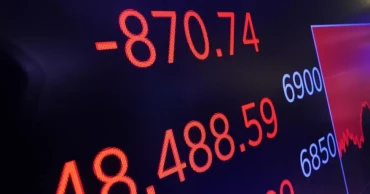
Wall Street tumbles as Trump threatens tariffs on eight European nations
Wall Street plunged sharply on Tuesday after US President Donald Trump threatened to impose new tariffs on eight European countries, intensifying tensions over his push to assert American influence over Greenland.
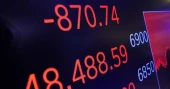
The sell-off affected nearly all sectors, extending losses from last week. The S&P 500 fell 143.15 points, or 2.1%, to 6,796.86, marking its steepest decline since October. The Dow Jones Industrial Average dropped 870.74 points, or 1.8%, to 48,488.59, while the Nasdaq composite slid 561.07 points, or 2.4%, to 22,954.32.
Technology stocks led the decline, with Nvidia down 4.4% and Apple falling 3.5%. Retailers, banks and industrial companies also lost ground, including Lowe’s (-3.3%), JPMorgan Chase (-3.1%) and Caterpillar (-2.5%).
Global markets reacted similarly, with European and Asian indices falling. Japanese long-term bond yields hit record levels amid concerns over fiscal policy. Gold and silver prices surged 3.7% and 6.9% respectively, while bitcoin retreated to around $89,700 from last week’s peak above $96,000.
Trump said on Saturday that he would levy a 10% import tax in February on goods from Denmark, Norway, Sweden, France, Germany, the UK, the Netherlands, and Finland. Combined imports from these European nations exceed those from the US’s two largest import partners, Mexico and China.
The threat has drawn sharp diplomatic reactions in Europe, with leaders considering countermeasures, including retaliatory tariffs. Analysts warned that such measures could push up inflation, complicating the Federal Reserve’s policy outlook.
Investors are also monitoring corporate earnings amid the tariff uncertainty. Industrial giant 3M fell 7% after reporting mixed quarterly results, while other major firms, including Johnson & Johnson, Halliburton and Intel, are expected to release earnings this week.
9 months ago
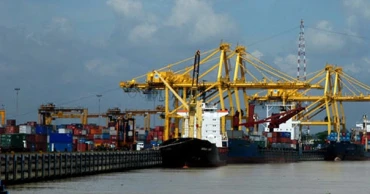
Chittagong port tariffs increased by up to 50 per cent
The Chittagong Port Authority has increased tariffs for the first time in 39 years by up to 50 per cent.
The new tariffs came into effect in the early hours of Tuesday.
Businessmen warned that the increased port service charges will raise trading costs and affect business competitiveness. The increased tariffs will increase consumer prices.
Some of the port charges have increased more than others. For instance, the berthing charge for the first 12 hours has been increased by 100 per cent. After 36 hours, the berthing charge has been increased by up to 900 per cent.
The new tariff sets the pilotage fee at $800 per movement, while the new fees for tugboat services range between $ 615 and $ 6,830, depending on vessel size.
Container handling and other services’ charges have seen a 25 per cent to 50 per cent increase.
"The scope and capacity of the port are expanding. We are committed to building new facilities and ensuring smooth services for port users. We do not believe this tariff adjustment will significantly impact consumers," said Omar Faruk, the CPA secretary.
Syed Mohammad Arif, chairman of the Bangladesh Shipping Agents Association, said that the new tariffs will hurt trade.
"We had requested a maximum increase of 10-12 per cent” he said.
However, port officials estimated the per-kilogram impact of the increased tariff to be marginal, increasing costs by 32 to 44 paisa.
The Chattogram port handles about 33 lakh containers and 13 crore metric tons of cargo annually, with over 4,000 ships using the port service each year.
Container handling at Ctg Port up 9% in Aug-October: CPA Chairman
The new tariff structure was built on the advice of the Spain-based consultancy firm IDOM, which compared tariffs of 17 major global ports, including 10 Asian ports, before coming up with its recommendations.
Export-bound containers, both full container load and less-than-container-load, now get 6 days of free time instead of the earlier four days’ time. The port will start charging from the 7th day at the daily rate of $ 6.90. The charge will rise with time, reaching $ 62 a day after 21 days.
Issuing a warning that the revised tariffs could pose serious challenges, SM Saiful Alam, president of the Chittagong Customs Agents Association, said, “Where will traders recover these new costs from? Ultimately, it will be passed on to consumers. This is a bad development for the economy.”
He pointed out that Chittagong port still lacks modern equipment, even compared with the ports in the neighboring countries.
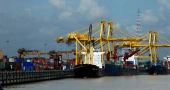
Currently, the port has only 18 gantry cranes, while 12 other berths rely on ship cranes to handle cargo.
Shafiqul Alam Jewel, vice chairman of the BSAA, demanded that the port authority ensure better service after the tariff increase.
According to the gazette, the entry fee per gross ton now stands at $ 0.306, while the vessel working charge within the port was set at $ 0.017.
The minimum pilotage charge was fixed at $ 800. Vessels over 10,000 GT will have to pay $ 0.08 per gross ton.
The night navigation surcharge has been increased by 25 per cent, while the outer pilotage area surcharge has increased by 50 per cent. The tugboat fee per movement for 200–5,000 GT was set at $ 615.
The water supply charge from the mainline has been fixed at $ 2.92 per 1,000 liters. The cost of supplying water by a port lorry travelling a distance of 5 km has been fixed at $ 6.23. Using a water boat for water supply in the Karnaphuli River will cost $ 12.46. The boat water supply cost beyond 7 nautical miles from the Patenga lighthouse will be $ 24.96 per 1,000 liters. The waste handling cost within the Karnaphuli is now $ 2,456.99. Outside the Karnaphuli, the waste handling cost will be $ 4,063.15. The crane use charge per container for a crane less than 21 feet has been fixed at $ 20.80. For using a crane over 40 feet, now traders will have to pay $ 35.10.
This is the first time since 1986 that the CPA announced new tariffs.
CPA urged to take action against LPG import from sanctioned countries
Port authorities say the tariff review was necessary to improve services and fund infrastructure upgrades to meet global standards.
With around 80 per cent of the country’s apparel exports going through Chittagong port, business leaders said the increased costs could affect competitiveness.
Rakibul Alam Chowdhury, a director of the Bangladesh Garment Manufacturers and Exporters Association, said, “The industry was struggling to cope with the US-imposed 20 per cent tariff. The new charges will complicate the situation further.”
Mahfuzul Haque Shah, a former director of the Chittagong Chamber of Commerce and Industry, said that such a steep rise in cost is very difficult to deal with.
“Our request to stand by businessmen in this difficult time was not heeded,” he said.
“It will raise the costs of imported consumer goods and raw materials, impact manufacturing and hurt the economy,” he said.
Chittagong Port is currently ranked 68th among the world’s top 100 busiest ports and handles 93 per cent of Bangladesh’s total import-export trade.
1 year ago

Trump warns Walmart: Don’t raise prices due to my tariffs but do eat the costs from those taxes
On Saturday, former President Donald Trump sharply criticized Walmart on social media, demanding that the company absorb the extra costs resulting from his tariffs.
As Trump raised import duties, he sought to reassure a doubtful public by claiming that the burden would fall on foreign exporters, not American consumers, and that businesses like retailers and car manufacturers would shoulder any additional expenses. However, most economists have cast doubt on these assertions, warning that the tariffs could fuel higher inflation. Walmart itself cautioned on Thursday that the prices of a wide range of goods — from bananas to children’s car seats — could rise.
Posting on Truth Social, Trump targeted the retail behemoth, which employs 1.6 million workers across the U.S. He argued that Walmart, headquartered in Bentonville, Arkansas, should be willing to reduce its profit margins to support his broader economic strategy, which he claims will eventually bring more manufacturing jobs back to the United States.
“Walmart should STOP trying to blame Tariffs as the reason for raising prices throughout the chain,” Trump posted. “Walmart made BILLIONS OF DOLLARS last year, far more than expected. Between Walmart and China they should, as is said, “EAT THE TARIFFS,” and not charge valued customers ANYTHING. I’ll be watching, and so will your customers!!!”
The posting by the Republican president reflected the increasingly awkward series of choices that many major American companies face as a result of his tariffs, from deteriorating sales to the possibility of incurring Trump’s wrath. Trump has similarly warned domestic automakers to not raise their prices, even though outside analyses say his tariffs would raise production costs.
So far, those tariffs have darkened the mood of an otherwise resilient U.S. economy. The preliminary reading of the University of Michigan survey of consumer sentiment on Friday slipped to its second lowest measure on record, with roughly 75% of respondents “spontaneously” mentioning tariffs as they largely expected inflation to accelerate.
In April, Walmart CEO Doug McMillon was among the retail executives who met with Trump at the White House to discuss tariffs. But the Trump administration went forward despite warnings and has attacked other companies such as Amazon and Apple that are struggling with the disruptions to their supply chains.
Walmart chief financial officer John David Rainey said he thinks $350 car seats made in China will soon cost an additional $100, a 29% price increase.
Colombia seeks to join China-based development bank as Latin America drifts away from Washington
“We’re wired to keep prices low, but there’s a limit to what we can bear, or any retailer for that matter,” he told The Associated Press on Thursday after the company reported strong first-quarter sales.
The administration recently ratcheted down its 145% tariffs on China to 30% for a 90-day period. Trump has placed tariffs as high as 25% on Mexico and Canada due to illegal immigration and drug trafficking, harming the relationship with America’s two largest trading partners.
There is a universal baseline tariff of 10% on most countries as Trump promises to reach trade deals in the coming weeks after having shocked the financial markets in early April by charging higher import taxes based on trade deficits with other countries. Trump insists he intends to preserve the tariffs as a revenue source and that a framework agreement with the United Kingdom would largely keep the 10% tariff rate in place.
Trump has also placed import taxes on autos, steel and aluminum and plans to do so on pharmaceutical drugs, among other products.
The tariffs and Trump’s own reversals on how much he should charge have generated uncertainty across the U.S. economy, such that Federal Reserve Chair Jerome Powell has held the central bank’s benchmark rates steady until there is more clarity. Powell has warned that tariffs can both hurt growth and raise prices.
1 year ago
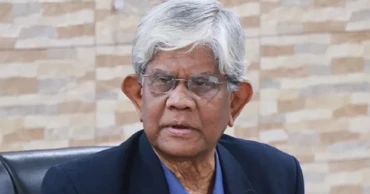
Govt initiates talks with US over newly imposed tariffs: Finance Adviser
Finance Affairs Adviser Dr. Salehuddin Ahmed on Sunday said the government has taken necessary steps to engage with the United States authorities over the new tariffs imposed by Washington.
Speaking to journalists at the Secretariat, he said, “The impact of the new US tariffs on the economy will not be difficult to manage. The government is hopeful that a positive outcome will emerge from the discussions.”
Dr. Salehuddin also noted that commodity prices were found stable during Ramadan and Eid-ul-Fitr, bringing some sort of relief to the public.
Finance Adviser assures rational budget for 2025-26 prioritising local needs
“This year, people had a good Eid. In March alone, the country received $3 billion in remittances, which helped boost the foreign exchange reserves,” he added.
The finance adviser said the country’s overall economic situation is showing signs of improvement, supported by the rising inflow of foreign currency.
Tulsi Gabbard’s remarks won’t affect bilateral relations: Finance Adviser
1 year ago
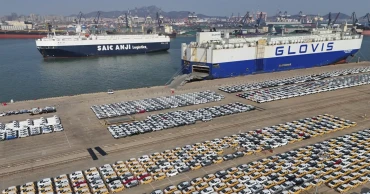
China's exports in December grew 10.7%, beating estimates as higher US tariffs loom
China’s exports in December grew at a faster pace than expected, as factories rushed to fill orders to beat higher tariffs that U.S. President-elect Donald Trump has threatened to impose once he takes office.
Exports rose 10.7% from a year earlier. Economists had forecast they would grow about 7%.
Imports rose 1% year-on-year. Analysts had expected imports to shrink about 1.5%.
Trump has pledged to raise tariffs on Chinese goods and close some loopholes that exporters now use to sell their products more cheaply in the U.S. If enacted, his plans would likely raise prices in America and squeeze sales and profit margins for Chinese exporters.
With exports outpacing imports, China's trade surplus grew to $104.84 billion.
China's exports are likely to remain strong in the near-term, said Zichun Huang of Capital Economics, as businesses try to “front-run” potentially higher tariffs.
Read: Asian shares decline amid concerns over rate cuts and tariffs
“Outbound shipments are likely to stay resilient in the near-term, supported by further gains in global market share thanks to a weak real effective exchange rate," she wrote in a note.
But exports will likely weaken later in the year if Trump follows through on his threat to impose tariffs, Huang said.
1 year ago
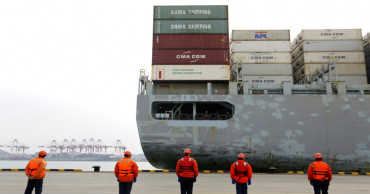
China cuts tariffs on $75B of US imports in trade truce
China cut tariffs on $75 billion of U.S. imports including soybeans, pork and auto parts Thursday in a trade truce with Washington while Beijing struggles with a costly virus outbreak.
6 years ago