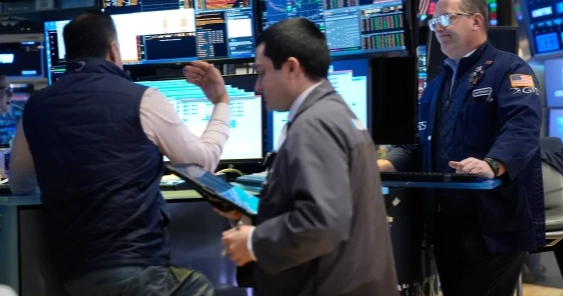
U.S. stock markets moved lower on Friday, heading toward a fourth straight week of losses, although a slight drop in oil prices helped calm markets in other parts of the world.
The S&P 500 fell 0.5% in early trading and was on track for its longest weekly losing streak in a year. The Dow Jones Industrial Average dropped 126 points, or 0.3%, while the Nasdaq Composite declined 0.8%.
Rising bond yields continued to put pressure on U.S. stocks. Higher yields make borrowing more expensive for businesses and consumers, which can slow economic growth and reduce investment demand. Yields have been increasing since the war with Iran began, as investors worry that higher oil and gas prices could push inflation up.
Due to these concerns, traders are now less hopeful that the Federal Reserve will cut interest rates this year. According to market data, some investors are even considering a small chance of a rate hike in 2026 — something that seemed very unlikely before the conflict.
Lower interest rates usually support economic growth and stock prices, and Donald Trump has repeatedly called for cuts. However, reducing rates too quickly could worsen inflation.
Outside the United States, markets showed more stability after Thursday’s sharp declines. Stock indexes rose slightly in Europe and gained 0.3% in South Korea, although markets in China fell.
The relative calm came as oil prices eased. Brent crude slipped 0.3% to $108.29 per barrel, while U.S. benchmark crude remained nearly unchanged at $95.53.
Oil prices have been highly volatile since the war began, rising from around $70 per barrel. Markets are closely watching how long the conflict will last and its impact on energy supplies, especially in the Strait of Hormuz, a key route for global oil shipments that Iran has restricted.
Among individual companies, Super Micro Computer shares plunged 28.2% after U.S. authorities accused a senior executive and others of illegally exporting advanced chips to China. The company said it is cooperating with investigators and has suspended the employees involved.
On the positive side, FedEx rose 2.8% after reporting stronger-than-expected quarterly profits.
In the bond market, the yield on the 10-year U.S. Treasury climbed to 4.32%, up from 4.25% a day earlier and significantly higher than 3.97% before the war began.