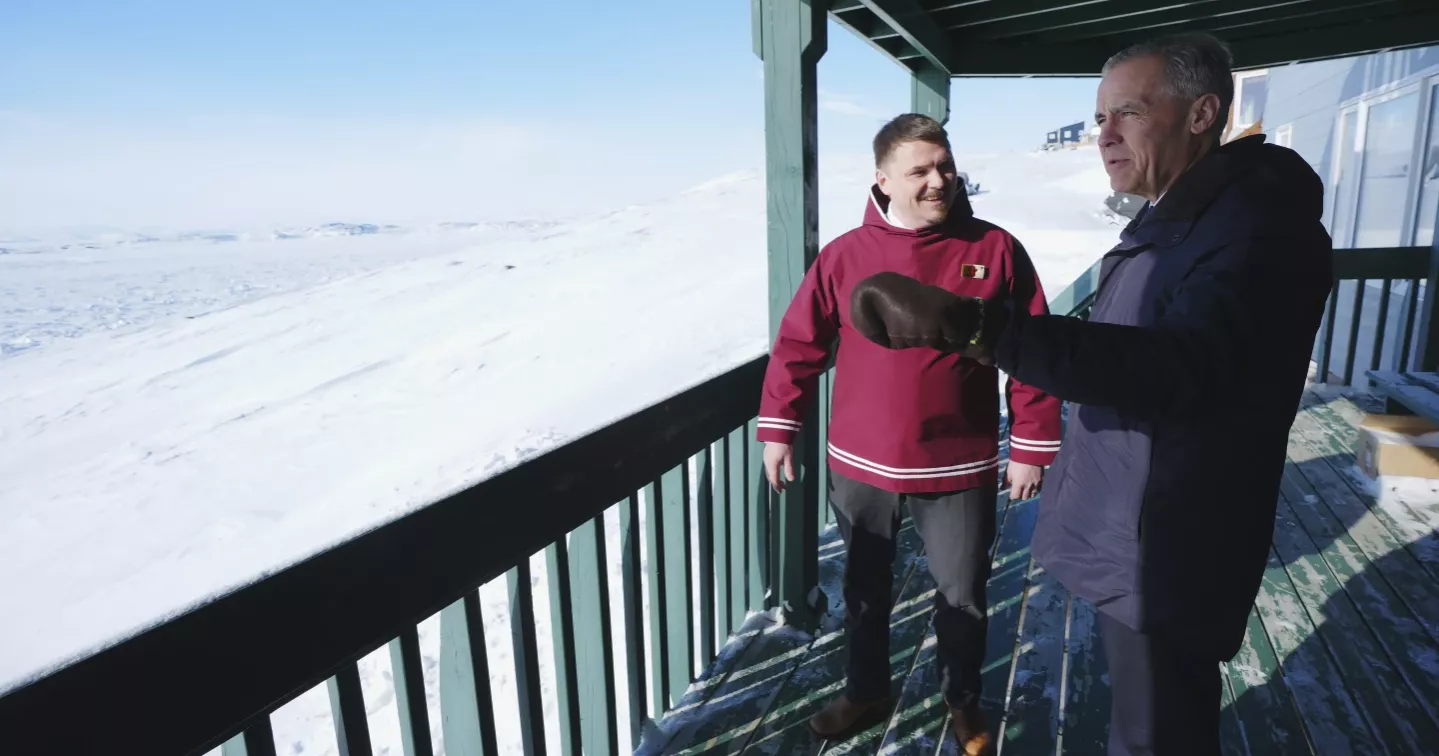
Canadian Prime Minister Mark Carney has announced the acquisition of a radar system from Australia and an expansion of military operations in the Arctic to reinforce the country’s sovereignty in the increasingly contested region.
According to the prime minister’s office, the Over-the-Horizon Radar (OTHR) system, valued at CAD 6 billion (USD 4.2 billion), will enhance early warning capabilities, extending radar coverage from the Canada-U.S. border into the Arctic.
Carney made the announcement at a military base in Nunavut’s capital, Iqaluit, following diplomatic visits to Paris and London.
“Defending our Arctic sovereignty is a key priority,” Carney stated. “Canada is, and always will be, an Arctic nation.”
The Australian radar system consists of a series of pillars spanning nearly 1.6 kilometers (one mile) and is expected to have a smaller footprint than similar American systems.
Australian Prime Minister Anthony Albanese welcomed the deal, calling it a significant export if finalized. He spoke with Carney the previous night, expressing surprise at the geopolitical tensions unfolding between Canada and the U.S.
Canadian government officials, speaking anonymously, indicated that the deal has been well received by top military figures in the North American Aerospace Defense Command (NORAD), the joint U.S.-Canadian military command. However, they were uncertain about Washington’s political response to the purchase.
US military targets Houthi radar sites in Yemen after merchant sailor goes missing
Carney also unveiled a CAD 420 million (USD 294 million) investment to bolster Canada’s Arctic military presence, including expanded operations, training exercises, and additional personnel deployment. The initiative aims to establish a more consistent year-round presence in the region.
During his visit, Carney’s flight path passed over Greenland, an area that has drawn interest from U.S. President Donald Trump as part of his “America First” foreign policy strategy. His administration has made controversial remarks about annexing Greenland and even suggested Canada should become the 51st U.S. state.
“Our historically aligned priorities with the United States are beginning to diverge,” Carney observed.
Trump has reportedly threatened economic measures to pressure Canada into statehood, a stance that has provoked backlash among Canadians. His rhetoric has unexpectedly boosted the political standing of Canada’s governing Liberal Party, which had been facing a potential electoral defeat but now sees renewed support. Carney is expected to call a general election within days.
The U.S. president has also imposed tariffs on Canadian steel and aluminum and has hinted at broader trade restrictions.
Carney and Trump have yet to speak since Carney assumed office as prime minister and Liberal Party leader over a week ago. Carney stated that he will engage in a comprehensive discussion with Trump at an appropriate time, covering a range of bilateral issues.
Meanwhile, Trump has continued to make dismissive remarks about Canada, reiterating on Fox News that the country “was meant to be the 51st state.” He suggested that his approach to Canada is harsher than his dealings with America's adversaries.
Russia donates two military helicopters, radar station to Kyrgyzstan
He further downplayed the upcoming Canadian election, expressing indifference toward the outcome, particularly regarding the Conservative candidate.
Carney’s visit to Iqaluit highlights its significance as the largest settlement in Nunavut, a vast Arctic territory home to around 40,000 people. The remote region, about the size of Alaska and California combined, remains largely inaccessible by road or rail.
The Arctic has increasingly become a focal point for geopolitical disputes, climate change concerns, and economic interests, making Canada’s efforts to assert sovereignty and strengthen security measures all the more pressing.
Source: With input from agency