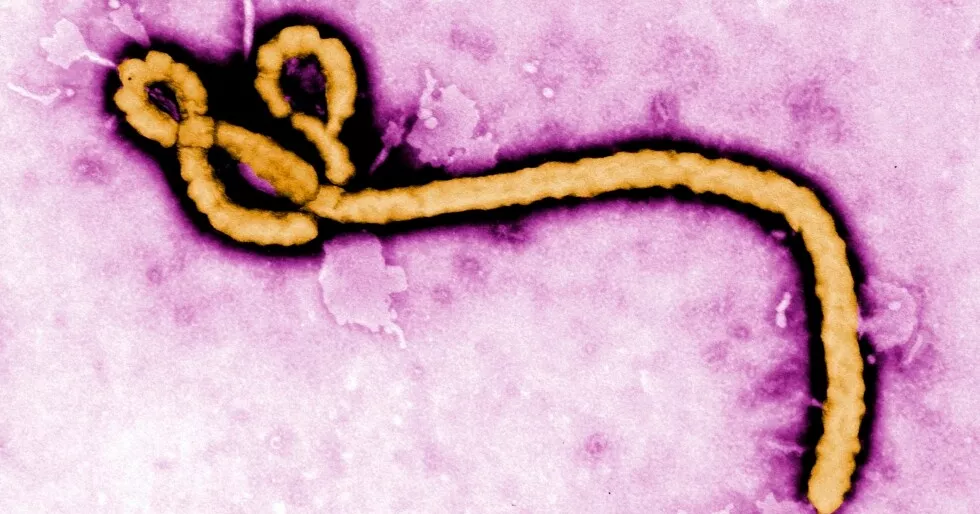
Health officials in Africa have reported a new Ebola outbreak in the Democratic Republic of Congo, with at least 246 suspected cases and 65 deaths, raising fresh concerns about the deadly virus.
Ebola, a severe disease that often causes death, was first identified in 1976 after outbreaks in what are now South Sudan and the Democratic Republic of Congo, according to the World Health Organization.
Since then, all major outbreaks have occurred in sub-Saharan Africa, where the virus naturally exists, with West and Central Africa experiencing the most severe impacts.
What is Ebola and how it spreads
Ebola is caused by a group of viruses, with three main types responsible for major outbreaks: Ebola virus, Sudan virus and Bundibugyo virus, the WHO says.
Fruit bats are believed to be the natural carriers of the virus, while animals such as monkeys and apes can also become infected. Humans can catch the disease through direct contact with infected animals or through person-to-person transmission via body fluids such as blood, vomit or contaminated surfaces.
Symptoms usually appear between two days and three weeks after infection, most often within a week. Early signs resemble flu, including fever, fatigue, body pain and sore throat. In severe cases, patients may develop vomiting, diarrhea, rashes, seizures and internal or external bleeding.
The average fatality rate is around 50 percent, though it has ranged from 25 percent to 90 percent in different outbreaks, according to WHO. Vaccines and treatments are currently available only for the Ebola virus species.
2013–2016: Worst outbreak in history
The largest Ebola outbreak on record occurred between 2013 and 2016 in West Africa, mainly affecting Guinea, Liberia and Sierra Leone.
More than 28,000 people were infected and over 11,000 died. The virus also spread to a small number of cases in countries including the United States, United Kingdom, Italy and Spain, mostly linked to travelers and returning health workers.
Researchers believe the outbreak began in southeastern Guinea after a child came into contact with infected fruit bats.
2018–2020: Congo and Uganda outbreak
The second-largest outbreak took place in eastern Congo, particularly in North Kivu, South Kivu and Ituri provinces, with some cases also reported in Uganda.
That outbreak recorded more than 3,400 cases and over 2,200 deaths, with a fatality rate of about 66 percent.
The current outbreak announced Friday has also emerged in Ituri, near the Ugandan border. Congo has experienced more than a dozen Ebola outbreaks in recent decades, including one as recently as late 2025.
2000–2001: Uganda outbreak
An earlier major outbreak in Uganda recorded 425 cases and 224 deaths. It was caused by the Sudan virus.
Health authorities were praised for quickly controlling the spread through community awareness campaigns and efforts to counter misinformation.
Uganda has faced several Ebola outbreaks over the years.
1976: First recorded outbreaks
The first known Ebola outbreaks were reported in 1976 in what were then Sudan and Zaire (now the Democratic Republic of Congo).
In Sudan, at least 151 people died. In Congo, an outbreak near the Ebola River led to 280 deaths and the identification of the virus that now bears the river’s name.
Scientists believe the virus may have originated from bats in a cotton factory, although the exact source remains unconfirmed.
The same year, a laboratory technician in the United Kingdom became the first known Ebola case outside Africa after accidentally pricking himself with contaminated material. He recovered.
Since then, very few Ebola cases have been recorded outside Africa.