Ebola
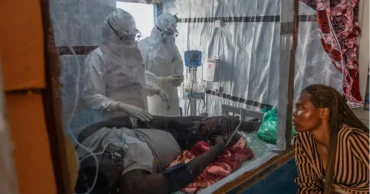
Here's data showing Congo's Ebola outbreak is on track to surpass history's largest
The Ebola outbreak spreading rapidly in Congo has yet to reach its peak and could be several times larger than currently reported, according to data from Congolese health authorities and the Africa Centres for Disease Control and Prevention (Africa CDC).
The World Health Organization says the outbreak is advancing at an unprecedented pace and could eventually surpass the 2014-2016 Ebola epidemic in West Africa, which killed more than 11,000 people.
The latest outbreak has so far resulted in 2,516 deaths among 5,290 confirmed cases in Congo’s vast eastern region. The spread has been fueled by a highly mobile population, including people displaced by armed conflict, as well as widespread mistrust of health authorities.
Only about 10% of current cases are linked to known contacts, far below the 90%-95% level considered necessary to bring an outbreak under control, according to Yap Boum, head of emergency preparedness and response at the Africa CDC.
Boum told reporters Thursday that authorities may be detecting only 30%-40% of the actual cases.
Rapid spread raises alarmBy the 13th week after the outbreak was officially declared, Congo had recorded about 10 times as many cases and seven times as many deaths as the West African Ebola outbreak had recorded at a comparable stage, according to Africa CDC data.
The 2014-2016 outbreak eventually caused more than 28,000 cases and over 11,000 deaths.
Congo’s previous deadliest Ebola outbreak, from 2018 to 2020, recorded about 3,400 cases and more than 2,200 deaths. The current outbreak is progressing much faster, with confirmed cases increasing at roughly 18 times the previous rate and deaths at about 13 times the rate.
Experts are particularly concerned that the outbreak may have started in the mining town of Mongbwalu as early as February, months before authorities officially declared it on May 15.
Contact tracing remains limitedAfrica CDC data from the past three weeks shows that health workers have traced 82% of the 19,630 contacts already identified.
However, the agency estimates that nearly 100,000 contacts should have been identified based on an average of 60 contacts per confirmed case. That means the actual contact-tracing rate is only about 16% of what was expected.
The outbreak is caused by the Bundibugyo virus, a strain for which there are no approved vaccines or treatments. Its symptoms can also be milder than those associated with the more common Ebola virus, potentially leading some patients to delay seeking medical help.
Outbreak reaches new provinceThe number of affected health zones has expanded from three at the beginning of the outbreak to 56 across six provinces.
Bas-Uele province, which had previously reported no cases, has recorded two cases in separate locations during the past week and a half, according to government data.
There are signs of improvement in some areas, however. South Kivu province, for example, has gone 79 days without reporting a new case.
Most deaths occur outside treatment centersCommunity deaths, meaning those occurring outside Ebola treatment centers, have increased steadily. They accounted for 97% of reported deaths on Aug. 17, according to Africa CDC figures.
Yet only about 20% of health alerts are coming from communities, highlighting the challenge of persuading people to report suspected cases.
The overall case fatality rate stands at 46.7%, but it is considerably higher in some areas. In North Kivu, one of the country's most populous provinces, the fatality rate has reached 68.2%.
Health officials say people are often delaying or avoiding treatment because of misinformation, reliance on traditional remedies, fears of isolation and concerns about being quarantined for symptoms that may turn out to be caused by other illnesses. The relatively mild early symptoms of the Bundibugyo strain may also discourage people from seeking care quickly.
1 month ago
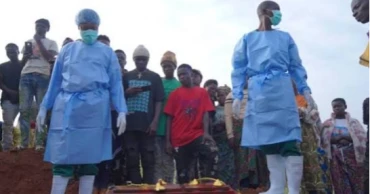
Congo Ebola outbreak tops 5,000 cases amid rapid spread
Congo’s Ebola outbreak has surpassed 5,000 cases, with health officials warning that the virus is spreading at an unusually fast pace and putting pressure on response efforts in one of the country’s most remote areas.
Data from Congo’s Health Ministry showed that 5,021 cases had been recorded as of Sunday, including 2,378 deaths.
The outbreak is unfolding amid insecurity, displacement and large movements of people, making it difficult for health workers to contain the virus.
According to health officials, the outbreak has spread faster than any previous Ebola outbreak. From the first confirmed case, it has expanded about three times faster than the 2014-2016 outbreak in West Africa, which was the deadliest Ebola outbreak on record, killing more than 11,000 people.
World Health Organization Director-General Tedros Adhanom Ghebreyesus said Tuesday that the outbreak was spreading rapidly and that the risk of further transmission within Congo and beyond its borders remained high.
He warned that the epidemic was still far from being brought under control.
Security problems have also hampered response efforts, particularly in Ituri province, the area worst affected by the outbreak. Health workers have faced attacks while trying to investigate cases and provide treatment.
On Monday, residents attacked a health team in Aru territory after a suspected Ebola case was reported. A mob burned an ambulance and damaged two other vehicles, according to Michael Wani, president of the Union of Cultural Associations for the Development of Ituri.
1 month ago

Congo Ebola death toll nears 1,000 as outbreak spreads rapidly
The death toll from the Ebola outbreak in the Democratic Republic of Congo has climbed to 999, according to the latest official figures, underscoring the severity of what health authorities have described as the fastest-spreading Ebola outbreak on record.
Data released by Congo’s Ministry of Health showed that, as of Sunday, the country had recorded 2,473 confirmed and suspected Ebola cases since the outbreak was declared on May 15. Of those, 999 people have died.
The current outbreak is caused by the Bundibugyo strain of the Ebola virus, for which there are currently no approved vaccines or specific treatments, making containment efforts more challenging.
Health officials say the outbreak is spreading at an unprecedented pace. Previous outbreaks, including the 2013-2016 West Africa epidemic that claimed more than 11,000 lives, took around eight months to reach 1,000 deaths. The current outbreak has reached that milestone in a significantly shorter period.
Ebola is a highly infectious viral disease transmitted through direct contact with bodily fluids such as blood, vomit and semen. It often causes severe illness and can be fatal.
Authorities have expressed concern that about 80 percent of newly reported infections are linked to unknown transmission chains, indicating that the virus is spreading faster than health teams can identify and isolate cases.
The outbreak is centred in Ituri province but has also spread to four other provinces, prompting authorities to intensify surveillance and response efforts.
Response operations have been hampered by insecurity in some affected areas. Attacks on health facilities and medical teams have forced aid workers to suspend operations in certain locations, while some healthcare workers have staged strikes over unpaid salaries since the outbreak began.
Speaking at the Africa Health Summit in Ghana on Tuesday, Africa Centres for Disease Control and Prevention (Africa CDC) Director-General Dr. Jean Kaseya urged stronger international support to contain the outbreak.
"If we do not stop this outbreak today, it could become one of the worst Ebola outbreaks the world has ever documented," he warned.
2 months ago
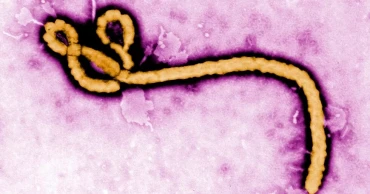
Ebola outbreaks: a look at major incidents and how the virus was first discovered
Health officials in Africa have reported a new Ebola outbreak in the Democratic Republic of Congo, with at least 246 suspected cases and 65 deaths, raising fresh concerns about the deadly virus.
Ebola, a severe disease that often causes death, was first identified in 1976 after outbreaks in what are now South Sudan and the Democratic Republic of Congo, according to the World Health Organization.
Since then, all major outbreaks have occurred in sub-Saharan Africa, where the virus naturally exists, with West and Central Africa experiencing the most severe impacts.
What is Ebola and how it spreads
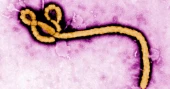
Ebola is caused by a group of viruses, with three main types responsible for major outbreaks: Ebola virus, Sudan virus and Bundibugyo virus, the WHO says.
Fruit bats are believed to be the natural carriers of the virus, while animals such as monkeys and apes can also become infected. Humans can catch the disease through direct contact with infected animals or through person-to-person transmission via body fluids such as blood, vomit or contaminated surfaces.
Symptoms usually appear between two days and three weeks after infection, most often within a week. Early signs resemble flu, including fever, fatigue, body pain and sore throat. In severe cases, patients may develop vomiting, diarrhea, rashes, seizures and internal or external bleeding.
The average fatality rate is around 50 percent, though it has ranged from 25 percent to 90 percent in different outbreaks, according to WHO. Vaccines and treatments are currently available only for the Ebola virus species.
2013–2016: Worst outbreak in history
The largest Ebola outbreak on record occurred between 2013 and 2016 in West Africa, mainly affecting Guinea, Liberia and Sierra Leone.
More than 28,000 people were infected and over 11,000 died. The virus also spread to a small number of cases in countries including the United States, United Kingdom, Italy and Spain, mostly linked to travelers and returning health workers.
Researchers believe the outbreak began in southeastern Guinea after a child came into contact with infected fruit bats.
2018–2020: Congo and Uganda outbreak
The second-largest outbreak took place in eastern Congo, particularly in North Kivu, South Kivu and Ituri provinces, with some cases also reported in Uganda.
That outbreak recorded more than 3,400 cases and over 2,200 deaths, with a fatality rate of about 66 percent.
The current outbreak announced Friday has also emerged in Ituri, near the Ugandan border. Congo has experienced more than a dozen Ebola outbreaks in recent decades, including one as recently as late 2025.
2000–2001: Uganda outbreak
An earlier major outbreak in Uganda recorded 425 cases and 224 deaths. It was caused by the Sudan virus.
Health authorities were praised for quickly controlling the spread through community awareness campaigns and efforts to counter misinformation.
Uganda has faced several Ebola outbreaks over the years.
1976: First recorded outbreaks
The first known Ebola outbreaks were reported in 1976 in what were then Sudan and Zaire (now the Democratic Republic of Congo).
In Sudan, at least 151 people died. In Congo, an outbreak near the Ebola River led to 280 deaths and the identification of the virus that now bears the river’s name.
Scientists believe the virus may have originated from bats in a cotton factory, although the exact source remains unconfirmed.
The same year, a laboratory technician in the United Kingdom became the first known Ebola case outside Africa after accidentally pricking himself with contaminated material. He recovered.
Since then, very few Ebola cases have been recorded outside Africa.
4 months ago
.jpg)
Hunting for 'Disease X'
Showing early symptoms of hemorrhagic fever, the patient sits quietly on her bed, wrangling two toddlers desperate to flee the cell-like hospital room in Ingende, a remote town in the Democratic Republic of the Congo (DRC).
They are waiting for the resul
5 years ago
.jpg)
Congo announces end to 2nd deadliest Ebola outbreak ever
Eastern Congo marked an official end Thursday to the second deadliest Ebola outbreak in history, which killed 2,280 people over nearly two years, as armed rebels and community mistrust undermined the promise of new vaccines.
6 years ago

Congo, weary from Ebola, must also battle the coronavirus
Congo has been battling an Ebola outbreak that has killed thousands of people for more than 18 months, and now it must also face a new scourge: the coronavirus pandemic.
6 years ago
8,000 vaccinated against Ebola in western Rwanda
About 8,000 Rwandans have so far been vaccinated against Ebola in the western districts of Rubavu and Rusizi bordering the Democratic Republic of Congo (DRC), an official said Saturday.
6 years ago
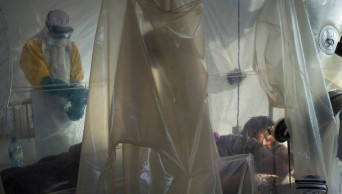
Early study results suggest 2 Ebola treatments saving lives
Washington, Aug 13 (AP/UNB) — Two of four experimental Ebola drugs being tested in Congo seem to be saving lives, international health authorities announced Monday.
7 years ago
Uganda begins largest trial of experimental Ebola vaccine
Kampala, Aug 3 (AP/UNB) — Researchers in Uganda have launched the largest-ever trial of the experimental Ebola vaccine that is expected to be deployed in neighboring Congo, where a deadly outbreak has killed over 1,800 people.
7 years ago