Although access to water, sanitation and hygiene (WASH) services in rural Bangladesh has seen considerable progress over time substantial challenges still persist in meeting the United Nations’ Sustainable Development Goal (SDG)-6 for clean water and sanitation.
To address the gaps, the interim government has undertaken a Tk 1,989.82 crore ‘Rural Sanitation Project’ aimed at improving sanitation and hygiene systems for the poorest communities in the country, with a goal of enhancing public health and living standards in rural areas.
The Local Government Division will implement the project through the Department of Public Health Engineering (DPHE) between July 2025 and June 2028 with the government’s own fund, according to a project document.
The project document says the government is committed to providing safe sanitation to all citizens of the country, especially the poor.
It says the project seeks to expand access to improved sanitation facilities in rural Bangladesh, especially for disadvantaged groups, in line with the Sustainable Development Goals (SDGs).
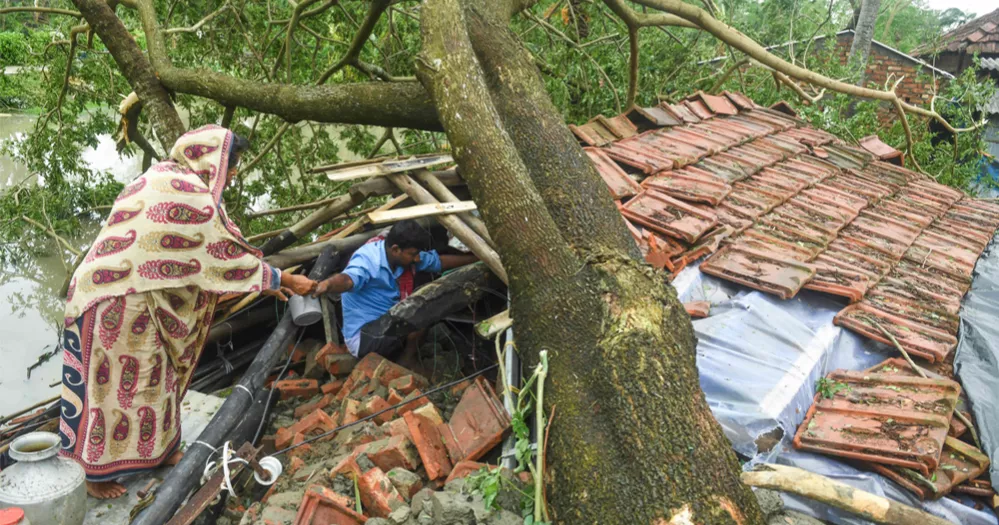
The project will also address the need for safe sanitation during and after disasters in flood, cyclone and storm-affected areas.
Thousands in agony as Teesta devours homes, farmland in north
Past Efforts and Progress in Rural Sanitation
A national baseline survey was conducted in October 2003 to assess sanitation coverage.
It showed that out of about 21 million households in the country only 33 percent use hygienic latrines, 25 percent use unhygienic latrines, and 42 percent defecate in the open.
After the launch of the National Sanitation Campaign in 2003, the government decided to formulate and implement many policies to promote sanitation.
Various steps and activities have been taken to implement the formulated policies and achieve 100% sanitation coverage.
Among the steps, the National Sanitation Project (Phase 1, 2, and 3) implemented by DPHE is notable. The National Sanitation Project (Phase 1) was implemented from July 2004 to December 2007.
After the implementation of the project, the open defecation coverage stood at 6%.
The National Sanitation Project (Phase 2) was implemented from July 2004 to June 2013.
At the end of the project, the open defecation coverage stood at 4%.
The latest, the National Sanitation Project (Phase 3) is under implementation whose activities are almost at the final stage.
The coverage of improved sanitation systems in Bangladesh is currently 64.4% and Safely Managed Sanitation Coverage is 42%.
Project Targets and Key Activities
To achieve the Sustainable Development Goals, it is necessary to ensure the provision of one improved latrine for each household.
The recommendation to provide free sanitation facilities to the extremely poor was accepted as per the approved Pro-Poor Strategy 2020 for the Water and Sanitation Sector of Bangladesh.
The government is committed to ensuring sanitation facilities for all at all times, safe sanitation facilities in all institutions and public places as per the SDG targets.
Due to frequent disasters caused by climate change, it is necessary to ensure sanitation facilities for the people in flood-affected, storm- and cyclone-affected areas during and after the disaster.
The ‘Rural Sanitation Project’ was proposed with the aim of bringing 50% of the poor population of the project area under the Safely Managed Sanitation (SMS) scheme by 2027 and, above all, increasing the overall coverage of SMS in rural areas of Bangladesh from 66% (as per Sample Vital Registration System, Bangladesh Bureau of Statistics-2022) to 70%.
Major activities under the project include installation of 274,351 improved twin-pit latrines for poor households at a cost of Tk 1,755.84 crore, construction of 1,984 community toilets costing Tk 178.56 crore, and awareness-building campaigns with Information, Education, and Communication (IEC) materials.
The plan also covers consultancy services, training programmes, and transport facilities for implementation.
The project will cover rural areas of 496 upazilas across 64 districts, excluding municipalities.
In 98 upazilas where a World Bank-funded water supply and sanitation project is already installing twin-pit toilets, the Rural Sanitation Project will only implement other components.
Bangladeshi children aren’t eating vegetables — and how it’s fueling a health crisis
Economic Impact and Government Commitment
A feasibility study by BEST Consulting Services Ltd. recommended the project noting significant sanitation gaps among the rural poor.
The Planning Commission has also endorsed it, citing strong economic returns with an estimated Economic NPV of Tk 3,375.64 crore, a Benefit-Cost Ratio of 2.87, and an Internal Rate of Return of 43%.
In the 2024-25 fiscal the allocation for the project was Tk 198.03 crore, in 2025-26 it is Tk 797.89 crore, and in 2026-27 fiscal the allocation will be Tk 993.8856 crore.
Officials said the project will build on the progress achieved through three earlier National Sanitation Projects, which helped drastically reduce open defecation since the 2000s.