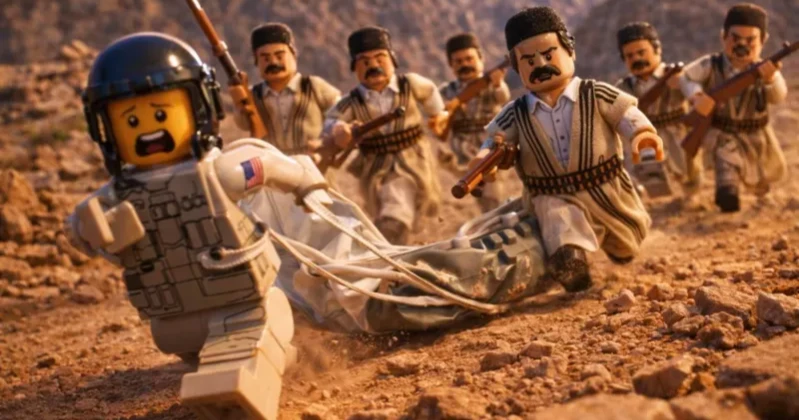
Viral AI-generated videos styled like Lego animations are being used to spread pro-Iran narratives during the ongoing conflict, with experts warning they represent a powerful new form of propaganda.
At first glance, the fast-paced and vividly coloured clips resemble scenes from animated films. However, the content often includes images of war, injured children, fighter jets and US President Donald Trump, presenting Iran as resisting what it portrays as a dominant global power, the United States.
In a recent BBC podcast, a representative of Explosive Media, one of the main creators of such videos, acknowledged that the Iranian government is a “customer” of the outlet, despite earlier claims of being fully independent.
The individual, who identified himself as Mr Explosive, said his small team uses the Lego-style format because it is easily understood across cultures. The videos are widely shared by Iranian and Russian state-linked social media accounts, reaching millions of viewers.
Experts say the content is highly effective. Propaganda specialist Dr Emma Briant described the videos as “highly sophisticated,” noting that AI tools trained on Western data help create culturally familiar messages for global audiences. She said the clips have collectively drawn hundreds of millions of views.
The videos often mix political messaging with controversial or unverified claims. Some include references to conspiracy theories, such as alleged links between US figures and the Epstein files, for which there is no credible evidence.
In one widely circulated clip, a downed US pilot is shown being captured by Iranian forces. However, US officials said the pilot was rescued by special forces on April 4 and is receiving treatment in Kuwait. The producer rejected that account, offering an alternative version without evidence.
Analysts say such content can shape perceptions by rapidly spreading misleading narratives. Some social media influencers have echoed the claims made in the videos, further amplifying their reach among English-speaking audiences.
The clips have become more detailed in recent months, depicting specific locations in the Gulf region being destroyed by Iranian strikes. In reality, reports suggest damage in many cases has been limited.
The videos are often released shortly after major developments in the conflict, sometimes even before official announcements, indicating a coordinated and fast-moving content strategy.
Explosive Media’s representative defended working with the Iranian government, calling it an “honourable” role, and dismissed criticism over misinformation and alleged bias.
Researchers say this type of AI-driven messaging signals a shift in how countries communicate during conflicts, bypassing traditional media channels and directly targeting global audiences.
While social media platforms have removed some accounts sharing the videos, similar content continues to reappear, highlighting the challenges of controlling such rapidly evolving digital campaigns.
Source: BBC