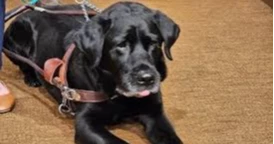
Lyft has agreed to a settlement ensuring that blind and other disabled passengers can travel with their service animals nationwide, following a complaint in Minnesota.
College student Tori Andres contacted the Minnesota Department of Human Rights after several Lyft drivers refused to let her guide dog, Alfred, accompany her. The department found that Lyft had violated the state’s Human Rights Act. Under the settlement, Lyft will update its driver training and app features to make the protections apply across the U.S., not just in Minnesota.
"This case is deeply personal because I travel almost everywhere with my guide dog," Andres said at a news conference, with Alfred lying quietly at her feet. "He is my eyes, my freedom, and why I can live independently."
The settlement requires Lyft to educate drivers about passengers’ rights and warns that drivers could be deactivated for violating the law. Drivers are prohibited from refusing rides to passengers who use service animals, wheelchairs, or have low or no vision. Minnesota will monitor Lyft’s compliance for three years, and Andres will receive $63,000 as part of the settlement.
Rebecca Lucero, the state’s Human Rights Commissioner, said, "We expect all riders in Minnesota and across the country will benefit from these changes."
Lyft, however, downplayed the settlement, stating that it had already enforced policies to protect service animal users and that alleged violations were by independent drivers. The company emphasized that discrimination has no place in its platform.
Recent app updates allow riders to notify drivers about service animals and report refusals. Drivers who try to cancel such rides receive an immediate in-app warning that refusing service animals is illegal and could lead to termination.
The settlement was reached without a lawsuit. Although Uber is not part of the agreement, Minnesota’s Human Rights Act applies to all ride-share companies. Lucero urged all businesses to review their policies to ensure compliance.
The federal government is also pursuing a separate lawsuit against Uber over alleged discrimination against disabled riders, including those with service dogs.
"Access to ride shares like Lyft is not a convenience it is a civil right," Lucero said.