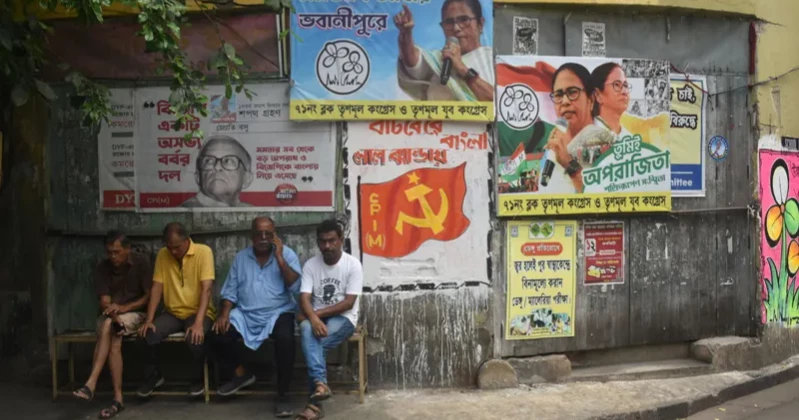
Around nine million people have been removed from the voter list in India’s West Bengal, triggering political tensions ahead of the state election later this month.
Muhammad Daud Ali, 65, a former Indian army technician said, he recently found that his name and those of his three children were missing from the electoral roll, despite having valid documents such as a passport and service records. Only his wife’s name remains on the list.
Officials said the deletions were made under a Special Intensive Revision (SIR) process. The removed names account for about 12 percent of the state’s 76 million voters reports BBC.
More than six million names were dropped after being marked as absent or deceased. Another 2.7 million people, including families like Ali’s, are still under review, and their status will be decided by special tribunals.
The Election Commission said the update aims to remove duplicate and outdated entries while keeping the voter list accurate. However, the exercise has faced criticism and legal challenges since it was first carried out in Bihar last year.
The issue has become more sensitive in West Bengal, where the ruling Trinamool Congress (TMC) is in conflict with the Election Commission over the process.
Chief Election Commissioner Gyanesh Kumar said the goal is to ensure a clean voter list, with no eligible voter left out.
Tensions have grown after comments by political leaders, including Prime Minister Narendra Modi, who said the revision would help identify “illegal Bangladeshi infiltrators.” The TMC claims the term is being used to target Muslims, although some Hindu voters have also been affected.
West Bengal shares a long and porous border with Bangladesh, making migration and voter identity a sensitive political issue.
The state has been ruled by Chief Minister Mamata Banerjee’s TMC since 2011, with the Bharatiya Janata Party (BJP) as its main rival.
The TMC has alleged that the voter list revision has removed millions of voters, especially Muslims, to benefit the BJP. The BJP and the Election Commission have denied the claim.
After several court challenges, the Supreme Court allowed the Election Commission to go ahead with the April polls without resolving all disputes. As a result, the fate of about 2.7 million voters remains uncertain.