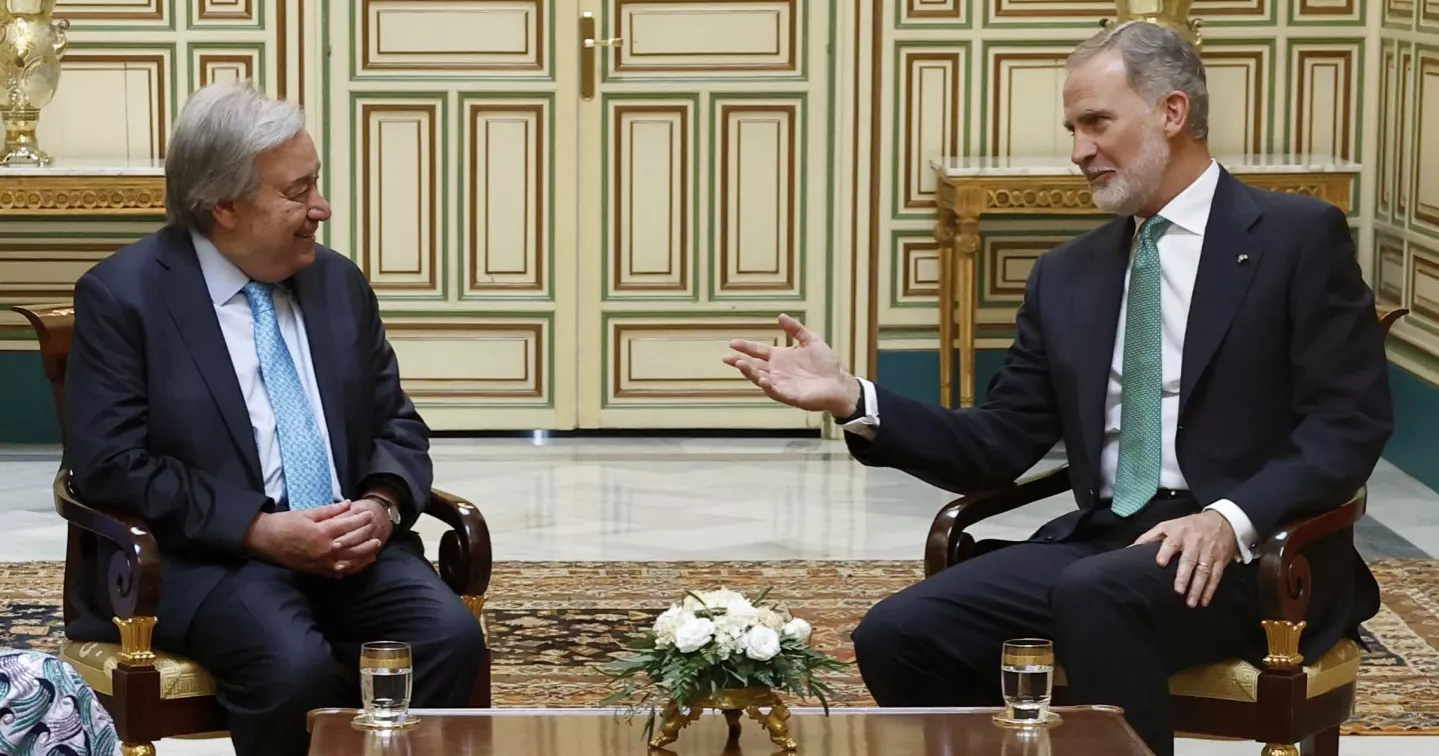
Representatives from dozens of countries convened Monday in Spain for a major United Nations conference aimed at addressing widening global inequalities and generating the trillions of dollars required to close the development gap—without the participation of the United States, once a key contributor.
U.N. Secretary-General Antonio Guterres opened the four-day Financing for Development summit in Seville, highlighting the difficult context: rising debt, falling investments, dwindling foreign aid, and growing trade barriers.
“Development depends on financing, yet right now that engine is faltering,” Guterres warned in his opening remarks. “We have come to Seville to change direction—to fix and accelerate the engine of development so that investment flows at the scale and speed the world needs.”
Co-hosted by the U.N. and the Spanish government, the conference is seen as a critical moment to address the estimated $4 trillion annual shortfall in funding needed to tackle poverty, achieve the U.N.’s lagging 2030 Sustainable Development Goals, and lift millions out of hardship.
Despite ongoing global instability and heightened geopolitical tensions, conference organizers remain hopeful the international community can confront the pressing challenge of ensuring access to food, healthcare, education, and clean water for all.
Spanish Prime Minister Pedro Sánchez echoed that optimism, telling delegates the summit was an opportunity to reject the belief that global rivalry and competition should define humanity’s future.
Israeli airstrike on Iran’s Evin Prison raises fears for political prisoners
Ambitious Plan to Bridge the Financial Divide
Over 70 world leaders and thousands of officials from development banks, international financial bodies, philanthropies, businesses, and civil society groups are attending the Seville gathering, according to the U.N.
However, the absence of the United States has cast a shadow over proceedings. Washington withdrew from the summit earlier this month after objecting to a 38-page outcome document that had been under negotiation for months among the U.N.’s 193 member states.
Despite U.S. opposition, the other nations endorsed the agreement by consensus, paving the way for its formal adoption in Seville under the name The Seville Commitment (Compromiso de Sevilla).
The document outlines urgent reforms to bridge the $4 trillion financing gap, including proposals for countries to ensure tax revenues amount to at least 15% of GDP, a threefold increase in lending from multilateral development banks, and mechanisms to boost private investment in essential areas such as infrastructure. It also emphasizes reforms to help countries manage soaring debt burdens.
U.N. trade chief Rebeca Grynspan recently underscored the severity of the crisis, stating that “development is regressing” amid rising global debt. In 2024, 3.3 billion people lived in countries that spent more on debt interest than on health or education—a figure projected to reach 3.4 billion this year. Developing nations are expected to spend $947 billion servicing debts in 2025, up from $847 billion last year.
An expert panel appointed by Guterres has put forward 11 recommendations to address the debt crisis, strengthen borrower nations, and promote a fairer global financial system.
Israeli settlers attack military base in the West Bank
U.S. Pushback on Global Reform Efforts
American diplomat Jonathan Shrier explained Washington’s withdrawal, saying while the U.S. remains committed to global cooperation and economic development, the Seville agreement crossed several “red lines.” These included provisions seen as interfering with how international financial institutions are governed, expanding multilateral development bank lending, and granting the U.N. greater influence over global debt frameworks.
The U.S. also opposed certain trade, tax, and innovation proposals, including calls for a U.N. framework on international tax cooperation, which conflict with American policy.
The U.S., historically the world’s largest foreign aid donor, has scaled back significantly in recent years. Under President Donald Trump, the U.S. Agency for International Development (USAID) was dismantled and foreign assistance budgets slashed, with Trump calling such spending wasteful.
Other Western nations have also reduced international aid contributions.
U.N. Deputy Secretary-General Amina Mohammed called the U.S. exit from the Seville summit “regrettable,” emphasizing that many of the proposed actions cannot succeed without American involvement.
“We will continue engaging with the U.S. after Seville and hope to convince them to play a role in lifting millions out of poverty,” Mohammed said.