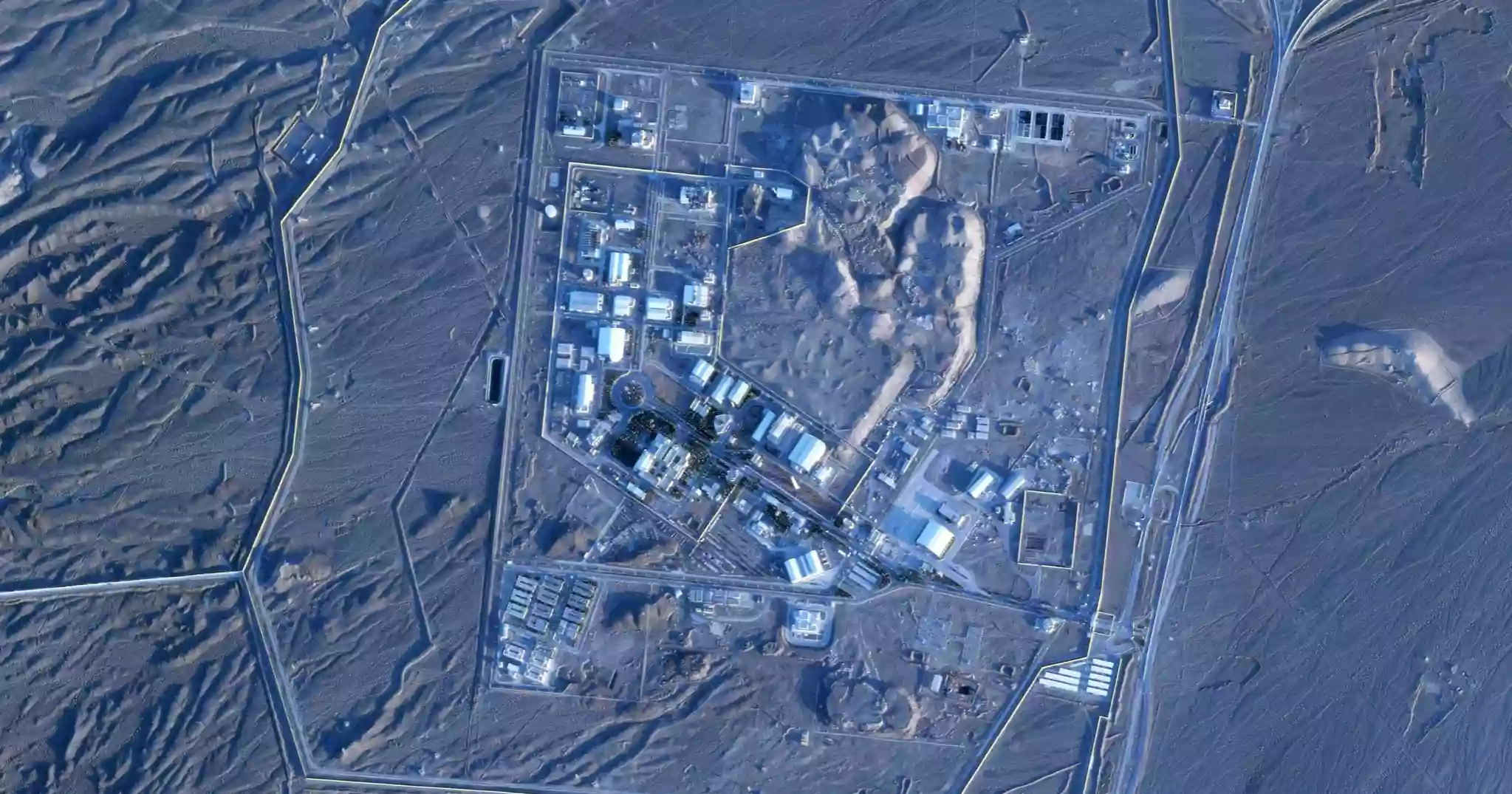
Satellite imagery has revealed renewed activity at two major Iranian nuclear facilities damaged in airstrikes last year, raising fresh concerns as tensions escalate over Tehran’s violent crackdown on nationwide protests.
Images released by Planet Labs PBC show newly constructed roofs covering heavily damaged structures at Iran’s Natanz nuclear enrichment site and the Isfahan Nuclear Technology Center. Analysts say the coverings appear designed to block satellite surveillance, potentially allowing Iran to inspect or recover remaining materials out of international view.
The activity marks the first significant construction detected at Iran’s bombed nuclear sites since Israel’s 12‑day conflict with Iran in June, followed by U.S. strikes. Iran has denied inspectors from the UN’s International Atomic Energy Agency (IAEA) access to the facilities since the attacks.
Experts caution the work does not suggest reconstruction of the sites. Instead, it may indicate efforts to assess whether sensitive assets — including stocks of highly enriched uranium — survived the strikes.
Read More: China successfully launches new test satellite
“These roofs are likely meant to obscure recovery operations rather than rebuild,” said analysts monitoring Iran’s nuclear program.
Natanz, Iran’s primary uranium enrichment hub, previously enriched uranium up to 60% purity — close to weapons-grade levels. The above-ground Pilot Fuel Enrichment Plant was severely damaged by Israeli strikes, with subsequent U.S. bunker-busting bombs targeting underground halls.
At Isfahan, which produces uranium gas used in enrichment, a similar roof now covers a damaged structure near the site’s northeast corner. Satellite images also show tunnel entrances nearby being filled or reinforced, possibly to protect against future attacks.
Iran has not commented publicly on the new construction. The IAEA also declined to respond.
Meanwhile, U.S. President Donald Trump has warned Iran to negotiate over its nuclear program, as Washington increases its military presence in the Middle East. Analysts warn the ongoing crisis carries significant nuclear risks.